
From the airport into Thimphu: every option and what it costs
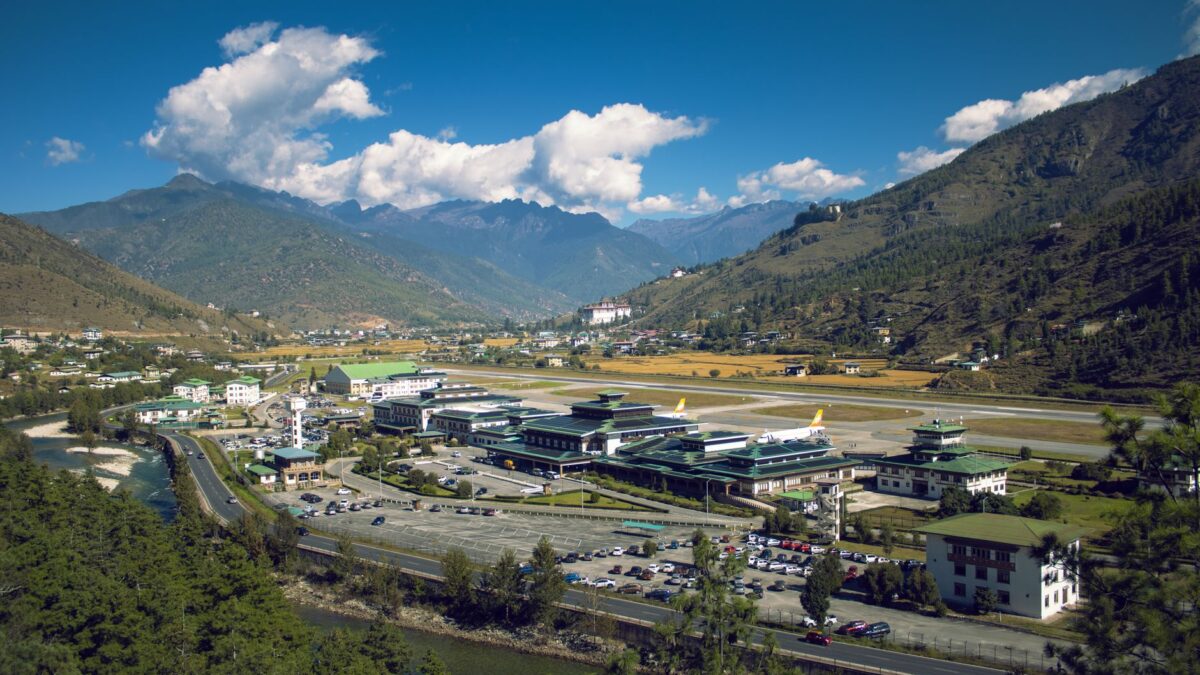
The first thing you notice stepping out of Paro International Airport isn’t the mountains—it’s the quiet. Then the damp, pine-scented air hits you, and you remember: you’re in Bhutan. But before you can start soaking in the serenity, you need to get to Thimphu, the capital, 54 kilometres and about an hour and a half away by road. There’s no railway line here—Bhutan’s only airport is Paro, and the only way into Thimphu is by road. So, what are your options? Let me walk you through them, fare by fare, so you can choose what fits your style and budget.
The Taxi: Your Flexible, Everyday Workhorse
If you’re travelling independently—and you’re not on a guided tour—the taxi is the most straightforward option. Taxis wait right outside the arrivals hall at Paro Airport, and the ride to Thimphu takes about 1.5 hours along the winding, pine-lined highway. The fare is not metered for this intercity run; it’s a fixed route, so you’ll negotiate before you get in. Expect to pay around Nu 2,500 to Nu 3,000 (roughly $30–$36) for the whole car. That might sound like a lot, but it’s a private door-to-door service, and if you’re two or three people, it splits nicely. You can also share with other travellers—ask at the taxi stand—and that can bring it down to about Nu 700–800 per person.
I always tell visitors: if you’re arriving late, just take the taxi and sleep. The road isn’t lit, and you don’t want to be fumbling with buses at dusk. Also, the last stretch into Thimphu, dropping down into the valley, is spectacular in daylight—you’ll see the Tashichho Dzong glowing in the late-afternoon sun. If you can, time your arrival for that.
The City Bus: The Budget-Friendlier Route
Yes, there is a public bus from Paro to Thimphu. It’s run by the municipal Thimphu City Bus Service, and it’s the choice of locals who don’t want to haggle. The bus departs from a stop a short walk from the airport terminal—you might need to ask around, but everyone knows it. The journey is the same road, same time, about 1.5 hours, but it costs a fraction: around Nu 150 per person (about $1.80). Buses run roughly every 30–60 minutes until about 6 PM, so if you land midday and you’re flexible, this is a great, authentic way to start your trip. You’ll sit with monks, farmers, and schoolkids in uniforms. It’s not fancy, but it’s real.
One tip: the bus drops you at the main bus terminal in Thimphu, on the north side of town, not far from the Centenary Farmers Market. From there, a short taxi ride anywhere in the city will cost you about Nu 100–150—or you can walk if your hotel is central.
Private Transfer: The Convenience of Pre-Booking
If you’re arriving on a package tour—and most visitors do, because of Bhutan’s visa rules—your operator will have arranged a private transfer. This is a dedicated car and driver, usually a clean SUV like a Toyota Land Cruiser or a Hyundai Tucson. It costs more than a taxi, typically Nu 3,500 to Nu 4,500 (about $42–$54), but it includes a meet-and-greet at the arrivals gate. Your driver will hold up a sign with your name, take your bags, and handle all the logistics. Given the Sustainable Development Fee of $100 per night and visa requirements, most travellers are already on a tour, so this is a seamless add-on. The driver will often offer a stop at a viewpoint called the ‘Tiger’s Nest’ viewpoint—not the actual monastery, but a scenic spot where you can see the Paro valley below. It’s a nice touch, but if you’re tired, just say no.
Choose this option if you want zero hassle, if you’re travelling with heavy luggage, or if you’re on a business trip and need to arrive fresh. It’s also the safest for night landings—though Paro is a daytime airport, so that’s rarely an issue.
Train? There’s No Train—But Let’s Talk About the Future
You might read about a proposed railway from India to Thimphu—there was talk of extending the Indian rail network through Phuentsholing. But as of now, there’s no train station in Paro or Thimphu. The only surface crossings are by road. If you’re coming overland from India, you’ll likely fly into Paro or drive up through Phuentsholing, a journey that takes a full day. So, for the airport transfer, forget the train. It doesn’t exist yet. If you’re curious, the government has mentioned a railway link in feasibility studies, but it’s decades away. Practical advice: stick to the road.
Which One Should You Pick?
Let me simplify:
- Lowest cost, most authentic: the city bus. Take it if you land before noon and you’re not in a hurry. You’ll save enough for a plate of ema datshi (around Nu 150–250) and a local beer at the weekend market.
- Best balance of cost and comfort: the shared taxi. If you’re two or three people, it’s nearly the same price as the bus per person, but door-to-door. Ask at the taxi stand to share with others—it’s common.
- Maximum comfort and zero worries: the private transfer. Book it through your operator. It’s pricier, but it sets a calm tone for your whole trip.
What to Watch For Once You’re on the Road
The road from Paro to Thimphu is mostly two lanes, carved into the mountainside, with occasional hairpin bends. In late monsoon (which is right now—we’re seeing 10mm of rain in a day, but it comes and goes), the road can be slippery, and there are occasional rockslides. Don’t worry—the drivers are used to it. But hold on to your seat if you’re a nervous passenger. The views are worth it: deep valleys, prayer flags strung across the road, and the occasional glimpse of a takin in the wilds of Motithang as you come into Thimphu.
Also, remember: you can’t smoke in the taxi—smoking is banned in all public places in Bhutan, and that includes cars. And, if you’re prone to altitude sickness, Thimphu sits at about 2,320 metres, so take it easy for the first day or two.
Arriving in Thimphu: First Impressions
You’ll likely be dropped near Norzin Lam, the main commercial spine, or at your hotel if it’s in Chang Lam near the Clock Tower Square. If you’ve taken the bus, you’ll alight at the terminal near the Centenary Farmers Market, where the air smells of fresh rain and chili. From there, everything is a short walk or a cheap taxi ride—a single city bus fare is only about Nu 20–30, and a metered taxi short ride is Nu 15–20 per kilometre, though meters are rarely used; agree on the price beforehand.
Before you even think about your hotel, make a stop at Ambient Cafe or Elsewhere Art And Cafe for a cappuccino (around Nu 124)—you’re here, you’re safe, and the journey is done. Check your watch: you’ve officially landed in Bhutan. The rest is slow, green, and wonderful.
Karma Wangchuk
Frequently asked questions
How much is a taxi from Paro Airport to Thimphu?
A private taxi costs around Nu 2,500–3,000 (US$30–36) for the whole car, taking about 1.5 hours. Sharing with other travellers can lower it to Nu 700–800 per person.
Is there a bus from Paro Airport to Thimphu?
Yes, a public city bus runs from the airport to Thimphu's main terminal for about Nu 150 per person. It leaves every 30–60 minutes until early evening, taking the same 1.5-hour route.
Are there any trains from Paro Airport to Thimphu?
No, there is no train service in Bhutan. The only ways are by road—taxi, bus, or private transfer—all taking about 1.5 hours along the winding mountain highway.
What is the best way to get to Thimphu from the airport for a first-timer?
If you're on a tour, take your operator's private transfer (Nu 3,500–4,500). Otherwise, a shared taxi is the best balance of cost and comfort. The public bus is cheapest but less convenient if you're jet-lagged.
How long does it take to get from Paro Airport to downtown Thimphu?
The drive takes approximately 1.5 hours regardless of mode, covering 54 km. Allow extra time during monsoon weather or if the road has recent rockfalls.


