

Getting around Luxembourg City: metros, taxis and passes
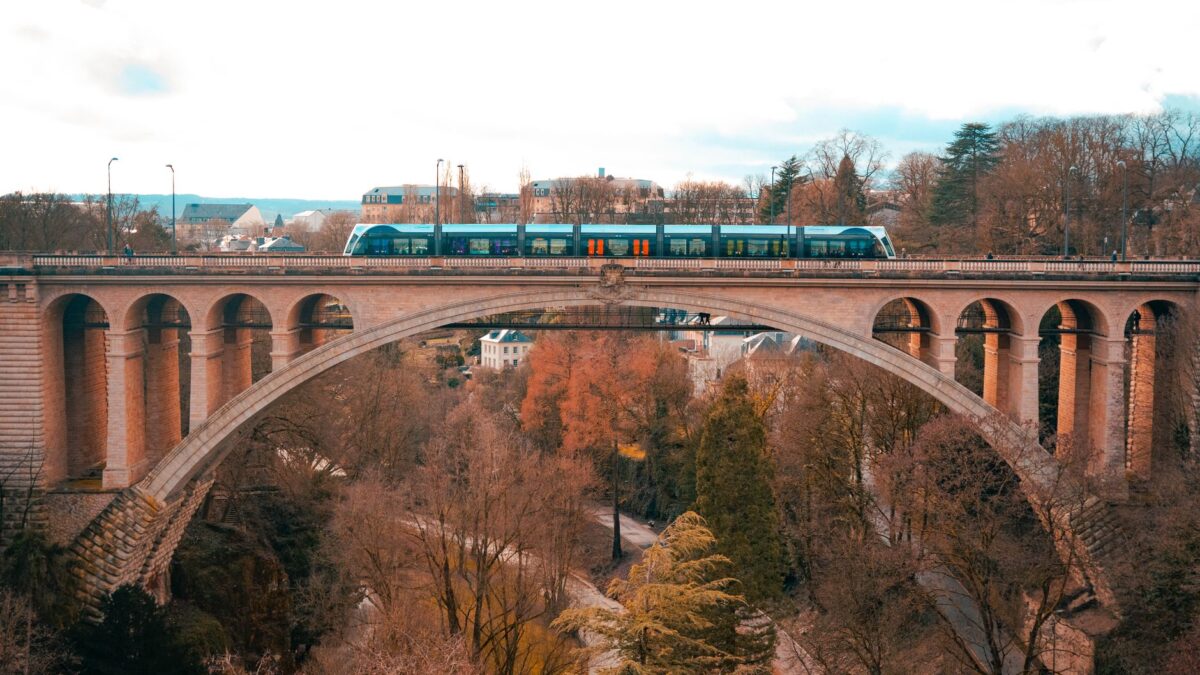
The fog is already settling into the Alzette and Pétrusse valleys, that familiar late-October dampness that clings to your coat and makes the cobblestones of the Grund slick underfoot. It’s grey, it’s quickly dark, and if you’re trying to navigate this city on four wheels during rush hour, you’ll be waiting. I’ve lived here long enough to know that driving in Luxembourg City isn’t just about traffic; it’s about a geography that splits vertically as much as horizontally. You have the rocky plateau of Ville Haute above, the charming but steep valley quarters below, and the modern business district of Kirchberg across the river. Getting around requires a shift in mindset: abandon the idea that a car is king. Here, freedom comes from your feet and the free public transport network.
Why Walking Beats the Wheel
Luxembourg City is built on cliffs and valleys, a fortress nicknamed the ‘Gibraltar of the North’ for good reason. Its UNESCO-listed Old Town and fortifications are not designed for cars; they are designed for people who enjoy a bit of elevation gain. When I need to get from Place Guillaume II down to the riverside cafés of the Grund, I don’t look for a taxi. I walk. The Chemin de la Corniche offers what locals call ‘Europe’s most beautiful balcony,’ a cliff-top promenade that drops dramatically over the Alzette. It’s a five-minute stroll from the upper town, provided you don’t mind the stairs.
However, do not underestimate the verticality. Moving between Ville Haute (Upper Town) and the lower districts like Clausen or Pfaffenthal involves significant inclines. In November, when the leaves are down and the wind whips through the Bock Casemates entrance, walking can feel brisk. But it is the best way to see the city. You pass the Grand Ducal Palace at 17 Rue du Marché-aux-Herbes, spot the Gëlle Fra obelisk rising from Place de la Constitution, and catch glimpses of the Cathédrale Notre-Dame. If you try to drive these narrow, winding streets, you will find parking nearly impossible and stress inevitable. Let your legs do the work until you hit Kirchberg or the outskirts.
The Free Transit Network: Trams, Buses, and the mKaart
The single most important fact for any visitor or new resident is that public transport in Luxembourg is completely free. Since 1 March 2020, all domestic bus, tram, and train travel in second class has been free nationwide. This applies to Luxembourg City’s extensive network. You do not need to buy a ticket. You simply board.
The heart of this system is the tram. It links the Gare (Central Station) directly to Kirchberg, the European quarter where the EU institutions sit. If you are heading to the MUDAM, the Philharmonie, or the large shopping centre on Kirchberg, the tram is your best bet. It runs frequently and cuts through the congestion that plagues the Boulevard Prince Charles. Speaking of which, keep an eye out for diversions. The Pont J. Bech on the Kirchberg side is currently fully closed to traffic for a week as part of the K2A tram extension works, with routes diverted via Boulevard Prince Charles. Similarly, weekend lane closures on Boulevard Konrad Adenauer disrupt car traffic between Avenue J.-F. Kennedy and Rue C.-L. Hammes through late autumn. While these affect drivers, the tram largely bypasses these gridlocks.
You should still acquire an mKaart (often linked with the MobiCard app). While not required to ride for free, it allows you to register your card for specific benefits, track your journey history, and manage subscriptions if you ever choose to upgrade. For those who prefer the quiet luxury of first-class trains or trams, a monthly pass costs around €60. But for everyday movement, second class is ample, warm, and clean.
Taxis and Ride-Hailing: When You Need a Lift
There are times when the weather turns too hostile for walking, or you are carrying heavy groceries up the steep streets of Bonnevoie. In those cases, taxis and ride-hailing services fill the gap. They are readily available, particularly around the Gare hub and the main squares, but they come at a premium. Luxembourg is a high-cost market, and transportation reflects that.
A short local taxi ride within the city limits will vary depending on distance and time of day, but you should expect to pay a standard metered fare. For transfers from the airport to the city centre, prices typically range from €35 to €50. It is a reasonable price for the convenience, especially given the late darkness of October evenings. If you are staying in mid-range accommodation, such as the ibis Styles Luxembourg Centre Gare or Hotel Vauban, your concierge can often summon a reliable car for you.
Ride-hailing apps operate here, but traditional taxis remain the dominant option for quick point-to-point transfers. Note that the Gare district, while the busiest and most international hub, is also the city’s hotspot for crime and disorder. Police recorded significant robbery statistics in the area recently, and surveys indicate that many residents feel unsafe there. If you are taking a taxi from the Gare, stay alert, keep your belongings close, and preferably wait inside the station premises rather than on the street corner.
Navigating the Districts: Where to Go and How
Understanding the layout helps you choose your mode of transport. The city is divided into distinct personalities:
- Ville Haute: The historic centre. Walkable, steep, and packed with boutiques along the pedestrian Rue du Marché-aux-Herbes. Perfect for a morning stroll.
- Grund: The cobbled valley quarter under the cliffs. Reached by lifts and stairs from the top. Best explored on foot at dusk when the riverside cafés light up.
- Clausen: Just across the river from Grund. A nightlife and restaurant strip. The birthplace of Robert Schuman. Again, walk or take a short tram/bus ride.
- Kirchberg: The modern plateau. Home to the MUDAM and EU institutions. Easily accessible by tram. Flats here are among the priciest in the country, around €11,000 per square metre, reflecting its status as a business hub.
- Bonnevoie: South-east of the centre. Diverse, creative, and relatively affordable. Popular with expats. Good bus links make it easy to reach without a car.
If you are visiting the Casemates du Bock, the 17th-century underground military galleries, you will start near the Gare and walk down. It is a major attraction and well-signposted. For a cultural evening, head to Kirchberg for the Philharmonie or MUDAM, accessible via the free tram.
Practical Tips for Late Autumn
As we approach All Saints’ Day on 1 November, the city slows down slightly, though the student population keeps the energy up. The terraces empty out, and menus shift toward game and root vegetables. If you are planning a visit, consider the Halloween-themed guided walks from Place Guillaume II, which explore the city’s dark past of executioners and witch persecutions. It is a spine-chilling two-hour tour that runs late, perfect for the early darkness.
For dining, the Rives de Clausen area hosts events like the Big Beer Company’s Oktoberfest, wrapping up its final sessions in late October. It is a lively atmosphere with live Bavarian music, though you will need to walk or take a short taxi ride there. If you are staying longer, note that rents are cooling slightly but remain high, with modest one-bedroom flats averaging around €1,850. This cost is offset for residents by the free transit and high average wages.
Finally, remember that Luxembourg is in Schengen. EU/EEA/Swiss citizens need only a valid ID or passport for stays under three months. Third-country nationals require a Schengen type-C visa for less than 90 days. If you are moving here, registration at the Bierger-Center on Place Guillaume II is mandatory. Bring your proof of housing, ID, and employment contract. Opening a bank account at Spuerkeess or BGL BNP Paribas will also require strict KYC checks, so have your documents ready.
In summary, leave the car in the hotel. Use the free trams and buses to cross the river, walk the corniche to clear your head, and reserve taxis for late nights or heavy loads. It is the local way, and it is the only way to truly experience the magic of Luxembourg City.
Frequently asked questions
Is public transport free in Luxembourg City?
Yes. Since March 2020, all domestic buses, trams, and trains in second class are completely free nationwide. You do not need to buy tickets, though an mKaart is recommended for registration.
How much does a taxi cost from the airport to the city centre?
A taxi transfer from Luxembourg Airport to the city centre typically costs between €35 and €50. Prices are metered and may vary slightly based on traffic and time of day.
What is the best way to get from the Old Town to Kirchberg?
The tram is the most efficient option. It runs directly from the Gare (Central Station) area up to Kirchberg, connecting the historic centre to the European quarter and museums like MUDAM.
Are there road closures I should avoid in October 2026?
Yes. The Pont J. Bech on the Kirchberg side is closed for tram works (Oct 24–31). Additionally, weekend lane closures on Boulevard Konrad Adenauer affect car traffic through late November. The tram generally avoids these disruptions.
Is the Gare district safe to walk in at night?
The Gare area is the city's busiest hub but also records higher levels of crime, including robberies. Many residents report feeling unsafe. It is advisable to stay alert, keep valuables hidden, and use reputable taxi services from within the station.
Things to do in Luxembourg
 Private Vianden Castle Tour from Luxembourg City
 Luxembourg: Moselle Wine Tasting & Castle Private Day Tour
 Luxembourg Vianden Castle Tour with Transfer + surprise stop
 From Luxembourg: Trier, Moselle River, Waterfall and Castle Tour
 Luxembourg Castles, Forests & Rivers Private Tour (Easy Walks)
 Mullerthal Walk: Berdorf Rocks, Clifftop Wine & the Wolf's Gorge