
A week in Vienna on a mid-range budget
The first thing you notice is the light. At 05:39 in August, Vienna’s dawn creeps over the Ringstrasse in a pale gold that makes even the imperial facades look soft. By 21:00, the overcast sky settles into a warm dusk, and you’re still sitting outside at a Heurigen in Grinzing, a glass of wine in hand, wondering how a city this grand can feel so relaxed. I’ve lived here for years, and every summer I’m reminded: August is Vienna’s secret season. The city is half-empty, the trams run lighter, and the whole place seems to exhale. But you’re not here to just breathe—you’re here to eat, to see, to wander. So let’s talk money.
This is a week in Vienna on a mid-range budget: not hostels, not luxury, but the sweet spot where you sleep in a proper hotel, eat sit-down Schnitzel, ride the U-Bahn without checking the fare, and still have cash left for a festival night or two. I’ll give you a day-by-day feel, with real prices as of summer 2026. Buckle up.
Getting Around: The Transit Reality Check
If you’re arriving in August 2026, the biggest news is the U4. The line fully reopens on Monday, 3 August, after a month-long split between Schwedenplatz and Landstraße/Wien-Mitte. That’s a relief—it means you can glide from Schönbrunn to the city center without drama. But watch out: the U3 is still cut in two between Hütteldorfer Straße and Westbahnhof until the end of August. Replacement line E3, plus buses 48A and trams 46 and 49, will get you through, but leave extra time.
Prices? Vienna raised transit fares on 1 January 2026, the first hike in 13 years. A single ticket now costs €3.20 (or €3.00 via the WienMobil app), which stings if you’re hopping on for one stop. A 72-hour ticket is your best bet for a week: about €17–18, and it covers all buses, trams, and U-Bahn. If you’re staying longer, the Monatskarte is around €51 (2025 rate, likely a bit more now), and the annual pass is famously about €1/day—but for a week, stick to the 72-hour or 48-hour. I always tell visitors: don’t overthink it. Buy the 72-hour, and you’ll ride without a care. The city is walkable anyway, especially districts 1, 2, and 7.
Day 1: The Imperial Core (Innere Stadt)
Start at St. Stephen’s Cathedral (Stephansdom). Climb the south tower (443 steps, about €6) for a panorama that’s worth every puff. Then wander the Kärntner Strasse to the Hofburg. Don’t just walk past—go inside the Sisi Museum (about €15 for the imperial apartments), and if you’re lucky, catch the Spanish Riding School’s morning exercise (€10–20, depending on the day).
Lunch at Reinthaler’s Beisl (a classic tavern near the cathedral): a hearty Tafelspitz (boiled beef with horseradish-apple sauce) will set you back about €15–25, and the atmosphere is pure Old Vienna. If you want an actual Wiener Schnitzel, Figlmüller – Restaurant Bäckerstraße is the icon—expect €19–28 for the pork or veal version, and it’s huge. Share a side of potato salad (about €4–5).
Afternoon: the Kunsthistorisches Museum. The Bruegel collection is unmissable, and the building itself is a temple of marble and gold. Entry is about €21 (a bit less with the Vienna City Card). Finish with an Apfelstrudel at Café Landtmann—around €9, but you’re paying for the velvet chairs and the ghost of Freud. Day one total (no hotel): roughly €70–80 per person, with plenty of walking.
Day 2: The Green Island (Leopoldstadt)
Cross the Danube Canal (just walk—it’s 10 minutes from the center) and you’re in the 2nd district. Start at the Karmelitermarkt for breakfast—fresh pastries, coffee, and people-watching. Then head to the Prater. The Riesenrad (giant ferris wheel) is €12 for a ride, but you can stroll the park for free, and the Wurstelprater amusement area is chaos in the best way.
Lunch in the 2nd: try a modern twist at Dom Schnitzel or Schnitzel One—both do schnitzel variations around €15–20. In the afternoon, walk to Augarten—a baroque garden with a porcelain factory and a flak tower that’s a weird, monumental reminder of WWII. If you’re here on 1 August, the Lichterlfest at the Alte Donau (free entry) is a dream: lit-up boats, lanterns, and lakeside food stalls from about 18:00. I went last time; it’s magical. Evening: join a Heurigen in the 19th, but that’s Day 5. For now, grab a casual dinner at one of the many beisls near the Praterstern (about €15–25 for a main). Today’s spend: €50–60.
Day 3: Art and Chocolate (Neubau & Mariahilf)
The 7th district is Vienna’s creative heart. Start at the MuseumsQuartier (MQ)—the courtyards are free, and even if you skip the Leopold Museum (about €16, with a great Schiele collection), just watching the people with coffee in hand is a sport. For a caffeine fix, head to Balthasar Coffee Bar or The Good Coffee Society—a flat white will cost about €4–5, worth every cent.
Lunch on Neubaugasse: indie bakeries and falafel joints abound, so you can eat well for €8–12. In the afternoon, walk down Mariahilfer Strasse—Vienna’s longest shopping street—to the Naschmarkt. The market’s 120 stalls are a feast for the eyes, and the Saturday flea market (if you’re here that day) is a treasure hunt. A late lunch of a kebab or fresh pasta at one of the market’s food stands will be €10–15.
For a special dinner, try Restaurant Vienne/OnurChefs near the Naschmarkt—a fusion spot where mains run €18–25. Or go classic: a beisl near the MQ, with Wiener Schnitzel for €19–28. Day 3 total: €40–60, unless you buy something at the Naschmarkt.
Day 4: Palaces and Klimt (Landstraße & Schönbrunn)
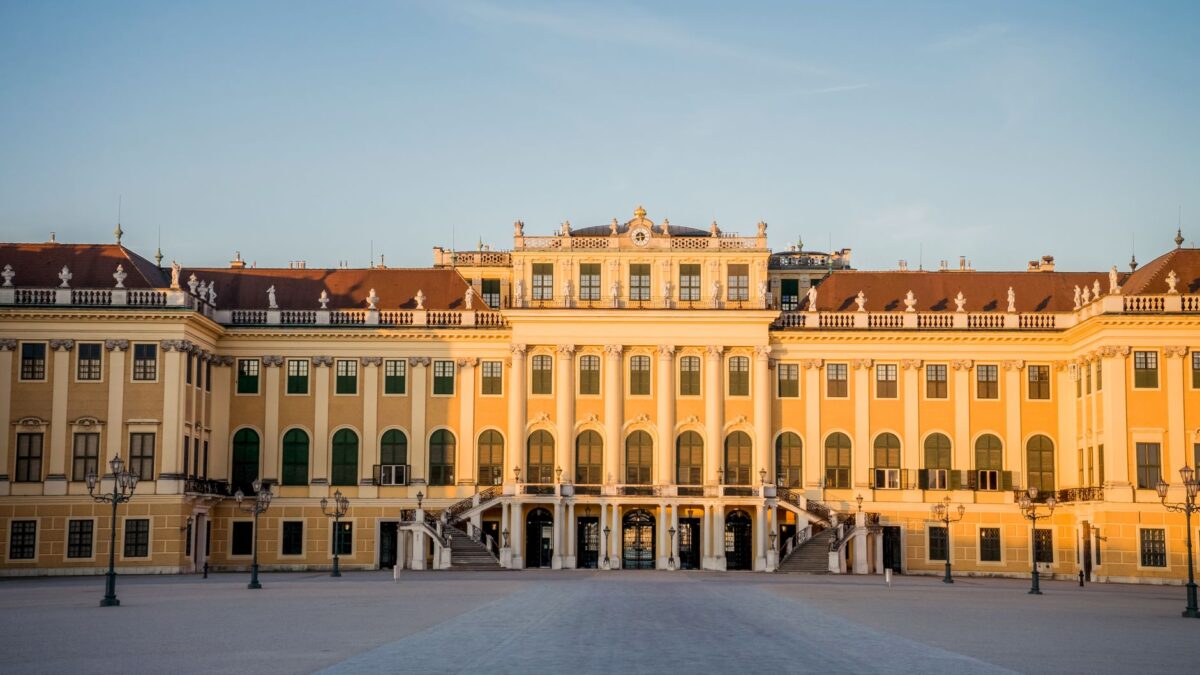
Today is palace day. Head to Schönbrunn Palace (take the U4—it’s back to full service). The Grand Tour (about €24) takes you through 40 rooms; if that’s too much, the Imperial Tour (€18) gives you the essentials. Walk up to the Gloriette for the view, then visit the Tiergarten (oldest zoo in the world) if you have energy—another €26, but it’s a great half-day.
Lunch at a Schnitzel place near Schönbrunn: Schnitzel One has a branch here, or try a local café for a light meal (€10–15). Afternoon: take the U4 back to Landstraße and visit the Belvedere. The Klimt collection, including The Kiss, is on display in the Upper Belvedere (about €23). Don’t miss the Hundertwasserhaus down the street—it’s free to stare at, and gloriously weird. Day 4 is your heavy tickets day: expect to spend €70–90.
Day 5: The Vineyards (Döbling & Grinzing)
Today is for the Heurigen—Vienna’s wine taverns. Take the 38A bus up to Kahlenberg for the classic panorama over the city, then walk (or bus) down to Grinzing. The Heurigen here are touristy but fun, and a jug of local wine plus a platter of cold cuts and cheeses will cost about €20–30 per person. Try the Hausanteil (pickled pork) if you’re brave, and always ask for the Most (fresh apple wine) in September. In August, the vineyards are green and the evenings are long.
For lunch before you go, grab a bakery lunch in Döbling (€8–12). The rest of the day is low-key: walk through the Wienerwald (start at Grinzing and follow the trails), and you might spot a deer if you’re quiet. Evening: another Heuriger, or back to town for a dinner at a beisl (€15–25). Day 5 total: €40–50.
Day 6: The Festival and the U-Bahn Underground
ImPulsTanz, Europe’s biggest contemporary dance festival, is in its final week—closing parties on 7–8 August in the City Hall Arkadenhof. Tickets vary, but many shows are €20–40; the closing party is often free to enter (you just drink and dance). This is a highlight of summer in Vienna. In the morning, before the festival, explore the 3rd district’s modern side: the Wien Mitte station connects to the CAT airport rail link, but for today, just wander the Belvedere’s gardens (free) and think about Klimt.
Lunch: Dom Schnitzel again? Or try a new beisl—mains are always €15–25. Afternoon: take the U3 (remember, it’s split!) to the Westbahnhof area and see the Otto Wagner pavilions—the Jugendstil masterpieces. They’re free to admire from outside. Evening: festival time. Day 6 total: €40–70, depending on tickets.
Day 7: The Art of Leaving Space
Your last day. Walk the Ringstrasse loop (about 45 minutes) and marvel at the parliament, the opera house, the palace. Stop at The Truth Wollzeile for one last flat white (€4–5). Buy a Sachertorte in a supermarket (€5) to take home. If you’re flying out, the CAT from Wien Mitte to the airport is €14.90 (about 16 minutes) or take the S7 regional train for €4.50—the latter is the budget trick. Check the S-Bahn closures starting 10 August; if you leave after that, the northern branches have replacement buses, but the CAT is safe.
Final lunch: Pane è Cafe for a €12–15 panini, or Reinthaler’s Beisl for a last Schnitzel. Then, with €200–300 left in your pocket (depending on your choices), you leave Vienna with a full heart and a slightly looser wallet. This is the real Vienna: not just the imperial pomp, but the way a city of two million keeps its soul in summer—and the knowledge that a week here costs less than a weekend in Paris, and gives you far more.
What a Week Actually Costs (Mid-Range Budget)
Let’s add it up. For one person, seven nights in a mid-range hotel (like The Hoxton, Vienna, or a good private room in House of Ble) will run €120–180 per night, so €840–1,260 for the week. If you’re on a tighter budget, Hampton by Hilton Vienna City West or Austria Classic Hotel Wien can come in cheaper, around €90–120 a night. For two sharing, you cut per-person costs substantially.
Daily spending (food, transit, attractions) as I’ve listed: €40–90 per day, average €65. Over 7 days, that’s €455. Add a few splurges (a festival ticket, a cocktail at Hotel Splendor, a souvenir), and you’re looking at €1,300–1,500 total for the week, plus flights. That’s a solid estimate. Public transit, as noted, is the one thing that’s gotten pricier—single tickets are €3.20 now—but daily and weekly passes remain fair compared to other capitals.
The Fine Print: Practical Tips for August 2026
Visa-free for most: US, UK, Canadian, and Australian tourists can stay up to 90 days in any 180-day period without a visa—Austria is in the Schengen zone. EU/EEA citizens need no visa but must register if staying over 3 months.
Safety and smarts: Vienna is one of the world’s safest cities, but pickpockets do operate around Stephansplatz and Praterstern—keep your wallet in front, not in a back pocket. If you’re staying longer than 3 months, you must register your residence (Meldezettel) within 3 days at a Magistratisches Bezirksamt—free, but bring your passport and landlord’s signature.
Get a local SIM: HoT, the low-cost A1 brand, is the locals’ pick—prepaid SIMs cost as little as €10 with data, and you just need a passport. For banking, Erste Bank’s ‘George’ app is English-friendly, but fintechs like N26 and Revolut work fine for visitors.
One last thing: if you’re here for Assumption Day (15 August), many shops close, but the Heurigen stay open—so plan your wine day accordingly. And if you see a wild boar in the Lainzer Tiergarten, give it space. It’s more elegant than you.
Frequently asked questions
How much does a 7-day trip to Vienna cost mid-range?
For one person, expect to spend roughly €840–1,260 on a hotel (€120–180/night), plus €40–90 per day on food, transit, and attractions. Total around €1,300–1,500 for the full week, not counting flights.
Is public transport in Vienna expensive in 2026?
Single tickets rose to €3.20 (€3.00 via the WienMobil app) as of Jan 2026, but 72-hour tickets are around €17–18 and cover all buses, trams, and U-Bahn. A weekly pass may save money if you ride a lot.
What are the must-see attractions and their costs in Vienna?
Top sights include Schönbrunn Palace (from €18–24), Belvedere Palace (≈€23 for Klimt’s *The Kiss*), Kunsthistorisches Museum (≈€21), and the Hofburg/Sisi Museum (≈€15). The Prater’s Riesenrad is about €12.
What should I know about Vienna's transit closures in August 2026?
The U4 reopens fully on 3 August after summer works. The U3 is still split between Hütteldorfer Straße and Westbahnhof until end of August, with replacement line E3 and buses 48A/trams 46 and 49. Check current service before traveling.
Is Vienna safe for tourists?
Yes, Vienna routinely tops safety and quality-of-life rankings. Violent crime is low, but be aware of pickpockets around Stephansplatz and Praterstern on crowded days. Keep valuables secured.


