

Armenia etiquette: the dos and don’ts
Yerevan in late October is a city of golden light and sharp turns. The plane trees along Republic Square are turning russet, the air smells of roasted chestnuts and damp pavement, and Mount Ararat looms in the distance, its snow-capped peak glowing against the grey sky. But before you dive into the wine bars or the ancient monasteries, there is a rhythm to life here that differs from what you might expect in Paris or New York. As a local, I want to share the unwritten rules that will help you navigate this 2,800-year-old capital with respect and ease. It is not about rigid etiquette, but about understanding the warmth and history that define Armenian hospitality.
Greetings and Social Nuances
In Armenia, greetings are never casual in the Western sense. When you meet someone, especially for the first time, a firm handshake with direct eye contact is essential. If you are greeting an elder or a woman, wait for her to extend her hand first. A slight nod of the head signifies respect. Do not rush the initial pleasantries; asking about family, health, and where they are from is standard and expected. Dismissing these questions as small talk can be seen as cold or dismissive.
If you are invited into a home, do not arrive on time—arrive ten minutes late. Being punctual is appreciated in business, but in social settings, it suggests you have nowhere else to be. Upon entering, remove your shoes if you see a shoe rack at the door; this is non-negotiable in most households. Never point your foot at anyone or place your feet on furniture. The sole of your shoe is considered unclean, and pointing it at a person is a grave insult.
Dining: The Sacred Lavash and the Art of Refusal
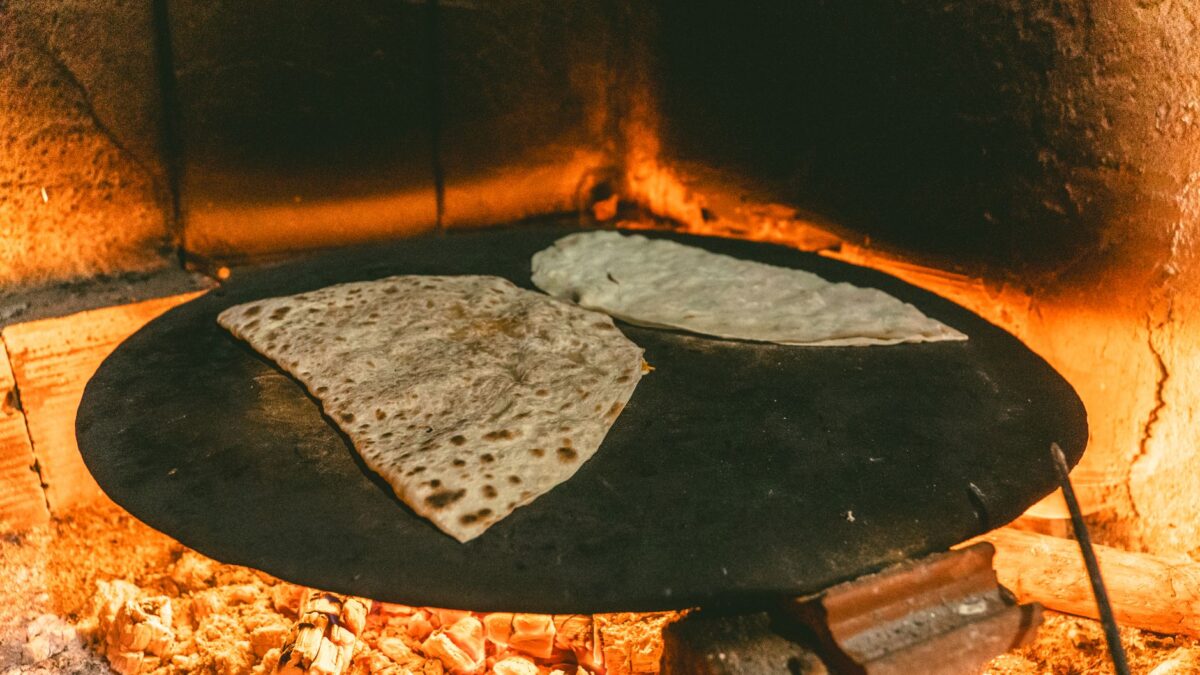
To understand Armenia is to understand bread. Lavash, the thin, soft flatbread baked in a tonir (clay oven), is sacred. If you drop a piece, pick it up, kiss it, and place it on a high shelf or somewhere clean. Never throw it away. At the table, the lavash is shared, torn by hand, and used to scoop up food. It is rude to refuse it or leave it untouched.
Hospitality here is aggressive and generous. Your host will offer you food until you are full. You must accept at least one round of food and drink. To refuse outright is to reject their care. However, if you are truly full, explain politely that you are satisfied, but leave a small amount on your plate to show you enjoyed it immensely. Leaving a completely empty plate may signal you are still hungry, prompting more servings.
Tipping is not mandatory but is appreciated. In mid-range restaurants like Tavern Yerevan or Lavash Restaurant, leaving 10% is standard if service was good. In simpler stolovaya-style canteens, rounding up the bill or leaving small change is sufficient. Cash tips are preferred over adding them to card transactions, as they go directly to the staff. Remember, a meal at a modest local spot costs around 1,500–2,500 AMD (about $4), so tipping is always within reach.
Dress Code and Public Behavior
Yerevans take pride in their appearance. While jeans and t-shirts are common, looking neat is a sign of respect. Avoid wearing overly revealing clothing, especially when visiting religious sites. For churches and monasteries, women should cover their shoulders and knees, and men should remove hats. Many places provide shawls at the entrance, but it is better to come prepared. The weather in October can be deceptive; afternoons may be warm, but evenings turn sharply cool. Layering is practical and stylish.
Public displays of affection are tolerated among younger generations but remain subtle. Holding hands is fine, but passionate kissing in public squares or on public transport is frowned upon. Armenia is conservative in many ways, and maintaining a dignified demeanor earns you respect. If you are drinking alcohol, which is abundant here due to our ancient winemaking tradition, do so responsibly. Drunkenness is not celebrated as it might be in some Western cities; it is viewed as a loss of control and dignity.
The Small Customs That Matter
One of the most important customs is the concept of mehmanperesti (guest-loving). If you are a guest, you are treated like royalty. If you are a visitor, you are often treated like a long-lost relative. Accept gifts graciously. If you bring something from your home country, it will be cherished. Do not give clocks, sharp objects, or black items, as these carry negative connotations.
When crossing the street, look both ways twice. Traffic in Yerevan can be chaotic, and drivers may not yield even at crosswalks. Pedestrians have right of way legally, but practically, you must assert yourself. Use designated crossings whenever possible. If you use ride-hailing apps like GG or Yandex Go, confirm the license plate before getting in. Unlicensed taxis are rare but exist; sticking to verified services ensures your safety.
Photography requires permission. Always ask before taking photos of people, especially elders or vendors at the Vernissage market. Some may charge a small fee, usually around 500–1,000 AMD (about $1.30–$2.50), which is fair compensation for their time. In museums and churches, flash photography is prohibited. Respect these boundaries.
Navigating Current Events and Local Sensitivities
Armenia is currently navigating complex geopolitical waters. Discussions about Nagorno-Karabakh, Turkey, and Azerbaijan are sensitive. Listen more than you speak. If locals raise these topics, listen with empathy rather than offering unsolicited political opinions. The mood in Yerevan is resilient but somber. Avoid making jokes about historical conflicts or using derogatory terms. Showing genuine interest in Armenian culture, history, and art is the best way to connect.
As you explore, notice the details. The khachkars (cross-stones) carved with intricate patterns, the blue domes of the churches, the vibrant colors of the pomegranates and quince in the markets. These are not just sights; they are expressions of identity. Engage with them thoughtfully. Ask questions, learn a few words of Armenian, and smile. The Armenians are proud of their heritage, and your respectful curiosity will open doors that no guidebook can.
Frequently asked questions
Is tipping expected in Armenian restaurants?
Tipping is not mandatory but appreciated. In mid-range restaurants, leaving 10% is standard for good service. In smaller cafes or stolovayas, rounding up the bill is sufficient.
What should I wear when visiting churches in Armenia?
Modesty is key. Women should cover shoulders and knees; men should remove hats. Many churches provide shawls, but bringing a scarf is recommended for comfort and respect.
How do I handle greetings with Armenian locals?
Expect firm handshakes and direct eye contact. Ask about family and well-being; it is a sign of respect, not small talk. Wait for elders or women to initiate physical contact if unsure.
What is the rule about bread (lavash) at the table?
Lavash is sacred. Never throw it away. If you drop it, pick it up, kiss it, and place it on a high shelf. Use it to scoop food and accept it graciously.
Is it safe to walk in Yerevan at night?
Yes, Yerevan is generally safe with low crime rates. However, be cautious of traffic and use verified ride-hailing apps like GG or Yandex Go instead of hailing random taxis.
Things to do in Armenia
 Private 6-7 hour Tsaghkadzor, Kecharis, Lake Sevan, Sevanavank Tour from Yerevan
 Balloon ride Skyball
 Private 8-9-hour Echmiadzin, Zvartnots, Garni and Geghard trip from Yerevan
 Private tour to Hin Areni winery, Tatev monastery & ropeway, Khndzoresk caves
 The Great Beauty of Armenia: 7-Day Culture and Cuisine Tour
 Yerevan Private Walking Food Tour