

What to eat in Mexico — and what it costs
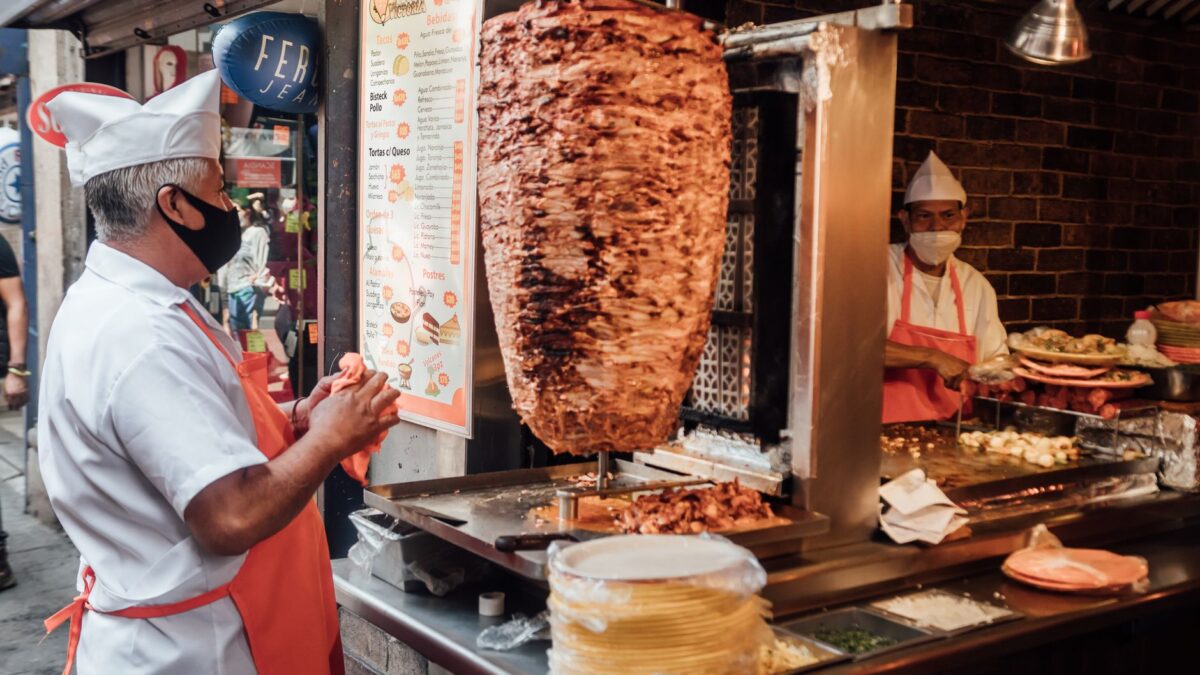
The first rain of the afternoon has just let up, and the pavement on Calle Regina is still steaming. You’re standing at a plastic table outside a taquería, the smell of charred pineapple and trompo-spun pork filling the air. A street dog naps under the next table. You’ve just paid 18 pesos for an al pastor taco that will ruin all other tacos for you, forever. This is Mexico City — where the best meal of your life costs less than a dollar, and where the city itself, with its sinking cathedral and its mural-covered walls, is the real main course. Let’s talk about what to eat, where to find it, and what it actually costs — in pesos, not tourist dollars.
The Street: Where Mexico City Feeds You for Pocket Change
Start where everyone starts: the taco. You’ll see al pastor (spit-roasted pork, shaved straight onto a small corn tortilla, topped with onion, cilantro, and a slice of pineapple), suadero (slow-cooked beef brisket, soft and fatty), and carnitas (pork confit, often from Michoacán-style joints). A single taco on the street will run you about 15 to 20 pesos — that’s under a dollar. You’ll want at least three. You’ll want to wander the streets of Roma Norte or Condesa, where the taco stands are as much a part of the neighborhood as the Art Deco mansions and the leafy parks. For a sit-down version, head to El Cardenal on Calle de la Palma in the Centro Histórico, a beloved institution for traditional Mexican cooking — but for the real street experience, just follow the smoke and the line.
Beyond tacos, don’t miss the tlacoyo — a thick, oblong tortilla stuffed with beans, cheese, or fava beans, then griddled and topped with salsa, nopales, and queso fresco. A good one costs about 30 to 50 pesos. You’ll find them at markets and on street corners, especially around Mercado de Medellín in Roma Sur, where a hearty lunch with a drink at the food court runs around 100 pesos. That’s your full meal for the price of a coffee in a hipster café — though it’s worth splurging on that coffee too.
Market Meals: The Comida Corrida, Mexico’s Daily Bargain
If you’re looking for a proper sit-down lunch that doesn’t break the bank, find a comida corrida — the set menu that millions of chilangos eat every weekday. At a market food stand, that gets you soup, a main dish (often a choice of meat, fish, or a mole-based plate), rice, beans, tortillas, and a water or a soft drink, all for about 80 to 100 pesos. It’s the best deal in the city, and it’s how you’ll eat like a local, not a tourist.
For a slightly fancier version of the same concept, go to the Mercado de Medellín food court, where your lunch plus a drink will still hover around 100 pesos. You can also try the markets in Coyoacán, the bohemian colonial village south of the center, where the weekend market spills into the Jardín Centenario and the smell of quesadillas mixes with the incense from Frida Kahlo’s Casa Azul. Just remember: in Mexico City, a quesadilla may or may not come with cheese — always ask.
Chiles en Nogada and the Taste of September
If you’re lucky enough to be here in late August or early September, you’ll notice a seasonal special appearing on menus across the city: chiles en nogada. This is Mexico’s patriotic dish — a roasted poblano pepper stuffed with a sweet-savory picadillo of meat and fruit, bathed in a creamy walnut sauce, and topped with pomegranate seeds and parsley to mimic the green-white-red of the Mexican flag. The season is brief, tied to the pomegranate harvest, and every restaurant puts its own spin on it. You’ll see it at traditional spots like El Cardenal (they do a fine version) or at contemporary places like Cuina or Restaurante Cerrojo Zócalo, where the classic gets a modern touch. Prices for a plate of chiles en nogada at a mid-range restaurant will run about 200 to 300 pesos — more than a taco, but still a bargain for a dish that requires as much labor as a wedding cake.
If you’d rather try it in a more casual setting, some market stands and fondas in the Centro offer it during the season for less, but the quality can vary. Trust the look in the woman’s eye who serves you — she knows if it’s a good batch.
Café Culture: Where to Sit, Sip, and Watch
Mexico City’s café scene is serious business. In Roma and Condesa, you’ll find specialty coffee shops on almost every corner. A cup of filtered coffee at a place like Café Nin (a tiny, moody spot with a Japanese-Mexican twist) or Nice Day Coffee (loud, bright, and full of laptops) will cost you about 40 to 60 pesos. Cafebrería El Péndulo in Roma is not just a café — it’s a bookstore with a jungle of plants and a mezzanine, where you can lose an afternoon. If you’re near the Zócalo, Finca Don Porfirio is a reliable spot for a cafecito and a pastry before you go stare at Diego Rivera’s murals in the Palacio Nacional.
But for the most Mexican coffee experience, skip the espresso and order a café de olla — cinnamon and piloncillo, served from a clay pot. You’ll find it at markets and some traditional restaurants, and it will cost you less than the latte at a specialty place. Win-win.
Sit-Down Dinners: Splurge Without the Guilt
If you want to experience Mexico City’s fine-dining side — and you should — be prepared to spend about 200 to 300 pesos per person for a dinner at a mid-range restaurant. That gets you an appetizer, a main course, and perhaps a drink at a place like Tezontle Restaurant in the Roma area, which serves modern Mexican with a focus on local ingredients. Or try Curva Café de especialidad in the Condesa for a lazy lunch that turns into a long afternoon.
For the full experience, though, you need to go to El Cardenal. It’s been a Mexico City classic for decades, and the breakfast spread — with its hot chocolate, fresh breads, and a version of chilaquiles that will make you weep — is as good as the dinner. It’s not the cheapest meal of your trip, but it’s worth every peso.
Getting Around: Eat More, Move More (It’s Practically Free)
To hit all these spots, you’ll need to move. And here’s the thing: Mexico City’s public transit is almost insultingly cheap. A single Metro ride costs 5 pesos, and the Metrobús (the bus rapid transit system) is 6. The Cablebús — the city’s cable car system in the north — is 7. That means for less than 20 pesos, you can cross the entire city, from the floating gardens of Xochimilco to the marble halls of Palacio de Bellas Artes, and still have money left for a taco. Get yourself a Tarjeta de Movilidad Integrada (MI Card) at any Metro station — it costs about 15 pesos, and you can top it up with up to 500 pesos. It works on all public transport, and even on the Ecobici bikeshare. Just remember: Metro rush hour is a contact sport. Plan around it if you can.
Also, a note on the city’s rhythm: with Independence Day just around the corner on September 16th, the Centro Histórico starts to buzz with preparations — flags, decorations, and the occasional sound of a military rehearsal. It’s a fantastic time to be in the city, but also a busy one. Book your lunch spots ahead if you can.
The Cost of Everything Else (So You Can Budget More for Tacos)
To put the food prices in perspective: a month-long apartment in a trendy neighborhood like Roma or Condesa will set you back 15,000 to 18,500 pesos — about $920. A more modest flat outside the center is 11,000 to 12,000 pesos ($630). So yes, you can afford to eat like a king without selling a crown. A coffee in Roma (40–60 pesos) costs about as much as a single taco. You do the math.
One last thing: don’t be afraid of the rain. It’s the season for heavy afternoon showers, so pack a light rain jacket and keep your taco-eating plans flexible. The best street food is often served under a tarp, and the sound of rain on the roof of a market stall while you bite into a crispy chicharrón taco? That’s a Mexico City memory you’ll keep forever.
So go. Eat. Walk. Eat again. Mexico City is not a city you visit with a plan — it’s a city you eat your way through, one 18-peso taco at a time.
Frequently asked questions
How much does a taco cost in Mexico City?
Street tacos (al pastor, suadero, carnitas) cost about 15 to 20 pesos each around 1 US dollar. You'll typically eat 3 or 4 for a meal.
What is a comida corrida in Mexico City?
It's a set lunch served at market food stands and fondas, usually including soup, a main dish, rice, beans, tortillas, and a drink, for about 80 to 100 pesos.
When are chiles en nogada available in Mexico City?
The dish appears on menus from late August through September, tied to the pomegranate harvest and leading up to Independence Day on September 16.
Is public transport in Mexico City expensive?
No, it's very affordable. A single Metro ride costs 5 pesos, Metrobús is 6 pesos, and Cablebús is 7 pesos. Get a Tarjeta de Movilidad Integrada for convenience.
Where can I eat a good meal without spending much?
Market food courts are your best bet—try the Mercado de Medellín for a hearty lunch and drink at around 100 pesos. Street taquerías are even cheaper, with tacos at 15-20 pesos each.
Things to do in Mexico
 Lagoon 39ft Private Catamaran 5hr - El Cielo Full Experience
 VIP Cenotes Private Tour
 Likely to sell out
Bestseller! Tulum Private Tour with Turtles and Cenote Snorkeling
Likely to sell out
Bestseller! Tulum Private Tour with Turtles and Cenote Snorkeling
 Heather Nikki 80 ft Italian Azimut Yacht Rental
 Special offer
Private Tour to Tulum, Cenote and Swimming with Turtles
Special offer
Private Tour to Tulum, Cenote and Swimming with Turtles
 Private luxury catamaran in Tulum with snacks & open bar