

A week in Thimphu on a mid-range budget
Thimphu in early September is a city holding its breath. The monsoon rains have just begun to retreat, leaving the pine-clad ridges of Kuenselphodrang Nature Park slick and emerald, while the air inside the valley turns crisp. You arrive not to silence, but to the low hum of preparation. This is when Thimphu gears up for its biggest festival fortnight. The streets are busy with monks rehearsing at Tashichho Dzong, and the weekend markets overflow with produce. For a traveler navigating this capital on a mid-range budget, the cost of living looks deceptively low in US dollars, yet it carries weight relative to local incomes. Here is how to spend a week in Thimphu without breaking the bank, anchored in the real rhythms of the city.
The Logistics of Arrival and Stay
Before you even step into Thimphu, understand the financial framework. If you are from outside India, Bangladesh, or Maldives, you need a visa clearance letter arranged through a TCB-licensed tour operator. This includes a $40 visa fee and a Sustainable Development Fee (SDF) of $100 per night. While this daily fee is significant, it supports Bhutan’s infrastructure and environment. Once you land at Paro International Airport and collect your stamp, you are free to explore.
Accommodation in Thimphu has become increasingly expensive. Rents for modest one-bedroom flats on the outskirts can run between Nu 8,000 and Nu 10,000 monthly, swallowing a large portion of an average urban salary. For travelers, mid-range hotels offer better value. Places like Hotel Bhutan Home or Hotel Druk Thimphu Bhutan provide comfortable stays that balance comfort with cost. Avoid booking directly if possible; use licensed operators to bundle your SDF and lodging, which often simplifies the logistics significantly.
Day 1: Settling into Chang Lam and Norzin Lam
Your first day is about acclimatization. Thimphu sits at roughly 2,320 meters, so pace yourself. Start in Chang Lam, the modern commercial zone climbing toward the dzong. Grab a cappuccino at Ambient Cafe or Bao Cafe and coffee—expect to pay around Nu 124 ($1.5). It’s a small price to pay for the warmth and the view of the valley opening up before you.
Walk down to Norzin Lam, the city’s main commercial spine. This is where you’ll find banks, handicraft shops, and the only real bar strip in town. For lunch, avoid the tourist traps near the bus station. Instead, head to a local eatery like Thimphu Restro & Cafe. A plate of ema datshi (chilli-cheese stew) with red rice will cost you about Nu 250 ($3.0). It is hearty, spicy, and the soul of Bhutanese cuisine. In the evening, stroll along Norzin Lam as the lights come on. If you want a local beer, a 0.5 L bottle from a shop costs between Nu 52 and Nu 73 ($0.7). Keep your expenses light today to adjust to the altitude.
Day 2: The Weekend Market and Cultural Roots
If your arrival coincides with a Saturday, the Centenary Farmers Market (Weekend Market) is non-negotiable. Located by the river in Chang Lam, this is the heart of Thimphu’s social life. You can wander through stalls selling fresh matsutake mushrooms—known locally as ‘sangay shamu’—which are in season right now. For a snack, buy a plate of momos from a street stall for just Nu 50–100 ($0.9). It is cheap, delicious, and authentic.
Afterward, walk to the National Memorial Chorten on Doeboom Lam. Built in 1974 in memory of the third King, this stupa is a daily hub of prayer-wheel circumambulation. Locals come here every evening to pray. Entry is free, but respect the dress code: covered shoulders and long pants. From here, take a short taxi ride to Kawajangsa, the cultural quarter. Visit the Folk Heritage Museum, a restored traditional farmhouse-museum. The entrance fee is modest, and it offers a profound look at rural Bhutanese life. Dinner at a mid-range restaurant like Solé might set you back around Nu 900–1,900 ($17) per person, but the ambiance and quality justify the cost after days of simpler fare.
Day 3: Heights and History
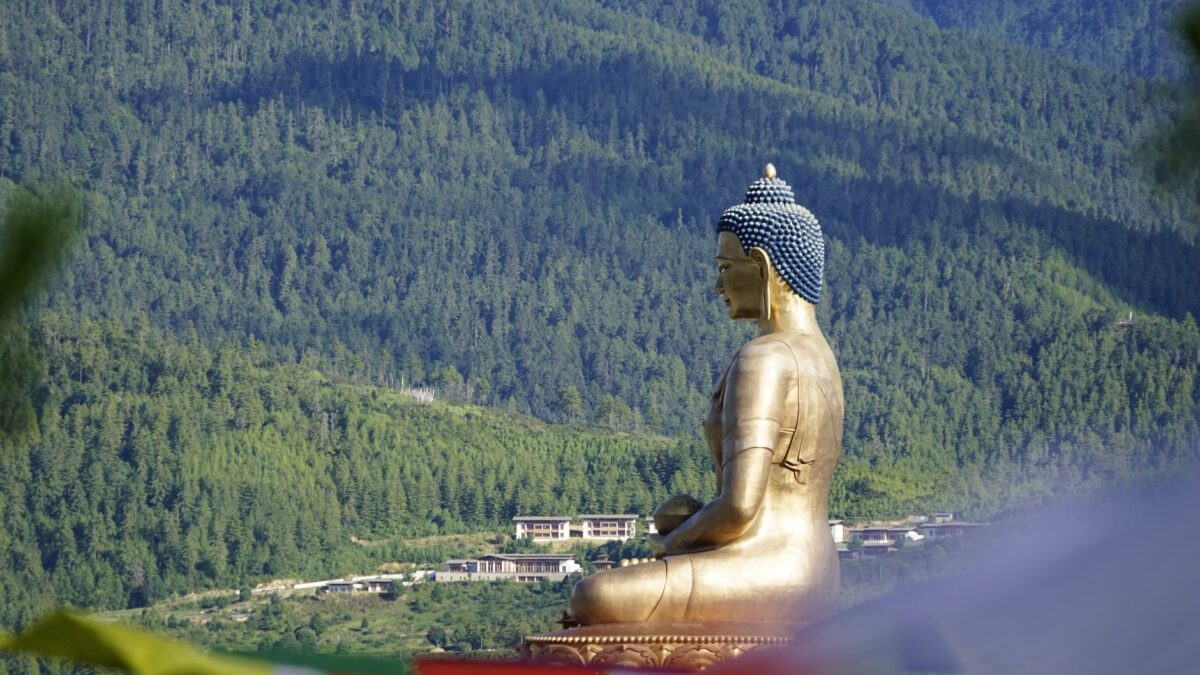
Today requires more energy. Take a taxi up to Buddha Dordenma in Kuenselphodrang Nature Park. The 51-meter gilded Shakyamuni statue dominates the skyline. The taxi ride from the city center will cost you roughly Nu 15–20 per km. Since meters are rarely used, negotiate the price upfront. The view from the statue is panoramic, offering a chance to see the golden langurs in the treetops below if you’re lucky.
On your way down, stop at Changangkha Lhakhang, a 12th-century hilltop temple above central Thimphu. Families bring children here for blessings. It is a quiet, spiritual interlude. Return to the city via the municipal Thimphu City Bus Service. A single route ticket costs only Nu 20–30 ($0.3). It’s a chaotic, colorful experience that locals love. For dinner, try The Hamptons or Thimphu Courtyard for a slightly more international menu, keeping your budget around Nu 1,500 for two people.
Day 4: Simtokha and the Arts
Spend your fourth day exploring the outskirts. Hire a taxi to visit Simtokha Dzong, Bhutan’s oldest dzong dating back to 1629. It is now a monastic school, located about 5 km south of town. The architecture is ancient and serene. Afterward, visit the National Postal Museum in the city center. Bhutan is famous for its stamps, and this museum showcases everything from playable record stamps to personalized photo stamps. It is a delight for collectors and casual visitors alike.
For lunch, grab something simple from Elsewhere Art And Cafe, which doubles as a gallery and eatery. Their prices are reasonable for the area. In the afternoon, walk through the Royal Textile Academy in Kawajangsa. Bhutanese weaving is world-renowned, and seeing the looms in action provides context for the textiles you’ll see in the market. Return to your hotel and rest. If you feel up for it, The HOPE Cafe and BAR offers a relaxed atmosphere for an evening drink.
Day 5: Motithang and Relaxation
Motithang is known as the “Meadow of pearls,” an upscale suburb nestled in pine forests. It is quieter than the city center. Visit the Motithang Takin Preserve to see the takin, Bhutan’s national animal. It’s a gentle, slow-paced morning. Langurs are often seen on balconies here at dawn, so if you wake early, keep your eyes peeled.
Lunch in Motithang can be pricier due to the presence of luxury hotels like Amankora Thimphu. To stay mid-range, pack a picnic or return to the city. Buy a liter of whole milk for Nu 71–76 ($0.9) from a local shop if you prefer home-cooked simplicity. Spend the afternoon shopping for handicrafts near the post office on Norzin Lam. Bargaining is expected in small shops, but fixed prices apply in larger emporiums.
Days 6-7: Festival Fever and Final Costs
In early September, Thimphu buzzes with anticipation for the Tshechu. Even if you miss the main masked dances at Tashichho Dzong (scheduled for late September), the city is alive with rehearsals. Walk around Tashichho Dzong courtyard during the day to observe monks practicing Drubchen rites. It is free to watch from the perimeter.
Use your final days to explore the Royal Botanical Garden Serbithang or Ludrong Memorial Garden. These spots are less crowded and offer beautiful green spaces. For your last meal, treat yourself to a proper dinner at Mountain Cafe – Thimphu or simply enjoy a final bowl of noodle soup from a street vendor. Calculate your total transport costs; if you used taxis extensively, expect to spend around Nu 300–500 for the week. Add in your food and activities, and a mid-range traveler can comfortably navigate Thimphu for approximately Nu 3,000–4,000 ($45–$55) per day, excluding accommodation and the SDF.
Bhutan is not a cheap destination in absolute terms, but within Thimphu, daily expenses are manageable if you embrace local options. The city rewards those who walk, talk to locals, and respect its traditions. As the sun sets over the Pelden Dechen Phodrang, you’ll realize that the true value of this trip isn’t just in what you spent, but in what you witnessed.
Frequently asked questions
How much does a meal cost in Thimphu?
A meal at an inexpensive local eatery, such as ema datshi with red rice, costs around Nu 250 ($3.0). Mid-range restaurants charge approximately Nu 900–1,900 ($17) per person.
What is the Sustainable Development Fee (SDF)?
Non-Indian/Bangladeshi/Maldivian visitors must pay a $100 per night SDF, valid through August 31, 2027, plus a $40 visa fee. This is arranged through a licensed tour operator.
Is public transportation cheap in Thimphu?
Yes. The municipal Thimphu City Bus Service charges only Nu 20–30 ($0.3) per ride. Taxis are also affordable, typically costing Nu 15–20 per km, though meters are rarely used.
When is the best time to visit Thimphu for festivals?
Early September sees the closing of the wet season and preparations for the Thimphu Tshechu (late September). The city is vibrant with market activity and religious rehearsals.
Do I need cash or cards in Thimphu?
Major banks like Bank of Bhutan and BNB accept cards, but smaller vendors, markets, and taxis often prefer cash (Ngultrum). ATMs are widely available in the city center.


