

Getting around Bratislava: metros, taxis and passes
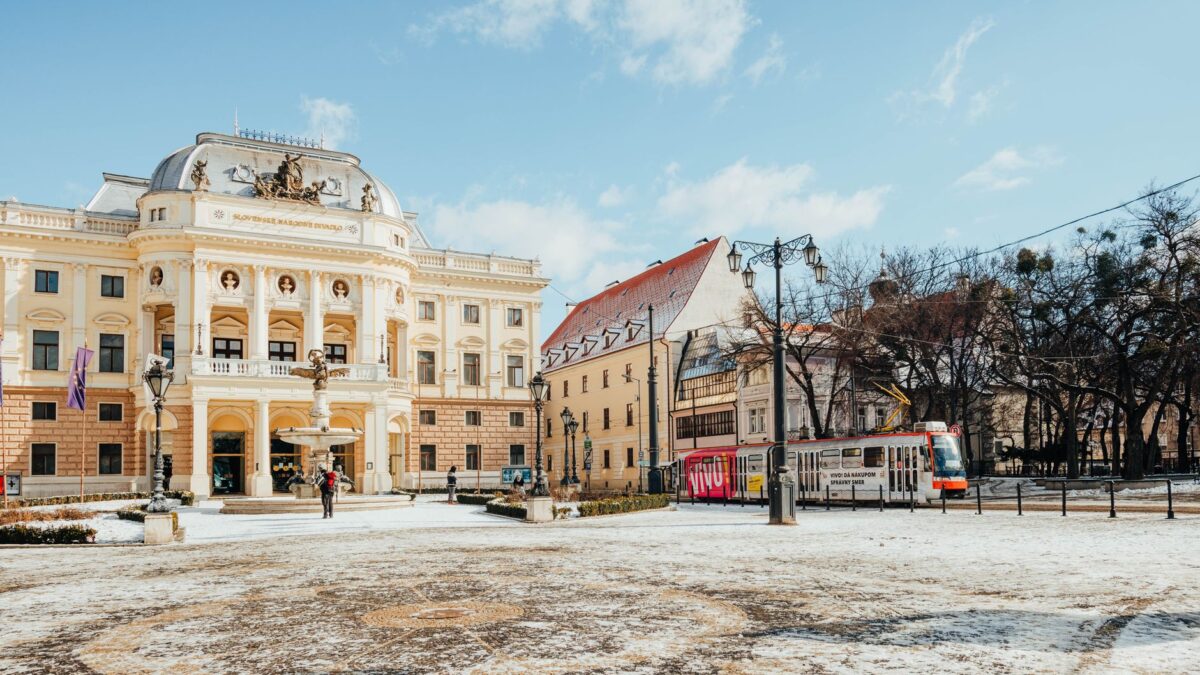
There is a specific rhythm to Bratislava in early September. The air still holds that last, stubborn stretch of summer warmth, hovering around 20°C, but the light has shifted—softer, more overcast, casting long shadows across the cobblestones of Staré Mesto. As locals, we feel this shift immediately. The trams snap onto fuller school timetables, the first hody neighbourhood fairs begin to buzz, and the scent of young wine (burčiak) starts drifting from stalls as the grape harvest approaches. Navigating this city isn’t about conquering distance; it’s about flowing with its compact, hilly grace.
The Myth of the Metro
If you are arriving at the airport or looking for a subway system like those in London or Paris, you will be disappointed. Bratislava does not have a metro. It never has, and there are no immediate plans for one. Instead, our veins are paved with tram tracks and bus routes. This is actually a blessing for visitors. The network, operated by DPB (Dopravný podnik Bratislava) under the integrated IDS BK system, is dense, reliable, and covers every corner of the city, from the socialist-era giants of Petržalka across the Danube to the vineyard-covered slopes of Rača in Nové Mesto.
For most tourists, the core experience happens in District I (Staré Mesto). Here, walking is not just an option; it is the primary mode of transport. The medieval core is small enough that you can stroll from Michael’s Gate to the Blue Church in ten minutes. However, when you need to cross the river or head up to the castle, the trams take over. Tram lines 3 and 4 recently returned to Špitálska with a rebuilt ‘Centrum’ stop, making access to the Old Town smoother than it has been in years. Just keep an eye out: if you are heading north on Námestie SNP, tram 1 is temporarily diverted until the interchange work finishes, so check the displays before you board.
Fares, Passes, and the App Economy
Getting around is remarkably affordable, especially compared to Western European capitals. A single 30-minute ticket for buses, trams, or trolleybuses costs about €1.20 if you buy it from a machine or driver, though using the official IDS BK mobile app brings that down to roughly €1.09. This is where the local habit comes in: almost everyone uses the app. It scans QR codes directly from your phone screen, saving you the hassle of finding change or waiting for a ticket machine to restock.
If you plan to move frequently, the math shifts quickly. A 24-hour pass runs about €4, which is perfect for a whirlwind Saturday exploring the Little Carpathians or crossing into Vienna (which is just an hour away by train from Hlavná stanica). For longer stays, the monthly transit pass for the Bratislava city zones (100+101) is €40.50. That is less than the price of a set lunch (denné menu) at a local eatery, which typically costs around €9. If you are staying for a week or more, buying the monthly pass is often cheaper than buying individual daily tickets, even if you only use it for half the month.
Visitors should also know about the Bratislava City Card. While it bundles unlimited public transport with discounts for museums and castles, do the math first. A standard museum entry might save you €5–€8, but unless you are hitting five major paid attractions in three days, the standalone transit fares are usually sufficient and simpler.
Taxis, Ride-Hailing, and the Airport Run
When the rain comes down hard—a common occurrence in these overcast Septembers—or when you are carrying shopping from Miletičova Market in Ružinov, ride-hailing is your best friend. Both Bolt and Uber operate seamlessly in Bratislava. I always recommend Bolt; it is locally rooted, often slightly cheaper, and the interface is very user-friendly. You will rarely face surge pricing in the city centre, and drivers are generally polite and punctual.
Avoid hailing random taxis off the street, especially near the main train station or the bar streets of Obchodná and Ventúrska late at night. While legitimate companies exist, the risk of inflated meters is higher. If you must use a traditional taxi, ensure they display a company logo and call sign. For the airport transfer, pre-booking a Bolt or arranging a hotel pickup is far safer than hoping for a willing driver outside the terminal.
Be aware of current infrastructure quirks. Major works at Bratislava main station are currently rerouting trains from Trnava and Nitra. The S50 line now terminates at Bratislava-Nové Mesto, and the R55 is suspended. Commuters are switching to trams at Nové Mesto, which means the area can be busier than usual. If you are heading to the airport from the city centre, allow extra time during peak hours as traffic can snarl near the highway on-ramps.
Walking: The Best Way to See the City
Bratislava was designed for humans, not cars. The historic centre is largely pedestrianised, and the best way to experience it is on foot. Start at Hlavné námestie (Main Square), where the Old Town Hall stands. Climb the tower at Michael’s Gate for a view that stretches all the way to the Little Carpathians. Then, walk up the gentle slope toward Bratislava Castle. The white four-tower silhouette against the sky is the city’s symbol, and the grounds offer free panoramic views of the Danube.
Do not miss the walk along the riverbank. In Petržalka, Sad Janka Kráľa park is one of Central Europe’s oldest public parks, laid out in the 1770s. It is a green lung for the district, which houses a quarter of the city’s population. Once known as the “Bronx of Bratislava,” Petržalka is now a vibrant, bike-friendly community with its own cafes and markets. Crossing the Most SNP (‘UFO’ Bridge) is a must. Built in 1972, the flying-saucer observation deck offers the best sunset panorama in the city. The elevator ride up is quick, and the restaurant inside serves coffee for about €3.10—expensive, but worth it for the view.
For a touch of history, walk to St Martin’s Cathedral. This Gothic coronation church saw around 19 Hungarian kings and queens crowned here, including Maria Theresa in 1741. It is a quiet, solemn place that contrasts sharply with the lively nightlife spilling out of the nearby cafés.
Navigating the Seasonal Shift
As you settle into the city, pay attention to the seasonal rhythms. Early September marks the return to school, which changes the flow of trams and buses. The streets fill with students heading to schools like the British International School in Karlova Ves or the Slovak Technical University. This adds a youthful energy to districts like Nové Mesto, where Štefánikova street is lined with craft-beer bars and coffee shops.
Also, watch for local events that impact traffic. Ahead of the Vrakunské hody fair, parking bans go into effect, and streets may close to vehicles. Similarly, the Castle Flow rap festival takes over the grounds of Bratislava Castle for evening performances, meaning the castle area will be crowded and inaccessible to regular foot traffic during show hours. Plan your visits accordingly.
Finally, remember that Bratislava is safe. Pickpocketing is rare but can happen in crowded tourist spots, so keep your bag zipped. The main nuisances are noise from the bar streets late at night. If you want peace, stay in Ružinov or Karlova Ves. If you want energy, Staré Mesto is your home. Either way, with a charged phone for the IDS BK app and comfortable shoes for the hills, you will find Bratislava easy to navigate and impossible to forget.
Frequently asked questions
Does Bratislava have a metro or subway system?
No, Bratislava does not have a metro. The city relies on an extensive network of trams, buses, and trolleybuses operated by DPB under the IDS BK system.
How much does a single public transport ticket cost in Bratislava?
A single 30-minute ticket costs about €1.20 if bought from a machine or driver, but approximately €1.09 if purchased via the official IDS BK mobile app.
Is it safe to use Uber or Bolt in Bratislava?
Yes, both Bolt and Uber operate safely and reliably throughout the city. Bolt is particularly popular and often slightly cheaper than traditional taxis.
What is the best way to get from Bratislava to Vienna?
The fastest option is the train from Bratislava Main Station (Hlavná stanica), which takes about one hour. Regular bus services are also available.
Are there any current disruptions to tram or train services in September 2026?
Yes, major works at the main station are truncating some train lines to Nové Mesto, and tram 1 is diverted off Námestie SNP until the interchange is finished. Check real-time apps for updates.
Things to do in Slovakia
 Private Hiking Tour Visit to Slovakia with Licensed Guide
 Military Guns Shooting Experience with GunMates Bratislava
 Special offer
5-Course Traditional Bratislava Food Tour with Local Guide
Special offer
5-Course Traditional Bratislava Food Tour with Local Guide
 Bratislava Off the Beaten Path Tour - recommended also by Rick Steves
 Likely to sell out
Private Day Trip to Banska Stiavnica Unesco Site
Likely to sell out
Private Day Trip to Banska Stiavnica Unesco Site
 Kalashnikov, Pistol & Sniper Rifle Shooting in BratislavaShootingClub PLUS