

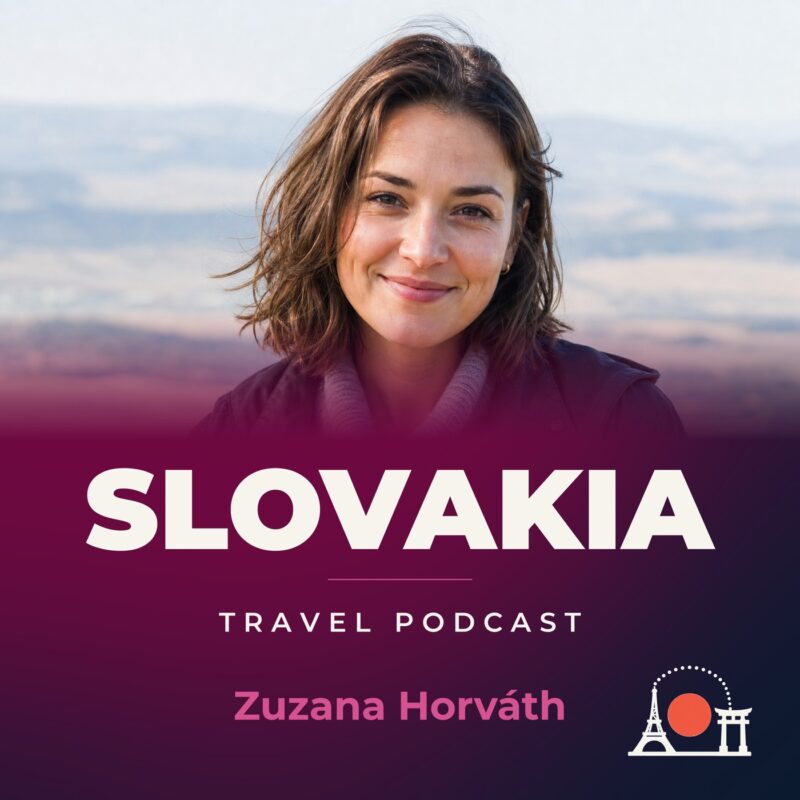
Slovakia Travel Podcast with Zuzana Horváth
Hosted by Zuzana Horváth — a new episode every day from Slovakia.
The show treats Slovakia as a settled space rather than a checklist. Over a series of stays it works across the country’s grain, from the Tatra Mountains in the north to the lowlands in the south. Those two zones are close enough for one journey to move between them, and different enough to change the feel of the country.
The range of places runs from Bratislava, the capital in the west, across the Low Tatras and the old mining towns of Banská Bystrica and Kremnica, to Košice in the east. It also turns to the Slovak Paradise, where the valleys and ravines make movement slow and deliberate.
The programme follows the calendar: cold, cloudy winters and cool summers set the pace while a place is learned. It returns to the same villages and mountain huts, watches the lakes fill and thaw, and then moves on to somewhere connected to what came before. This is how Slovakia is known: by accumulation.
Recent episodes
Things to do in Slovakia
 Private Hiking Tour Visit to Slovakia with Licensed Guide
 Military Guns Shooting Experience with GunMates Bratislava
 Special offer
5-Course Traditional Bratislava Food Tour with Local Guide
Special offer
5-Course Traditional Bratislava Food Tour with Local Guide
 Bratislava Off the Beaten Path Tour - recommended also by Rick Steves
 Likely to sell out
Private Day Trip to Banska Stiavnica Unesco Site
Likely to sell out
Private Day Trip to Banska Stiavnica Unesco Site
 Kalashnikov, Pistol & Sniper Rifle Shooting in BratislavaShootingClub PLUS
 Bratislava: Traditional Food Tour, Tasters & Cherry Liqueur
 Highlights of Bratislava's Old Town with Castle
Plan your trip to Slovakia
Getting around
Staying connected
Slovakia at a glance
Slovakia in depth
Reference data on the country — geography, people, history, economy and transport.
Geography and climate
Location
Central Europe, south of Poland
Terrain
Rugged mountains in the central and northern part and lowlands in the south
Climate
Temperate; cool summers; cold, cloudy, humid winters
Elevation
- Highest point
- Gerlachovsky Stit 2,655 m
- Lowest point
- Bodrok River 94 m
- Mean elevation
- 458 m
Area
- Total
- 49,035 sq km
- Land
- 48,105 sq km
- Water
- 930 sq km
Size comparison
About 1.5 times the size of Maryland; about twice the size of New Hampshire
Coastline
0 km (landlocked)
Land borders
- Total
- 1,587 km
- Border countries
- Austria 105 km; Czechia 241 km; Hungary 627 km; Poland 517 km; Ukraine 97 km
Natural resources
Lignite, small amounts of iron ore, copper and manganese ore; salt; arable land
Land use
- Agricultural land
- 38% (2023 est.)
- Arable land
- 27.2% (2023 est.)
- Permanent crops
- 0.4% (2023 est.)
- Permanent pasture
- 10.4% (2023 est.)
- Forest
- 40.3% (2023 est.)
- Other
- 21.4% (2023 est.)
Natural hazards
Flooding
Note
Landlocked; most of the country is rugged and mountainous; the Tatra Mountains in the north are interspersed with many scenic lakes and valleys
People and society
Population
- Total
- 5,563,649 (2024 est.)
- Male
- 2,684,747
- Female
- 2,878,902
Nationality
- Noun
- Slovak(s)
- Adjective
- Slovak
Ethnic groups
Slovak 83.8%, Hungarian 7.8%, Romani 1.2%, other 1.8% (includes Czech, Ruthenian, Ukrainian, Russian, German, Polish), unspecified 5.4% (2021 est.)
Languages
- Languages
- Slovak (official) 81.8%, Hungarian 8.5%, Roma 1.8%, other 2.2%, unspecified 5.7% (2021 est.)
- Major-language sample(s)
- Svetova Kniha Faktov, nenahraditelny zdroj zakladnej informacie. (Slovak)
Religions
Roman Catholic 55.8%, Evangelical Church of the Augsburg Confession 5.3%, Greek Catholic 4%, Reformed Christian 1.6%, other 3%, none 23.8%, unspecified 6.5% (2021 est.)
Median age
- Total
- 43.1 years (2025 est.)
- Male
- 41.3 years
- Female
- 44.4 years
Life expectancy
- Total population
- 77.2 years (2024 est.)
- Male
- 73.7 years
- Female
- 81 years
Urbanisation
- Urban population
- 54% of total population (2023)
- Rate of urbanization
- 0.17% annual rate of change (2020-25 est.)
Where people live
A fairly even distribution throughout most of the country; slightly larger concentration in the west in proximity to the Czech border
Largest cities
441,000 BRATISLAVA (capital) (2023)
Background and government
Background
Slovakia traces its roots to the 9th century state of Great Moravia. The Slovaks then became part of the Hungarian Kingdom, where they remained for the next 1,000 years. After the formation of the dual Austro-Hungarian monarchy in 1867, language and education policies favoring the use of Hungarian (known as "Magyarization") led to a public backlash that boosted Slovak nationalism and strengthened Slovak cultural ties with the closely related Czechs, who fell administratively under the Austrian half of the empire. When the Austro-Hungarian Empire dissolved at the end of World War I, the Slovaks joined the Czechs to form Czechoslovakia. During the interwar period, Slovak nationalist leaders pushed for autonomy within Czechoslovakia, and in 1939, in the wake of Germany's annexation of the Sudetenland, the newly established Slovak Republic became a German client state for the remainder of World War II.
After World War II, Czechoslovakia was reconstituted and came under communist rule within Soviet-dominated Eastern Europe. In 1968, Warsaw Pact troops invaded and ended the efforts of Czechoslovakia's leaders to liberalize communist rule and create "socialism with a human face," ushering in a period of repression known as "normalization." The peaceful Velvet Revolution swept the Communist Party from power at the end of 1989 and inaugurated a return to democratic rule and a market economy. On 1 January 1993, Czechoslovakia underwent a nonviolent "velvet divorce" into its two national components, Slovakia and the Czech Republic. Slovakia joined both NATO and the EU in 2004 and the euro zone in 2009.
Government
Parliamentary republic
Capital
Bratislava
Time zone
UTC+1 (6 hours ahead of Washington, DC, during Standard Time)
Local name
Slovenska republika
Independence
1 January 1993 (Czechoslovakia split into the Czech Republic and Slovakia)
National day
Constitution Day, 1 September (1992)
Economy and cost of living
Overview
High-income EU and eurozone economy; manufacturing and exports led by automotive sector; growth supported by private consumption and public investment from EU funds, tempered by trade risks; increased taxes and withdrawal of energy subsidies contributing to rising but manageable inflation; strong labor demand and influx of foreign labor offsets aging workforce
GDP per capita
- Real GDP per capita 2024
- $40,300 (2024 est.)
- Real GDP per capita 2023
- $39,500 (2023 est.)
- Real GDP per capita 2022
- $38,600 (2022 est.)
Inflation
- Inflation rate (consumer prices) 2024
- 2.8% (2024 est.)
- Inflation rate (consumer prices) 2023
- 10.5% (2023 est.)
- Inflation rate (consumer prices) 2022
- 12.8% (2022 est.)
Unemployment
- Unemployment rate 2024
- 5.3% (2024 est.)
- Unemployment rate 2023
- 5.9% (2023 est.)
- Unemployment rate 2022
- 6.2% (2022 est.)
Exchange rate
- Currency
- Euros (EUR) per US dollar -
- Exchange rates 2024
- 0.924 (2024 est.)
- Exchange rates 2023
- 0.925 (2023 est.)
- Exchange rates 2022
- 0.95 (2022 est.)
- Exchange rates 2021
- 0.845 (2021 est.)
- Exchange rates 2020
- 0.876 (2020 est.)
Main industries
Automobiles; metal and metal products; electricity, gas, coke, oil, nuclear fuel; chemicals, synthetic fibers, wood and paper products; machinery; earthenware and ceramics; textiles; electrical and optical apparatus; rubber products; food and beverages; pharmaceutical
Agriculture
Wheat, sugar beets, maize, milk, barley, rapeseed, sunflower seeds, potatoes, soybeans, pork (2023)
Transport and connectivity
Airports
116 (2025)
Railways
Total 3,627 km (2020) 1,585 km electrified
Internet domain
.sk
Internet users
Percent of population 90% (2024 est.)
Mobile subscriptions
- Total subscriptions
- 7.63 million (2023 est.)
- Subscriptions per 100 inhabitants
- 132 (2022 est.)
Environment
Environmental issues
Air pollution and acid rain; land erosion from agricultural and mining practices; water pollution
Fresh water
50.1 billion cubic meters (2022 est.)
UNESCO Global Geoparks
- Total global geoparks and regional networks
- 1
- Global geoparks and regional networks
- Novohrad-Nógrád (includes Hungary) (2023)
Country reference figures are periodically revised. Check anything time-sensitive or safety-critical against an official source before you travel.
Slovakia travel guides
 News & Updates
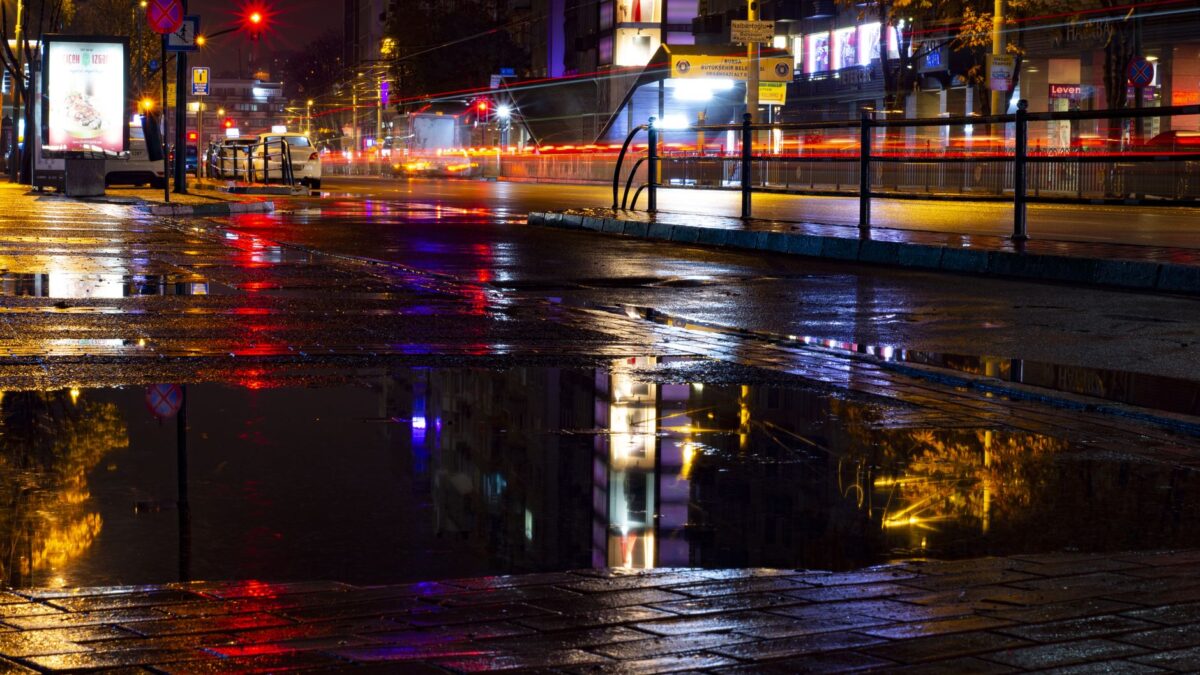
Slovakia in September 2026: what travelers should know now
Slovakia travel briefing for September 2026: weather, transport disruptions, holidays, and cost tips for Bratislava.
 Getting Around
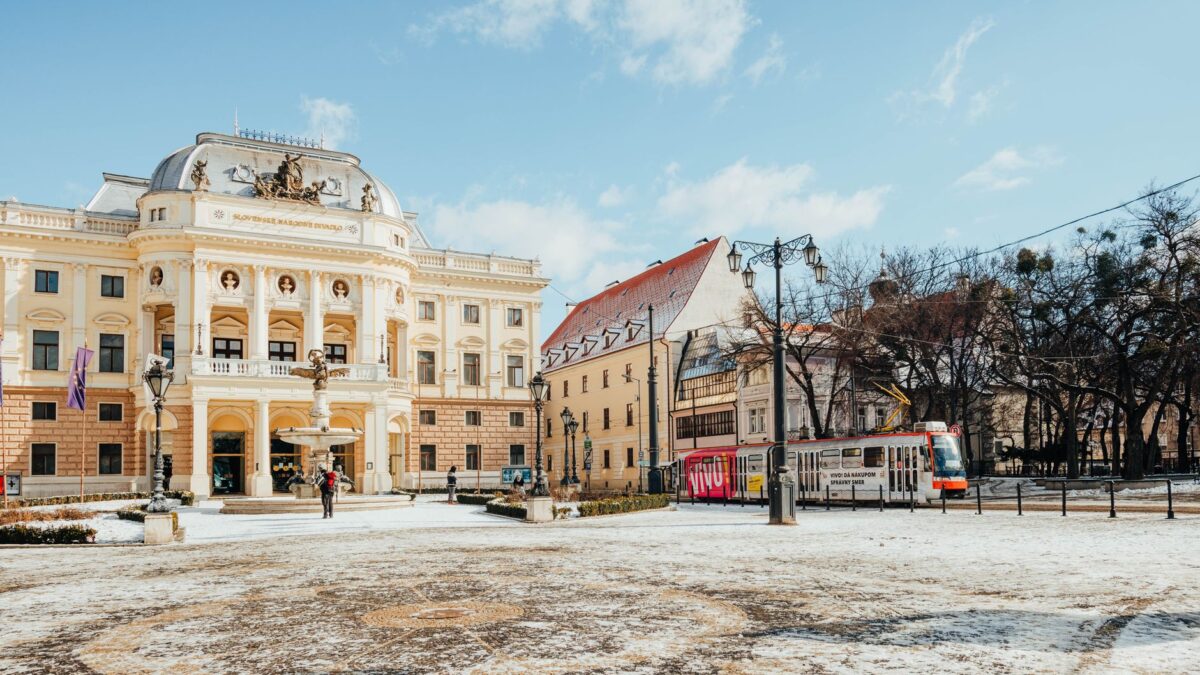
Getting around Bratislava: metros, taxis and passes
Navigate Bratislava like a local: real fare prices, tram tips, and why walking beats the non-existent metro in Slovakia's compact capital.
 Travel Tips
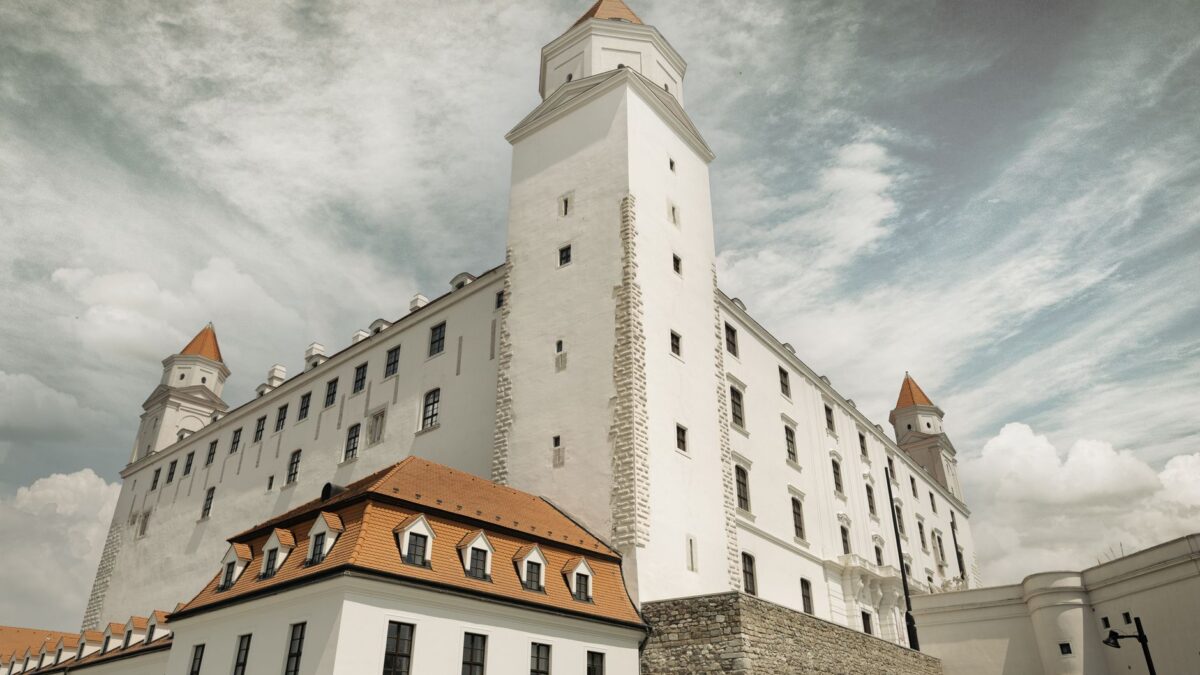
The best time to visit Slovakia
Discover the best time to visit Slovakia. Seasonal guide covering weather, crowds, prices, and festivals in Bratislava from Zuzana Horváth.
 News & Updates
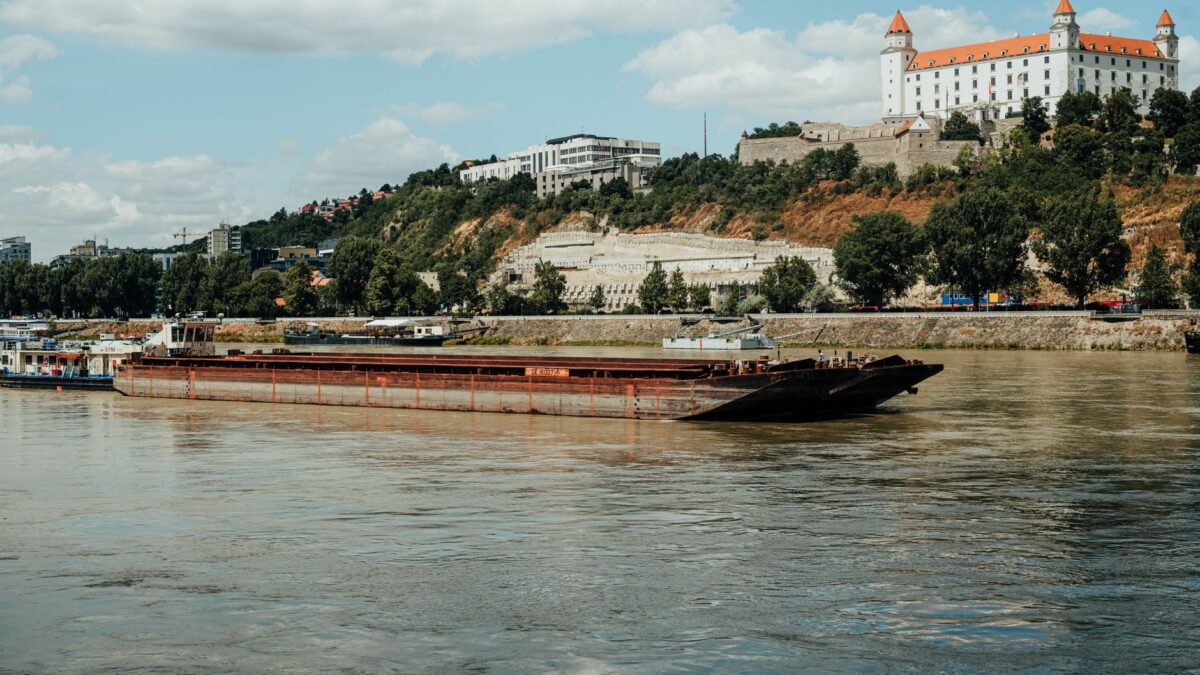
Slovakia in August 2026: what travelers should know now
Bratislava in late August 2026: weather shifts, National Uprising holiday, public transport tips, and what things really cost in Slovakia's capital this month.
Eastern Europe
 Poland
Poland Travel Podcast with Kacper Nowak
The flat North European Plain, stretching across central Poland and lacking natural barriers, has shaped centuries of conflict and movement.
 Czechia
Czechia Travel Podcast with Tereza Nováková
From Prague to the Moravian Gate, this show follows one resident learning Czechia's landscapes over seasons, with low mountains and hilly country…
 Hungary
Hungary Travel Podcast with Bence Kovács
Budapest, the capital and largest city, stands on the Duna, one of the two rivers that split Hungary into three regions.
 Romania
Romania Travel Podcast with Ioana Popescu
The Eastern Carpathians separate the Transylvanian Basin from the Moldavian Plateau, shaping a central Romania of foggy winters and summer storms.