

A first-timer’s guide to Albania
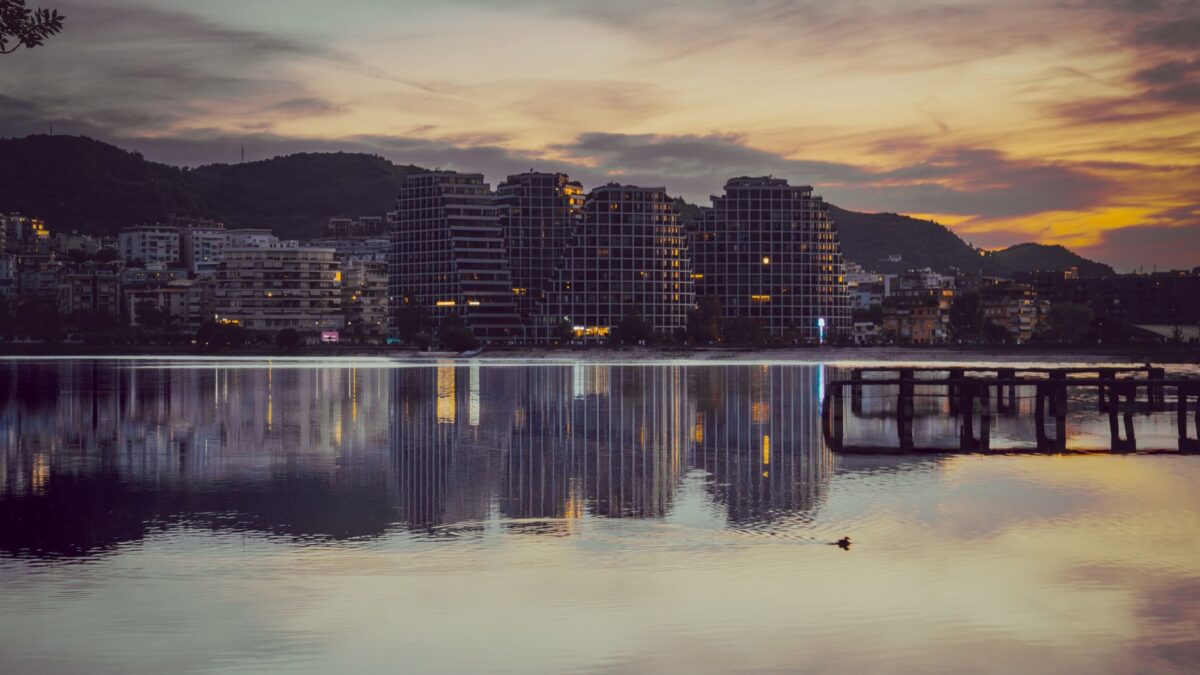
The first thing you notice about Tirana is the light. It hits the pastel façades—painted in shades of yellow, ochre, and pale blue by Mayor Edi Rama’s famous urban renewal project—with a warmth that feels entirely un-Mediterranean yet undeniably Balkan. Standing in Skanderbeg Square, with the equestrian statue of Albania’s national hero looming over you and the 19th-century Et’hem Bey Mosque humming with quiet reverence, it is easy to feel like you have stumbled into a time capsule. But look closer at the café terraces spilling onto the sidewalks, the young people streaming toward the Blloku district, and the distant silhouette of Mount Dajti, and you realize this is a city waking up. If you are planning your first trip, here is how to navigate it.
When to Go: The Sweet Spot
Albania’s tourism calendar has shifted dramatically in recent years. August used to be the only option, but now, early September offers a rare compromise: the sea is still warm from summer, but the crushing heat and crowds have lifted. Right now, as I write this from my desk in Tirana, the mercury is hovering around 34°C during the day but drops to a comfortable 19°C at night. It is overcast, breezy, and perfect for walking.
This month is particularly special because the cultural calendar abruptly wakes up after the quiet lull of August. You might catch the tail end of the National Albanian Film Festival or the opening nights of the Tirana International Film Festival, which is currently exploring themes of ‘HUMANOGRAPHY.’ If you are an opera lover, the Opera and Ballet House has just launched its new season with an ‘Opera Gala’ conducted by Simone Di Felice. However, be aware that this excitement brings back-to-school traffic and ongoing construction on the Tirana–Durrës Superstrada, so plan your drives accordingly.
If you prefer the coast, June or late May are ideal before the July heatwave. For mountain hiking in Theth or Valbona, stick to July and August when the trails are snow-free. Winter is mild but rainy; spring is green but unpredictable. Early autumn remains the sweet spot for a balanced itinerary.
Getting Around and Staying Put
Tirana is compact enough to walk, but traffic can be chaotic. The public bus system is efficient and incredibly cheap—a single ride costs about 40 ALL (roughly $0.40). You pay cash to the driver or use the new contactless tap-on systems where available. For longer stays, a monthly pass runs about 1,200 ALL ($13), though tourists rarely need it unless they are working remotely for months. For taxis, do not hail random cars. Use apps like Speed Taxi or Clust. A ride across central Tirana should cost between 600 and 900 ALL. Uber and Bolt do not operate here.
Where you stay defines your experience. If you want nightlife and modern amenities, choose Blloku (Ish-Blloku). Once the walled-off residence zone for the communist elite, it is now the upscale heart of the city, filled with chic cafés and bars. Expect rents here to be high, around 45,000–66,000 ALL per month if you were renting, so hotel prices reflect this premium. For a quieter, family-friendly vibe near the Grand Park, look at Komuna e Parisit. Avoid Kombinat, the southwestern industrial suburb, unless you have specific business there; it is rougher and less inviting at night. Outside the center, districts like Sauk or Qyteti Studenti offer cheaper options but require taxi rides to get anywhere interesting.
Money Matters and Daily Costs
Albania uses the Lek (ALL). Cash is king in smaller bakeries and markets, but cards are widely accepted in Tirana’s restaurants and hotels. Be prepared for prices to have risen since 2021; Numbeo data suggests rents and dining costs are up 30–60% in the capital. However, it remains affordable compared to Western Europe.
Here is what your money gets you today:
- A Byrek: Grab a flaky meat or cheese pastry from any local bakery for 50–150 ALL ($1.1).
- Coffee: A cappuccino or espresso at a trendy spot like Café Momus or 505 Café will run you 150–200 ALL ($1.9).
- Lunch: An inexpensive meal at a local restaurant is about 800 ALL ($9). If you go to the Pazari i Ri (New Bazaar) for street food, expect to spend 800–1,200 ALL ($11) for a hearty spread.
- Dinner: A sit-down meal at a traditional ‘lokale,’ featuring grilled meats or tavë kosi, costs 800–1,500 ALL ($12). A mid-range three-course dinner for two is roughly 4,250 ALL ($45).
Keep small bills handy. While ATMs are plentiful, some older machines or rural vendors may struggle with large notes. Also, note that milk is about 180 ALL ($1.9) per liter, and a loaf of white bread is a mere 100 ALL ($1.1).
The Essentials: Visas, SIMs, and Safety
Visa rules have recently updated to align more closely with EU standards. Most visitors from the EU, UK, and US enjoy visa-free entry. US citizens can stay up to one year without registration. EU citizens now register online via the e-Albania portal within three months of arrival to receive a five-year Registration Certificate, replacing the old permit system. Always check the latest requirements on e-visa.al before you fly.
For connectivity, buy a SIM card immediately upon landing at Tirana International Airport. Vodafone and ONE Albania are the main providers. You must register the SIM with your passport. A tourist pack with ample data (40–100 GB) costs around 2,400–2,900 ALL ($25-$30). If you face connection issues, ensure your APN is set correctly: live.vodafone.com for Vodafone or internet.one.al for ONE.
Safety in Tirana is generally high. Violent crime is rare. Blloku and Skanderbeg Square are safe to walk at night, provided you maintain standard big-city awareness. Watch your bags in crowded hubs like the New Bazaar or the airport. In outer residential blocks, exercise more caution after dark. The police presence in Blloku is strong, which adds to the sense of security.
Must-See Landmarks and Hidden Gems
You cannot visit Tirana without seeing the Pyramid. Opened in 1988 as the Enver Hoxha Museum, it sat abandoned for years before being renovated into a vibrant IT and youth hub. Climb to the top for panoramic views of the city. Nearby, visit Bunk’Art 2, housed in a massive Cold War bunker beneath the city, which tells the harrowing story of Albania’s isolationist past. For a deeper dive into surveillance history, the House of Leaves (Shtëpia e Gjetheves) was once the headquarters of the Sigurimi secret police.
Take the Dajti Ekspres cable car up Mount Dajti. It is the longest in the Balkans and offers stunning views of the city spreading out below. At the top, you can hike in Dajti National Park or visit Bunk’Art 1, another bunker museum perched on the mountain. For a taste of local life, wander through the historic core near the Clock Tower and the National History Museum, then end your evening with an ‘xhiro’—the traditional Albanian stroll—along the main boulevards.
Frequently asked questions
How much does a meal cost in Tirana?
An inexpensive local meal is around 800 ALL ($9), while a mid-range dinner for two is about 4,250 ALL ($45). Street food at the New Bazaar typically costs 800-1,200 ALL.
Do I need a visa to visit Albania?
Most EU, UK, and US citizens are visa-free. US citizens can stay up to a year; EU citizens must register online via e-Albania within three months to get a certificate.
What is the best way to get around Tirana?
Use the app-based taxis Speed Taxi or Clust for reliable service. Public buses cost 40 ALL per ride. Uber and Bolt do not operate in Albania.
Is Tirana safe for tourists?
Yes, Tirana is generally safe with low violent crime. Standard precautions apply: watch your belongings in crowded areas like Skanderbeg Square and the New Bazaar.


