
What to eat in France — and what it costs
Paris in late September has a specific rhythm. The humidity of August has broken, the light turns golden and slants low across the limestone facades, and the city exhales. You can feel it in the streets: the frantic summer tourist crush has thinned just enough for you to actually hear yourself think, or better yet, taste your coffee. This is the ‘rentrée’—the return to normalcy—and for food lovers, it is arguably the best time to be here. The markets are bursting with the year’s first game, earthy mushrooms, and crisp orchard fruits, while the terraces remain open but relaxed.
I am Camille Laurent, and I live here. I don’t just guide you through Paris; I eat in it. Below is my honest, unvarnished guide to what to eat, where to find it, and exactly how much it will cost you in these euros we call home. Forget the generic advice. We are going straight to the sources.
The Street Food Reality: Falafel, Crêpes, and Quick Bites
If you want to eat like a local on a budget, you must embrace the street food culture. It is not about standing in line at a chain; it is about finding the hole-in-the-wall that has been doing the same thing perfectly for thirty years.
Where to go: Head to Rue des Rosiers in Le Marais. This heart of the Jewish quarter is legendary for its falafel. The air smells of cumin and fried chickpeas. While there are many options, the competition is fierce, so look for the lines. Pair this with a fresh juice from a nearby stall.
What it costs: A classic falafel sandwich (Pita) runs roughly €7–€9. If you add a drink and maybe a crêpe from one of the ubiquitous stands on Rue des Rosiers or near the Sacré-Cœur in Montmartre, you are looking at about €10–€12 for a solid lunch. In Belleville, you can find even cheaper, diverse options along Rue Dénoyez, where North African and Chinese influences mix. A shawarma or dumpling plate might set you back only €6–€8.
Pro tip: Avoid the tourists selling bracelets or fake petitions near Sacré-Cœur and the Champs-Élysées. They are a distraction from the real culinary treasures hidden in the side streets of Le Marais and Canal Saint-Martin.
The Café Culture: Coffee, Pastries, and People-Watching
You cannot talk about France without talking about the café. But there is a difference between a tourist trap and a true institution. In Saint-Germain-des-Prés, you have the famous Café de Flore and Les Deux Magots. These are historic, yes, and part of the philosophical legacy of Sartre and de Beauvoir. But they are also expensive.
What it costs: At Café de Flore, expect to pay around €6–€8 for a simple espresso and perhaps €10–€12 for a croissant if you buy it elsewhere. A sit-down breakfast or lunch here can easily exceed €30–€40 per person. It is worth one visit for the history, but not for your daily caffeine fix.
Where to go instead: For authentic, high-quality coffee without the price tag, try BlackBird Coffee in Canal Saint-Martin or The Caféothèque of Paris in Le Marais. Here, a specialty coffee costs about €3–€5. If you want a traditional pastry, head to a local boulangerie. A pain au chocolat is roughly €1.50, and a tart aux pommes is €3–€4.
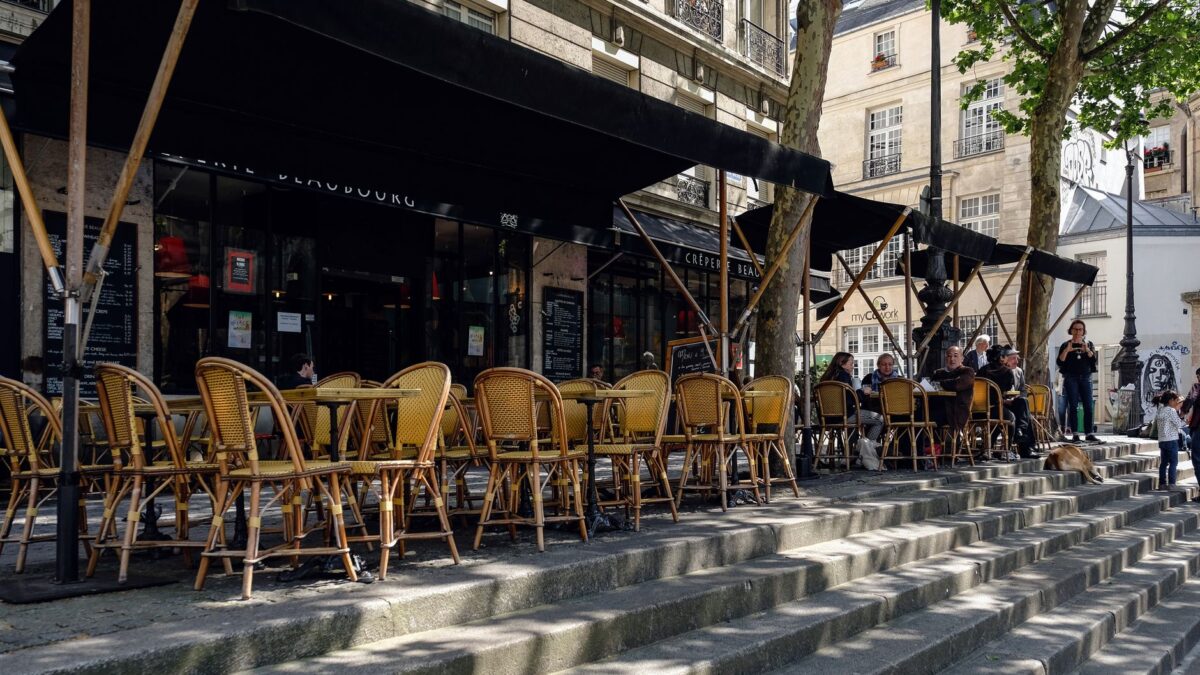
Local insight: Sit outside if the weather permits. In late September, the temperature hovers between 16–22°C, perfect for terrace life. Watch the world go by. This is the Parisian art form.
The Bistro and Brasserie Experience: Lunch vs. Dinner
This is where the magic happens. French cuisine is not just fine dining; it is the humble bistro. The key to eating well in Paris is to understand the menu structure. Look for the “Carte du Jour” (menu of the day) or “Formule.” These are your best friends for value.
Where to go: In Bastille / Oberkampf, the 11th arrondissement is the epicenter of real everyday Paris. Try La Jacobine or Brasserie des Prés for classic French dishes. In Montmartre, Sacrée Fleur Montmartre offers a more intimate, chef-driven experience. For something truly special, Pink Mamma in Le Marais is famous for its Italian-French fusion and massive portions, though it requires booking weeks in advance.
What it costs:
- Lunch Formule: A starter, main, and drink (often wine or water) typically costs €18–€25. This is the sweet spot for quality and price.
- Dinner à la Carte: Expect to pay €25–€35 for a main course. A full dinner with appetizer, main, dessert, and wine will run €40–€60 per person in a mid-range bistro. In high-end spots like Brasserie des Prés, prices can climb to €60–€80+ per person.
- Street-to-Sit-down Average: If you mix street food for lunch and a nice bistro dinner, your daily food budget should be around €35–€50 per person.
Warning: Always check the menu before sitting down. Some tourist traps in Montmartre near Place du Tertre may have higher prices for lower quality. Stick to places with handwritten menus in French, not laminated ones with photos.
Markets and Picnics: The Art of Eating Outdoors
One of the most enjoyable ways to eat in Paris is to shop at the market and picnic. In late September, the seasonal produce is at its peak. Go to Marché des Enfants Rouges in Le Marais, the oldest covered market in Paris (dating back to 1615). It is a foodie paradise with stalls serving everything from Moroccan tagines to Japanese sushi bowls.
What it costs: A meal at a market stall like L’As du Fallafel (if you can get in) or Traiteur Libanais costs about €8–€12. Buy some cheese, baguette, and fruit from the surrounding stalls. Then, walk to Place des Vosges or Jardin du Luxembourg to eat.
In Bastille, Marché d’Aligre is another excellent option. It is less polished but very authentic. Prices here are slightly lower. A picnic for two with wine from a local cave (wine shop) will cost about €20–€30 total.
Tip: Bring a small blanket or find a bench. The sun sets early now, around 19:40, so plan your picnic for late afternoon to catch the sunset over the Tuileries or the Canal Saint-Martin.
Practical Tips for Eating Well in Paris (September 2026)
Transport: Getting to these places is easy. Note that Metro Line 13 is closed until noon on Sundays due to works, and Metro Line 4 does not stop at Saint-Michel due to renovations. Use the Navigo Easy card (€2) loaded with tickets (€2.55/ride). Tourists can use the Paris Visite pass.
Safety: Be wary of pickpockets on crowded metro lines (especially Lines 1, 2, 4, and 13). Keep your phone in front pockets. The Eiffel Tower and Louvre areas are hotspots.
Booking: For popular spots like Pink Mamma or Café de Flore, book ahead. Walk-ins are risky during the day.
Currency: All prices are in Euros (EUR). As of 2026, the exchange rate is roughly 0.924 EUR to 1 USD. Inflation is low at 0.9%, so prices are stable.
Paris is not just a city of monuments; it is a city of flavors. From the falafel in Le Marais to the bistros of Bastille, every corner tells a story. Eat slowly, drink locally, and enjoy the autumn light. Bon appétit.
Frequently asked questions
How much does a typical meal cost in Paris in 2026?
A lunch menu (formule) at a mid-range bistro costs €18–€25. Dinner à la carte averages €25–€35 for a main. A full day of eating (street food + bistro dinner) budgets around €35–€50 per person.
Where is the best place for cheap street food in Paris?
Rue des Rosiers in Le Marais is famous for falafel (€7–€9). Belleville's Rue Dénoyez offers diverse, affordable options (€6–€8). Marché des Enfants Rougs also has affordable market stalls.
Is it worth eating at Café de Flore or Les Deux Magots?
They are historic institutions but expensive. An espresso is €6–€8, and meals can exceed €30–€40. Visit once for the atmosphere, but for better value and quality, try BlackBird Coffee or local bakeries.
Are there any metro closures affecting food districts in September 2026?
Yes. Metro Line 13 is fully closed until noon on Sundays (Sept 27). Line 4 does not stop at Saint-Michel (until Dec 19). Line 8 République station is closed until April 2027. Plan routes accordingly.
What are the best markets for picnics in late September?
Marché des Enfants Rouges (Le Marais) and Marché d'Aligre (Bastille) are top choices. Late September brings fresh mushrooms and orchard fruits. Pack a blanket for Place des Vosges or Jardin du Luxembourg.
Things to do in France
 Family Friendly Louvre Museum Private Guided Tour
 Private guided American D-Day Tour from Bayeux
 Likely to sell out
Scandola & Girolata: The Must-see Excursion EN Corsica
Likely to sell out
Scandola & Girolata: The Must-see Excursion EN Corsica
 Louvre Evening Tour Semi Private 6ppl Max BEST Avoid The Crowds
 The Essential Louvre Masterpieces Tour - Limited to Six Guests
 Likely to sell out
Paris Highlights: Half Day Private Walking Tour
Likely to sell out
Paris Highlights: Half Day Private Walking Tour