

Getting around Rabat: metros, taxis and passes
It is late October in Rabat, and the air has finally lost its heavy summer humidity. The evenings on the terrace of the Café Maure, perched above the Bou Regreg river mouth, are crisp enough to demand a light jacket. This is when the city exhales. After the quiet of the August doldrums, the theatre season restarts in earnest, with venues like the Théâtre National Mohammed V hosting international drama schools and the Jassad festival filling the cultural calendar. But before you can enjoy a play or wander the blue-and-white lanes of the Kasbah, you need to understand how this calm capital moves.
The Tramway: Your Spine for Getting Around
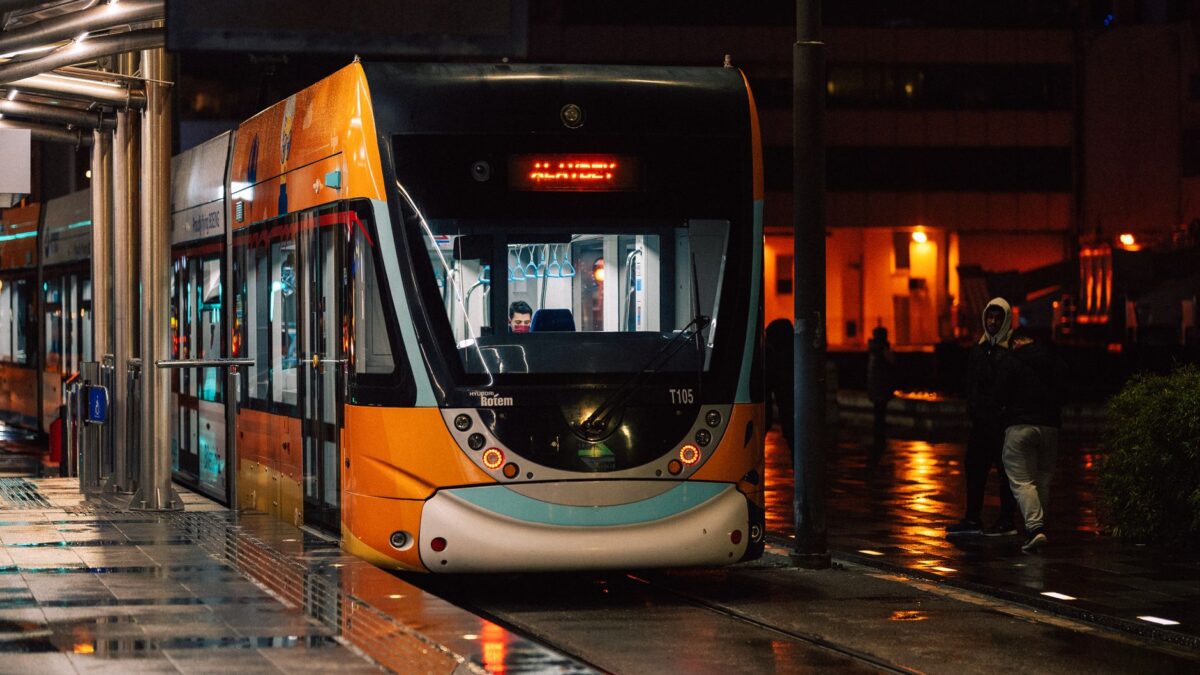
Rabat’s public transport backbone is the Tramway Rabat-Salé, Morocco’s first metro system, which opened in 2011. It is clean, modern, and arguably the most efficient way to navigate the urban sprawl between the historic core and the modern administrative districts. The network runs two lines over 27 kilometers, linking Salé across the river to Hassan, the Medina, Agdal, and the university campus at Al Irfane.
For a visitor, the system is straightforward but requires a bit of planning. A single ticket costs about 7 MAD (roughly $0.70) and is valid for one hour, allowing one transfer between Line 1 and Line 2. You must re-validate your ticket when boarding the second vehicle. Tickets are not sold on board; you purchase them at station kiosks, machines, or via the Tram Mobile app. Regulars use the named electronic Irtiah card, which costs around 270 MAD per month for general public travel, though students under 26 pay only 160 MAD.
Key terminals you will encounter include Hay Karima, Madinat Al Irfane, Hôpital Moulay Abdellah, and Yacoub Al Mansour. The tram spine runs directly past Rabat-Ville station, meaning if you arrive by regional train, you are steps from the tram. However, note that there is no tram service to Rabat-Agdal station, where the Al Boraq high-speed rail terminates. From there, you will need a petit taxi to reach the tram network or your hotel in the Agdal district.
Taxis: The Petit vs. Grand Divide
When the tram isn’t an option, or you are carrying luggage, taxis are the next logical step. In Rabat, you must distinguish between two very different types of vehicles. The petit taxi is what you want for city travel. These are small, often beige or yellow cars that operate within specific zones. They are metered, and the base fare for a short hop starts at approximately 7 MAD ($0.70). As a local, I always insist on using the meter. If the driver refuses, simply walk away; there are plenty of others waiting.
Avoid unmarked grand taxis unless you are traveling in a group heading to the suburbs or another city, as they function more like shared minibuses on fixed routes. For safety, stick to licensed petits taxis during the day and avoid empty stretches of the outlying southern districts, such as Yacoub El Mansour or Takaddoum, after dark. While Rabat is generally safe, petty theft and pickpocketing remain realistic risks in the crush around Bab El Had and Avenue Mohammed V.
If you prefer the convenience of ride-hailing apps, Uber and Careem operate reliably in the central districts like Agdal, Hay Riad, and Hassan. They offer a transparent price and cashless payment option, which is useful since Morocco remains a cash-heavy society. Cards work well in these modern quarters, but you will need dirhams for the medina, souks, and petits taxis.
Walking: The Best Way to See the Medina and Kasbah
In many cities, walking is a last resort. In Rabat, it is the primary mode of discovery. The Medina and the Kasbah des Oudayas are compact, residential, and remarkably walkable even at night. Unlike Marrakech, which can feel chaotic, the Kasbah offers a calm, livable atmosphere with wide, sloping streets lined with white walls and blue doors.
Start your walk at the carved Bab Oudaia gate. Wander through the Andalusian Gardens and up to the cliff-top for panoramic views of the Atlantic and the river estuary. The rug souk on Rue des Consuls is a sensory delight, filled with leather goods, antiques, and jewellery. From there, you can easily walk to the Hassan Tower precinct. The unfinished Almohad minaret stands tall over a field of truncated columns, adjacent to the white-marble Mausoleum of Mohammed V. Both sites are free to enter and offer a profound sense of history.
Walking also connects you to the city’s culinary rhythm. A plate of fried fish or calamari rings at a medina street counter costs between 30 and 60 MAD ($5), while a grilled sardine lunch at the Oudaias river-mouth grills runs 60–140 MAD ($10). These are moments best savoured on foot, stopping for a cappuccino at Boho Café or a coffee at MAEYA when the legs get tired.
Navigating the Modern Districts: Agdal, Souissi, and Hay Riad
Beyond the old town, Rabat spreads into distinct modern districts, each with its own character and transport needs. Agdal is a grid of café-lined avenues and apartment blocks, home to the capital’s best everyday eating and the morning covered market. It is also the seat of power, with ministries and embassies concentrated in nearby Hay Riad. Hay Riad, which boomed in the 2000s, is affluent and corporate, offering the best rental yields and a quieter, villa-lined environment.
Souissi is the leafy, expensive enclave of diplomats and luxury villas, home to the Royal Golf Dar Es Salam and the Chellah necropolis on its edge. Getting between these areas often requires a taxi, as distances can be deceptively long. For instance, reaching the Mohammed VI Museum of Modern and Contemporary Art on Avenue Moulay Hassan may require a short taxi ride from the tram line if you are coming from the west.
Remember that Rabat is part of a larger metropolitan area. To see Salé’s Marinid Medersa Abu al-Hassan or its Great Mosque, you can take the tram across the Bou Regreg bridge, or catch a traditional boat. The tram effectively stitches Rabat and Salé together, making the twin cities feel like one continuous urban fabric.
- Currency: Use Moroccan Dirhams (MAD). Cash is king in markets and for taxis.
- Apps: Download the Tram Mobile app for tickets and Uber/Careem for ride-hailing.
- Safety: Rabat is calm, but watch for pickpockets in crowded transit hubs.
- Timing: Late October weather is ideal (15–23°C), but evenings require a jacket.
Frequently asked questions
How much does a single tram ticket cost in Rabat?
A single tram ticket costs about 7 MAD (roughly $0.70). It is valid for one hour and allows one transfer between Line 1 and Line 2.
Can I use the tram to get to Rabat-Agdal train station?
No, there is no tram service to Rabat-Agdal station. You must take a petit taxi from the Al Boraq high-speed station to reach the tram network.
What is the difference between a petit and grand taxi?
Petit taxis are small, metered cars for intra-city travel. Grand taxis are larger vehicles used for inter-city trips or shared rides on fixed routes.
Is Rabat safe to walk at night in the Medina?
Yes, the Medina and Kasbah are residential and generally safe to walk at night. However, remain vigilant against petty theft in crowded areas like Avenue Mohammed V.


