
Morocco Travel Podcast with Youssef Benali
Hosted by Youssef Benali — a new episode every day from Morocco.
Morocco Travel Podcast is a grounded, unhurried series about a country where the Atlantic and Mediterranean coasts frame two very different edges, the Rif and Atlas Mountains break up the interior, and the desert reaches south to the Sahara. The show is shaped by living in Morocco over years, not by a checklist.
Over the series, Youssef moves from Tangier to Fes, then south through Agadir and into the Draa Valley, letting each place set the pace. He returns to markets, ferry ports, mountain paths and fishing harbours. The coastal cities, the imperial cities and the Saharan palm groves all appear as working places rather than backdrops.
The show unfolds across seasons, from foggy Atlantic nights to dry desert days, and back to the green months in the Atlas valleys. Youssef returns to Tangier, Fes and the Draa Valley, noticing how each place changes, until the map becomes something lived rather than visited.
Recent episodes
Things to do in Morocco
 Crocoparc Agadir Day Trip with Round-Trip Transportation
 Merzouga Desert 3-Day Tour from Marrakech with Camel Ride
 4 Day Authentic Desert Tour From Fes To Marrakech
 Surf Lesson in Essaouira
 Private Atlas Mountains and 5 Valleys Tour from Marrakech - All inclusive -
 Agadir Agadir Agadir
 Group Kitesurfing lesson with a Local in Essaouira Morocco
 5-Day Private Tour to Sahara and ErgChebbi from Marrakech
Plan your trip to Morocco
Getting around
Staying connected
Morocco at a glance
Morocco in depth
Reference data on the country — geography, people, history, economy and transport.
Geography and climate
Location
Northern Africa, bordering the North Atlantic Ocean and the Mediterranean Sea, between Algeria and Mauritania
Terrain
Mountainous northern coast (Rif Mountains) and interior (Atlas Mountains) bordered by large plateaus with intermontane valleys, and fertile coastal plains; the south is mostly low, flat desert with large areas of rocky or sandy surfaces
Climate
Mediterranean in the north, becoming more extreme in the interior; in the south, hot, dry desert; rain is rare; cold offshore air currents produce fog and heavy dew
Elevation
- Highest point
- Jebel Toubkal 4,165 m
- Lowest point
- Sebkha Tah -59 m
- Mean elevation
- 909 m
Area
- Total
- 716,550 sq km
- Land
- 716,300 sq km
- Water
- 250 sq km
Size comparison
Slightly larger than twice the size of California
Coastline
2,945 km
Land borders
- Total
- 3,523.5 km
- Border countries
- Algeria 1,941 km; Mauritania 1,564 km; Spain (Ceuta) 8 km and Spain (Melilla) 10.5 km
Natural resources
Phosphates, iron ore, manganese, lead, zinc, fish, salt
Land use
- Agricultural land
- 66.7% (2023 est.)
- Arable land
- 15.4% (2023 est.)
- Permanent crops
- 4.3% (2023 est.)
- Permanent pasture
- 47.1% (2023 est.)
- Forest
- 12.8% (2023 est.)
- Other
- 20.3% (2023 est.)
Natural hazards
In the north, the mountains are geologically unstable and subject to earthquakes; periodic droughts; windstorms; flash floods; landslides; in the south, a hot, dry, dust/sand-laden sirocco wind can occur during winter and spring; widespread harmattan haze exists 60% of time, often severely restricting visibility
Note
Strategic location along Strait of Gibraltar; the only African nation to have both Atlantic and Mediterranean coastlines; the waters off the Atlantic coast are particularly rich fishing areas
People and society
Population
- Total
- 37,387,585 (2024 est.)
- Male
- 18,664,263
- Female
- 18,723,322
Nationality
- Noun
- Moroccan(s)
- Adjective
- Moroccan
Ethnic groups
Arab-Amazigh 99%, other 1%
Languages
- Languages
- Arabic (official), Tamazight languages (Tamazight (official), Tachelhit, Tarifit), French (often the language of business, government, and diplomacy)
- Major-language sample(s)
- كتاب ديال لحقائق متاع العالم، احسن مصدر متاع المعلومات الأساسية (Arabic)
Religions
Muslim 99% (official; virtually all Sunni, <0.1% Shia), other 1% (includes Christian, Jewish, and Baha'i); note - Jewish about 3,000-3,500 (2020 est.)
Median age
- Total
- 30.9 years (2025 est.)
- Male
- 30.1 years
- Female
- 31 years
Life expectancy
- Total population
- 74.2 years (2024 est.)
- Male
- 72.5 years
- Female
- 76 years
Urbanisation
- Urban population
- 65.1% of total population (2023)
- Rate of urbanization
- 1.88% annual rate of change (2020-25 est.)
Where people live
The highest population density is found along the Atlantic and Mediterranean coasts; a number of densely populated agglomerations are scattered through the Atlas Mountains, as shown in this population distribution map
Largest cities
3.893 million Casablanca, 1.959 million RABAT (capital), 1.290 million Fes, 1.314 million Tangier, 1.050 million Marrakech, 979,000 Agadir (2023)
Background and government
Background
In 788, about a century after the Arab conquest of North Africa, a series of Muslim dynasties began to rule in Morocco. In the 16th century, the Sa'adi monarchy, particularly under Ahmad al-MANSUR (1578-1603), repelled foreign invaders and inaugurated a golden age. The Alaouite Dynasty, to which the current Moroccan royal family belongs, dates from the 17th century. In 1860, Spain occupied northern Morocco and ushered in a half-century of trade rivalry among European powers that saw Morocco's sovereignty steadily erode; in 1912, the French imposed a protectorate over the country. A protracted independence struggle with France ended successfully in 1956. The internationalized city of Tangier and most Spanish possessions were turned over to the new country that same year. Sultan MOHAMMED V, the current monarch's grandfather, organized the new state as a constitutional monarchy and in 1957 assumed the title of king.
Since Spain's 1976 withdrawal from Western Sahara, Morocco has extended its de facto administrative control to roughly 75% of this territory; however, the UN does not recognize Morocco as the administering power for Western Sahara. The UN since 1991 has monitored a cease-fire, which broke down in late 2020, between Morocco and the Polisario Front -- an organization advocating the territory’s independence -- and restarted negotiations over the status of the territory in 2018. In 2020, the US recognized Morocco's sovereignty over all of Western Sahara.
In 2011, King MOHAMMED VI responded to the spread of pro-democracy protests in the North Africa region by implementing a reform program that included a new constitution, passed by popular referendum, under which some new powers were extended to parliament and the prime minister, but ultimate authority remains in the hands of the monarch. Later that year, the Justice and Development Party (PJD) -- a moderate Islamist democratic party -- won the largest number of seats in parliamentary elections, becoming the first Islamist party to lead the Moroccan Government. In 2015, Morocco held its first direct elections for regional councils, which was one of the reforms included in the 2011 constitution. The PJD again won the largest number of seats in nationwide parliamentary elections in 2016, but it lost its plurality to the probusiness National Rally of Independents (RNI) in 2021. In 2020, Morocco signed a normalization agreement with Israel, similar to those that Bahrain, the United Arab Emirates, and Sudan had concluded with Israel earlier that year.
Government
Parliamentary constitutional monarchy
Capital
Rabat
Time zone
UTC+1 (6 hours ahead of Washington, DC, during Standard Time)
Local name
Al Mamlakah al Maghribiyah
Independence
2 March 1956 (from France)
National day
Throne Day (accession of King MOHAMMED VI to the throne), 30 July (1999)
Economy and cost of living
Overview
Lower middle-income North African economy; ongoing recovery from recent drought and earthquake; rebounding via tourism, manufacturing, and raw materials processing; significant trade and investment with EU; reform programs include fiscal rebalancing, state enterprise governance and private sector investments
GDP per capita
- Real GDP per capita 2024
- $9,100 (2024 est.)
- Real GDP per capita 2023
- $8,900 (2023 est.)
- Real GDP per capita 2022
- $8,700 (2022 est.)
Inflation
- Inflation rate (consumer prices) 2024
- 1% (2024 est.)
- Inflation rate (consumer prices) 2023
- 6.1% (2023 est.)
- Inflation rate (consumer prices) 2022
- 6.7% (2022 est.)
Unemployment
- Unemployment rate 2024
- 9% (2024 est.)
- Unemployment rate 2023
- 9.1% (2023 est.)
- Unemployment rate 2022
- 9.5% (2022 est.)
Exchange rate
- Currency
- Moroccan dirhams (MAD) per US dollar -
- Exchange rates 2024
- 9.942 (2024 est.)
- Exchange rates 2023
- 10.131 (2023 est.)
- Exchange rates 2022
- 10.161 (2022 est.)
- Exchange rates 2021
- 8.988 (2021 est.)
- Exchange rates 2020
- 9.497 (2020 est.)
Main industries
Automotive parts, phosphate mining and processing, aerospace, food processing, leather goods, textiles, construction, energy, tourism
Agriculture
Wheat, milk, potatoes, sugar beets, tomatoes, barley, olives, apples, tangerines/mandarins, onions (2023)
Transport and connectivity
Airports
48 (2025)
Railways
- Total
- 2,067 km (2014)
- Standard gauge
- 2,067 km (2014) 1.435-m gauge (1,022 km electrified)
Ports
- Total ports
- 12 (2024)
- Large
- 3
- Medium
- 1
- Small
- 3
- Very small
- 5
- Ports with oil terminals
- 2
- Key ports
- Agadir, Casablanca, Tanger, Tangier-Mediterranean
Internet domain
.ma
Internet users
Percent of population 91% (2023 est.)
Mobile subscriptions
- Total subscriptions
- 55.9 million (2023 est.)
- Subscriptions per 100 inhabitants
- 137 (2021 est.)
Environment
Environmental issues
In the north: land degradation and desertification, with soil erosion from farming, overgrazing, and vegetation removal; water and soil pollution from industrial-waste dumping; in the south: desertification; overgrazing; sparse water
Fresh water
29 billion cubic meters (2022 est.)
UNESCO Global Geoparks
- Total global geoparks and regional networks
- 1
- Global geoparks and regional networks
- M'Goun (2023)
Country reference figures are periodically revised. Check anything time-sensitive or safety-critical against an official source before you travel.
Morocco travel guides
 News & Updates
Morocco in September 2026: what travelers should know now
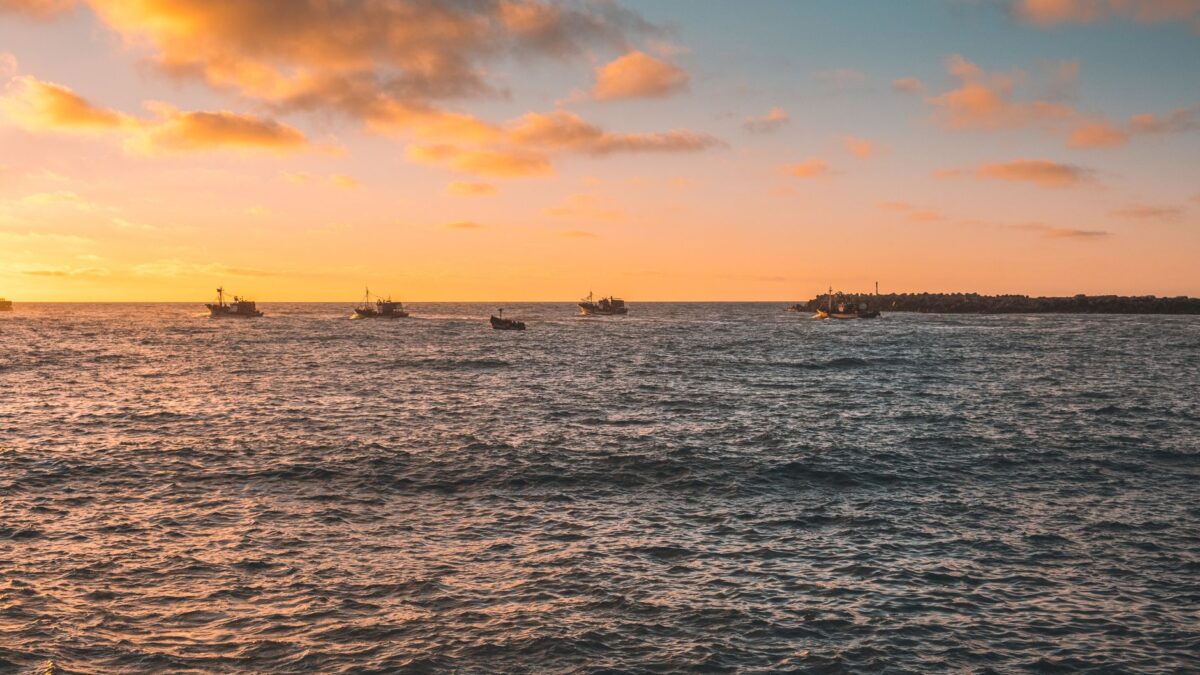
Morocco travel briefing for September 2026: weather, festivals, traffic alerts, and costs in Rabat.
 News & Updates
Morocco in August 2026: what travelers should know now
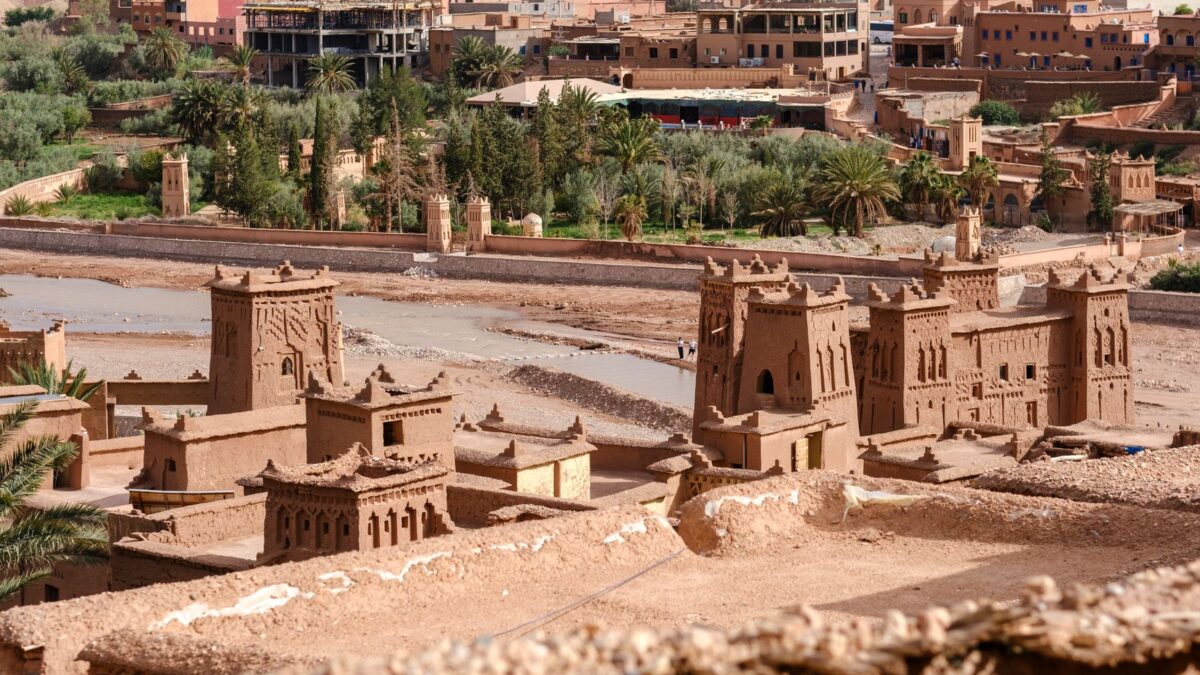
Morocco in August 2026: Rabat weather, the L'Océan demolition detour, new Jidar murals, the Morocco-India Forum, and current prices for food and tram rides.
 Costs & Money
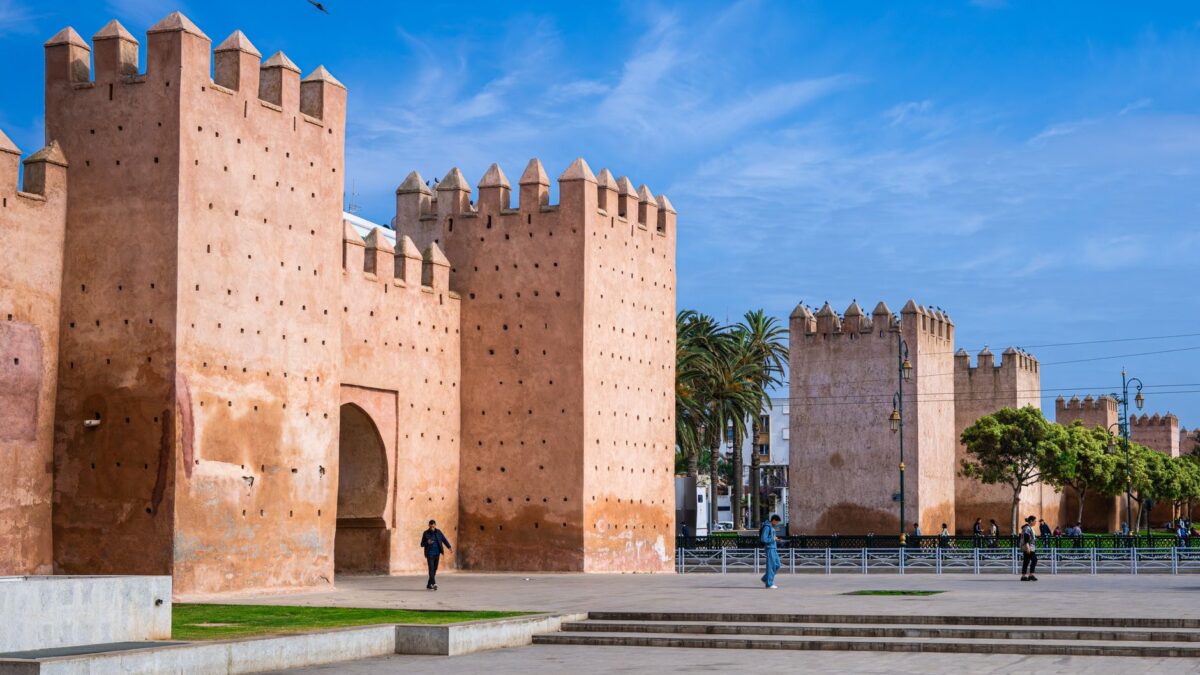
A week in Rabat on a mid-range budget
A detailed, day-by-day budget for a week in Rabat, Morocco, on a mid-range budget — real prices for meals, transit, hotels, and attractions.
 Food & Drink
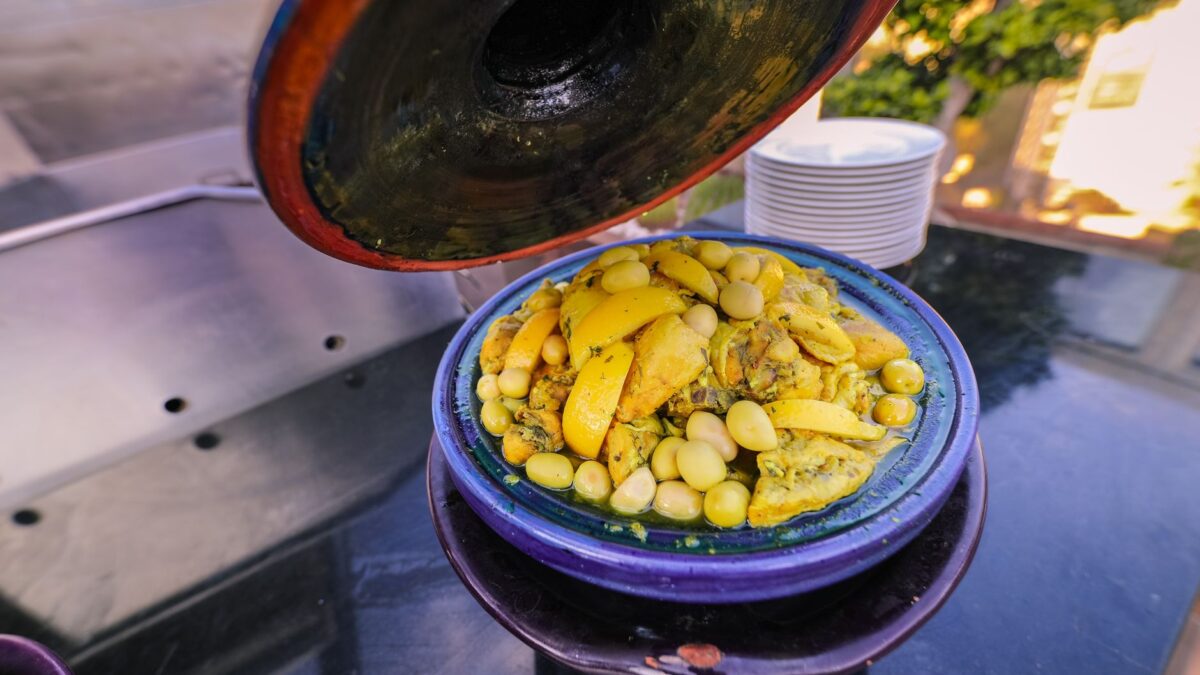
What to eat in Morocco — and what it costs
Honest Rabat food guide: what to eat in Morocco, where to find it, and real prices from street kefta to sit-down tagines, in dirhams…
North Africa
 Egypt
EgyptEgypt Travel Podcast with Nour Hassan
The Nile's annual flood, along with the deserts to the east and west, allowed one of the world's great civilizations to develop…
 Tunisia
Tunisia Travel Podcast with Rania Ben Salah
The Sahara's northern edge in Tunisia is semiarid, while the central plain stays hot and dry and the northern mountains enjoy mild,…