

How much does a trip to United Arab Emirates cost?
The air-conditioned bus pulls away from the marina on Al Maryah Island, and I watch the glass towers of ADGM shrink in the mirror. A man two seats ahead is fanning himself with a newspaper, fresh from the Al Mina Fish Market, his bag heavy with hammour. This is Abu Dhabi in mid-August — 45 degrees of shimmering heat, and the city has adjusted its rhythm. The pavements are quiet until sunset, but the malls are humming, the museums are cool, and the date festivals are in full swing. If you’re thinking of visiting, you’re probably asking one question: what does it actually cost? Let me walk you through it, dirham by dirham.
The Big Three: Flights, Visas, and Getting Around
Getting here is straightforward. Zayed International Airport handles direct flights from most major US, UK, and EU hubs. For many Western passport holders — Americans, Brits, Australians — entry is a free visa on arrival, typically valid for 90 days. That’s a saving of roughly AED 350–500 compared to pre-arranged tourist e-visas. Check the ICP website before you fly, but for most of you, the only cost at immigration is a stamp.
Once you’re in the city, transport is genuinely cheap. The public bus network, run by AD Mobility, uses the Hafilat Smart Card. A single city-zone fare is AED 2 — about 55 US cents. The card itself costs AED 10 from any ticket machine or Lulu Hypermarket. If you’re staying a week, get the 7-day unlimited pass for AED 35; it pays for itself after three journeys. For longer stays, the 30-day pass is AED 95. Taxis are metered and reasonable: a base fare of around AED 12, and a typical short city ride will cost AED 15–25. From the airport to downtown Saadiyat, expect closer to AED 70–90, but the bus — routes A1 or A2 — will get you there for a couple of dirhams.
One thing that changed recently: Abu Dhabi Mobility launched new MR1 and MR2 bus routes in July, linking Mohammed bin Zayed City Train Station directly to the Main and Al Zahiyah bus stations. That means if you arrive by Etihad Rail’s new Abu Dhabi–Fujairah passenger service, your first and last mile is now seamless and cheap.
Where to Sleep: From Budget Beds to Corniche Views
Accommodation is where you’ll feel the biggest range. For budget travellers, dorm beds in hostels are scarce in Abu Dhabi, but you can find no-frills guesthouses and 2-star hotels in the downtown Al Zahiyah area for as little as AED 150–200 a night. More realistically, a clean private room in a budget hotel will run AED 180–250.
Mid-range is the sweet spot. A 3–4 star hotel like the TRYP by Wyndham or Novotel Al Bustan will typically cost AED 230–450 per night. I’ve seen Copthorne rates around AED 279, and Le Méridien near the Corniche hovering around AED 430. These are comfortable, air-conditioned, often with a pool, and centrally located. For a family, the Jannah Executive Hotel Apartments on the Corniche offer suites with kitchenettes — useful if you want to cook some meals and save on restaurant bills.
At the top end, the luxury options are world-class: the Four Seasons on Al Maryah Island or the beachfront resorts on Saadiyat Island will set you back AED 800–1,500 a night. But here’s a local secret: summer rates at many 5-star hotels drop by 30–50% because of the heat. It’s not unusual to snag a deluxe room at a fraction of winter prices.
Eating and Drinking: Shawarma to Machboos
Food is where you can really balance your budget. Street food is a gift. A shawarma sandwich costs AED 5–10 — that’s about $2 — and it’s substantial. A cup of karak chai, the spiced milky tea that defines Emirati cafeterias, is AED 2–5. You can eat well on AED 50 a day if you stick to these staples, plus fruit from any Lulu or Carrefour.
At a casual local restaurant, a plate of machboos — the national dish of spiced rice with lamb or chicken — will cost AED 30–45. That’s a filling, authentic meal. For something more polished, head to Al Fanar Restaurant & Cafe at Yas Mall, which serves excellent Emirati cuisine in a heritage setting; mains will be AED 50–80, worth it for the experience and the atmosphere.
Your daily coffee habit will cost more. A cappuccino at a café is AED 18–28 — about $6 – $7. Meanwhile, a local beer in a bar will cost AED 40–55, thanks to the heavy alcohol tax. If you drink, budget accordingly, or switch to fresh juices and soft drinks to keep costs down. At the nicer sit-down restaurants, like Society Abu Dhabi or Swiss Butter in Novotel Al Bustan, expect AED 100-150 per person for a full meal with mocktails.
Attractions: Culture and Thrills on a Budget
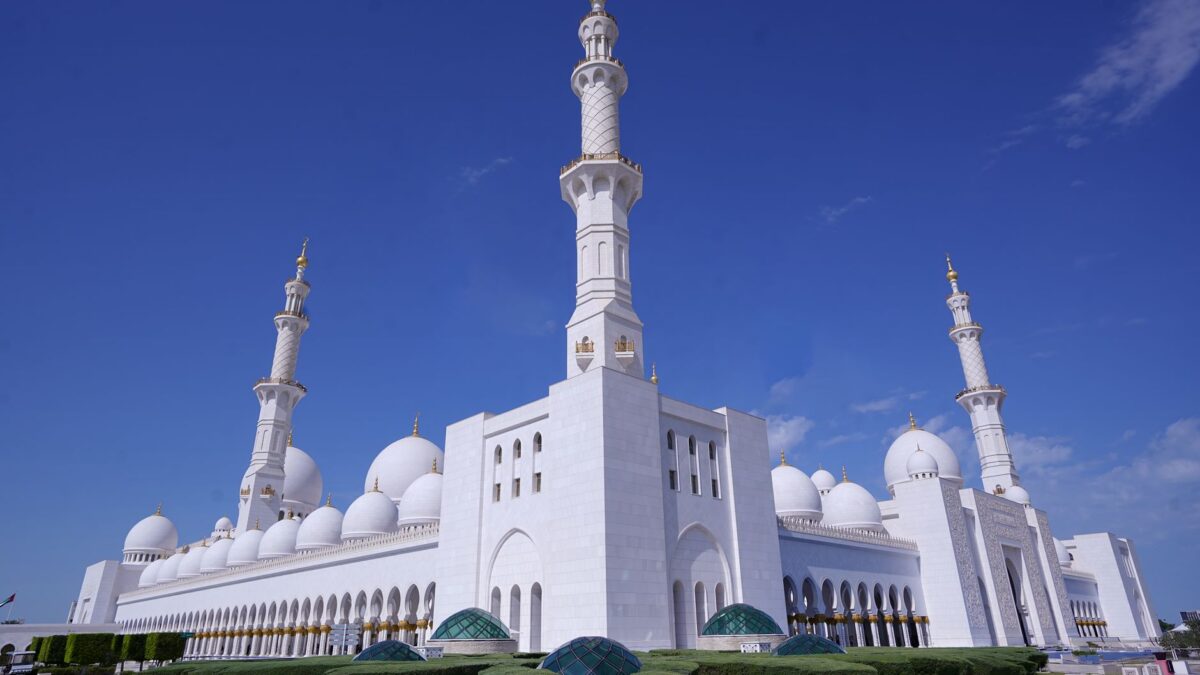
Abu Dhabi’s headline attractions are expensive, but there are ways to save. The Sheikh Zayed Grand Mosque is completely free — a stunning 45-minute guided tour of white marble and the world’s largest hand-knotted carpet. It’s a non-negotiable visit.
The Louvre Abu Dhabi on Saadiyat Island charges AED 63 for general admission. During the summer programme, UAE residents get 30% off and children go free — so if you can borrow a resident’s card, or if you’re staying long enough to get an Emirates ID, you’ll save. The current special exhibition, ‘LEGO SHOWS Natural Brickstory’, opens at the Natural History Museum on 21 August and is included with general admission; that museum’s tickets run around AED 100.
Yas Island is the big-budget day. Ferrari World, Warner Bros. World, and SeaWorld each have ticket prices around AED 250–350 per park. Choose one, not three, unless you have deep pockets. Alternatively, the free and low-cost options are excellent: the Corniche beach is free for public access, Mangrove National Park kayaking is around AED 100 for a paddle through the protected wetlands, and Al Wathba Fossil Dunes is a free nature reserve with 34-million-year-old formations.
If you’re here in August specifically, you’ve timed it for the dates festivals. The Al Wathba Dates Festival wrapped up earlier in the month, but the inaugural Sheikh Zayed Summer Festival is running until 23 August with free heritage, sports, and AI programming for families. And for the little ones, the CoComelon Sing-A-Long with Blippi plays at Etihad Arena on Yas Island on 15–16 August — tickets are around AED 100–150.
Daily Budget Totals: The Bottom Line
Let me give you three realistic daily totals, excluding flights but including everything else — accommodation, food, transport, and one paid attraction.
- Budget traveller (AED 180–250 / day, ~$50–70): Budget hotel room (AED 200), four shawarmas and karak chai (AED 40), bus pass daily equivalent (AED 5), one major attraction per two days (AED 50/day average), plus a trip to the Grand Mosque (free).
- Mid-range comfort (AED 500–700 / day, ~$140–190): 3-4 star hotel (AED 350), one restaurant meal (AED 60) plus street food (AED 30), café cappuccino (AED 20), one taxi ride (AED 20), one theme park or museum entry (AED 100), plus a yoga class or dessert out (AED 50).
- Comfortable/upper (AED 1,000–1,500 / day, ~$270–410): 5-star hotel (AED 800), dinner at a premium restaurant like Al Khayma Heritage Restaurant (AED 120), lunch at a mall café (AED 80), taxis exclusively (AED 60), one premium admission (AED 300), plus a drink or two (AED 120).
For a week-long trip, a sensible midpoint for most people is around AED 4,000 – 4,500 ($1,100–1,200) per person, not including flights, for a comfortable mid-range stay with a good mix of attractions. Remember, the cheapest days are the ones you spend outdoors — the mosques, the corniche, the heritage village — and in August, the heat makes you grateful for every air-conditioned bus.
One final note on money: use cards where you can. The ADCB, FAB, and Emirates NBD ATMs are everywhere, and they accept international cards with minimal fees. Carry some cash for the souk and street stalls, but don’t over-carry. Abu Dhabi is one of the safest cities in the world — emergency number 999 — but that doesn’t mean you shouldn’t be smart. Keep your hotel card, your Hafilat card, and a cold bottle of water close, and let this city’s golden light do the rest.
Frequently asked questions
Is Abu Dhabi expensive for tourists?
It depends on your style. A budget traveller can manage on AED 180-250 per day, while a mid-range visitor should budget AED 500-700. Transportation is very cheap (bus fares AED 2) and street food like shawarma is AED 5-10, but alcohol and theme parks are pricey.
How much does a hotel cost in Abu Dhabi?
Nightly rates for a 3-4 star hotel typically range from AED 230 to 450, like TRYP or Novotel. Budget hotels are around AED 150-200, while luxury resorts on Saadiyat or Al Maryah Islands start around AED 800.
What is the best way to get around Abu Dhabi on a budget?
Use the public bus network with a Hafilat Smart Card. A single city-zone ride is AED 2, and a 7-day unlimited pass costs AED 35. Taxis are metered with a base fare of about AED 12, useful for short rides or late nights.
Are there free things to do in Abu Dhabi?
Yes, the Sheikh Zayed Grand Mosque is completely free with guided tours. The Corniche beaches, Al Wathba Fossil Dunes, and the Emirates Heritage Village are also free. The Sheikh Zayed Summer Festival (until Aug 23) offers free family programming.
Do US citizens need a visa for Abu Dhabi?
No, US citizens (like most Western nationalities) receive a free visa on arrival at Zayed International Airport, typically valid for 90 days. Always verify the latest rules on the ICP website before travel, but no pre-arranged visa is needed for short stays.


