


United Arab Emirates Travel Podcast with Omar Al Mansouri
Hosted by Omar Al Mansouri — a new episode every day from United Arab Emirates.
The United Arab Emirates is a country of abrupt transitions: flat coastal plains give way to rolling dunes, and the eastern mountains rise behind cities where Arabic, English, Hindi and Urdu all meet in daily conversation. This podcast looks at what it means to travel through that landscape as a resident would, moving slowly and paying attention.
Over the series, the focus moves from the high-rise districts of Dubai and the waterfront of Abu Dhabi to the older streets of Sharjah and the mountain wadis around Fujairah in the east. These places share one country but differ in pace, architecture and daily rhythm.
The episodes follow a longer stay in each place, so the same markets, corniches and desert tracks reappear in different light. Summer heat changes how a city moves; winter weekends bring camping in the dunes. Returning to the same landmarks again allows a different kind of knowledge to build up.
Recent episodes
Things to do in United Arab Emirates
 Experience Burj Al Arab by Jetski
 Go Fishing Dubai 5 hours Trolling & Regular Fishing
 Dubai: 60Min Jet Ski To Burj Al Arab, Atlantis The Palm
 1 hour Jetski Tour - Burj Al Arab Tour
 Flyboard Experience in Dubai
 Sandventures
 Dubai Desert Safari at Arabian Heritage Luxury Camp
 Evening Desert Safari With Live Shows and BBQ Dinner
Plan your trip to United Arab Emirates
Getting around
Staying connected
United Arab Emirates at a glance
United Arab Emirates in depth
Reference data on the country — geography, people, history, economy and transport.
Geography and climate
Location
Middle East, bordering the Gulf of Oman and the Persian Gulf, between Oman and Saudi Arabia
Terrain
Flat, barren coastal plain merging into rolling sand dunes of vast desert; mountains in east
Climate
Desert; cooler in eastern mountains
Elevation
- Highest point
- Jabal Bil 'Ays 1,905 m
- Lowest point
- Persian Gulf 0 m
- Mean elevation
- 149 m
Area
- Total
- 83,600 sq km
- Land
- 83,600 sq km
- Water
- 0 sq km
Size comparison
Slightly larger than South Carolina; slightly smaller than Maine
Coastline
1,318 km
Land borders
- Total
- 1,066 km
- Border countries
- Oman 609 km; Saudi Arabia 457 km
Natural resources
Petroleum, natural gas
Land use
- Agricultural land
- 5.5% (2023 est.)
- Arable land
- 0.7% (2023 est.)
- Permanent crops
- 0.6% (2023 est.)
- Permanent pasture
- 4.2% (2023 est.)
- Forest
- 4.6% (2023 est.)
- Other
- 89.7% (2023 est.)
Natural hazards
Frequent sand and dust storms
Note
Strategic location along southern approaches to Strait of Hormuz, a transit point for crude oil; Abu Zaby (Abu Dhabi) and Dubayy (Dubai) together account for over 90% of UAE's area and two-thirds of the population
People and society
Population
- Total
- 10,093,593 (2025 est.)
- Male
- 6,831,802
- Female
- 3,261,791
Nationality
- Noun
- Emirati(s)
- Adjective
- Emirati
Ethnic groups
Emirati 11.6%, South Asian 59.4% (includes Indian 38.2%, Bangladeshi 9.5%, Pakistani 9.4%, other 2.3%), Egyptian 10.2%, Filipino 6.1%, other 12.8% (2015 est.)
Languages
- Languages
- Arabic (official), English, Hindi, Malayalam, Urdu, Pashto, Tagalog, Persian
- Major-language sample(s)
- كتاب حقائق العالم، المصدر الذي لا يمكن الاستغناء عنه للمعلومات الأساسية (Arabic)
Religions
Muslim 74.5% (official) (Sunni 63.3%, Shia 6.7%, other 4.4%), Christian 12.9%, Hindu 6.2%, Buddhist 3.2%, agnostic 1.3%, other 1.9% (2020 est.)
Median age
- Total
- 35.8 years (2025 est.)
- Male
- 38.1 years
- Female
- 29.8 years
Life expectancy
- Total population
- 79.9 years (2024 est.)
- Male
- 78.6 years
- Female
- 81.4 years
Urbanisation
- Urban population
- 87.8% of total population (2023)
- Rate of urbanization
- 1.5% annual rate of change (2020-25 est.)
Where people live
Population is heavily concentrated to the northeast on the Musandam Peninsula; the three largest emirates -- Abu Dhabi, Dubai, and Sharjah -- are home to nearly 85% of the population
Largest cities
3.008 million Dubai, 1.831 million Sharjah, 1.567 million ABU DHABI (capital) (2023)
Background and government
Background
The Trucial States of the Persian Gulf coast granted the UK control of their defense and foreign affairs in 19th-century treaties. In 1971, six of these states -- Abu Dhabi, 'Ajman, Al Fujayrah, Ash Shariqah, Dubayy, and Umm al Qaywayn -- merged to form the United Arab Emirates (UAE). Ra's al Khaymah joined in 1972.
The UAE's per-capita GDP is on par with those of leading West European nations. For more than three decades, oil and global finance drove the UAE's economy. In 2008-09, the confluence of falling oil prices, collapsing real estate prices, and the international banking crisis hit the UAE especially hard. The UAE did not experience the "Arab Spring" unrest seen elsewhere in the Middle East in 2010-11, partly because of the government's multi-year, $1.6-billion infrastructure investment plan for the poorer northern emirates, and its aggressive pursuit of advocates for political reform.
The UAE in recent years has played a growing role in regional affairs. In addition to donating billions of dollars in economic aid to help stabilize Egypt, the UAE was one of the first countries to join the Defeat ISIS coalition, and to participate as a key partner in a Saudi-led military campaign in Yemen. In 2020, the UAE and Bahrain signed a peace agreement (the Abraham Accords) with Israel -- brokered by the US -- in Washington, D.C. The UAE and Bahrain thus became the third and fourth Middle Eastern countries, along with Egypt and Jordan, to recognize Israel.
Government
Federation of monarchies
Capital
Abu Dhabi
Time zone
UTC+4 (9 hours ahead of Washington, DC, during Standard Time)
Local name
Al Imarat al Arabiyah al Muttahidah
Independence
2 December 1971 (from the UK)
National day
Independence Day (National Day), 2 December (1971)
Economy and cost of living
Overview
High-income, oil-driven Middle Eastern economy; fastest GDP growth of Gulf states; diversification through tourism, construction, and services; strong foreign direct investment orientation; continued government investment and business-friendly reforms
GDP per capita
- Real GDP per capita 2024
- $68,600 (2024 est.)
- Real GDP per capita 2023
- $68,600 (2023 est.)
- Real GDP per capita 2022
- $68,900 (2022 est.)
Inflation
- Inflation rate (consumer prices) 2024
- 1.7% (2024 est.)
- Inflation rate (consumer prices) 2023
- 1.6% (2023 est.)
- Inflation rate (consumer prices) 2022
- 5.3% (2022 est.)
Unemployment
- Unemployment rate 2024
- 2.2% (2024 est.)
- Unemployment rate 2023
- 2.2% (2023 est.)
- Unemployment rate 2022
- 2.9% (2022 est.)
Exchange rate
- Currency
- Emirati dirhams (AED) per US dollar -
- Exchange rates 2024
- 3.672 (2024 est.)
- Exchange rates 2023
- 3.672 (2023 est.)
- Exchange rates 2022
- 3.672 (2022 est.)
- Exchange rates 2021
- 3.672 (2021 est.)
- Exchange rates 2020
- 3.672 (2020 est.)
Main industries
Petroleum and petrochemicals; fishing, aluminum, cement, fertilizer, commercial ship repair, construction materials, handicrafts, textiles
Agriculture
Dates, cucumbers/gherkins, camel milk, goat milk, tomatoes, chicken, goat meat, eggs, milk, camel meat (2023)
Transport and connectivity
Airports
42 (2025)
Ports
- Total ports
- 20 (2024)
- Large
- 1
- Medium
- 4
- Small
- 9
- Very small
- 6
- Ports with oil terminals
- 17
- Key ports
- Abu Zaby, Jabal Az Zannah/Ruways, Khawr Fakkan, Mina Jabal Ali, Zirkuh
Internet domain
.ae
Internet users
Percent of population 100% (2023 est.)
Mobile subscriptions
- Total subscriptions
- 22.4 million (2024 est.)
- Subscriptions per 100 inhabitants
- 203 (2024 est.)
Environment
Environmental issues
Air pollution; water scarcity; lack of natural freshwater resources; land degradation and desertification; waste generation, beach pollution from oil spills
Fresh water
150 million cubic meters (2022 est.)
Country reference figures are periodically revised. Check anything time-sensitive or safety-critical against an official source before you travel.
United Arab Emirates travel guides
 Travel Tips
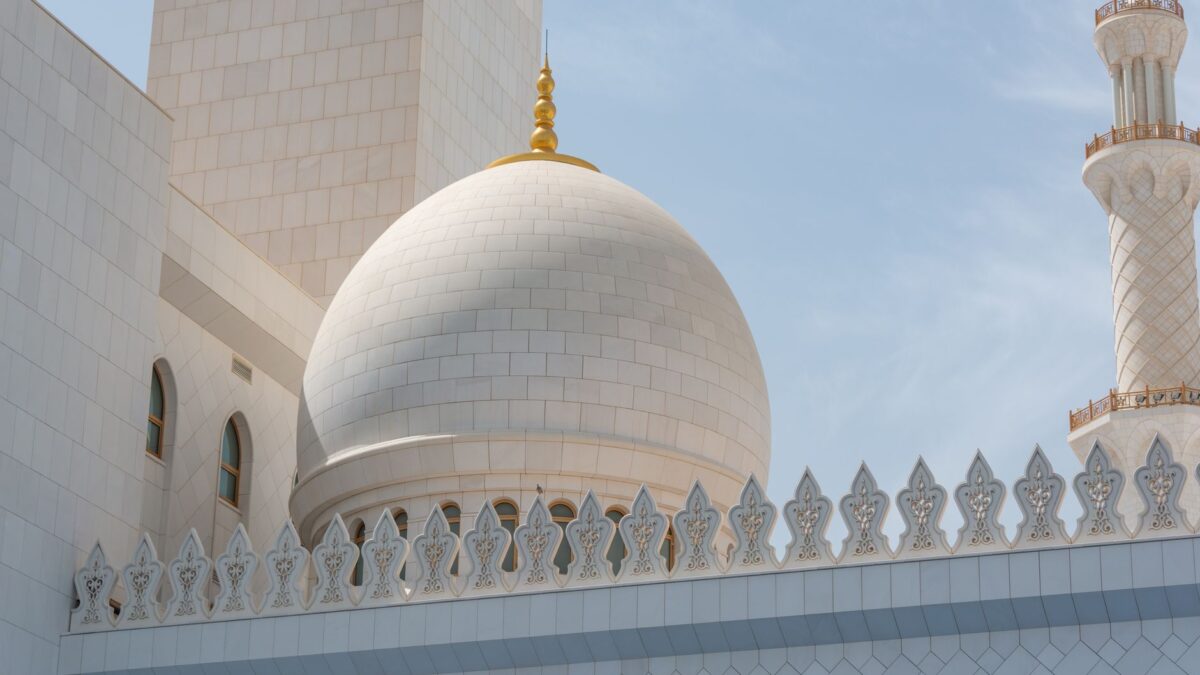
A first-timer’s guide to United Arab Emirates
Your practical guide to visiting Abu Dhabi: best times to go, transport tips, district highlights, and local insights for a seamless first trip.
 Living Abroad
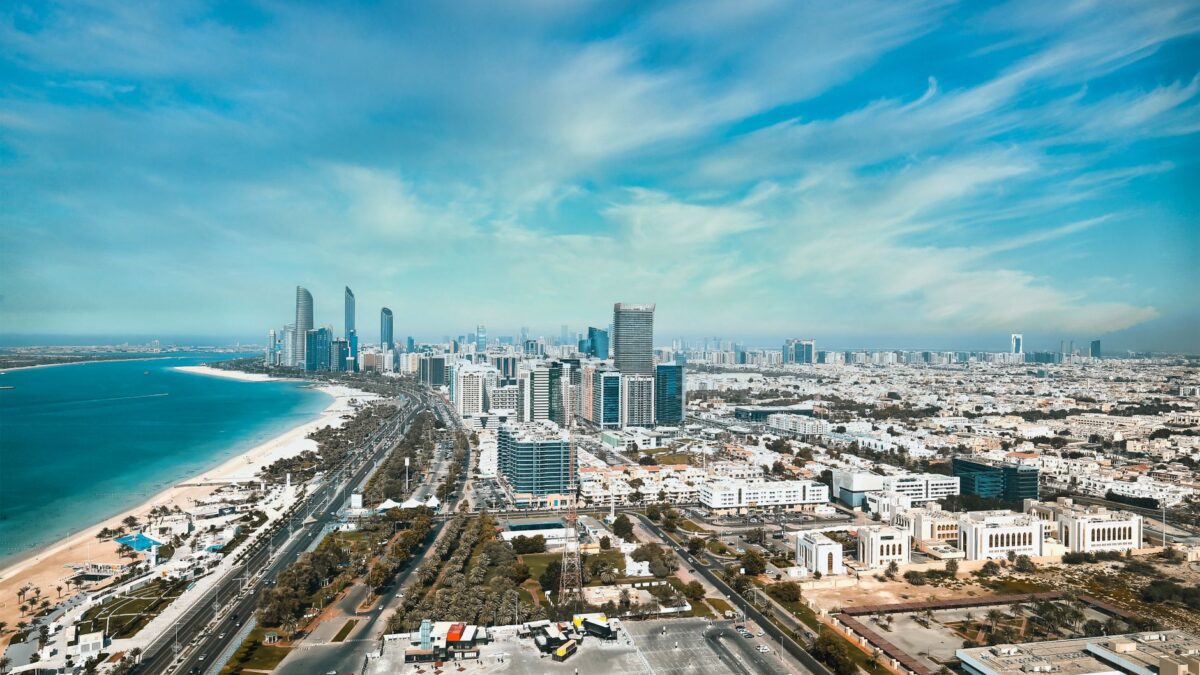
Moving to United Arab Emirates: visas, banking and SIM cards
Moving to Abu Dhabi? Omar Al Mansouri guides you through visas, banking, SIM cards, and the Hafilat transport card for a smooth first-week setup.
 News & Updates
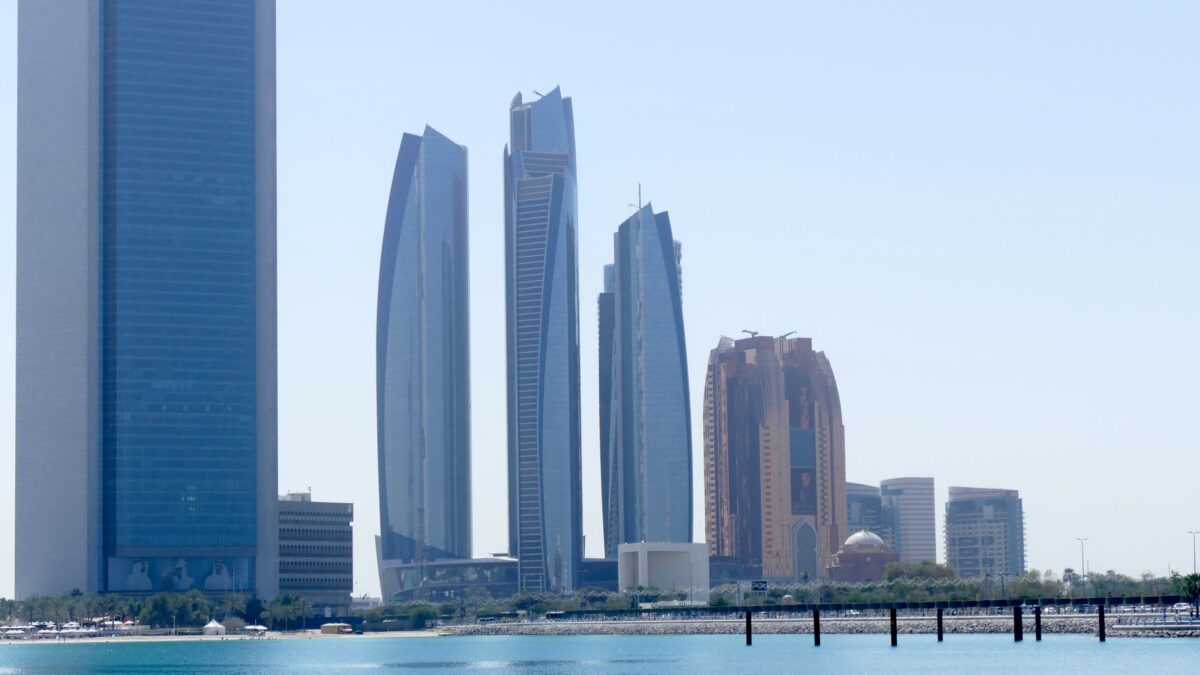
United Arab Emirates in September 2026: what travelers should know now
Abu Dhabi in September 2026: weather, ADNEX events, costs, and essential tips for travelers arriving this month.
 Getting Around
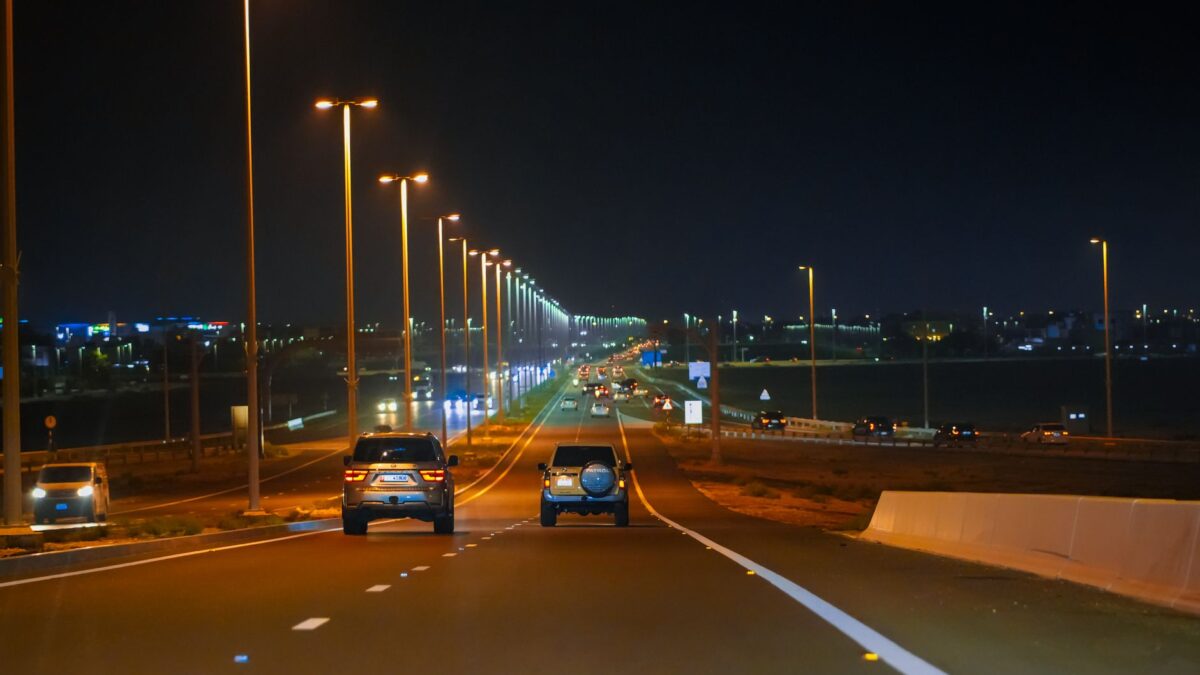
Getting around Abu Dhabi: metros, taxis and passes
Omar’s guide to Abu Dhabi transport: Hafilat bus passes, taxis, the coming rail, and walking tips for the August heat. Local insights for 2026.
Western Asia
 Turkey
Turkey Travel Podcast with Emre Yilmaz
The Anatolian plateau, with its harsh interior climate, sits at the heart of a country whose largest city clusters around the Bosporus.
 Saudi Arabia
Saudi Arabia Travel Podcast with Layla Al Qahtani
A mostly sandy desert stretching between the Persian Gulf and the Red Sea makes Saudi Arabia the largest country on earth with…
 Israel
Israel Travel Podcast with Noa Shapira
The Negev desert, hot and dry in the south, gives way to a low coastal plain and central mountains; Hebrew and Arabic…
 Jordan
Jordan Travel Podcast with Faris Al Khouri
The Jordanian Highlands, a north-south spine west of the capital, channel winter rains towards the Dead Sea and the Jordan Valley.