

A first-timer’s guide to Malaysia
The August air in Kuala Lumpur hits you like a warm, wet blanket the moment you step out of KLIA — and then you smell it: durian. Not the faint, polite whiff you might have encountered in an Asian grocery store back home, but a thick, sweet, slightly funky aroma that hangs over the roadside stalls and night markets. It’s peak durian season, which means the musang king and kampung varieties are cheap, ripe, and absolutely everywhere. For a first-timer, it’s your first real taste of the sensory overload that is Malaysia’s capital — and honestly, it only gets better from here.
When to come and how long to stay
There’s no true “bad” time to visit KL, but August sits right in the thick of the southwest monsoon. That means daily downpours, usually short and sharp in the late afternoon, followed by sticky, 25–35°C heat that feels closer to 40°C when the sun peeks through the overcast. Pack an umbrella and light, breathable clothing — you’ll use both within the same hour.
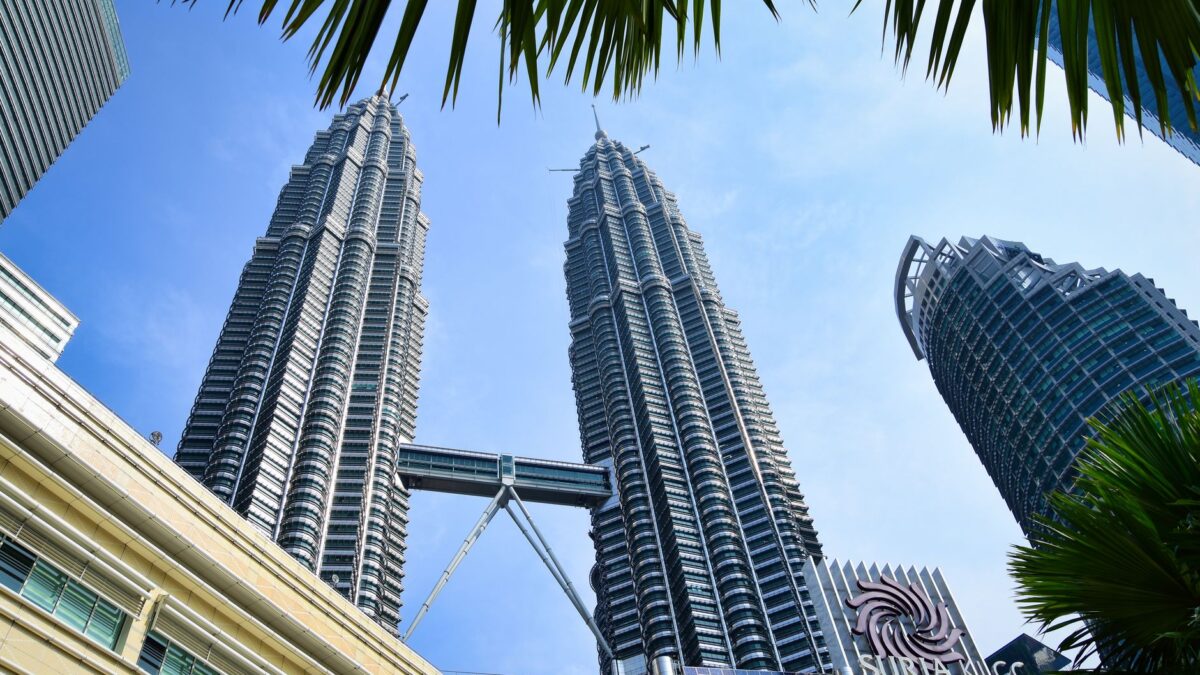
For a first trip, give yourself at least five full days in the city. That’s enough to tick off the big landmarks — the Petronas Twin Towers Skybridge (book ahead for the 41st-floor bridge and 86th-floor deck), the 421-metre Menara KL, the colossal Merdeka 118 — and still leave time for the neighbourhoods. If you can stretch to a week, add a day trip: Cameron Highlands’ tea plantations, Genting Highlands’ hill resorts, or Kuala Selangor’s firefly river cruises are all within a few hours’ drive.
Getting around: tap, ride, and don’t overthink it
KL’s public transport is genuinely good, and it’s getting better — the new LRT3 Shah Alam Line has pushed daily rail ridership past one million. But the ageing Kelana Jaya Line still makes headlines for breakdowns, so give yourself buffer time if you’re catching a flight. The simplest move is to buy a reloadable Touch ‘n Go card at any station — it works on the MRT, LRT, Monorail, KTM, and Rapid KL buses. A short ride will set you back about RM 2–3, and if you’re staying a month or more, the My50 pass caps unlimited RapidKL rides at just RM 50 — less than what you’d spend on two café lattes in some cities.
For airport transfers, the KLIA Ekspres is your best friend: 28 minutes from KLIA to KL Sentral, no traffic jams. From there, hop onto the LRT to your hotel. And when your feet give out — they will — Grab dominates ride-hailing. It’s safe, cheap, and you pay through the app, so no haggling.
Money: the ringgit goes further than you think
Your first instinct might be to convert everything to US dollars in your head. Stop that. Malaysia is one of Asia’s more affordable capitals, and the ringgit buys plenty. A filling hawker meal — say, a plate of nasi campur with rice, veg, and protein — runs about RM 5–10. A bowl of laksa, RM 8–10. Even a proper nasi lemak, the coconut-rice national breakfast with sambal and anchovies, is RM 5–13. Over on Jalan Alor, the famous street-food strip in Bukit Bintang, a typical meal spend is RM 10–15. That’s around US$2–3. You’ll eat well and often for less than a single fast-food combo back home.
At sit-down restaurants, expect RM 23–28 per meal. A durian from Chow Kit market? About RM 32 for a 1.3kg fruit — roughly US$4, which is ridiculous for the flavour. Carry small notes; many hawkers and market vendors don’t take cards. ATMs are everywhere, and the current exchange rate sits around 4.6 ringgit to the US dollar.
Where to base yourself (and where to actually hang out)
First-timers naturally gravitate to Bukit Bintang — the Golden Triangle’s shopping and nightlife heart, with Pavilion KL, Changkat Bukit Bintang’s bars, and Jalan Alor all on your doorstep. If you want something more local, consider:
- Bangsar — an expat-favourite enclave with Telawi-street nightlife and brunch spots like Antipodean. One LRT stop from KL Sentral, so it’s super convenient.
- Brickfields — Little India, right next to KL Sentral, with banana-leaf curries that’ll ruin you for other food.
- Old City Centre / Chinatown — Petaling Street’s hustle, Central Market, and regenerating shophouses near Merdeka 118. Most atmospheric, most chaotic.
- TTDI — a leafy suburb with MRT access and a great park for morning jogs. More peace, more space.
Hotels run the gamut, but budget-to-mid-range spots like Seeds Hotel Premier Kampung Baru or Kingston Hotel 4 in Bukit Bintang offer clean rooms without the five-star price tag. If you want to be near the new TRX district, check out Agile Residence TRX — handy for the MRT and surrounded by new cafés.
Five things I wish I’d known before my first trip
1. The MDAC is non-negotiable
Even though most nationalities get visa-free entry for 30 or 90 days, you must complete the free Malaysia Digital Arrival Card (MDAC) online within three days before you land. It takes five minutes, and skipping it can mean hassle at immigration. Also carry proof of onward travel and enough funds — they do ask.
2. Your passport is your everything
Buying a local SIM at KLIA arrivals? Your passport gets scanned, and biometric verification is tied to your registration. Opening a bank account — say, with Maybank or CIMB for payroll — needs your passport, valid visa, and proof of address. Opening a door at a serviced apartment? Many use digital locks, but when they don’t, expect a physical key. Keep your passport on you in a money belt, not your back pocket.
3. “Safe” doesn’t mean “careless”
KL is generally safe, but snatch thefts happen — especially phones and bags on streets and in markets. Don’t walk down Petaling Street with your phone dangling from your hand. Use Grab over unlicensed taxis at night. Avoid dimly lit alleys, and be street-smart around Chow Kit. It’s not dangerous; it’s just city common sense.
4. The rain is part of the rhythm
Don’t let a 4pm downpour ruin your plans. Cafés like LOKL Coffee Co in Chinatown or Feeka Coffee Roasters in Bukit Bintang are perfect rain stops. Or duck into the Islamic Arts Museum Malaysia — Southeast Asia’s largest of its kind, with 12 galleries of calligraphy, Qur’ans, and ceramics. The rain usually passes within an hour.
5. The weekends are for events
August in KL is packed. Heineken House brings a two-stage music event with local acts and a 360-degree Star Club stage to XOX Arena at The Arch Galeries (15 August). The klpac hosts ‘Unbound’, a baroque-meets-contemporary-dance production with the Kenny Shim Dance Collective (15–16 August). And LaLaport BBCC’s Bon Odori festival fills its rooftop garden with yukata crowds, taiko drumming, and idol performances from KLP48 and JKT48 (1–2 and 8–9 August). Plus, Two Door Cinema Club plays their ‘Tourist History’ anniversary set in full at Zepp KL on 19 August. Check what’s on before you book — you might time your trip around something amazing.
The bottom line
KL is a city that rewards the curious and the hungry. It’s chaotic in the best way — colonial shophouses next to glass towers, Tamil temples down the road from Chinese hawker halls, monkeys in the forest park, and fireflies on the river. For a first-timer, the essentials are simple: bring an open mind, an empty stomach, and a rain jacket. The ringgit will stretch, the Grab drivers will chat, and by the end of your first week, you’ll already be planning your second visit — probably to Penang or Langkawi. But that’s a story for another episode.
Frequently asked questions
How many days do I need for a first visit to Kuala Lumpur?
Plan for at least five full days in the city to cover the main landmarks plus neighbourhoods like Bukit Bintang and Bangsar. A week allows for a day trip to Cameron Highlands or firefly-watching in Kuala Selangor.
Do I need a visa to visit Malaysia as an American or European tourist?
Most US, UK, EU, and Australian passport holders enter visa-free for 90 days. You must complete the free Malaysia Digital Arrival Card (MDAC) online within three days before arrival and carry an onward ticket.
How much does food cost in Kuala Lumpur for a tourist?
A hawker meal like nasi campur or laksa costs about RM 8–12 (US$2–3), while a sit-down restaurant meal runs RM 23–28. Street food on Jalan Alor averages RM 10–15 per meal.
What is the best way to get around KL as a tourist?
Buy a Touch 'n Go card for MRT, LRT, and Monorail — a short ride costs RM 2–3. The KLIA Ekspres train connects the airport to KL Sentral in 28 minutes, and Grab is the most reliable ride-hailing option.
Is Kuala Lumpur safe for solo travellers at night?
KL is generally safe, but petty theft happens. Avoid dimly lit alleys, keep your phone hidden on streets like Petaling Street, and use Grab rather than unlicensed taxis late at night.
Things to do in Malaysia
 Penang 5 Hour Small Group Balik Pulau Cycling Tour With Lunch
 Half-Day Mangrove Kayaking in Langkawi
 Full Day Flexi Private Tour in Penang Island with Pickup
 Market Visit & Private Hands-on Cooking Class at Daun Senja
 Half-Day Geopark Mangrove Kayaking Adventure
 Back of the Bike Street Food Experience – Real Penang!