A first-timer’s guide to Bosnia and Herzegovina
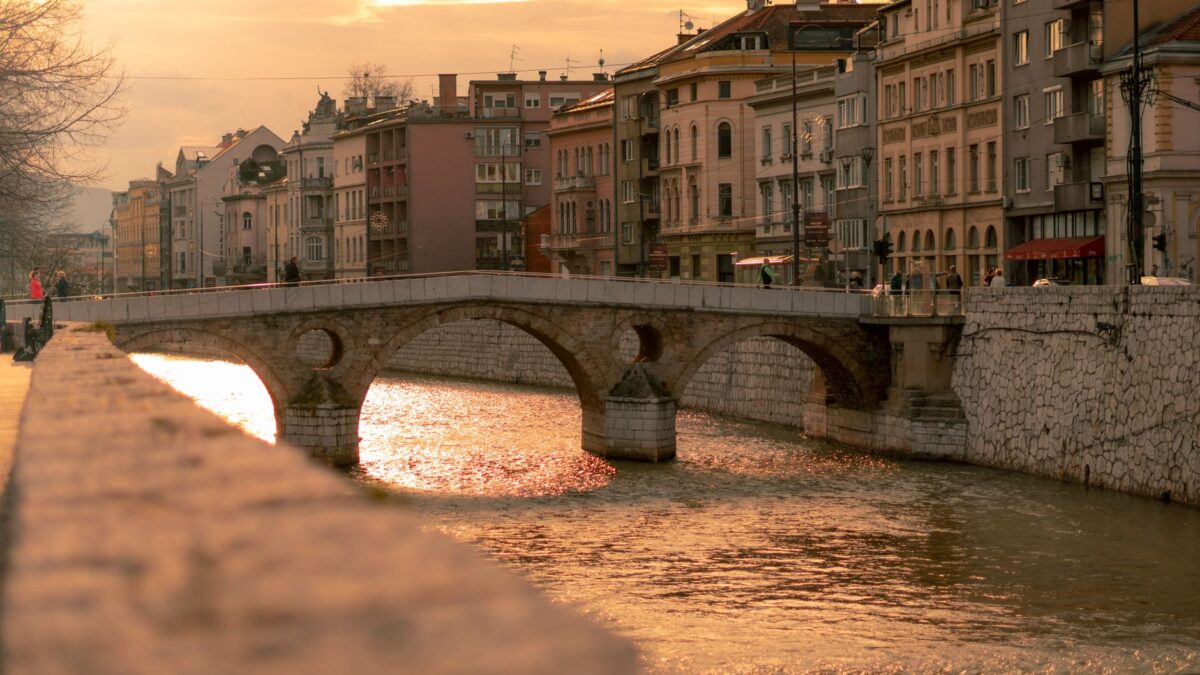
The first thing you notice in Sarajevo is the light. It pools on the red roofs of Baščaršija, slides down the Miljacka river, and catches the minarets just as the call to prayer drifts over the city. In August, the air smells of grilled ćevapi, ripe plums, and the faint metallic tang of copper being hammered in Kazandžiluk. The Sarajevo Film Festival is about to take over the streets — red carpets are already rolled out, flags flutter along the river — and every café spills onto the pavement. You’ve arrived at the right moment. Here’s everything you need to know before you come.
When to come and how long to stay
The sweet spot is late spring (May–June) and early autumn (September–October), when temperatures hover in the low-to-mid 20s and the city is green and quiet. But if you’re a festival lover, mid-August is electric: the 32nd Sarajevo Film Festival runs August 14–21, with the red carpet outside the National Theatre and open-air screenings in the old town. You’ll need to book accommodation months ahead — this is peak season for a reason. The weather in August is hot (expect up to 34°C), so pack light layers and a hat for daytime exploring.
As for duration: give yourself at least 3–4 days for Sarajevo itself, and add 2–3 more if you want to day-trip to Mostar or the mountains. A week lets you see the city’s layers, take the cable car up Trebević, and still have time to sit in a café with a cup of Bosnian coffee and do absolutely nothing. That’s part of the experience.
Getting around: trams, buses, and a dash of patience
Sarajevo’s public transport is a mixed bag — charming when it works, frustrating when it doesn’t. The historic tram line 3 runs from Baščaršija to Ilidža, passing through the heart of the city. A single ride costs about 1.80 BAM if you buy from the driver, or around 1.60 BAM from a kiosk. A day pass is about 6 BAM, and a monthly pass is around 48 BAM — but unless you’re staying for weeks, stick to single tickets or the JavniPrevozKS app for e-tickets.
For the airport, bus line 31E from Dobrinja is frequent and cheap. Taxis are plentiful but agree on a fare before you get in — scams do happen, especially around the bus station. Ride-hailing apps like Bolt are more transparent. And if you’re heading to Ilidža for Vrelo Bosne, the tram is the way to go; the ride itself is a mini-tour of the city’s Austro-Hungarian and Ottoman layers.
Money: cash is king, cards are accepted
The currency is the konvertibilna marka (BAM), pegged at about 1.8 BAM to the US dollar (roughly 2 BAM to the euro). Credit cards are widely accepted in hotels and restaurants, but for market stalls, small bakeries, and the copper shops in Baščaršija, you’ll need cash. ATMs are plentiful — check for BBI Banka or UniCredit, which are reliable. Prices are remarkably low: a cup of Bosnian coffee costs about 2.5 BAM, a local draft beer about 3.5 BAM, and a portion of ćevapi (10 pieces with somun) around 14 BAM — up from 12 BAM in 2025, a rise that made locals grumble about the national dish becoming a ‘luxury’. Even so, a meal in Baščaršija’s street-food area will rarely set you back more than 15 BAM. Bosnia remains one of Europe’s most affordable capitals.
The essential neighborhoods and sights
Start in Baščaršija, the Ottoman-era bazaar that’s been the city’s beating heart since the 15th century. Wander the cobbled streets, watch coppersmiths hammer away on Kazandžiluk, drink a bosanska kafa at a café near the Sebilj fountain, and don’t leave without a photo of the Gazi Husrev-beg Mosque, the largest and most significant Ottoman mosque in the country.
Cross the Miljacka to Bistrik, the old residential quarter home to the Sarajevo Brewery (Sarajevska pivara) — stop for a draft — and the cable car up Trebević. The 7-minute ride ascends to the 1984 Olympic mountain, where the abandoned bobsled track is now a graffiti-lined time capsule. Stick to the cleared paths — the forest beyond can still hold landmines from the war.
For history, visit the Latin Bridge, where Franz Ferdinand was assassinated in 1914, and the Vijećnica (City Hall), the Neo-Moorish beauty restored after being shelled in 1992. The Tunnel of Hope museum, at the edge of the city, tells the story of the 800-meter lifeline dug under the airport during the siege — a moving, essential experience. Just don’t confuse it with the similarly named ‘Tunnel of Salvation’ you might see listed on Google Maps; stick to the official museum near the old airport.
Modern Sarajevo lives in Marijin Dvor: Austro-Hungarian palaces, the UNITIC twin towers, and the National Museum, home to the Sarajevo Haggadah. Wander the quiet, hilly streets of Grbavica for a glimpse of everyday life away from the tourists, and if you need a green escape, take the tram to Ilidža and walk through the park to Vrelo Bosne, where the Bosna river springs from the ground.
Practicalities that make or break a trip
Visas: Citizens of the US, UK, Schengen countries, and many others can enter visa-free for up to 90 days in any 180-day period. You must be registered within 24 hours of arrival — your hotel or landlord will handle this automatically. For longer stays, apply for a temporary residence permit through the BiH Foreigners’ Affairs Service (Služba za poslove sa strancima).
SIM cards: Prepaid SIMs are cheap and easy — buy one at a kiosk from BH Telecom, m:tel, or HT Eronet. Bring your passport; registration is required. Coverage in the city is excellent.
Safety: Sarajevo is generally a safe city with low violent crime. The main risk is pickpocketing on trams — keep your wallet in the front pocket. Taxi fare scams are common, so agree on a price or use an app. And if you hike or bike on Trebević, stay on paved paths and marked trails.
What I wish I’d known: Many museums and shops close on Mondays — plan around it. The city is hilly; break in sturdy walking shoes. And coffee culture here is slow and social — when you order a bosanska kafa, it comes with a cube of sugar and a glass of water. Drink it when it’s hot, sip it slowly, and don’t rush. That’s the real Sarajevo.
If you’re lucky enough to be here in August
Your timing is impeccable. The Summer Wine Lounge takes over the Skenderija plateau on August 13 with regional and Italian exhibitors — a perfect pre-festival evening. On August 15, a free gala concert, Most prijateljstva (Bridge of Friendship), brings US opera singers and the Balkan Philharmonic to the Hotel Terme congress centre on Ilidža. And for electronic music fans, Circus Maximus, a brand-new four-night festival with NERVO and Fedde Le Grand, debuts in the open-air garden of the Hotel Europe from August 18–21. The city is alive, the nights are warm, and the plums are ripe. Buy a paper bag of them from a market stall, find a bench by the river, and let Sarajevo do its thing.
Bosnia and Herzegovina is not a postcard country — it’s a place that asks you to listen, to look, and to stay a while. Do that, and you’ll leave with more than photos. You’ll leave with a piece of its stubborn, beautiful heart.
Frequently asked questions
Is Bosnia and Herzegovina safe for first-time travelers?
Yes, Sarajevo is generally a safe city with low violent crime. Watch for pickpocketing on trams, agree taxi fares in advance, and stick to cleared paths on Trebević due to possible landmines in remote areas.
Do I need a visa for Bosnia and Herzegovina?
Citizens of the US, UK, Schengen countries, and many others can enter visa-free for up to 90 days in any 180-day period. You must be registered within 24 hours of arrival, which hotels or landlords do automatically.
What currency is used in Bosnia and Herzegovina?
The currency is the konvertibilna marka (BAM), roughly 1.8 BAM to the US dollar. Credit cards are accepted in hotels and restaurants, but cash is essential for markets and small shops.
How much does a meal cost in Sarajevo?
A portion of ćevapi (10 pieces with somun) costs about 14 BAM, and a cup of Bosnian coffee is around 2.5 BAM. A street-food meal in Baščaršija usually costs between 7 and 14 BAM.
What is the best time to visit Sarajevo?
Late spring (May–June) and early autumn (September–October) are ideal for mild weather and fewer crowds. August is fantastic for the Sarajevo Film Festival, but book accommodation early.


