

Bosnia and Herzegovina Travel Podcast with Amina Begović
Hosted by Amina Begović — a new episode every day from Bosnia and Herzegovina.
Travelling in Bosnia and Herzegovina means moving between the joint Bosniak/Croat Federation and the Republika Srpska, over mountains and through valleys, from Ottoman-era bridges to Austro-Hungarian facades. This podcast is about how those layers of history sit beside each other in daily life, and what a visitor needs to know to read them.
Across the series she moves from the old town of Sarajevo to the Neretva at Mostar, then north to Banja Luka and the karst fields of Popovo Polje near Trebinje. Each place introduces the valley, the river, or the borderland that shaped it, and the host returns to them as connections become clear.
The podcast unfolds with the seasons, returning to the same streets and foothills when the inland valleys lose their snow and when the coast is wet and mild. This slow accumulation of knowing somewhere properly is the point; the episodes treat the country’s valleys and highlands as places to revisit, not to tick off.
Recent episodes
Things to do in Bosnia and Herzegovina
 Lukomir Highland Village Hike
 War Times Experience in Sarajevo - Half Day Tour
 Private transfer Dubrovnik and Mostar
 Planet Sarajevo Multimedia Museum
 Sarajevo to Dubrovnik: Transfer With Herzegovina Tour
 Utopia of Tito’s Yugoslavia, Tito’s Bunker & Siege of Sarajevo
 Full-Day Herzegovina Tour with Blagaj, Pocitel and Kravice Waterfalls
 PROFESSIONAL SARAJEVO WALKING TOUR - With guide who guided STING!
Plan your trip to Bosnia and Herzegovina
Getting around
Staying connected
Bosnia and Herzegovina at a glance
Bosnia and Herzegovina in depth
Reference data on the country — geography, people, history, economy and transport.
Geography and climate
Location
Southeastern Europe, bordering the Adriatic Sea and Croatia
Terrain
Mountains and valleys
Climate
Hot summers and cold winters; areas of high elevation have short, cool summers and long, severe winters; mild, rainy winters along coast
Elevation
- Highest point
- Maglic 2,386 m
- Lowest point
- Adriatic Sea 0 m
- Mean elevation
- 500 m
Area
- Total
- 51,197 sq km
- Land
- 51,187 sq km
- Water
- 10 sq km
Size comparison
Slightly smaller than West Virginia
Coastline
20 km
Land borders
- Total
- 1,543 km
- Border countries
- Croatia 956 km; Montenegro 242 km; Serbia 345 km
Natural resources
Coal, iron ore, antimony, bauxite, copper, lead, zinc, chromite, cobalt, manganese, nickel, clay, gypsum, salt, sand, timber, hydropower
Land use
- Agricultural land
- 21.7% (2023 est.)
- Arable land
- 7.2% (2023 est.)
- Permanent crops
- 1.4% (2023 est.)
- Permanent pasture
- 12.8% (2023 est.)
- Forest
- 42.2% (2023 est.)
- Other
- 36.1% (2023 est.)
Natural hazards
Destructive earthquakes
Note
Within Bosnia and Herzegovina's recognized borders, the country is divided into a joint Bosniak/Croat Federation (about 51% of the territory) and the Bosnian Serb-led Republika Srpska or RS (about 49% of the territory); the region called Herzegovina is contiguous to Croatia and Montenegro
People and society
Population
- Total
- 3,653,499 (2025 est.)
- Male
- 1,778,548
- Female
- 1,874,951
Nationality
- Noun
- Bosnian(s), Herzegovinian(s)
- Adjective
- Bosnian, Herzegovinian
Ethnic groups
Bosniak 50.1%, Serb 30.8%, Croat 15.4%, other 2.7%, not declared/no answer 1% (2013 est.)
Languages
- Languages
- Bosnian (official) 52.9%, Serbian (official) 30.8%, Croatian (official) 14.6%, other 1.6%, no answer 0.2% (2013 est.)
- Major-language sample(s)
- Knjiga svjetskih činjenica, neophodan izvor osnovnih informacija. (Bosnian)
Religions
Muslim 50.7%, Orthodox 30.7%, Roman Catholic 15.2%, atheist 0.8%, agnostic 0.3%, other 1.2%, undeclared/no answer 1.1% (2013 est.)
Median age
- Total
- 45.7 years (2025 est.)
- Male
- 43.1 years
- Female
- 46.5 years
Life expectancy
- Total population
- 78.5 years (2024 est.)
- Male
- 75.5 years
- Female
- 81.6 years
Urbanisation
- Urban population
- 50.3% of total population (2023)
- Rate of urbanization
- 0.61% annual rate of change (2020-25 est.)
Where people live
The northern and central areas of the country are the most densely populated
Largest cities
346,000 SARAJEVO (capital) (2023)
Background and government
Background
After four centuries of Ottoman rule over Bosnia and Herzegovina, Austria-Hungary took control in 1878 and held the region until 1918, when it was incorporated into the newly created Kingdom of Serbs, Croats, and Slovenes. After World War II, Bosnia and Herzegovina joined the Socialist Federal Republic of Yugoslavia (SFRY).
Bosnia and Herzegovina declared sovereignty in October 1991 and independence from the SFRY on 3 March 1992 after a referendum boycotted by ethnic Serbs. Bosnian Serb militias, with the support of Serbia and Croatia, then tried to take control of territories they claimed as their own. From 1992 to 1995, ethnic cleansing campaigns killed thousands and displaced more than two million people. On 21 November 1995, in Dayton, Ohio, the warring parties initialed a peace agreement, and the final agreement was signed in Paris on 14 December 1995.
The Dayton Accords retained Bosnia and Herzegovina's international boundaries and created a multiethnic and democratic government composed of two entities roughly equal in size: the predominantly Bosniak-Bosnian Croat Federation of Bosnia and Herzegovina and the predominantly Bosnian Serb-led Republika Srpska (RS). The Dayton Accords also established the Office of the High Representative to oversee the agreement's implementation. In 1996, the NATO-led Stabilization Force (SFOR) took over responsibility for enforcing the peace. In 2004, European Union peacekeeping troops (EUFOR) replaced SFOR. As of 2022, EUFOR deploys around 1,600 troops in Bosnia in a peacekeeping capacity. Bosnia and Herzegovina became an official candidate for EU membership in 2022.
Government
Parliamentary republic
Capital
Sarajevo
Time zone
UTC+1 (6 hours ahead of Washington, DC, during Standard Time)
Local name
None
Independence
1 March 1992 (from Yugoslavia)
National day
Independence Day, 1 March (1992) and Statehood Day, 25 November (1943) - both observed in the Federation of Bosnia and Herzegovina entity; Victory Day, 9 May (1945) and Dayton Agreement Day, 21 November (1995) - both observed in the Republika Srpska entity
Economy and cost of living
Overview
Import-dominated economy; remains consumption-heavy; lack of private sector investments and diversification; jointly addressing structural economic challenges; Chinese energy infrastructure investments; high unemployment; tourism industry impacted by COVID-19
GDP per capita
- Real GDP per capita 2024
- $20,400 (2024 est.)
- Real GDP per capita 2023
- $19,800 (2023 est.)
- Real GDP per capita 2022
- $19,300 (2022 est.)
Inflation
- Inflation rate (consumer prices) 2024
- 1.7% (2024 est.)
- Inflation rate (consumer prices) 2023
- 6.1% (2023 est.)
- Inflation rate (consumer prices) 2022
- 14% (2022 est.)
Unemployment
- Unemployment rate 2024
- 10.8% (2024 est.)
- Unemployment rate 2023
- 10.7% (2023 est.)
- Unemployment rate 2022
- 12.7% (2022 est.)
Exchange rate
- Currency
- Konvertibilna markas (BAM) per US dollar -
- Exchange rates 2024
- 1.808 (2024 est.)
- Exchange rates 2023
- 1.809 (2023 est.)
- Exchange rates 2022
- 1.859 (2022 est.)
- Exchange rates 2021
- 1.654 (2021 est.)
- Exchange rates 2020
- 1.717 (2020 est.)
Main industries
Steel, coal, iron ore, lead, zinc, manganese, bauxite, aluminum, motor vehicle assembly, textiles, tobacco products, wooden furniture, ammunition, domestic appliances, oil refining
Agriculture
Maize, milk, vegetables, potatoes, plums, wheat, apples, barley, chicken, tomatoes (2023)
Transport and connectivity
Airports
20 (2025)
Railways
- Total
- 965 km (2014)
- Standard gauge
- 965 km (2014) 1.435-m gauge (565 km electrified)
Ports
- Total ports
- 1 (2024)
- Large
- 0
- Medium
- 0
- Small
- 1
- Very small
- 0
- Ports with oil terminals
- 0
- Key ports
- Neum
Internet domain
.ba
Internet users
Percent of population 83% (2023 est.)
Mobile subscriptions
- Total subscriptions
- 3.84 million (2024 est.)
- Subscriptions per 100 inhabitants
- 121 (2024 est.)
Environment
Environmental issues
Air pollution; deforestation and illegal logging; inadequate wastewater treatment and flood management facilities; urban waste disposal; uncleared land mines from the 1990s
Fresh water
37.5 billion cubic meters (2022 est.)
Country reference figures are periodically revised. Check anything time-sensitive or safety-critical against an official source before you travel.
Bosnia and Herzegovina travel guides
 News & Updates
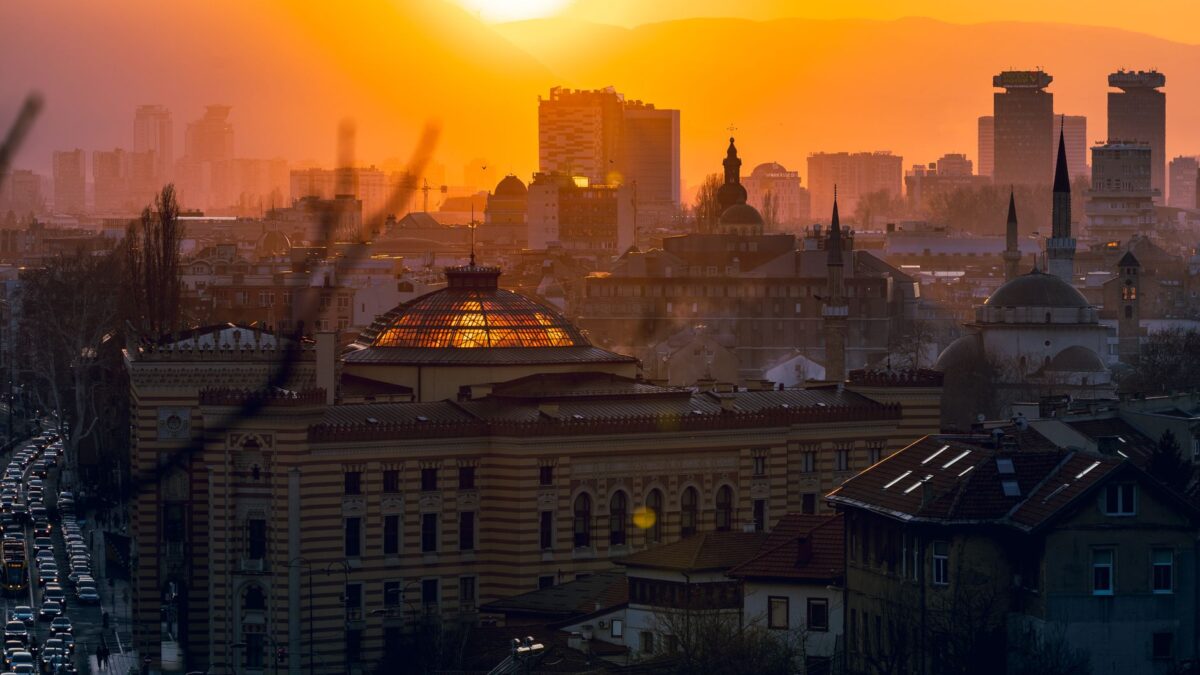
Bosnia and Herzegovina in September 2026: what travelers should know now
Sarajevo travel update Sept 2026: wildfire smoke, new tram lines, FASADA festival, and essential cost tips for Bosnia and Herzegovina.
 News & Updates
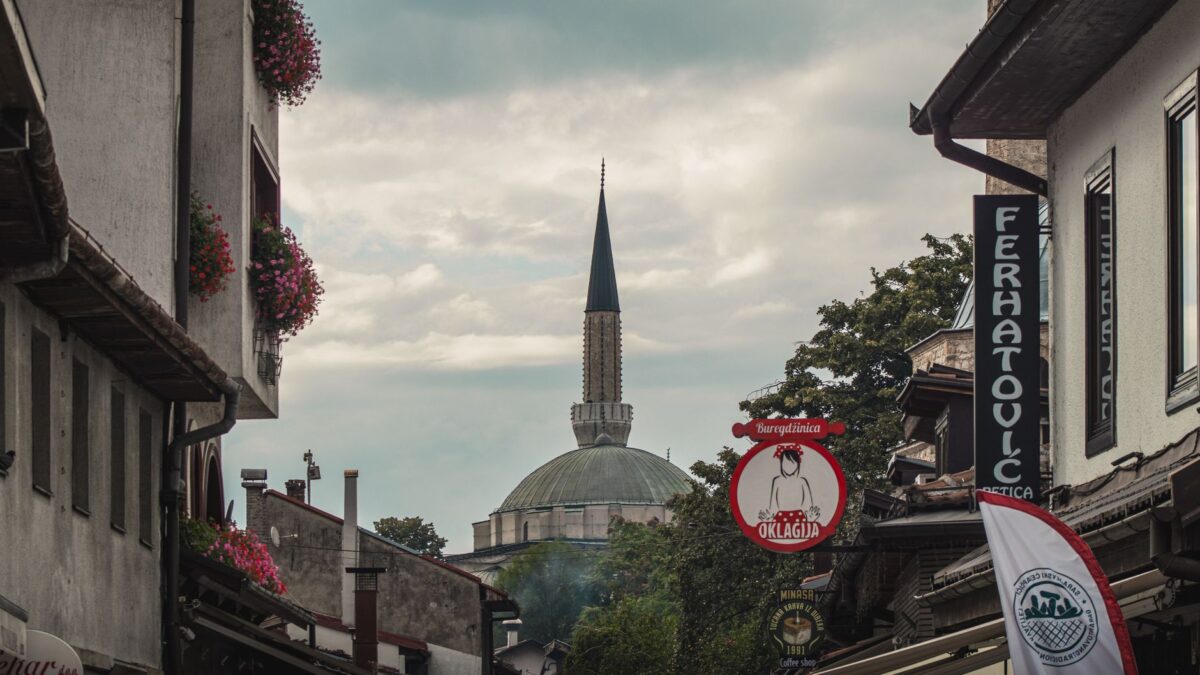
Bosnia and Herzegovina in August 2026: what travelers should know now
Sarajevo in August 2026: film festival crowds, Solomun street concert, new tram line, weather tips, prices, and what to do right now.
 Travel Tips
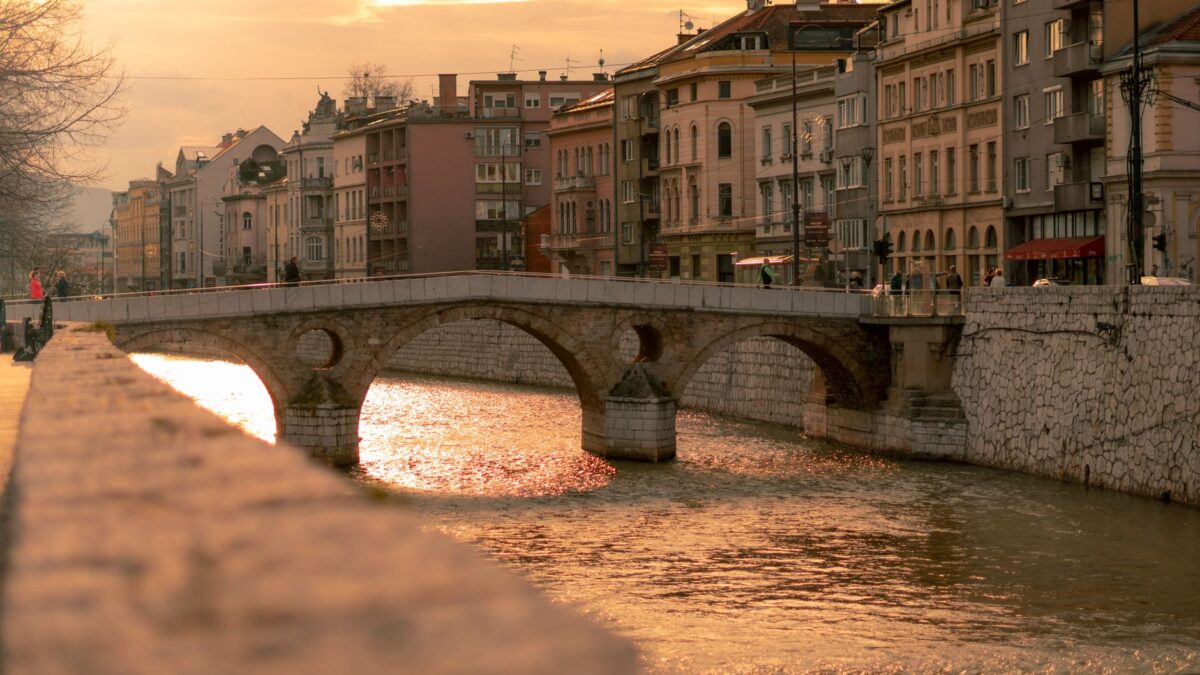
A first-timer’s guide to Bosnia and Herzegovina
Plan your first trip to Bosnia and Herzegovina: best time to visit, how long to stay, trams, costs in BAM, and insider tips on…
Southern Europe
 Spain
SpainSpain Travel Podcast with Mateo Herrera
The Pyrenees run along the northern border; Madrid and Barcelona anchor Spain's largest urban settlements, and the interior summers are hot and…
 Italy
ItalyItaly Travel Podcast with Sofia Romano
The Po River Valley, with its dense population and plains, contrasts sharply with the mountainous terrain that dominates most of Italy.
 Greece
Greece Travel Podcast with Nikos Pappas
The Peloponnese is a mountainous peninsula with ranges that reach into the Aegean as island chains, while Athens holds one third of…
 Portugal
Portugal Travel Podcast with Inês Carvalho
The westward sweep of the Tagus River divides Portugal’s mountainous north from the rolling southern plains, shaping two distinct worlds in one…