

A first-timer’s guide to France
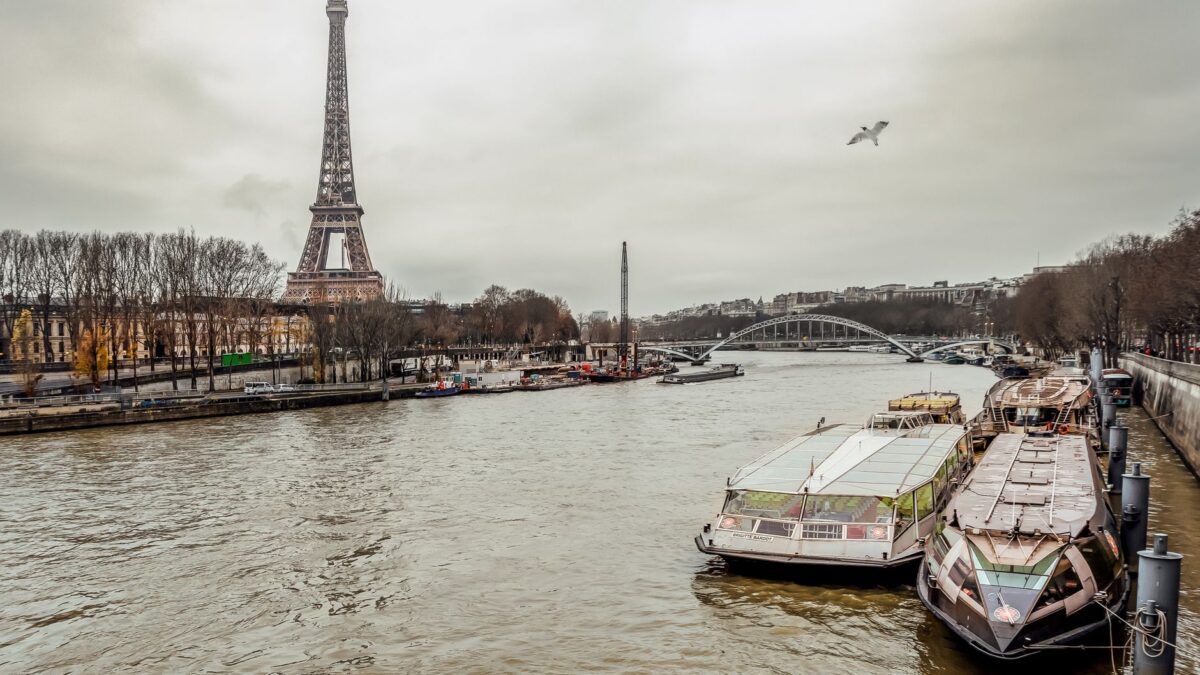
Paris in mid-August smells like sunscreen, warm baguette, and the faint metallic tang of the Seine just before a thunderstorm. I’m writing this from my apartment near Canal Saint-Martin, where the forecast says 24–31°C and a brief, dramatic downpour—the kind that sends deckchair refugees scattering under the iron footbridges, then clears as fast as it came. Today is Assumption Day, a national holiday, and the city feels half-empty: my usual boulangerie has a handwritten fermeture annuelle sign taped to the shutter, and the quays are lined with people doing absolutely nothing, beautifully. This is your first visit to France, and I want you to land with the kind of practical knowledge that turns a good trip into a great one—no fluff, just the essentials.
When to come and how long to stay
If you can, come in May or September—the light is golden, the crowds are thinner, and you’ll dodge both the July-August tourist crush and the Parisian exodus. That said, August has its own magic: Paris Plages (running July 4–August 30 this year) transforms the Seine quays, Bassin de la Villette, and Canal Saint-Martin into pop-up urban beaches, complete with free supervised swimming in the river for the first time since the 2024 Olympics. The 2026 edition even has an America250 theme, so expect stars-and-stripes deckchairs. The catch: many local shops close for annual holiday, so your corner café might be shuttered—but the ones that stay open are relaxed, unhurried, and full of actual Parisians.
For a first trip, plan at least 5-7 days in Paris plus 2-3 days for a side trip—Versailles, Normandy, or the Loire Valley. Any less and you’ll be sprinting between monuments; any more and you’ll need a second mortgage. If you’re visiting specifically for Paris, a week is perfect: enough for the big museums, a day in the Marais, a picnic along the Canal, and a day that starts with a jambon-beurre and ends at a natural wine bar in Oberkampf.
Getting around: the metro, the RER, and the August 2026 chaos
First, buy a Navigo card—the Découverte version costs €5, plus you’ll need a passport photo. Load it with a weekly pass at €32.40 or, if you’re staying longer, a monthly pass at €90.80 (2026 rates, all zones). A single metro/RER ticket is €2.55, but you’ll use more than two a day, so the pass pays for itself. Use the Bonjour RATP app to top up, or the Île-de-France Mobilités app. Don’t bother with paper tickets; they’re demagnetized by your phone’s magnetic field in your pocket.
Now the bad news, and I say this with love: August 2026 is a maintenance nightmare. Here’s your cheat sheet:
- RER A is cut between Vincennes and Noisy-le-Grand Mont d’Est, with replacement buses adding 50+ minutes toward Disneyland. If you’re taking the kids, budget for the extra time.
- RER C is completely suspended between Paris-Austerlitz and Versailles-Château Rive Gauche until August 22. To see Versailles, take the Transilien N from Montparnasse or the L from Saint-Lazare instead—check the schedule, but it’s painless.
- RER B—the line you’ll likely use from CDG—is closed through the central section (Gare du Nord to southern Paris) until August 16. You’ll need to transfer via metro lines 4 and 5. It’s doable, just allow an extra 45 minutes.
- Metro line 13 is cut north of La Fourche (replacement buses) until August 17, and République station on line 8 is closed for nine months, so trains pass non-stop.
The golden rule: check the RATP app every morning before you leave. Paris is still walkable, and in summer, walking is the best way to soak in the city—just bring water and comfortable shoes.
Money: what things actually cost
Paris is expensive, but it’s not insane if you know where to look. The euro is your friend right now—at roughly 0.924 per US dollar, your money goes a bit further than it has in years. Here’s what to expect (all approximate, in euros):
- Meals: A lunchtime formule—starter, main, coffee—at a local bistro runs €12-€16. A main course at a mid-range place like Brasserie Bellanger will set you back €16-€22. The humble jambon-beurre (ham and butter on a baguette) is €4-€5, and it’s lunch perfection. For a splurge, Bouillon République offers classic French dishes at reasonable prices.
- Coffee: An espresso at a corner café is about €2; a fancy pour-over at a specialty spot like Café d’Auteur is €3-€4. You’re paying for the terrace view at Café de Flore—embrace it once, then find a local haunt.
- Museums: The Louvre is €22 for a timed entry—book ahead, and go on a late Wednesday evening if you can. The Musée d’Orsay is a must for Impressionists, and the Musée Carnavalet in the Marais is free and covers Paris’s history. Check if you qualify for EU discounts (under-26, teachers, etc.).
- Hotels: A mid-range boutique hotel starts at about €150 a night. For budget, look at the 19th or 20th arrondissements—like the Novotel Paris 20 Belleville—where you’ll find better rates and more local life.
- Groceries: A fresh baguette is €1.30, a litre of milk €1.51, and a supermarket beer (0.5L) about €2.65. Picnic supplies are cheap—hit a market like Marché des Enfants Rouges (the oldest covered market, 17th-century, in the Marais) or the daily Marché d’Aligre in the 12th.
One warning: official 2026 transit fares are up, and rents have risen ~2% in 2025, but the essentials—bread, coffee, a bite—remain affordable compared to London or New York. Just avoid the tourist-trap restaurants near major monuments, and you’ll be fine.
Where to go (beyond the Eiffel Tower)
You’ll hit the Louvre (obviously—see the Mona Lisa and then speed-walk to the Winged Victory), the Musée d’Orsay (housed in a Belle Époque railway station—gorgeous), and Notre-Dame (reopened in December 2024 after the fire, so it’s finally accessible again). But to feel Paris like a local, explore the neighborhoods:
- Le Marais: Historic Jewish quarter along rue des Rosiers, art galleries, the elegant Place des Vosges, and the best falafel in town. The Musée Picasso is here, in a hôtel particulier.
- Canal Saint-Martin: My home turf. Picnic quays, iron footbridges, indie record shops, and street art along Quai de Valmy. Start at Chez Prune for a people-watching drink.
- Belleville & Ménilmontant: The street-art capital—check Rue Denoyez and Rue Sainte-Marthe—plus Parc de Belleville’s views and cheap global eats along Boulevard de Belleville.
- Montmartre: Hilltop village vibe, Sacré-Cœur gleaming white, and Place du Tertre’s artists. Take the funicular to save your legs.
- Oberkampf / Bastille: Natural wine bars, small-plates bistros, and live music at La Maroquinerie or La Bellevilloise.
- Butte-aux-Cailles: A rarely-touristed cobbled village in the 13th, with authentic bistros and the Art Deco Piscine de la Butte-aux-Cailles pool—bring a swimsuit.
- Père-Lachaise Cemetery: Jim Morrison, Oscar Wilde, Édith Piaf, Chopin—it’s a peaceful, beautiful walk.
The stuff you didn’t know you needed to know
Let me save you from the mistakes I’ve seen a thousand times:
- Visa and entry: If you’re from the US, UK, Canada, Australia, or most non-EU countries, you can enter visa-free for 90 days in any 180-day period. The EU’s ETIAS has been postponed repeatedly—check its status before you fly. Stay longer than 90 days, and you need a long-stay visa (VLS-TS), which you must validate online via OFII within 3 months, paying a tax (about €50 for students, €200 for most others).
- Pickpockets are real: Paris is safe, but the metro and tourist spots (Louvre, Eiffel Tower, Châtelet) are hunting grounds. Keep your wallet in your front pocket, your bag zipped and in front of you. At night, avoid wandering alone around Gare du Nord and parts of the 18th/19th/20th arrondissements. Emergency number: 112.
- The RER B is your airport lifeline—and it’s broken this month. We covered this, but I’ll repeat: allow extra time and use the app.
- Museums need reservations: The Louvre and Orsay absolutely require a timed slot. You can get in without one at the Orsay sometimes, but don’t risk it. Centre Pompidou is closed for major renovation until 2030—skip it, and see Musée de l’Orangerie for Monet’s Water Lilies instead.
- Parisians aren’t rude, they’re just busy. Always say “Bonjour” when entering a shop or café. It’s not optional. Learn a few phrases: s’il vous plaît, merci, l’addition (the bill). You’ll get warmer service instantly.
- Sunday is different: In August, many places close on Sunday. Check opening hours online before you trek anywhere.
- Drink tap water: It’s perfectly fine, and you’ll save a fortune. Ask for une carafe d’eau at restaurants—it’s free.
One last thing: don’t overplan. Leave an afternoon to do nothing—sit on a deckchair at Parc des Buttes-Chaumont, watch herons on the Seine, or get lost in the Marais. France isn’t a checklist; it’s a mood. You’ll leave with a tan, a full stomach, and the urge to start planning your second trip before you’ve even landed back home.
Frequently asked questions
What’s the best time of year to visit Paris for a first-timer?
May or September are ideal—mild weather, fewer crowds, and the city fully open. August is festive with Paris Plages and a relaxed vibe, but many local shops close for annual holiday and transit has major maintenance closures.
Is the metro pass worth it for a 5-day trip?
Yes, if you take more than 2 metro/RER trips a day. The Navigo Découverte card (€5) with a weekly pass at €32.40 beats single tickets at €2.55 each after just 13 rides.
What’s the current situation with the RER B from CDG in August 2026?
RER B is closed through central Paris (Gare du Nord to southern sections) until August 16. You’ll need to transfer to metro lines 4 or 5—allow an extra 45 minutes. Check the Bonjour RATP app for real-time updates.
Do I need a visa to visit France from the US or UK?
No, for tourist stays up to 90 days in a 180-day period. The ETIAS system is still postponed—confirm its status before travel. Stays over 90 days require a long-stay visa (VLS-TS) with online validation via OFII within 3 months.
How much should I budget for meals in Paris?
A lunch formule at a bistro is €12-€16, a main course €16-€22, and a jambon-beurre sandwich €4-€5. Coffee is €2-€4. Budget around €40-€60/day for food if you mix markets, casual cafés, and one nicer dinner.
Is the Centre Pompidou open in 2026?
No, it’s closed for major renovations until 2030. See modern art at the Musée Picasso or the Musée d’Orsay instead—or try the free contemporary art spaces like the Palais de Tokyo (not in the list but worth checking).
Things to do in France
 Family Friendly Louvre Museum Private Guided Tour
 Private guided American D-Day Tour from Bayeux
 Louvre Evening Tour Semi Private 6ppl Max BEST Avoid The Crowds
 Likely to sell out
Scandola & Girolata: The Must-see Excursion EN Corsica
Likely to sell out
Scandola & Girolata: The Must-see Excursion EN Corsica
 The Essential Louvre Masterpieces Tour - Limited to Six Guests
 Likely to sell out
Paris Highlights: Half Day Private Walking Tour
Likely to sell out
Paris Highlights: Half Day Private Walking Tour