

A first-timer’s guide to United States
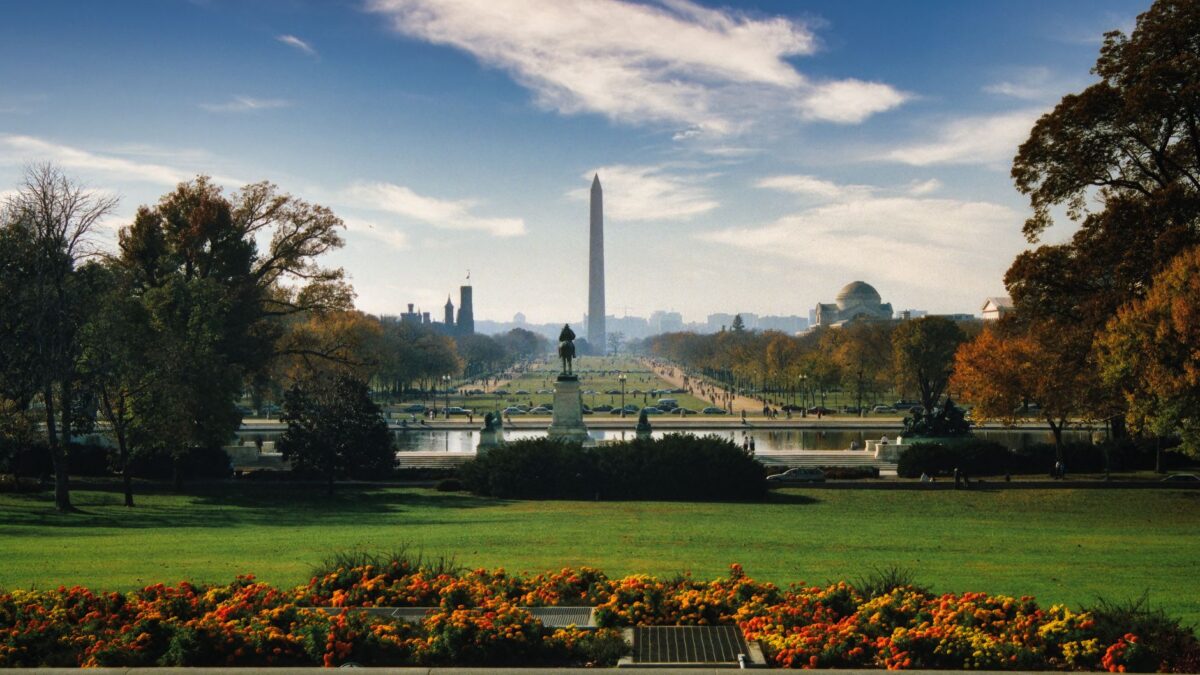
It is mid-November in Washington, D.C., and the air has that specific, raw bite that only comes from a wind sweeping off the Potomac. The trees are bare skeletons against an overcast sky, and the sun sets at 4:54 PM, casting long shadows across the National Mall before you’ve even had your lunch. If you are visiting now, you might feel the chill settling into your bones—it’s currently around 7°C (45°F) with light winds—but this is also when the city reveals its most intimate side. The holiday markets are just flickering to life on F Street NW and around Dupont Circle, and the menus have shifted toward oysters and game. You aren’t seeing the postcard version of America here; you are standing in the engine room of the world’s superpower, feeling its pulse, its history, and its occasional friction.
The Best Time to Visit and How Long to Stay
Summer in D.C. is famously humid, with temperatures often climbing above 30°C (86°F), while winter brings the gray skies and brisk winds you are likely experiencing right now. For first-timers, spring (April–May) offers cherry blossoms but massive crowds, and fall (September–October) provides mild weather and changing leaves. However, if you can handle the cold, November and December offer a cozy atmosphere as the city prepares for the holidays. The DowntownDC Holiday Market, running through late December, transforms F Street NW into a pedestrian zone with over 120 vendors, though it closes on Thanksgiving Day.
How long should you stay? A minimum of four days is realistic to cover the heavy hitters without rushing. This gives you time to walk the two-mile lawn of the National Mall, explore the distinct neighborhoods like Georgetown or U Street, and absorb the sheer scale of the federal architecture. If you want to dive deeper into the arts scene—like catching Gilla Band at The Atlantis or Joy Oladokun at the Howard Theatre—you’ll want to extend your trip by another day or two. D.C. is not a city you can sprint through; it demands patience and walking shoes.
Getting Around: Metro, Walking, and What’s Changed
Navigating D.C. is straightforward once you understand the transit system. The Metrorail is the backbone, with six lines covering 98 stations. You don’t need to buy paper tickets; simply tap a contactless credit card or use the SmarTrip app. A single ride costs between $2.25 and $6.75 depending on distance and time of day, while a one-day unlimited pass is around $13.50. If you prefer buses, the Metrobus is a flat $2.25 per ride. Note that the free DC Circulator loop was discontinued at the end of 2024, so rely on the standard Metrobus network instead.
Walking is essential. Neighborhoods like Capitol Hill, with its Victorian rowhouses and Eastern Market, or the cobblestone streets of Georgetown, are best explored on foot. However, be aware that some areas, like Georgetown, do not have their own Metro station, requiring a bus or ride-share connection. Also, keep an eye out for road closures; during the holiday market season, F Street NW is shut to traffic between 7th and 9th Streets. While robotaxis like Waymo have been discussed, they are not yet approved in the District due to recent legislative votes, so traditional taxis and ride-shares remain the primary options for longer hops.
Money Matters: Costs, Tips, and Banking
D.C. is one of America’s priciest cities, with rents running roughly 31–37% above the national average. For visitors, dining will be the biggest variable. An inexpensive restaurant meal runs about $23.50 per person, while a three-course dinner for two at a mid-range spot can cost $105–$115. Be prepared for mandatory service fees of up to 20–23% on dining bills, which are often added automatically rather than left as optional tips. A fast-food combo is around $13.50, and a simple coffee might set you back $6.00–$6.40. Beer in a bar averages $5.50–$6.00.
If you are staying longer, banking is easy thanks to major networks like Bank of America, Wells Fargo, and Truist. Capital One is headquartered locally in nearby McLean, VA, and their cafés double as banking hubs. Credit unions like Navy Federal are also prominent. Most branches require photo ID and proof of address; newcomers without a Social Security Number may need to start with online banks like Ally or SoFi. For daily spending, cash is rarely needed, but having a backup card is wise given the prevalence of digital transactions.
Essential First-Timer Knowledge: Safety, Visa, and Local Realities
Safety in D.C. has improved significantly after a peak in violent crime a few years ago, but the security landscape is unique. Since August 2025, the Metropolitan Police Department has operated under a federal emergency order, meaning you will see National Guard deployments and federal agents, particularly around the National Mall and corridors like Logan Circle and Shaw. Checkpoints are common, and you should always carry identification. While the city is generally safe for tourists, stay aware of your surroundings, especially late at night in entertainment districts.
For international travelers, the Visa Waiver Program allows citizens of eligible countries to visit for up to 90 days with an ESTA authorization, which now costs around $40. Apply only through the official CBP website to avoid third-party surcharges. Other visitors will need a B-1/B-2 visa. Upon arrival, everyone receives an electronic I-94 record.
Culturally, D.C. is defined by its role as the seat of government and its rich African American heritage. The U Street and Shaw neighborhoods, once known as “Black Broadway,” were devastated by riots in 1968 but have since revived as centers of jazz and go-go music. Respect this history. When visiting landmarks like the Smithsonian National Museum of African American History & Culture, remember that timed passes are required via recreation.gov. The Smithsonian museums are free, but planning ahead is non-negotiable due to high demand.
Where to Eat and Explore: Beyond the Monuments
While the Lincoln Memorial and Jefferson Memorial are must-sees, the real soul of D.C. lies in its food halls and historic venues. Start your morning at Eastern Market on Capitol Hill, where the South Hall offers fresh produce and weekend flea markets. For lunch, try the Market Lunch blueberry-buckwheat pancakes. In NoMa, Union Market offers a vibrant food hall experience with rooftop views at Hi-Lawn. For a taste of local classics, seek out half-smokes at Ben’s Chili Bowl on U Street, a staple since 1958.
If you want waterfront views, head to The Wharf in Southwest D.C. Here, you’ll find the Municipal Fish Market—the oldest continuously operating fish market in the U.S.—and plenty of dining options like Pink Tiger on the Wharf. For a more upscale evening, Founding Farmers DC or Old Ebbitt Grill offer classic American fare in historic settings. Art lovers should not miss the Library of Congress Thomas Jefferson Building, featuring a Gilded-Age Great Hall and the Gutenberg Bible. Finally, take advantage of the city’s green spaces; Rock Creek Park offers 1,700 acres of trails within city limits, and the National Zoo is free to enter, housing everything from giant pandas to bald eagles nesting nearby at the National Arboretum.
Frequently asked questions
Do I need a visa to visit Washington D.C.?
Travelers from Visa Waiver Program countries need an ESTA costing around $40, valid for 90 days. Others require a B-1/B-2 visa and receive an electronic I-94 upon arrival.
How much does it cost to eat in D.C.?
Dining is expensive. Expect to pay about $23.50 for an inexpensive meal and $105–$115 for a three-course dinner for two. Mandatory service fees of up to 23% are common.
Is public transportation safe and reliable?
Yes. Use the SmarTrip card or contactless tap for Metrorail ($2.25–$6.75) and Metrobus ($2.25). The free DC Circulator was discontinued in 2024, so rely on standard Metro routes.
What are the current safety conditions in D.C.?
Violent crime has decreased, but federal control of police means visible National Guard and checkpoints near the Mall and Logan Circle. Always carry ID and stay aware.
Which neighborhoods should first-timers visit?
Capitol Hill for history, Georgetown for charm, U Street/Shaw for jazz and food, and The Wharf for modern waterfront dining and entertainment.
Things to do in United States
 Nashville VIP Style Private Tour with Local Singer-Songwriter
 Half-Day Private Boating On Black Hurricane - Clearwater Beach
 Private Stand Up Paddle Boarding Tour in Turtle Town, Maui
 Epic Camelback Mountain Guided Hiking Adventure in Phoenix, Arizona
 Semi-private SMALL group Historic Walking Tours w/certified guide
 Icy Strait Whale & Wildlife Endeavor