


United States Travel Podcast with Harper Wells
Hosted by Harper Wells — a new episode every day from United States.
This podcast approaches travel in the United States as a matter of settling somewhere long enough to understand it. The country is vast central plains, western mountains, eastern hills and low mountains, plus Alaska and Hawaii’s volcanic terrain. That range makes each relocation a shift in climate and habit as much as geography.
Her route takes in real range: Chicago and the Great Lakes, the Rocky Mountain front, the arid Great Basin of the southwest, and the low mountain country of the east. She also treats Washington, D.C. as a working capital rather than a postcard. Each location is chosen for how it connects to the last.
The podcast follows a slower rhythm. Harper returns to places as seasons change, watching how a city like Houston feels in January and July, or how a mountain valley reveals itself after rain. Over time, listener and host build a layered mental map of the country that no single trip could provide.
Recent episodes
Things to do in United States
 Hawaii Volcanoes, Waterfalls, Beaches & Hilo Highlights Day Tour
 Nashville VIP Style Private Tour with Local Singer-Songwriter
 Half-Day Private Boating On Black Hurricane - Clearwater Beach
 Private Stand Up Paddle Boarding Tour in Turtle Town, Maui
 Epic Camelback Mountain Guided Hiking Adventure in Phoenix, Arizona
 Semi-private SMALL group Historic Walking Tours w/certified guide
 Maui Circle Island-PRIVATE-Air Tour for 2-5: Waterfalls & Lava!
 Icy Strait Whale & Wildlife Endeavor
Plan your trip to United States
Getting around
Staying connected
United States at a glance
United States in depth
Reference data on the country — geography, people, history, economy and transport.
Geography and climate
Location
North America, bordering both the North Atlantic Ocean and the North Pacific Ocean, between Canada and Mexico
Terrain
Vast central plain, mountains in west, hills and low mountains in east; rugged mountains and broad river valleys in Alaska; rugged, volcanic topography in Hawaii
Climate
Mostly temperate, but tropical in Hawaii and Florida, arctic in Alaska, semiarid in the great plains west of the Mississippi River, and arid in the Great Basin of the southwest; low winter temperatures in the northwest are ameliorated occasionally in January and February by warm chinook winds from the eastern slopes of the Rocky Mountains
Elevation
- Highest point
- Mount McKinley 6,190 m (highest point in North America)
- Lowest point
- Death Valley (lowest point in North America) -86 m
- Mean elevation
- 760 m
Area
- Total
- 9,833,517 sq km
- Land
- 9,147,593 sq km
- Water
- 685,924 sq km
Size comparison
About half the size of Russia; about three-tenths the size of Africa; about half the size of South America (or slightly larger than Brazil); slightly larger than China; more than twice the size of the European Union
Coastline
19,924 km
Land borders
- Total
- 12,002 km
- Border countries
- Canada 8,891 km (including 2,475 km with Alaska); Mexico 3,111 km
Natural resources
Coal, copper, lead, molybdenum, phosphates, rare earth elements, uranium, bauxite, gold, iron, mercury, nickel, potash, silver, tungsten, zinc, petroleum, natural gas, timber, arable land
Land use
- Agricultural land
- 46.1% (2023 est.)
- Arable land
- 16.6% (2023 est.)
- Permanent crops
- 0.3% (2023 est.)
- Permanent pasture
- 29.2% (2023 est.)
- Forest
- 33.8% (2023 est.)
- Other
- 18.7% (2023 est.)
Natural hazards
Tsunamis; volcanoes; earthquake activity around Pacific Basin; hurricanes along the Atlantic and Gulf of America coasts; tornadoes in the Midwest and Southeast; mud slides in California; forest fires in the west; flooding; permafrost in northern Alaska is a major impediment to development
Volcanism: volcanic activity in the Hawaiian Islands, Western Alaska, the Pacific Northwest, and in the Northern Mariana Islands; Mauna Loa (4,170 m) in Hawaii and Mount Rainier (4,392 m) in Washington have been deemed Decade Volcanoes by the International Association of Volcanology and Chemistry of the Earth's Interior, worthy of study due to their explosive history and close proximity to human populations; Pavlof (2,519 m) is the most active volcano in Alaska's Aleutian Arc and poses a significant threat to intercontinental air travel; St. Helens (2,549 m), famous for the devastating 1980 eruption, remains active today; other historically active volcanoes are mostly concentrated in the Aleutian arc and Hawaii, including (in Alaska) Aniakchak, Augustine, Chiginagak, Fourpeaked, Iliamna, Katmai, Kupreanof, Martin, Novarupta, Redoubt, Spurr, Wrangell, Trident, Ugashik-Peulik, Ukinrek Maars, Veniaminof, (in Hawaii) Haleakala, Kilauea, Loihi, (in the Northern Mariana Islands) Anatahan, (in the Pacific Northwest) Mount Baker, and Mount Hood; see note 2 under "Geography - note"
Note
Note 1: world's third-largest country by size (after Russia and Canada) and by population (after China and India); Mt. McKinley is the highest point (6,190 m; 20,308 ft) in North America, and Death Valley is the lowest point (-86 m; -282 ft)
Note 2: the western US coast and the southern coast of Alaska lie along the Ring of Fire, which is a belt bordering the Pacific Ocean that contains about 75% of the world's volcanoes and up to 90% of the world's earthquakes
Note 3: the Aleutian Islands are a chain of volcanic islands that divide the Bering Sea (north) from the main Pacific Ocean (south); they extend about 1,800 km (1,118 mi) westward from the Alaskan Peninsula; the archipelago consists of 14 larger islands, 55 smaller islands, and hundreds of islets; there are 41 active volcanoes on the islands, which together form a large northern section of the Ring of Fire
Note 4: Mammoth Cave, in west-central Kentucky, is the world's longest known cave system with more than 650 km (405 miles) of surveyed passageways, which is nearly twice as long as the second-longest cave system, the Sac Actun underwater cave in Mexico (see "Geography - note" under Mexico)
Note 5: Kazumura Cave on the island of Hawaii is the world's longest and deepest lava-tube cave; it has been surveyed at 66 km (41 mi) long and 1,102 m (3,614 ft) deep
Note 6: Bracken Cave outside San Antonio, Texas is the world's largest bat cave and the summer home to the largest colony of bats in the world; an estimated 20 million Mexican free-tailed bats roost in the cave from March to October, making it the world's largest known concentration of mammals
People and society
Population
- Total
- 338,016,259 (2025 est.)
- Male
- 167,543,554
- Female
- 170,472,705
Nationality
- Noun
- American(s)
- Adjective
- American
Ethnic groups
White 61.6%, Black or African American 12.4%, Asian 6%, Indigenous and Alaska native 1.1%, Native Hawaiian and Other Pacific Islander 0.2%, other 8.4%, two or more races 10.2% (2020 est.)
Languages
English only (official) 78.2%, Spanish 13.4%, Chinese 1.1%, other 7.3% (2017 est.)
Religions
Protestant 46.5%, Roman Catholic 20.8%, Jewish 1.9%, Church of Jesus Christ 1.6%, other Christian 0.9%, Muslim 0.9%, Jehovah's Witness 0.8%, Buddhist 0.7%, Hindu 0.7%, other 1.8%, unaffiliated 22.8%, don't know/refused 0.6% (2014 est.)
Median age
- Total
- 39.5 years (2025 est.)
- Male
- 37.8 years
- Female
- 40 years
Life expectancy
- Total population
- 80.9 years (2024 est.)
- Male
- 78.7 years
- Female
- 83.1 years
Urbanisation
- Urban population
- 83.3% of total population (2023)
- Rate of urbanization
- 0.96% annual rate of change (2020-25 est.)
Where people live
Large urban clusters are spread throughout the eastern half of the US (particularly the Great Lakes area, northeast, east, and southeast) and the western-tier states; mountainous areas such as the Rocky Mountains and Appalachians, deserts in the southwest, the dense boreal forests in the extreme north, and the central prairie states are less densely populated; Alaska's population is concentrated along its southern coast, particularly around Anchorage, and Hawaii's is centered on the island of Oahu
Largest cities
18.937 million New York-Newark, 12.534 million Los Angeles-Long Beach-Santa Ana, 8.937 million Chicago, 6.707 million Houston, 6.574 million Dallas-Fort Worth, 5.490 million WASHINGTON, D.C. (capital) (2023)
Background and government
Background
Thirteen of Britain's American colonies broke with the mother country in 1776 and were recognized as the new nation of the United States of America following the Treaty of Paris in 1783. During the 19th and 20th centuries, 37 new states were added as the nation expanded across the North American continent and acquired a number of overseas possessions. Two of the most traumatic experiences in the nation's history were the Civil War (1861-65), in which a northern Union of states defeated a secessionist Confederacy of 11 southern slave states, and the Great Depression of the 1930s, an economic downturn during which about a quarter of the labor force lost its jobs. Buoyed by victories in World Wars I and II and the end of the Cold War in 1991, the US remains the world's most powerful nation state. Since the end of World War II, the economy has achieved relatively steady growth, low unemployment, and rapid advances in technology.
Government
Constitutional federal republic
Capital
Washington, D.C.
Time zone
UTC-5 (during Standard Time)
Independence
4 July 1776 (declared independence from Great Britain); 3 September 1783 (recognized by Great Britain)
National day
Independence Day, 4 July (1776)
Economy and cost of living
Overview
World’s largest economy by nominal GDP; largest importer and second-largest exporter; home to leading financial exchanges and global reserve currency; high and growing public debt; inflation moderating but remains above pre-pandemic levels
GDP per capita
- Real GDP per capita 2024
- $75,500 (2024 est.)
- Real GDP per capita 2023
- $74,200 (2023 est.)
- Real GDP per capita 2022
- $72,700 (2022 est.)
Inflation
- Inflation rate (consumer prices) 2024
- 2.9% (2024 est.)
- Inflation rate (consumer prices) 2023
- 4.1% (2023 est.)
- Inflation rate (consumer prices) 2022
- 8% (2022 est.)
Unemployment
- Unemployment rate 2024
- 4.2% (2024 est.)
- Unemployment rate 2023
- 3.7% (2023 est.)
- Unemployment rate 2022
- 3.7% (2022 est.)
Exchange rate
- British pounds per US dollar
- 0.782 (2024 est.), 0.805 (2023 est.), 0.811 (2022 est.), 0.727 (2021 est.), 0.780 (2020 est.)
- Canadian dollars per US dollar
- 1.369 (2024 est.), 1.35 (2023 est.), 1.302 (2022 est.), 1.254 (2021 est.), 1.341 (2020 est.)
- Chinese yuan per US dollar
- 0.783 (2024 est.), 7.084 (2023 est.), 6.737 (2022 est.), 6.449 (2021 est.), 6.901 (2020 est.)
- Euros per US dollar
- 0.924 (2024 est.), 0.925 (2023 est.), 0.950 (2022 est.), 0.845 (2021 est.), 0.876 (2020 est.)
- Japanese yen per US dollar
- 151.366 (2024 est.), 140.49 (2023 est.), 131.50 (2022 est.), 109.75 (2021 est.), 106.78 (2020 est.)
- Note 1
- The following countries and territories use the US dollar officially as their legal tender: British Virgin Islands, Ecuador, El Salvador, Marshall Islands, Micronesia, Palau, Timor Leste, Turks and Caicos, and islands of the Caribbean Netherlands (Bonaire, Sint Eustatius, and Saba)
- Note 2
- The following countries and territories use the US dollar as official legal tender alongside local currency: Bahamas, Barbados, Belize, and Panama
Main industries
Highly diversified, world leading, high-technology innovator, second-largest industrial output in the world; petroleum, steel, motor vehicles, aerospace, telecommunications, chemicals, electronics, food processing, consumer goods, lumber, mining
Agriculture
Maize, soybeans, milk, wheat, sugar beets, sugarcane, potatoes, chicken, pork, tomatoes (2023)
Transport and connectivity
Airports
16,116 (2025)
Railways
- Total
- 293,564.2 km (2014)
- Standard gauge
- 293,564.2 km (2014) 1.435-m gauge
Ports
- Total ports
- 666 (2024)
- Large
- 21
- Medium
- 38
- Small
- 132
- Very small
- 475
- Ports with oil terminals
- 204
- Key ports
- Baltimore, Boston, Brooklyn, Buffalo, Chester, Cleveland, Detroit, Galveston, Houston, Los Angeles, Louisiana Offshore Oil Port (LOOP), Mobile, New Orleans, New York City, Norfolk, Oakland, Philadelphia, Portland, San Francisco, Seattle, Tri-City Port
Internet domain
.us
Internet users
Percent of population 93% (2023 est.)
Mobile subscriptions
- Total subscriptions
- 391 million (2024 est.)
- Subscriptions per 100 inhabitants
- 113 (2024 est.)
Environment
Environmental issues
Air pollution; water pollution from runoff of pesticides and fertilizers; declining natural freshwater resources in the west; deforestation; mining; desertification; species conservation; invasive species
Fresh water
3.069 trillion cubic meters (2022 est.)
Country reference figures are periodically revised. Check anything time-sensitive or safety-critical against an official source before you travel.
United States travel guides
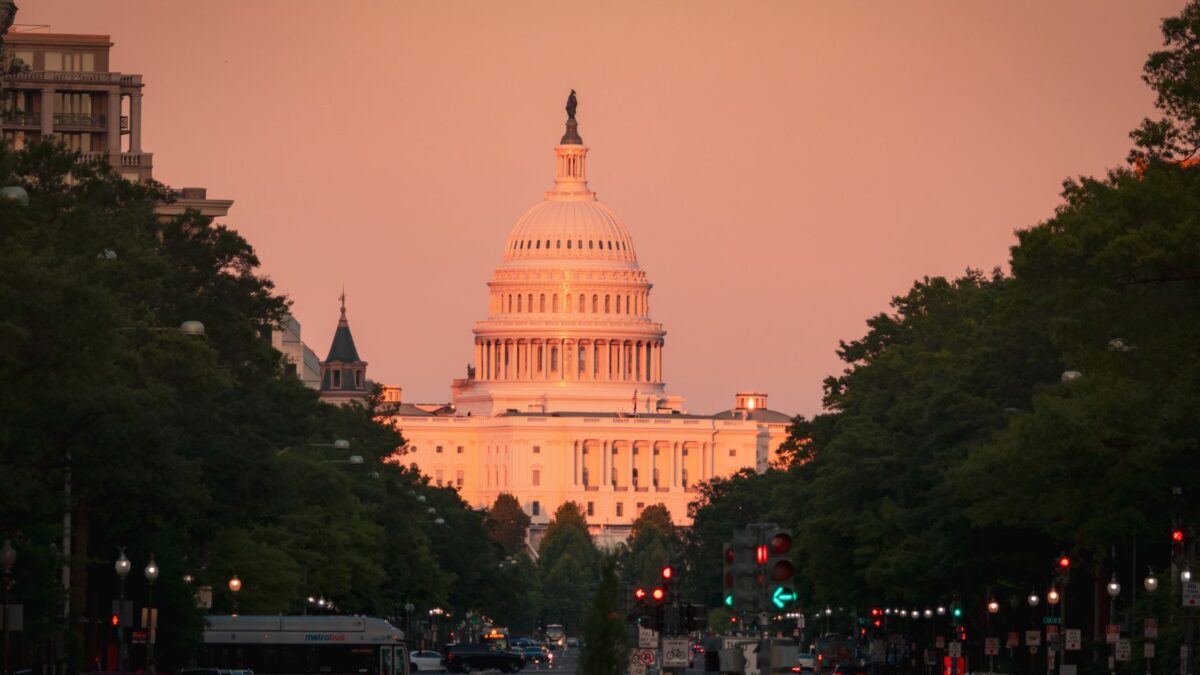 News & Updates
United States in September 2026: what travelers should know now
United States travel update for September 2026: Labor Day crowds, Smithsonian closures, and weather tips for Washington D.C.
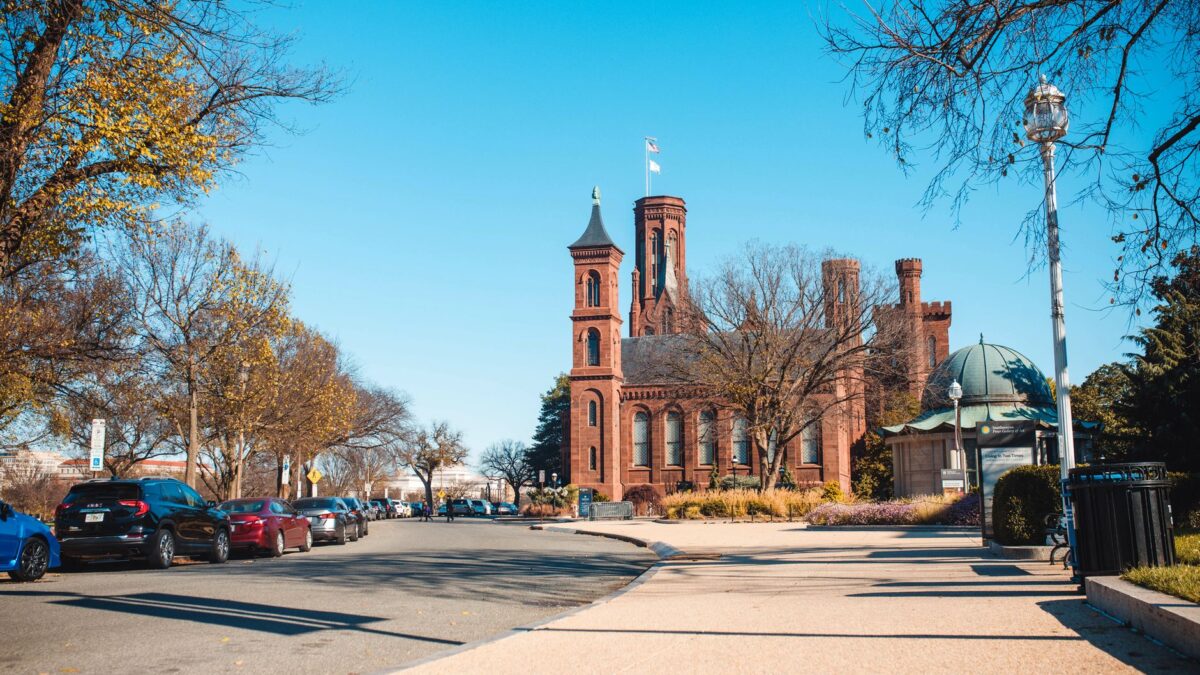 News & Updates
United States in August 2026: what travelers should know now
Washington, D.C. in August 2026: road closures ending, Red Line shutdown, Chinese Culture Festival, Labor Day plans, heat, and cheap eats. Harper Wells gives…
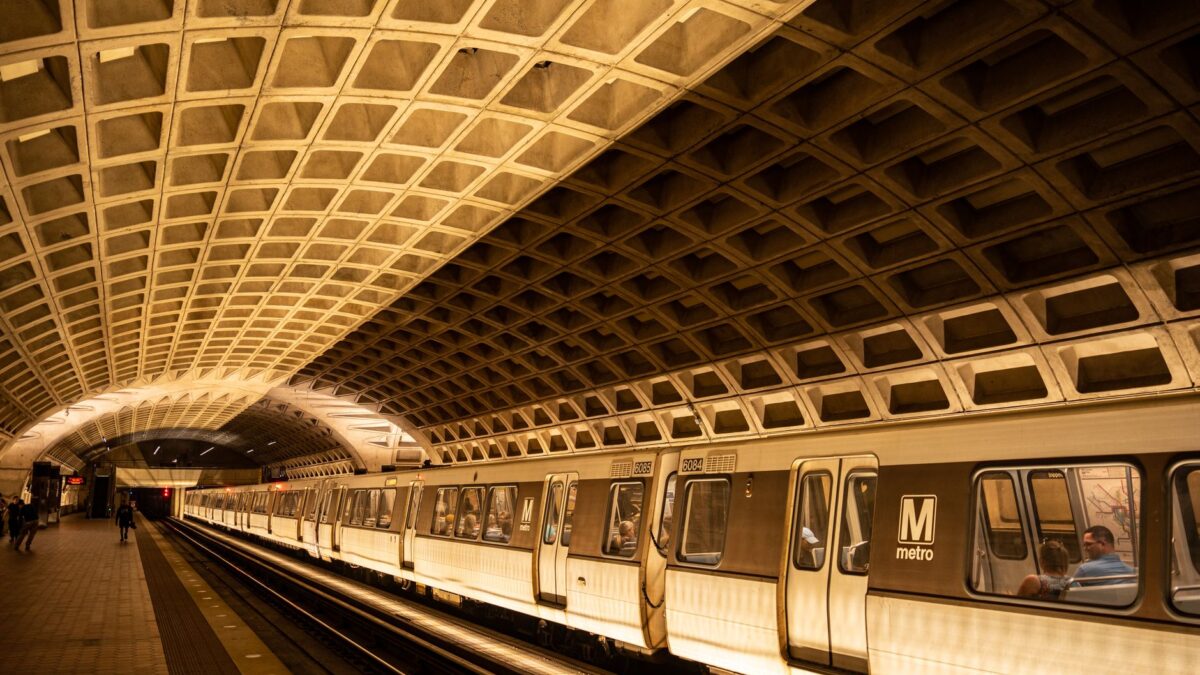 Getting Around
Getting around Washington, D.C.: metros, taxis and passes
Local's guide to getting around Washington, D.C.: Metro fares, SmarTrip passes, taxi vs. rideshare, and when walking beats it all — plus summer 2026…
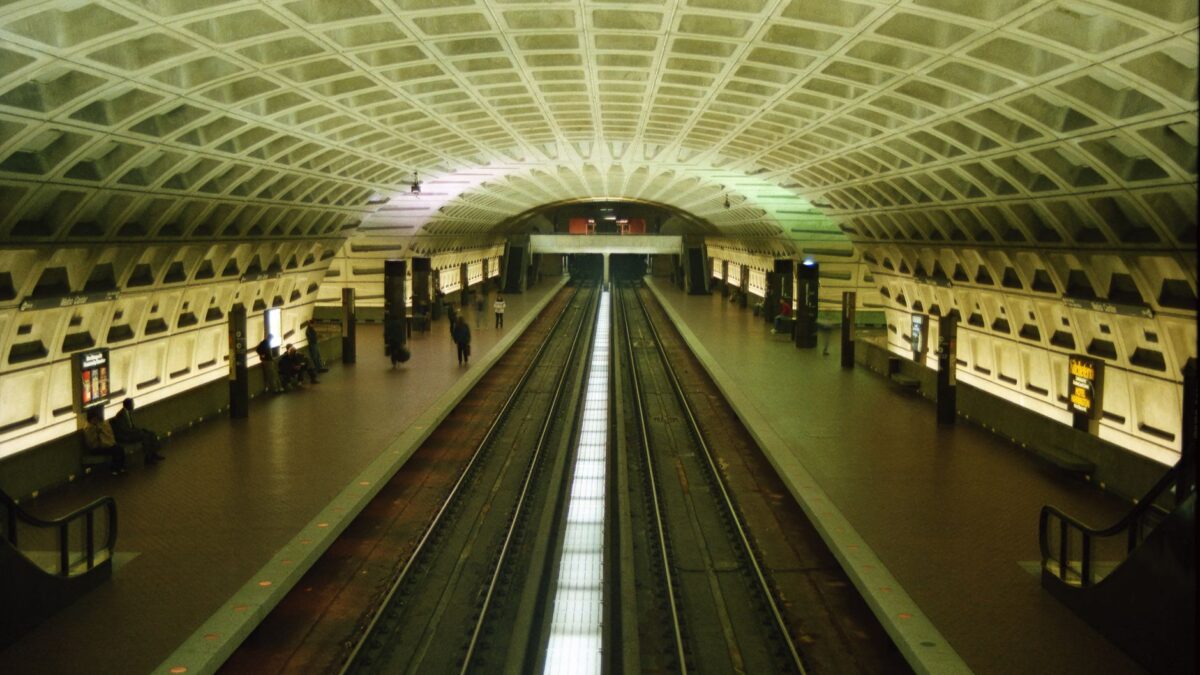 Getting Around
From the airport into Washington, D.C.: every option and what it costs
From DCA or Dulles into Washington, D.C.? Compare Metro fares, taxi costs, ride-share, and private transfer tips — with real prices and honest advice…
North America
 Mexico
Mexico Travel Podcast with Valeria Cruz
The high plateau between Jalisco and Veracruz holds most of the country's population, and Mexico City alone accounts for a quarter.
 Canada
Canada Travel Podcast with Nathan Beaulieu
The wide plains of the Prairies run from Manitoba to Alberta, rising finally into the Rocky Mountains and leaving Ottawa in the…