
A week in Bangkok on a mid-range budget
September in Bangkok is a study in contrasts. The air hangs heavy, hovering around 32°C with a humidity that makes it feel closer to 38°C, while the sky prepares for its daily dramatic performance. You are here at the tail end of the southwest monsoon, where days are broken by sudden, thunderous downpours and short-lived street flooding. But this wet season also brings a quiet magic: the Chao Phraya River swells and moves fast, the durian and rambutan seasons are winding down as longkong takes over, and the city feels less like a tourist trap and more like a living, breathing metropolis.
As Ploy Siriwan, I’ve lived through enough rainy seasons to know that trying to save every baht in Bangkok is unnecessary. The city rewards those who spend wisely on experiences rather than just surviving. For this week-long itinerary, we’re anchoring your budget in mid-range comfort—decent air-conditioned sleep, reliable transit, and food that ranges from world-class street stalls to proper sit-down dinners. We are looking at a total outlay of roughly 15,000 to 20,000 THB (about $425–$570 USD) for seven days, excluding international flights.
The Foundation: Where to Stay and How You Move
Your biggest fixed cost will be accommodation. In 2026, rents have climbed, but for a traveler, you can still find excellent value. A mid-range hotel or a decent guesthouse typically runs between 1,800 and 3,500 THB per night. If you are staying longer or prefer the space of a condo, a modest one-bedroom in areas like Ari or Rama 9 averages around 18,500 THB monthly, but nightly rates fluctuate.
For your base, consider the rhythm of the city. If you want to be in the expat heartland, look near Asok or Phrom Phong along the BTS Sukhumvit Line. Phrom Phong is often called ‘Little Tokyo’ due to the concentration of Japanese businesses around EmQuartier and EmSphere. If you prefer a slower, leafy vibe with indie coffee roasters and co-working spaces, Ari is the hipster enclave north of the center. For the classic tourist experience, Old Town or Rattanakosin puts you within walking distance of the Grand Palace, though you will pay a premium for convenience.
Transit is straightforward if you understand the two main systems. The BTS Skytrain is your best friend for avoiding traffic. Since November 2025, fares are distance-based, ranging from 17 to 65 THB. A typical central ride will cost you about 30–40 THB. If you plan to hop around significantly, buy a one-day unlimited pass for 150 THB (about $4). It pays for itself quickly. For the MRT Blue and Purple lines, you can simply tap a contactless Visa or Mastercard at the gates; there is no need to buy a separate card unless you prefer the Rabbit Card, which also works on the Chao Phraya tourist boat.
Day-by-Day Costs: Eating, Seeing, and Getting Around
Day 1: Arrival and Riverside Orientation
Settle into your hotel. Your first meal should be an inexpensive local stall dish—rice or noodles—for about 45–70 THB ($1.6). This is the backbone of Bangkok’s diet. Take a walk along the riverside near Pak Khlong Talat flower market. If you are visiting between September 10-13, you might catch the L’On Art Festival, a riverside art and music event with food stalls. Dinner at a mid-range air-con restaurant or food court will set you back 150–180 THB ($5). Transit cost: negligible if walking, or ~30 THB via BTS.
Day 2: The Royal Quarter
Head to Rattanakosin. Entry to the Grand Palace and Wat Phra Kaew is 500 THB for foreign adults—a non-negotiable fee for this iconic landmark established in 1782. Dress code is strict. Next, take a short ferry across to Wat Arun (Temple of Dawn), best viewed lit up at sunset from Tha Tien. Lunch can be a simple noodle soup for 60 THB. Evening dinner at a riverside spot might cost 300–500 THB. Transit: ~40 THB via BTS to Saphan Taksin, then ferry.
Day 3: Chinatown After Dark
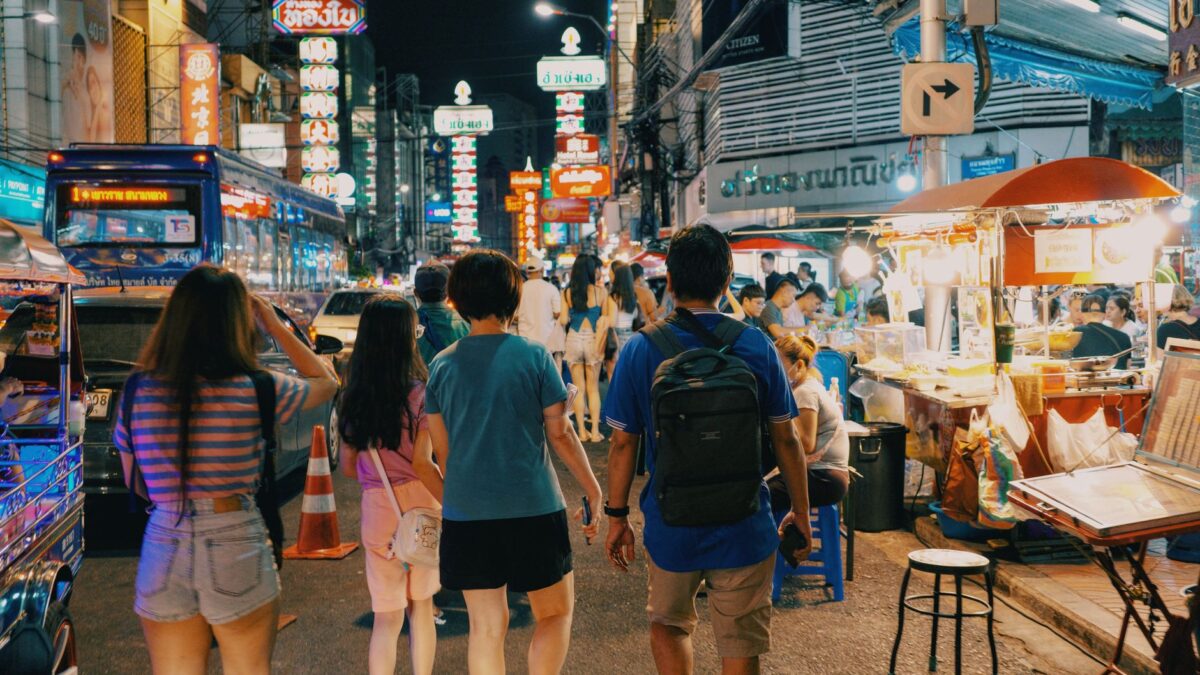
Yaowarat Road transforms after dark. This is Thailand’s Thai-Chinese powerhouse. Street food here is legendary. You might order three small bowls of boat noodles (kuay teow reua) for 15–25 THB each. Total food budget for this day could be under 300 THB if you stick to stalls. Coffee break? A cup at a local chain like Amazon or an independent cafe is 60–100 THB ($2.3). Transit: ~30 THB via BTS to Wat Mangkon.
Day 4: Culture and Green Spaces
Visit the Jim Thompson House Museum, the teak compound of the American who revived Thai silk. Guided tours are included in the entry fee. Later, escape the heat in Lumpini Park, famous for its resident water-monitor lizards sunning themselves harmlessly on the paths. Picnic lunch with items from a supermarket (bread ~60 THB, milk ~50 THB/liter) keeps costs low. Dinner at a mid-range place: 180 THB. Transit: ~40 THB via BTS to Silom.
Day 5: Modern Bangkok and Shopping
Explore the emerging new CBD at Rama 9, anchored by One Bangkok and ICONSIAM. Visit the RISE COFFEE Flagship Store or Piccolo vicolo for a high-end caffeine fix (~100 THB). Walk through the luxury malls. For lunch, try Thipsamai Padthai Pratoopee, a Michelin-recommended stall nearby. Budget 150 THB for a plate of pad thai. Transit: ~65 THB (longer distance) via BTS/MRT.
Day 6: Art and Heritage
Spend the morning at the Bangkok Art & Culture Centre (BACC) for free admission. Explore the galleries in Song Wat/Talat Noi, the heritage quarter adjacent to Chinatown. Visit Sunset Coffee Roaster for a unique view. Lunch at Ros Krung Esarn Thai Cafe or Cheaper & Better Street Food. Afternoon visit to Wat Saket (Golden Mount)—climb the 300 spiral steps for a 360° view. Entry is modest. Transit: Mix of walking and short taxi rides (~100 THB flag fall + meter).
Day 7: Relaxation and Farewell
Sleep in. Enjoy a final breakfast at a local café. Maybe visit the National Museum Bangkok if time permits. Last dinner: splurge slightly at a place like SOI Bangkok Restaurant or The Family. Budget 400–600 THB. Final transit costs: minimal. Pack up.
A Note on Weather and Current Events
In mid-September, expect rain. The Meteorological Department has issued warnings for heavy-to-very-heavy rain and flash-flood risks. Carry a compact umbrella and waterproof bags for your electronics. Be aware that some areas, like the drainage system under the Rama III Road elevated bridge near Chuea Phloeng, may have ongoing cleanup operations from recent incidents, leading to temporary road closures. Also, the Pratunam pedestrian skywalk is reportedly closed for Orange Line tunnel construction until early 2027, so plan your crossings at street level in that area.
Practical Money Tips
Bangkok is cash-friendly, especially for street food, but PromptPay QR payments are ubiquitous. You do not need a local bank account to use most apps; tourists can use credit cards widely. However, since 2025, major banks like Bangkok Bank, Kasikorn, and SCB only open accounts for holders of long-term visas. Tourists cannot open standard accounts. Always carry small bills for tips and minor purchases. Use Grab or Bolt for ride-hailing, or insist on the meter in taxis. Avoid tuk-tuks unless you are specifically interested in the tour, and never accept offers that seem too good to be true, such as ‘temple is closed today’ pitches.
With careful planning, Bangkok offers incredible value. You can eat like a king on a pauper’s budget, stay in comfort, and explore a city rich in history and modernity. Just respect the weather, keep your passport safe, and enjoy the chaos.
Frequently asked questions
How much does a mid-range hotel cost in Bangkok?
A decent mid-range hotel or guesthouse typically costs between 1,800 and 3,500 THB per night.
What is the cost of street food in Bangkok?
Inexpensive local stall meals like rice or noodle dishes usually range from 45 to 70 THB.
How much is a BTS Skytrain ticket?
Fares are distance-based, ranging from 17 to 65 THB. A one-day unlimited pass is available for 150 THB.
Is the Grand Palace expensive for tourists?
The foreign adult entry fee is 500 THB, which includes access to the Grand Palace and Wat Phra Kaew.
Can I open a Thai bank account as a tourist?
No, since 2025, major banks generally refuse accounts for tourists and DTV holders, requiring long-term visa status instead.
Things to do in Thailand
 Riverside Thai Cooking Class in Khao Lak with Market Tour
 Special offer
Private James Bond Island Speedboat Adventure Tour w/ Canoeing
Special offer
Private James Bond Island Speedboat Adventure Tour w/ Canoeing
 Chiang Mai Jungle Coffee Experience: Farm Trek, Roast & Brew.
 Bangkok: Floating Market & Train Tour with Michelin & Pickup
 Railway and Floating market & Ayutthaya Private Premium
 Half-Day Thai Cooking Class with organic ingredients