

Thailand Travel Podcast with Ploy Siriwan
Hosted by Ploy Siriwan — a new episode every day from Thailand.
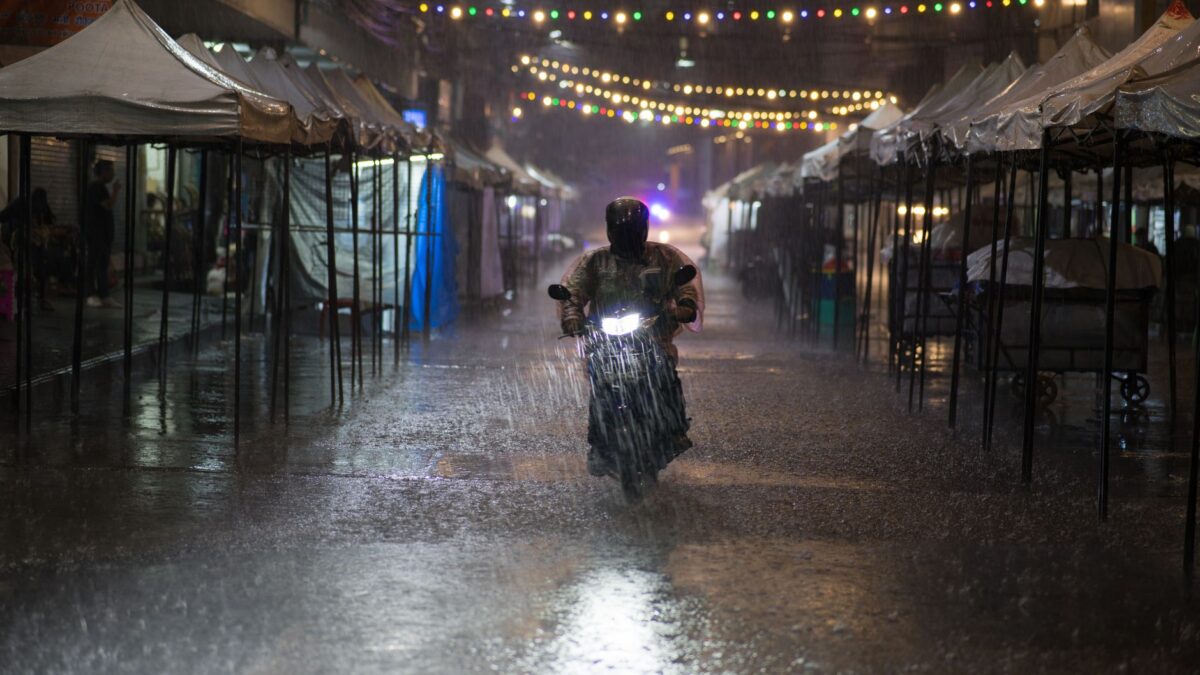
Thailand’s travel rhythms come from the southwest monsoon, which brings rain and cloud from mid-May to September, and the dry northeast monsoon from November to mid-March. The podcast follows those rhythms by staying in one place until it makes sense, then moving somewhere connected to it.
Her route runs from Bangkok’s dense centre to the Khorat Plateau in the east, then up to Chiang Mai in the north and down to the southern isthmus around Songkla. Each of these areas has its own climate and language mix, and the show treats them as places to learn, not sights to tick off.
As the monsoon shifts, the show returns to places at different times of year. A street in Chon Buri, a market outside Samut Prakan, a temple in Chiang Mai: each revisit adds another layer to what she knows. The show accumulates understanding slowly, the way living somewhere does.
Recent episodes
Things to do in Thailand
 Riverside Thai Cooking Class in Khao Lak with Market Tour
 Special offer
Private James Bond Island Speedboat Adventure Tour w/ Canoeing
Special offer
Private James Bond Island Speedboat Adventure Tour w/ Canoeing
 Chiang Mai Jungle Coffee Experience: Farm Trek, Roast & Brew.
 Bangkok: Floating Market & Train Tour with Michelin & Pickup
 Railway and Floating market & Ayutthaya Private Premium
 Half-Day Thai Cooking Class with organic ingredients
 Safety whitewater rafting in Chiangmai by Khampan Rafting
 Half Day Evening Cooking Class with Market Tour in Chiang Mai
Plan your trip to Thailand
Getting around
Staying connected
Thailand at a glance
Thailand in depth
Reference data on the country — geography, people, history, economy and transport.
Geography and climate
Location
Southeastern Asia, bordering the Andaman Sea and the Gulf of Thailand, southeast of Burma
Terrain
Central plain; Khorat Plateau in the east; mountains elsewhere
Climate
Tropical; rainy, warm, cloudy southwest monsoon (mid-May to September); dry, cool northeast monsoon (November to mid-March); southern isthmus always hot and humid
Elevation
- Highest point
- Doi Inthanon 2,565 m
- Lowest point
- Gulf of Thailand 0 m
- Mean elevation
- 287 m
Area
- Total
- 513,120 sq km
- Land
- 510,890 sq km
- Water
- 2,230 sq km
Size comparison
About three times the size of Florida; slightly more than twice the size of Wyoming
Coastline
3,219 km
Land borders
- Total
- 5,673 km
- Border countries
- Burma 2,416 km; Cambodia 817 km; Laos 1,845 km; Malaysia 595 km
Natural resources
Tin, rubber, natural gas, tungsten, tantalum, timber, lead, fish, gypsum, lignite, fluorite, arable land
Land use
- Agricultural land
- 43.8% (2023 est.)
- Arable land
- 31% (2023 est.)
- Permanent crops
- 11.2% (2023 est.)
- Permanent pasture
- 1.6% (2023 est.)
- Forest
- 39% (2023 est.)
- Other
- 17.2% (2023 est.)
Natural hazards
Land subsidence in Bangkok area resulting from the depletion of the water table; droughts
Note
Controls only land route from Asia to Malaysia and Singapore
People and society
Population
- Total
- 70,025,248 (2025 est.)
- Male
- 34,101,016
- Female
- 35,924,232
Nationality
- Noun
- Thai (singular and plural)
- Adjective
- Thai
Ethnic groups
Thai 97.5%, Burmese 1.3%, other 1.1%, unspecified <0.1% (2015 est.)
Languages
- Languages
- Thai (official) only 90.7%, Thai and other languages 6.4%, only other languages 2.9% (includes Malay, Burmese); English is a secondary language among the elite (2010 est.)
- Major-language sample(s)
- สารานุกรมโลก - แหล่งข้อมูลพื้นฐานที่สำคัญ (Thai)
Religions
Buddhist 92.5%, Muslim 5.4%, Christian 1.2%, other 0.9% (includes animist, Confucian, Hindu, Jewish, Sikh, and Taoist) (2021 est.)
Median age
- Total
- 41.9 years (2025 est.)
- Male
- 40.2 years
- Female
- 42.7 years
Life expectancy
- Total population
- 78.2 years (2024 est.)
- Male
- 75.2 years
- Female
- 81.3 years
Urbanisation
- Urban population
- 53.6% of total population (2023)
- Rate of urbanization
- 1.43% annual rate of change (2020-25 est.)
Where people live
Highest population density is found in and around Bangkok; significant population clusters throughout large parts of the country, particularly north and northeast of Bangkok and in the extreme southern region of the country
Largest cities
11.070 million BANGKOK (capital), 1.454 Chon Buri, 1.359 million Samut Prakan, 1.213 million Chiang Mai, 1.005 million Songkla, 1.001 million Nothaburi (2023)
Background and government
Background
Two unified Thai kingdoms emerged in the mid-13th century. The Sukhothai Kingdom, located in the south-central plains, gained its independence from the Khmer Empire to the east. By the late 13th century, Sukhothai’s territory extended into present-day Burma and Laos. Sukhothai lasted until the mid-15th century. The Thai Lan Na Kingdom was established in the north with its capital at Chang Mai; the Burmese conquered Lan Na in the 16th century. The Ayutthaya Kingdom (14th-18th centuries) succeeded the Sukhothai and would become known as the Siamese Kingdom. During the Ayutthaya period, the Thai/Siamese peoples consolidated their hold on what is present-day central and north-central Thailand. Following a military defeat at the hands of the Burmese in 1767, the Siamese Kingdom rose to new heights under the military ruler TAKSIN, who defeated the Burmese occupiers and expanded the kingdom’s territory into modern-day northern Thailand (formerly the Lan Na Kingdom), Cambodia, Laos, and the Malay Peninsula. In the mid-1800s, Western pressure led to Siam signing trade treaties that reduced the country’s sovereignty and independence. In the 1890s and 1900s, the British and French forced the kingdom to cede Cambodian, Laotian, and Malay territories that had been under Siamese control.
Following a bloodless revolution in 1932 that led to the establishment of a constitutional monarchy, Thailand's political history was marked by a series of mostly bloodless coups with power concentrated among military and bureaucratic elites. Periods of civilian rule were unstable. The Cold War era saw a communist insurgency and the rise of strongman leaders. Thailand became a US treaty ally in 1954 after sending troops to Korea and later fighting alongside the US in Vietnam. In the 21st century, Thailand has experienced additional turmoil, including a military coup in 2006 that ousted then Prime Minister THAKSIN Chinnawat and large-scale street protests led by competing political factions in 2008-2010. In 2011, THAKSIN's youngest sister, YINGLAK Chinnawat, led the Puea Thai Party to an electoral win and assumed control of the government.
In 2014, after months of major anti-government protests in Bangkok, the Constitutional Court removed YINGLAK from office, and the Army, led by Gen. PRAYUT Chan-ocha, then staged a coup against the caretaker government. The military-affiliated National Council for Peace and Order (NCPO) ruled the country under PRAYUT for more than four years, drafting a new constitution that allowed the military to appoint the entire 250-member Senate and required a joint meeting of the House and Senate to select the prime minister -- which effectively gave the military a veto on the selection. King PHUMIPHON Adunyadet passed away in 2016 after 70 years on the throne; his only son, WACHIRALONGKON (aka King RAMA X), formally ascended the throne in 2019. The same year, a long-delayed election allowed PRAYUT to continue his premiership, although the results were disputed and widely viewed as skewed in favor of the party aligned with the military. The country again experienced major anti-government protests in 2020. The reformist Move Forward Party won the most seats in the 2023 election but was unable to form a government, and Srettha THRAVISIN from the Pheu Thai Party replaced PRAYUT as prime minister after forming a coalition of moderate and conservative parties.
Government
Constitutional monarchy
Capital
Bangkok
Time zone
UTC+7 (12 hours ahead of Washington, DC, during Standard Time)
Local name
Ratcha Anachak Thai
Independence
1238 (traditional founding date; never colonized)
National day
Birthday of King WACHIRALONGKON, 28 July (1952)
Economy and cost of living
Overview
Upper middle-income Southeast Asian economy; substantial infrastructure; major electronics, food, and automobile parts exporter; globally used currency; extremely low unemployment; ongoing Thailand 4.0 economic development
GDP per capita
- Real GDP per capita 2024
- $21,700 (2024 est.)
- Real GDP per capita 2023
- $21,200 (2023 est.)
- Real GDP per capita 2022
- $20,800 (2022 est.)
Inflation
- Inflation rate (consumer prices) 2024
- 1.4% (2024 est.)
- Inflation rate (consumer prices) 2023
- 8.5% (2023 est.)
- Inflation rate (consumer prices) 2022
- -1.6% (2022 est.)
Unemployment
- Unemployment rate 2024
- 0.7% (2024 est.)
- Unemployment rate 2023
- 0.8% (2023 est.)
- Unemployment rate 2022
- 1% (2022 est.)
Exchange rate
- Currency
- Baht per US dollar -
- Exchange rates 2024
- 35.294 (2024 est.)
- Exchange rates 2023
- 34.802 (2023 est.)
- Exchange rates 2022
- 35.061 (2022 est.)
- Exchange rates 2021
- 31.977 (2021 est.)
- Exchange rates 2020
- 31.294 (2020 est.)
Main industries
Tourism, textiles and garments, agricultural processing, beverages, tobacco, cement, light manufacturing such as jewelry and electric appliances, computers and parts, integrated circuits, furniture, plastics, automobiles and automotive parts, agricultural machinery, air conditioning and refrigeration, ceramics, aluminum, chemical, environmental management, glass, granite and marble, leather, machinery and metal work, petrochemical, petroleum refining, pharmaceuticals, printing, pulp and paper, rubber, sugar, rice, fishing, cassava, world's second-largest tungsten producer and third-largest tin producer
Agriculture
Sugarcane, rice, cassava, oil palm fruit, maize, rubber, tropical fruits, chicken, mangoes/guavas, fruits (2023)
Transport and connectivity
Airports
105 (2025)
Railways
- Total
- 4,127 km (2017)
- Standard gauge
- 84 km (2017) 1.435-m gauge (84 km electrified)
- Narrow gauge
- 4,043 km (2017) 1.000-m gauge
Ports
- Total ports
- 21 (2024)
- Large
- 1
- Medium
- 2
- Small
- 3
- Very small
- 15
- Ports with oil terminals
- 14
- Key ports
- Bangkok, Laem Chabang, Pattani, Phuket, Sattahip, Si Racha
Internet domain
.th
Internet users
Percent of population 90% (2023 est.)
Mobile subscriptions
- Total subscriptions
- 115 million (2024 est.)
- Subscriptions per 100 inhabitants
- 161 (2024 est.)
Environment
Environmental issues
Air pollution from vehicle emissions; water pollution from organic and factory wastes; water scarcity; deforestation; soil erosion; illegal hunting; hazardous waste disposal
Fresh water
438.61 billion cubic meters (2022 est.)
UNESCO Global Geoparks
- Total global geoparks and regional networks
- 2
- Global geoparks and regional networks
- Khorat; Satun (2023)
Country reference figures are periodically revised. Check anything time-sensitive or safety-critical against an official source before you travel.
Thailand travel guides
 Getting Around
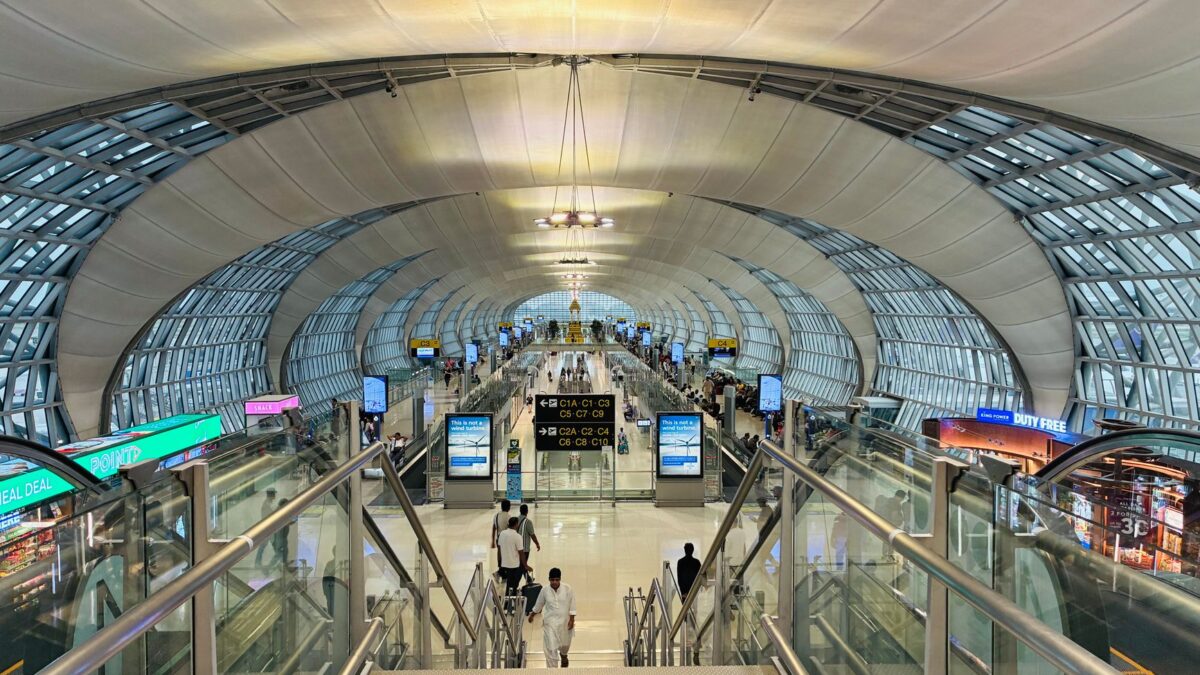
From the airport into Bangkok: every option and what it costs
Navigate Bangkok's airport transfer options: real fares for trains, taxis, and ride-hailing. Expert tips for arriving in Thailand's capital.
 Living Abroad
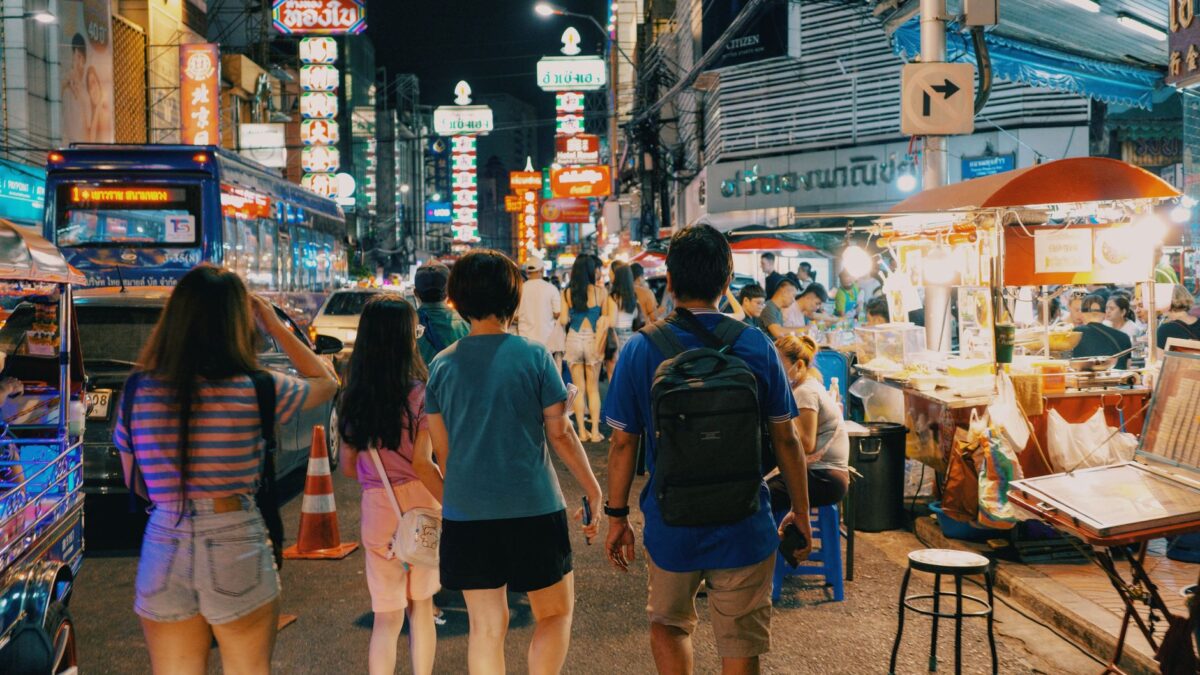
Moving to Thailand: visas, banking and SIM cards
Moving to Thailand? Get practical advice on visas, opening bank accounts, SIM cards, and choosing districts in Bangkok for your first week.
 Costs & Money
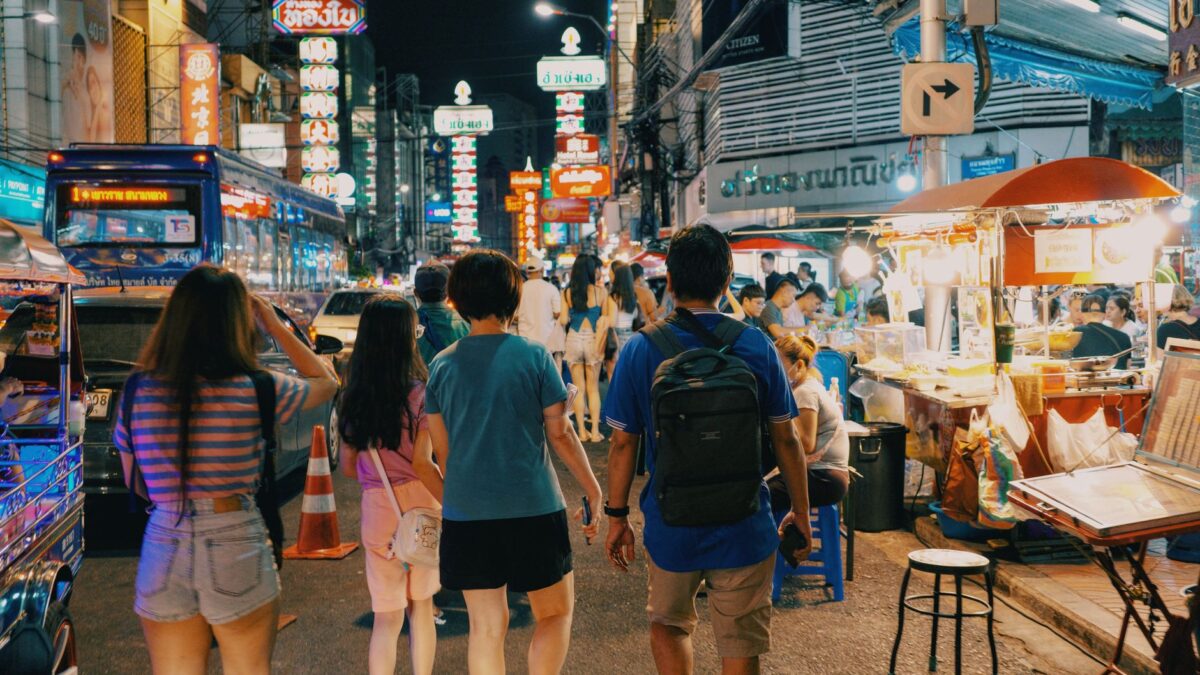
A week in Bangkok on a mid-range budget
Plan a week in Bangkok on a mid-range budget. Real prices for hotels, BTS fares, street food, and attractions in September 2026.
 News & Updates
Thailand in September 2026: what travelers should know now
Thailand in September 2026: Weather, events, transport closures & costs for Bangkok travelers.
Southeast Asia
 Vietnam
Vietnam Travel Podcast with Linh Nguyen
The monsoon climate of northern Vietnam brings a hot, rainy season from May to September and a warm, dry season from October…
 Indonesia
Indonesia Travel Podcast with Bayu Pratama
The island of Java, one of the most densely populated places on earth, is the demographic heart of the Indonesian archipelago.
 Malaysia
Malaysia Travel Podcast with Aisyah Rahman
The Strait of Malacca, separating the Malay Peninsula from Sumatra, has carried maritime trade and cultural influences from China, India, the Middle…
 Singapore
Singapore Travel Podcast with Rachel Tan
The northeastern monsoon, from December to March, brings wet weather that shapes daily life across Singapore's lowlying central plateau and its urbanised…