

A week in Bern on a mid-range budget
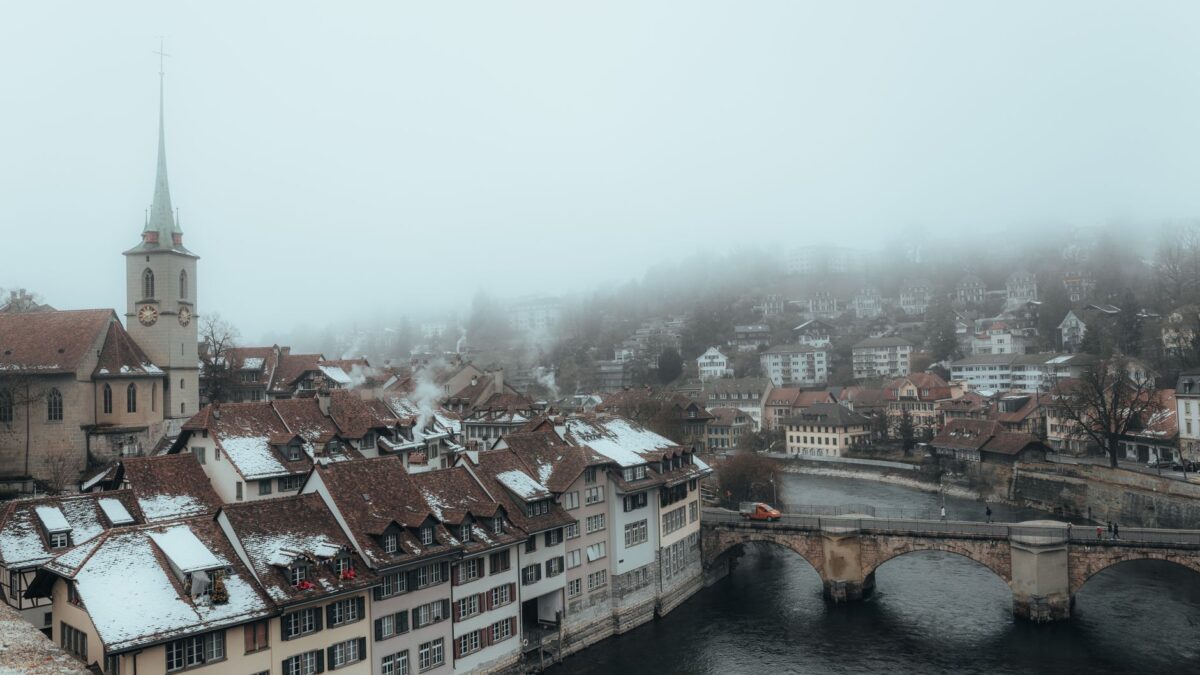
The first thing you notice is the sound. Not traffic — Bern’s Old Town is famously car-free — but the Aare, that glacier-fed ribbon of turquoise that loops around the peninsula like a liquid moat. Late August, and the air is 26°C, the sun still strong at 20:25, the city humming with the last festivals of summer. I’d come for a week, and I wanted to know what it really costs to live it properly — not skimp, not splurge. Here’s what that looks like, day by day, in Swiss francs.
Day 1: Settling in, Old Town and the Zytglogge
I check into Stay KooooK Bern City, a mid-range aparthotel right at the edge of the car-free zone, about CHF 210 a night for a compact studio with a kitchenette. That’s on the higher end of the typical CHF 180–250 for a decent hotel, but it pays for itself: you can make breakfast and picnic lunches. The receptionist hands me a Libero day pass (CHF 8.60 for zones 100/101, covering all trams and buses in the city) and points me toward the Zytglogge.
I join the crowd at 16:00 as the medieval clock’s mechanical bears and jesters put on their hourly show. It’s free, of course — the truest budget activity in Bern. Then I wander under six kilometres of sandstone arcades, the Lauben, which shelter you from the rain that’s spitting on and off. Dinner is at Altes Tramdepot Brauerei Restaurant, inside the old tram depot below the BearPark. A hearty Bernerplatte — sausages, smoked meats, Rösti — plus a pint of their house amber ale: CHF 48. I sleep well, jet-lagged but happy.
Day 2: Bears, Münster, and the Einstein House
Morning: a croissant and a coffee at Einstein – café & bel étage (CHF 8.50 for the combo). Then I cross the Nydeggbrücke to the BärenPark. It’s free to watch the bears — Bern’s symbol — climbing and swimming in their riverside enclosure. I climb the Berner Münster tower: CHF 5 for students, about CHF 8 for adults, and 344 steps later you’re rewarded with a 360° view of the tiled roofs and the Aare bend. Worth every step.
Lunch is a classic budget move: a daily Tagesteller at a local pub near the Münster — CHF 19 for a filling Rösti with cheese and salad. Afternoon, the Einstein-Haus at Kramgasse 49. It’s CHF 8 to see the tiny flat where Einstein wrote his 1905 papers, and it’s wonderfully mundane — a kitchen, a study, no genius vibes. Dinner: a Restaurant Romy burger (CHF 26) and a local beer (CHF 7.50) while watching the sun dip below the Gurten. So far, the week is running about CHF 85 a day, excluding hotel.
Day 3: The museum quarter and the river
Join me on a morning walk across the Kirchenfeldbrücke to the “museum quarter.” The Bernisches Historisches Museum / Einstein Museum is CHF 15 for a combined ticket — the permanent collection is excellent, and the Einstein exhibition is a highlight. I spend three hours there, then hop on tram 9 to the Zentrum Paul Klee. Entry is CHF 20 (free on the first Sunday of the month, but not today). Renzo Piano’s rolling glass-and-steel building is worth the trip alone, and Klee’s colours are a shock of joy.
It’s hot, so I do what Bernese do: Aareschwimmen. I rent a waterproof bag at the Marzili lido for CHF 5, take the little funicular down (CHF 2.60) and float with the current past the BearPark, the Bundeshaus and the Old Town, then climb out at the Altenbergsteg. It’s free, thrilling, and utterly Bern. Dinner at Restaurant ZOE, a mediterranean spot on the edge of the Breitenrain: CHF 52 for two courses and a glass of wine. My wallet groans, but it’s worth it.
Day 4: A day trip to Thun and the Seeland festival
I buy a day pass for the SBB (CHF 28, half-fare card not worth it for a week). The train from Bern to Thun is 20 minutes, and the Lake Thun Festival is in its final days. I watch a matinee of Grease from a cheap standing spot (CHF 25) against the Eiger, Mönch and Jungfrau. It’s ridiculous and glorious. Back in Bern, I take the funicular up to Gurten (CHF 9.40 return). The Theater Gurten is doing its last-ever performance of ‘So viu Läbe’ — the open-air theatre is leaving the mountain for good. I score a last-minute ticket for CHF 30, and it’s a folk-rock elegy to Bernese identity that leaves me verklempt.
Afterwards, at the Gurten summit, the view of the city and the Alps under the long evening light is free. I have a beer at the summit restaurant (CHF 8). Today was expensive — about CHF 100 — but this is why you came to Switzerland.
Day 5: The No Borders No Nations festival and local flavours
I’m staying in the Länggasse — student district, cheaper rents, great cafés. This morning, I discover Adriano’s Bar & Café at a wooden table with a notebook, coffee (CHF 5.30) and a slice of bread (CHF 2). The No Borders No Nations festival has taken over the Reitschule and Schützenmatte — a free, self-organised arts and music marathon. I wander through workshops on radical gardening and a punk acoustic set. Lunch is a falafel wrap from a food truck: CHF 14.
Afternoon, I visit the Rosengarten with its 200+ varieties of roses and the best postcard view of the Old Town. It’s free, always, and the sunset is spectacular. For dinner, I splurge on a nicer meal at Restaurant Rosengarten itself — with that view, CHF 50 for a main and a glass. It’s high-end, but you’re paying for the terrace above the bears and the river.
Day 6: The Berner Seeland folk day and a Sunday market
Sunday. The Bundesplatz is transformed into a farmers’ market — I buy a loaf of bread (CHF 3.50), some Emmentaler cheese (CHF 6), and a tub of raspberries (CHF 5) for a picnic. Then I take the train to the Eidgenössisches Scheller- und Trychlertreffen in the Berner Seeland — traditional cowbell and whip-cracking folk music. The headline acts, Florian Ast and George, are singing Bernese-German pop-folk; the crowd is a sea of alpine hats and embroidered shirts. Tickets are CHF 35 and worth the experience. Back in Bern, the Breitenrain quarter is lively — I have a pint at Barbière microbrewery (CHF 7).
Day 7: Easy morning, and what the week really costs
I take a quiet morning at Café TRAVOIS in the Matte quarter, learning about the Matteänglisch — the local secret language. A cappuccino is CHF 5.30, and the vibe is timeless. I pick up groceries at the Migros for the trip home: a litre of milk (CHF 2.10), a bag of apples, some cheese. One last tram ride on my day pass, and I’m done.
So, what did a week cost?
- Hotel (7 nights at Stay KooooK): CHF 1,470
- Food and drink: about CHF 45/day average (including a few restaurant meals and groceries) — CHF 315
- Local transit (Libero passes): CHF 30 (I bought daily passes on days with more than three trips)
- Attractions and festivals: CHF 145 (Münster, Einstein-Haus, ZKM, Thun Festival, Gurten theatre, folk concert, etc.)
- Day trip to Thun: CHF 63 (train and festival)
- Miscellaneous (funicular, lido locker, etc.): CHF 20
Total: about CHF 2,043 — roughly US$1,800 at current exchange rates. But if you’re on a tighter budget, swap the hotel for a guesthouse like Hotel Marthahaus (around CHF 100/night), pack lunches, and stick to free festivals and river swimming — you could do it for CHF 1,300, still a comfortable week.
The thing about Bern is that it’s not cheap — but it’s fair. A lunch menu under CHF 20 is real if you look, and the city’s beauty is free. You don’t need to skip the good stuff; you just need to know where it lives. I hope you get here before the Gurten theatre takes its final bow — and once the season winds down, the Aare is still waiting.
Frequently asked questions
How much does a meal cost in Bern?
A filling daily lunch menu at an inexpensive local place costs about CHF 20–24. A mid-range restaurant dinner with a drink is roughly CHF 45–55 per person. A cup of coffee is around CHF 5.30.
What is the cheapest way to get around Bern?
Bern’s public transport (Bernmobil) is efficient and priced by zones. A single fare for zones 100/101 is about CHF 2.60–4.40, and a day pass for the city is around CHF 8.60. A monthly Libero pass costs CHF 76–92 if you stay longer.
Is Bern expensive for tourists?
Bern is pricey in absolute terms, but studies rank it as relatively affordable for eating out compared to local wages. You can still have a good lunch menu for under CHF 20, and many attractions like the Rosengarten or BearPark are free.
What are the must-see free attractions in Bern?
The Zytglogge clock’s hourly show, the BärenPark, the Rosengarten, the Bundesplatz farmers’ market (Saturdays), and the Old Town’s arcades are all free. Aareschwimmen (floating in the river) costs only a locker rental.
Should I buy the Swiss Half Fare Card for a week in Bern?
If you only stay in and around Bern, it’s usually not worth it. City transit is cheap, and a one-day SBB Saver Day Pass to Thun costs about CHF 28–40. The Half Fare Card (CHF 120) pays off if you take multiple long-distance trains.
Things to do in Switzerland
 Best of Bernese Oberlands from Luzern
 Luzern / Lucerne Professional Paragliding Tandem Flights
 Likely to sell out
Alsace wine tour and medieval villages. Small group guided tour
Likely to sell out
Alsace wine tour and medieval villages. Small group guided tour
 Vine Stories: Lavaux & Lutry wine walk
 3 Hour Unique Wine Tour - Half Day in Swiss Alps
 Lake Luzern pick and mix Tour - Burgenstock, Rigi Seebodenalp and Luzern