


Switzerland Travel Podcast with Elena Vogt
Hosted by Elena Vogt — a new episode every day from Switzerland.
Switzerland Travel Podcast with Elena Vogt is a slow, grounded look at moving through a country where the terrain dictates the route. The Alps in the south and the Jura in the northwest leave a central plateau of lakes and rolling hills, so journeys are shaped by elevation. That is what makes travel here different.
The host covers a range that takes in Zurich’s urban density, the limestone ridges of the Jura, the chestnut woods of Ticino, and the high pastures of the Bernese Oberland. Each place explains how the country’s population clusters in the north and west while the southern Alps stay sparsely settled.
The show moves with the calendar. Episodes return to the same villages in different seasons: a rainy October in Lucerne, a snowy February in the Jura, a humid July by Lake Geneva. The format lets knowledge build, so a passing detail from one episode becomes the subject of another.
Recent episodes
Things to do in Switzerland
 Best of Bernese Oberlands from Luzern
 Luzern / Lucerne Professional Paragliding Tandem Flights
 Likely to sell out
Alsace wine tour and medieval villages. Small group guided tour
Likely to sell out
Alsace wine tour and medieval villages. Small group guided tour
 Vine Stories: Lavaux & Lutry wine walk
 3 Hour Unique Wine Tour - Half Day in Swiss Alps
 Lake Luzern pick and mix Tour - Burgenstock, Rigi Seebodenalp and Luzern
 DAVOS: Paragliding Tandem Flight In Swiss Alps (Video & Photos Included)
 Zurich 360° City Walk Tour Including Hidden Spots
Plan your trip to Switzerland
Getting around
Staying connected
Switzerland at a glance
Switzerland in depth
Reference data on the country — geography, people, history, economy and transport.
Geography and climate
Location
Central Europe, east of France, north of Italy
Terrain
Mostly mountains (Alps in south, Jura in northwest) with a central plateau of rolling hills, plains, and large lakes
Climate
Temperate, but varies with altitude; cold, cloudy, rainy/snowy winters; cool to warm, cloudy, humid summers with occasional showers
Elevation
- Highest point
- Dufourspitze on Monte Rosa 4,634 m
- Lowest point
- Lake Maggiore 195 m
- Mean elevation
- 1,350 m
Area
- Total
- 41,277 sq km
- Land
- 39,997 sq km
- Water
- 1,280 sq km
Size comparison
Slightly less than twice the size of New Jersey
Coastline
0 km (landlocked)
Land borders
- Total
- 1,770 km
- Border countries
- Austria 158 km; France 525 km; Italy 698 km; Liechtenstein 41 km; Germany 348 km
Natural resources
Hydropower potential, timber, salt
Land use
- Agricultural land
- 37.8% (2023 est.)
- Arable land
- 10% (2023 est.)
- Permanent crops
- 0.6% (2023 est.)
- Permanent pasture
- 27.1% (2023 est.)
- Forest
- 32% (2023 est.)
- Other
- 32.6% (2023 est.)
Natural hazards
Avalanches, landslides; flash floods
Note
Landlocked; crossroads of northern and southern Europe; along with southeastern France, northern Italy, and southwestern Austria, has the highest elevations in the Alps
People and society
Population
- Total
- 8,925,741 (2025 est.)
- Male
- 4,436,858
- Female
- 4,488,883
Nationality
- Noun
- Swiss (singular and plural)
- Adjective
- Swiss
Ethnic groups
Swiss 69.2%, German 4.2%, Italian 3.2%, Portuguese 2.5%, French 2.1%, Kosovan 1.1%, Turkish 1%, other 16.7% (2020 est.)
Languages
- Languages
- German (or Swiss German) (official) 62.1%, French (official) 22.8%, Italian (official) 8%, English 5.7%, Portuguese 3.5%, Albanian 3.3%, Serbo-Croatian 2.3%, Spanish 2.3%, Romansh (official) 0.5%, other 7.9% (2019 est.)
- Major-language sample(s)
- Das World Factbook, die unverzichtbare Quelle für grundlegende Informationen. (German)
Religions
Roman Catholic 34.4%, Protestant 22.5%, other Christian 5.7%, Muslim 5.4%, other 1.5%, none 29.4%, unspecified 1.1% (2020 est.)
Median age
- Total
- 44.4 years (2025 est.)
- Male
- 43.5 years
- Female
- 44.9 years
Life expectancy
- Total population
- 83.9 years (2024 est.)
- Male
- 82 years
- Female
- 85.8 years
Urbanisation
- Urban population
- 74.2% of total population (2023)
- Rate of urbanization
- 0.79% annual rate of change (2020-25 est.)
Where people live
Population distribution corresponds to elevation, with the northern and western areas far more heavily populated; the higher Alps of the south limit settlement
Largest cities
1.432 million Zurich, 441,000 BERN (capital) (2023)
Background and government
Background
The Swiss Confederation was founded in 1291 as a defensive alliance among three cantons. In succeeding years, other localities joined the original three. The Swiss Confederation secured its independence from the Holy Roman Empire in 1499. A constitution of 1848, which was modified in 1874 to allow voters to introduce referenda on proposed laws, replaced the confederation with a centralized federal government. The major European powers have long honored Switzerland's sovereignty and neutrality, and the country was not involved in either World War. The political and economic integration of Europe over the past half-century, as well as Switzerland's role in many UN and international organizations, has strengthened Switzerland's ties with its neighbors. However, the country did not officially become a UN member until 2002. Switzerland remains active in many UN and international organizations but retains a strong commitment to neutrality.
Government
Federal republic (formally a confederation)
Capital
Bern
Time zone
UTC+1 (6 hours ahead of Washington, DC, during Standard Time)
Local name
Schweizerische Eidgenossenschaft (German)/ Confederation Suisse (French)/ Confederazione Svizzera (Italian)/ Confederaziun Svizra (Romansh)
Independence
1 August 1291 (founding of the Swiss Confederation)
National day
Founding of the Swiss Confederation in 1291
Economy and cost of living
Overview
High-income, non-EU European economy; top ten in GDP per capita; renowned banking and financial hub; low unemployment and inflation; slowed GDP growth post-pandemic; highly skilled but aging workforce; key pharmaceutical and precision manufacturing exporter; leader in innovation and competitiveness indices
GDP per capita
- Real GDP per capita 2024
- $82,000 (2024 est.)
- Real GDP per capita 2023
- $82,300 (2023 est.)
- Real GDP per capita 2022
- $82,800 (2022 est.)
Inflation
- Inflation rate (consumer prices) 2024
- 1.1% (2024 est.)
- Inflation rate (consumer prices) 2023
- 2.1% (2023 est.)
- Inflation rate (consumer prices) 2022
- 2.8% (2022 est.)
Unemployment
- Unemployment rate 2024
- 4.2% (2024 est.)
- Unemployment rate 2023
- 4.1% (2023 est.)
- Unemployment rate 2022
- 4.2% (2022 est.)
Exchange rate
- Currency
- Swiss francs (CHF) per US dollar -
- Exchange rates 2024
- 0.88 (2024 est.)
- Exchange rates 2023
- 0.898 (2023 est.)
- Exchange rates 2022
- 0.955 (2022 est.)
- Exchange rates 2021
- 0.914 (2021 est.)
- Exchange rates 2020
- 0.939 (2020 est.)
Main industries
Machinery, chemicals, watches, textiles, precision instruments, tourism, banking, insurance, pharmaceuticals
Agriculture
Milk, sugar beets, wheat, potatoes, pork, apples, barley, beef, maize, grapes (2023)
Transport and connectivity
Airports
66 (2025)
Railways
Total 5,296 km (2020) 5,296 km electrified; Switzerland remains the only country with a fully electrified network
Internet domain
.ch
Internet users
Percent of population 97% (2023 est.)
Mobile subscriptions
- Total subscriptions
- 11.6 million (2024 est.)
- Subscriptions per 100 inhabitants
- 129 (2024 est.)
Environment
Environmental issues
Air pollution from vehicle emissions; water pollution from agricultural fertilizers; soil pollution from chemical contaminants; soil erosion; loss of biodiversity
Fresh water
53.5 billion cubic meters (2022 est.)
Country reference figures are periodically revised. Check anything time-sensitive or safety-critical against an official source before you travel.
Switzerland travel guides
 News & Updates
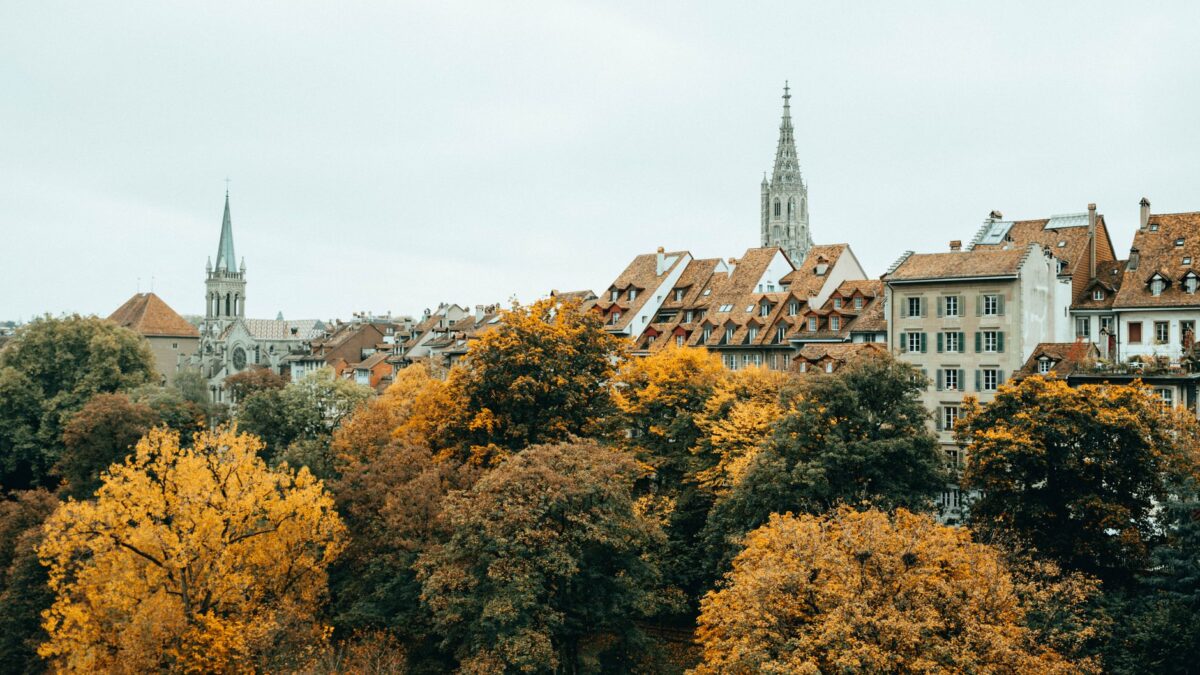
Switzerland in September 2026: what travelers should know now
Switzerland travel briefing for September 2026: weather, holidays, festivals, and costs in Bern.
 Getting Around
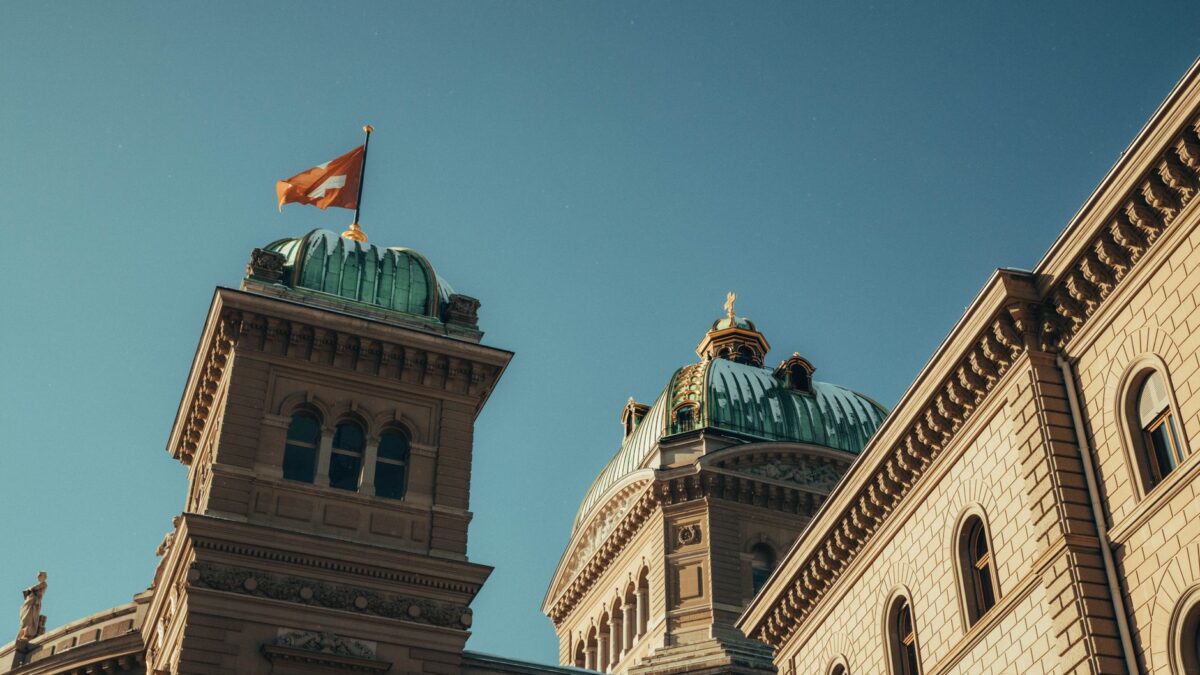
Getting around Bern: metros, taxis and passes
Master Bern's transit: trams, fares, and passes. Plus tips on walking the Altstadt, taxi costs, and seasonal moves like the Sichlete.
 Travel Tips
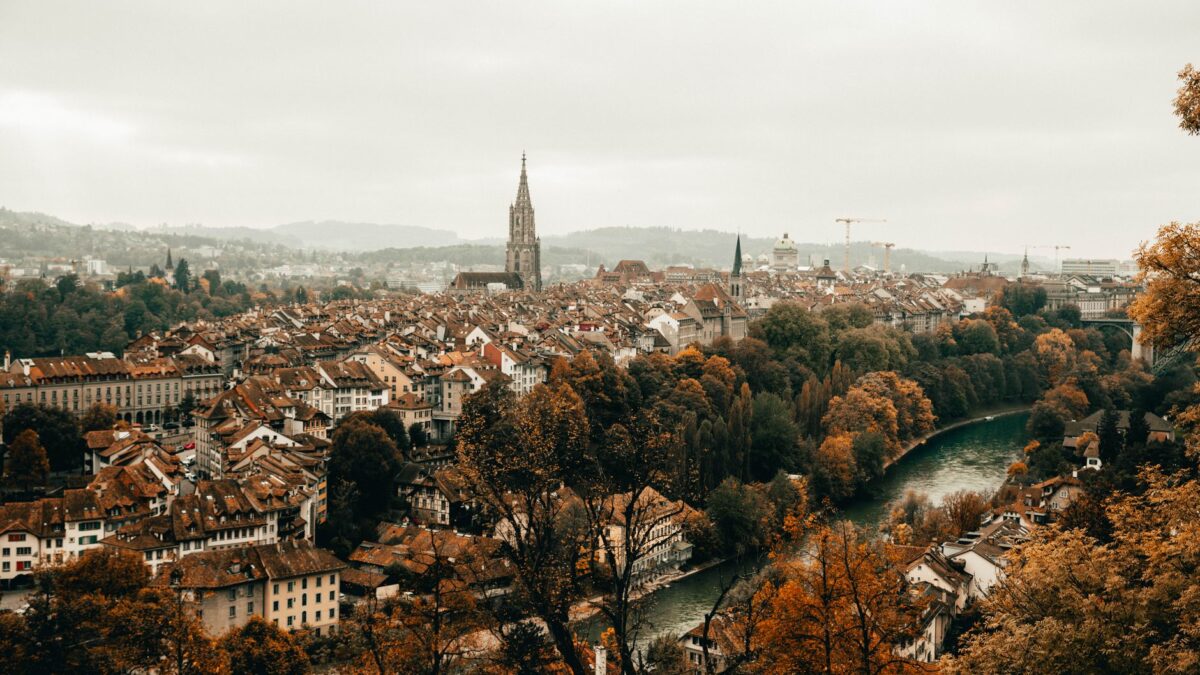
A first-timer’s guide to Switzerland
Your practical guide to Switzerland: best times to visit, transport tips, realistic costs in CHF, and essential advice for first-timers exploring Bern and beyond.
 Costs & Money
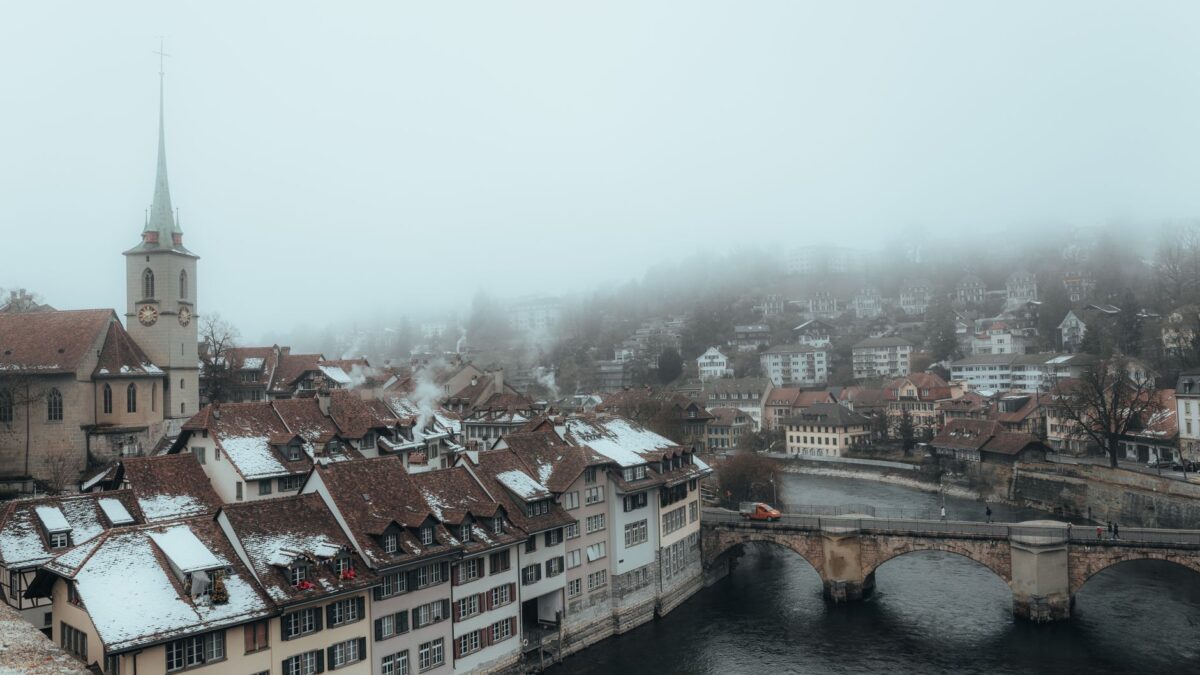
A week in Bern on a mid-range budget
A week in Bern on a mid-range budget: day-by-day costs for meals, transit, hotels, and attractions, with real prices in Swiss francs.
Western Europe
 France
France Travel Podcast with Camille Laurent
The Rhône is the only major French river flowing southward to the Mediterranean, while the Seine, Loire, and Garonne run west to…
 Germany
Germany Travel Podcast with Lena Brandt
The Elbe flows northward through German lowlands and uplands before reaching the North Sea, shaping trade and weather along its course.
 Austria
Austria Travel Podcast with Felix Gruber
This podcast follows one resident's slow journey through Austria, from Vienna's eastern lowlands to the Alpine passes and Danube-side valleys that shape…
 Netherlands
Netherlands Travel Podcast with Sanne de Vries
The Randstad, anchored by Amsterdam, Rotterdam, The Hague and Utrecht, holds most of the country's population, while the north remains less densely…