

A week in Havana on a mid-range budget
The heat hits you like a damp towel the moment you step out of José Martí. It’s August in Havana, the air thick with salt and exhaust, and the city is in the middle of a love affair with its own history. On the Malecón, families sprawl on the seawall, not just for the sunset but because the power has been out since 9 PM—the sixth nationwide blackout of the year. Yet the streets hum with a strange electricity of their own: it’s Fidel Castro’s centenary, and every corner seems to hold a book fair stall or a mural being painted. You’re here for a week, on a mid-range budget, and you’re about to find out that Havana will take your money in the most deliciously confusing ways.
Day 1: Settling In—Vedado’s Bookish Heart
Check into a casa particular in Vedado, the city’s cultural core. A clean room with a fan, a private bath, and a rooftop terrace where the neighbour grows tomatoes—expect to pay around 9,000–15,000 CUP per night (roughly $20–35). Your host, a retired schoolteacher named Marta, will insist you drink a cafecito before you leave. Do it.
It’s the final day of the 34th Havana International Book Fair, and the Cultural Station Línea y 18 is packed. You browse stalls of Russian literature (guest of honor) and Cuban poetry, then grab a street pizza slice for ~150 CUP—a spongy disc of bread, ketchup, and cheese that tastes like childhood. For dinner, wander to Antojos, a local spot near the University, where a plate of comida criolla—rice, beans, pork, and maduros—sets you back ~900 CUP. You finish with a cristal beer (~350 CUP) at a corner bar, watching students argue about baseball and politics.
Day 2: Old Havana’s Colonial Glow
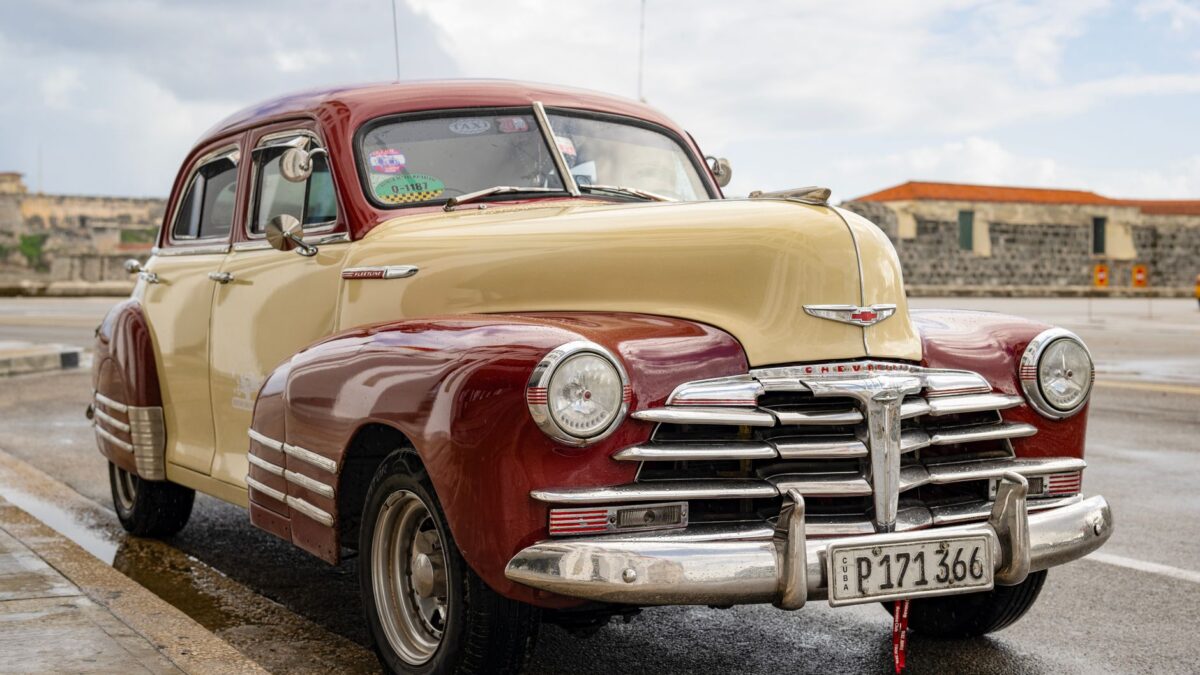
Take an almendrón—a shared 1950s Chevy—across town for ~15 CUP. You’re headed to Habana Vieja, the UNESCO core of four plazas and 900 historic buildings. Start at Plaza de Armas, where booksellers spread first editions on the cobblestones. The Museum of the Revolution’s main building is closed for renovation, but you can still see the Granma memorial and the tank collection out back—entry is ~1,500 CUP.
Lunch at Los Mercaderes, a paladar tucked into a colonial mansion. The ropa vieja here runs ~4,000 CUP—a splurge, but it’s the real deal, shreds of beef in a tangy tomato sauce. As you eat, the power flickers. The waiter shrugs: “Apagón.” You use the backup generator’s light to read the menu. In the afternoon, climb the Castillo del Morro across the harbor (entry ~1,000 CUP) and watch the sun dip behind the city. Take the ferry back for ~10 CUP, then join the cannon-firing ceremony at La Cabaña at 9 PM—free to watch from the esplanade, and the boom echoes through the bay like a heartbeat.
Day 3: The Malecón and a Birthday to Remember
Today is August 13th—Fidel Castro’s 100th birthday. The city is dressed in flags. You walk the Malecón early, before the heat becomes unbearable, and watch fishermen cast lines into the gray-green water. A group of neighbors is setting up a speaker on the seawall for the evening’s celebration. You grab breakfast at Cafe El Dandy—a cappuccino for ~150 CUP and a ham-and-cheese croissant for ~300.
By noon, you’re at Plaza de la Revolución for the centenary exhibition opening. The Che Guevara mural stares down impassively. In the afternoon, the Karl Marx Theater hosts the state ceremony—you won’t get in, but the streets are filled with people listening to speeches on loudspeakers. For dinner, try La Esquina de Cuba, a modest paladar in Centro Habana, where a lobster main dish goes for ~3,000 CUP. It’s a steal compared to the hotel restaurants. Later, you end up on a rooftop in Centro Habana with your casa host’s cousins, drinking Havana Club rum (a bottle costs ~1,500 CUP at the bodega) and watching the city’s lights ripple through the blackout—only the occasional generator hum breaks the silence.
Day 4: Art, Ice Cream, and a Night at the Factory
Start at Coppelia—the block-sized ice-cream park on Calle 23. A scoop of mango sorbet is ~50 CUP. Even in a crisis, people queue for hours; you’ll be glad you only waited 20 minutes. Then walk to Fábrica de Arte Cubano, a converted oil plant that’s part gallery, part club, part movie theater. Entry is ~500 CUP (go early to skip the line). The exhibits are a furious mix of installations and photography—some celebrating the centenary, others subtly pointing to the blackouts.
For dinner, head to Esto no es un café, one of Vedado’s newer gems. A plate of grilled fish and tostones is ~2,500 CUP. The owner chats about the 2026 heat—“40 degrees, feels like 50”—and points you to the roof for a view. The night is young, so you catch a set at La Zorra y El Cuervo (another ~500 CUP cover). The jazz is smoky, messy, and perfect.
Day 5: A Day Trip to the Beach—and a Reality Check
Rent a private taxi (one-way ~2,000 CUP) to Playas del Este, the beach strip east of the city. The water is warm and surprisingly clear. A plate of fried fish at a beachside paladar costs ~700 CUP. This is where you see the city’s two tiers: tourists with umbrellas, locals selling fresh coconut water (~100 CUP). By 5 PM, the crowds thin as the evening blackout approaches. You head back, and on the Malecón you see the nightly exodus—people carrying mats and pillows to sleep on the seawall. The heat is no joke; you’re grateful for the fan in your room.
Day 6: Miramar’s Quiet Luxury and the Museum of Neon
Spend the morning in Miramar, the leafy diplomatic district. Embassies line Quinta Avenida, and the Gran Muthu Habana hotel has a stunning lobby—you can nurse a coffee (~150 CUP) without being a guest. For lunch, try Sibarita Habana, a garden-like paladar where the ropa vieja is again around ~4,300 CUP—but with a modern twist. In the afternoon, visit the Museo Nacional de Bellas Artes (entry ~2,200 CUP) and lose yourself in Cuban art from colonial to contemporary. The building is blessedly cool, a reprieve from the 33°C streets.
For your final dinner, go out with a bang at Hotel Nacional—just a mojito on the terrace (a splurge at ~1,000 CUP), but the view of the Malecón at dusk is priceless. Then, one last walk down the seawall, stepping over couples and guitarists and stray dogs, the blackout turning the city into a constellation of oil lamps and car headlights.
Day 7: Leaving, With Your Wallet Lighter but Your Heart Full
On your last morning, settle your bill—your room, if you stayed a full week, totals ~70,000–105,000 CUP ($150–250). A final breakfast at Café Arcangel (a cortadito for ~125 CUP and a ham sandwich for ~400 CUP). Before you leave, remember: the country runs on a two-tiered system. A plate of rice and beans might cost you 900 CUP, but a local pays less with a national ID. Tips are appreciated but not mandatory—a few hundred pesos goes a long way.
At the airport, you count: about 220,000–280,000 CUP (~$500–650) for the week, excluding flights. You didn’t eat at the Sevilla Hotel’s restaurant (the ropa vieja there is ~4,300 CUP—tempting, but you had better). You didn’t buy a counterfeit cigar. You did sleep eight nights to the sound of the sea.
Practical Notes & Solidarity
- E-visa: Apply at evisacuba.cu ($50, ~72 hours). Complete the D’Viajeros form within 7 days of arrival.
- Cash is king: Credit cards rarely work. Carry CUP in small bills; many prices are quoted in USD but payable in pesos at ~445 CUP/USD on the street.
- Blackouts: Carry a power bank and flashlight. The city is used to it—so should you.
- Respect: Don’t photograph police or military. Ask before snapping portraits.
Havana is not a resort; it’s a living, breathing monument to survival. The pineapple juice at a street stall will cost you ~150 CUP, and the conversation you’ll have with the seller about the Yankees might just be the best thing you buy all week. Hasta luego, amigo.
Frequently asked questions
How much does a week in Havana cost on a mid-range budget?
Expect to spend around 220,000–280,000 CUP ($500–650) per person, excluding flights. This covers a casa particular (9,000–15,000 CUP/night), local meals, taxi short rides, and entry fees.
Is it safe to travel to Havana during the blackouts?
Violent crime is rare, but blackouts are daily. Carry a flashlight, power bank, and water. Many locals sleep on rooftops or the Malecón to escape the heat—follow their lead if your room gets stuffy.
What is the best way to pay for things in Cuba?
Use Cuban pesos (CUP) in cash for most transactions. The informal exchange rate is around 445 CUP/USD, far better than the official 24 CUP/USD. Avoid paying in USD at tourist spots—they often inflate prices.
Are there any must-attend events in Havana in mid-August 2026?
Yes—it’s Fidel Castro’s centenary (Aug 13) with ceremonies at the Karl Marx Theater and exhibitions at Revolution Square. Also, catch the tail end of the Havana International Book Fair (Aug 10-16) at Línea y 18.
Can I visit the Museum of the Revolution?
The main building is closed for renovation, but you can still see the Granma memorial and the armored vehicles in the park out front. Entry is around 1,500 CUP.