

A week in Kuala Lumpur on a mid-range budget
You step out of the hotel in KLCC and the heat hits you like a warm, wet towel. It is late October, that transitional month where the dry haze from Indonesian fires lingers, making the air feel thick and heavy even before the afternoon downpours start. The sky is a hazy white, not the bright blue you might see in brochures, but there is a specific energy here. You are in one of Southeast Asia’s most affordable big cities, where your money stretches further than almost anywhere else, provided you know how to navigate it.
I have lived in this city for years, and I can tell you that Kuala Lumpur does not punish visitors for being budget-conscious; it rewards them. A week here on a mid-range budget—meaning comfortable hotels, good food, and easy transit—costs significantly less than a weekend in Singapore or Bangkok. Let us break down exactly what a seven-day stay looks like in ringgits (MYR) and US dollars, anchored to real prices as of today.
Where You Sleep: The KLCC and Golden Triangle Base
For your first week, I recommend staying in the KLCC district or the adjacent Golden Triangle. This is the walkable core, home to the Petronas Twin Towers and Suria KLCC mall. It is safe, clean, and perfectly positioned for exploration. While luxury condos dominate the skyline, the mid-range accommodation options are surprisingly decent.
You can find a solid three-star equivalent hotel or guesthouse for about RM100–180 per night (roughly $30). Places like Hotel Transit Kuala Lumpur or Travelodge Kuala Lumpur City Centre offer reliable comfort without the premium price tag. If you want something slightly more boutique, Hotel 28 Kuala Lumpur sits right near the towers. For a full week, budget around RM700–1,260 ($175–$315) for lodging. This is remarkably cheap for a capital city with such modern infrastructure.
Eating Your Way Through: From Hawker Stalls to Mid-Range Dinners
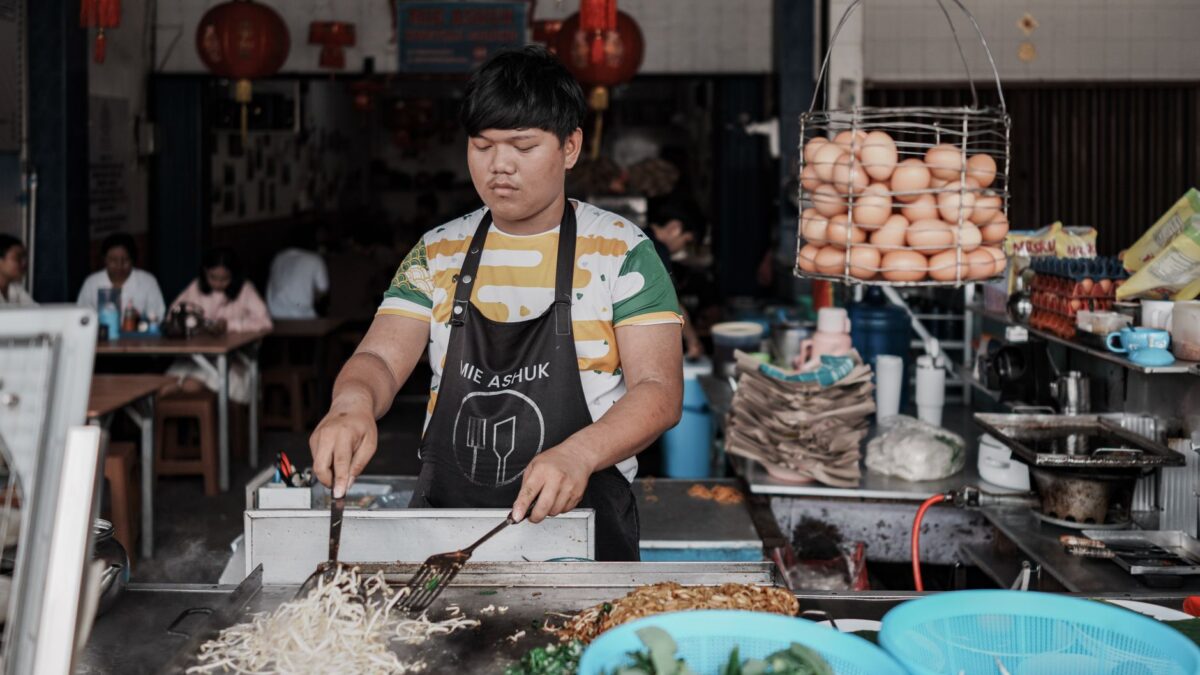
Food is where you will save the most, and also where you will indulge. Kuala Lumpur’s culinary scene is diverse, spanning Malay, Chinese, Indian, and Peranakan influences. The rule of thumb: eat at the kopitiams (coffee shops) and hawker stalls for lunch, and reserve mid-range restaurants for dinner.
A meal at an inexpensive local restaurant or a simple coffee shop costs about RM18–20 ($4). You can get a filling plate of nasi lemak—a coconut rice dish with sambal, anchovies, and egg—for just RM5–8 ($1.4) at a basic stall. For breakfast, try Feeka Coffee Roasters or Common Space for a cappuccino or flat white, which runs about RM12.65 ($2.8). If you prefer baking, keep an eye out for events like Salon Du Pain at Lot 10, where artisan bakeries like Shiobee and DONQ showcase festival-only bakes.
Dinner for two at a mid-range restaurant, featuring three courses without drinks, averages RM110–120 ($25). Venues like UpperDeck KL or Ferria KL offer great atmospheres for this price point. However, be aware that alcohol is heavily taxed. A local beer, whether 0.5 litres from a shop or draft in a bar, will cost you RM14–18 ($3). If you drink regularly, this becomes a significant line item. For groceries, a litre of fresh milk is roughly RM8.60 ($1.9), and a loaf of bread is RM4.40 ($1.0), so eating out remains the smarter financial choice.
Moving Around: Public Transit vs. Ride-Hailing
Kuala Lumpur is car-oriented, but its public transit system is efficient and cheap. The primary currency for moving around is the Touch ‘n Go stored-value card, which works on the Rapid KL LRT, MRT, monorail, and buses. A single trip within the city typically costs between RM1.20 and RM3.80, usually hovering around RM3 ($0.5).
If you plan to use transit extensively, note that the My50 monthly unlimited pass is tied to Malaysian residency (MyKad), so as a visitor, you will likely just top up your card. For longer distances or when the humidity becomes unbearable, ride-hailing apps like Grab are the default. A five-kilometer ride via Grab costs approximately RM10–15 ($1.0–$3.5), with a base flag-fall of RM4–5. It is affordable enough that you do not need to stress over every meter.
A word of caution: traffic can be unpredictable. Recently, there has been heavy talk among Klang Valley drivers regarding accidents, such as a recent pile-up on Jalan Kuching. Additionally, during the rainy season, flash flooding can strand traffic quickly. Always check the air quality index (AQI) before planning outdoor walks; with the ongoing transboundary haze, conditions have been unhealthy, affecting places like Jalan Alor’s outdoor stalls. Use transit to avoid the worst of the heat and pollution.
Attractions: Free Views and Paid Experiences
Many of Kuala Lumpur’s best sights are free. Walking around the KLCC Park to view the Petronas Twin Towers from below costs nothing. Similarly, exploring Bukit Bintang’s retail strip, including Pavilion KL and Fahrenheit88, is a window-shopping paradise. If you head to Brickfields, Little India offers vibrant street scenes and sari shops along Jalan Tun Sambanthan, perfect for photography and cultural immersion.
For paid attractions, consider Aquaria KLCC, located beneath the KLCC park, or Petrosains, The Discovery Centre, housed in the Twin Towers. Immersify Kuala Lumpur offers digital art experiences if you prefer interactive exhibits. Tickets for these vary but generally fit comfortably within a mid-range budget. Avoid the tourist traps in Chow Kit’s rougher lanes late at night; while the wet market is fascinating by day, safety is better ensured in the central districts.
The Bottom Line: Weekly Cost Breakdown
So, what does a week look like in total? Here is a realistic estimate for a solo traveler or a couple sharing costs:
- Accommodation: RM700–1,260 ($175–$315) for 7 nights in a mid-range hotel.
- Food: RM350–500 ($85–$120) if mixing hawker meals with occasional mid-range dinners.
- Transit: RM50–100 ($12–$25) using Touch ‘n Go and occasional Grab rides.
- Attractions & Misc: RM100–200 ($25–$50) for entry fees, souvenirs, and snacks.
Total estimated cost: RM1,200–2,060 ($300–$510) for the week. This is incredibly accessible. Keep in mind that rent in the city centre for locals ranges from RM2,000–2,600 ($500) monthly, showing that hospitality costs are subsidized for visitors relative to living expenses.
Practical tips: Ensure you file the free Malaysia Digital Arrival Card (MDAC) online before arrival. Most Western passports get a 90-day social visit pass. If you need banking, Maybank and CIMB are reliable, though opening accounts requires an in-person visit with proof of address. Stay hydrated, respect the local customs, and enjoy the chaotic charm of a city that never sleeps, even when the haze hangs low.
Frequently asked questions
How much does a mid-range hotel cost in Kuala Lumpur?
A three-star equivalent hotel or guesthouse typically costs between RM100 and RM180 ($30) per night.
Is it cheaper to eat at hawker stalls or restaurants in KL?
Hawker stalls are significantly cheaper, with nasi lemak costing RM5–8 ($1.4) versus RM18–20 ($4) at local coffee shops.
What is the best way to pay for public transport in KL?
Use a Touch 'n Go card for LRT, MRT, and buses. Single trips cost around RM3 ($0.5).
Do I need a visa for Kuala Lumpur?
Most Western passport holders receive a 90-day social visit pass on arrival, but must file the free MDAC online before travel.
Things to do in Malaysia
 Penang 5 Hour Small Group Balik Pulau Cycling Tour With Lunch
 Half-Day Mangrove Kayaking in Langkawi
 Full Day Flexi Private Tour in Penang Island with Pickup
 Market Visit & Private Hands-on Cooking Class at Daun Senja
 Half-Day Geopark Mangrove Kayaking Adventure
 Back of the Bike Street Food Experience – Real Penang!