

A week in Sarajevo on a mid-range budget
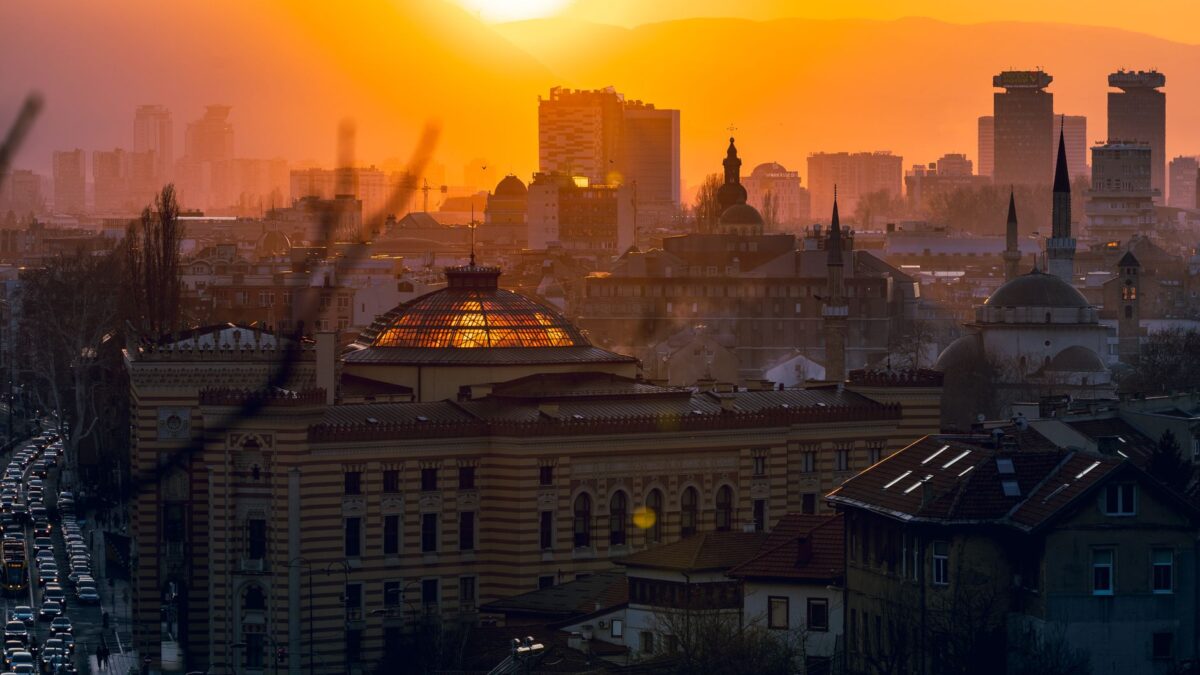
The valley fog clings to the Dinaric Alps in late October, turning the air crisp and smelling faintly of woodsmoke and roasting chestnuts. You step off the tram at Baščaršija, your breath visible in the 6–10°C chill, and realize you are standing in one of Europe’s most affordable capitals. Sarajevo is a city of sharp contrasts—Ottoman bazaars meeting Austro-Hungarian facades, sevdah music echoing over war scars—but for the mid-range traveler, it is also a place where your money goes remarkably far. With the currency pegged at roughly 1.808 BAM per US dollar, you can experience the soul of Bosnia without draining your wallet.
Where Your Money Goes: The Baseline
To plan a week here, you need to understand the local price landscape. Sarajevo remains cheap, but inflation has pushed prices up; items like ćevapi and burek have nearly doubled in cost over the last four years due to tourism demand. Still, a meal at an inexpensive local spot runs about 15 BAM for one person. If you want a proper three-course dinner at a mid-range restaurant with a companion, budget around 60–70 BAM.
Accommodation varies wildly by district. In the heart of Stari Grad (Baščaršija), places like Hotel Old Town or Villa Harmony Hotel offer charming, historic stays that fit a mid-range budget, though a modest one-bedroom flat rent sits around 770 BAM monthly. For a tourist, expect nightly rates that reflect the premium of being steps away from the Sebilj fountain. If you stay slightly further out in Grbavica or near the tram terminus in Ilidža, costs drop, but you trade convenience for transit time.
Day 1-2: The Bazaar, Coffee, and Copper
Your first days should be spent getting lost in Baščaršija. This is the Ottoman-era heart of the city. Start at the Sebilj fountain, the pseudo-Moorish wooden structure that serves as the city’s symbol. It’s free to visit, but you will likely stop at a nearby café. A cappuccino here costs about 3.90 BAM, while a traditional Bosnian coffee (kafa) might be just 2–4 BAM if you know where to look. Tourist spots in the main square charge up to 6 BAM, so walk a few streets into Kazandžiluk, the coppersmith lane, to find better value.
Lunch is non-negotiable. Head to Ćevabdžinica Nune or a neighborhood joint for a “desetka”—ten pieces of grilled meat with somun bread, onion, and kajmak. Expect to pay 12–14 BAM here, though smaller spots might do it for 7–9 BAM. In the evening, stroll toward the Gazi Husrev-beg Mosque, completed in 1532 by Mimar Sinan. Entry to the mosque complex is free, offering a moment of peace amidst the bustling market. For dinner, Avlija Sarajevo offers a beautiful courtyard setting where a mid-range meal for two will set you back around 65 BAM.
Day 3-4: History on the Edge of War
Sarajevo’s history is heavy, and you cannot escape it. Walk to the Latin Bridge, where Gavrilo Princip triggered World War I in 1914. The bridge itself is small, but the Museum of Sarajevo 1878–1918 next door provides crucial context. Moving forward to the 1990s siege, the Tunnel of Hope (Tunel Spasa) is a must-visit. Located near Butmir, this 800-meter tunnel supplied the encircled city in 1993. Visiting the 25-meter accessible section costs a small fee, but the emotional weight is priceless. Take a taxi here; the base fare is about 1.50 BAM plus 1 BAM per kilometer, making it cheaper than a full-day tour bus.
For lunch, try Dveri, a popular spot known for hearty portions. If you prefer street food, grab a slice of burek—a meat-filled pita—from a bakery for roughly 2.5–3 BAM. You can buy a kilo of chopped burek for 22–28 BAM if you’re feeding a group. Afterward, visit the War Childhood Museum. It is not a grand institution but an intimate collection of personal stories, often considered one of the most moving museums in the Balkans.
Day 5-6: Culture, Views, and Local Life
Take the GRAS tram west to Ilidža. A single ride is 2.20 BAM. Here, you can walk the Velika Aleja promenade lined with plane trees leading to Vrelo Bosne, the source of the Bosna River. It’s a green lung for the city, perfect for a quiet afternoon. Return to the center and head up to Vratnik. From the Yellow Fortress (Žuta tabija), you get a panoramic view of the valley and the rooftops. It’s a hike, but free.
For dinner, consider Restaurant Đulagin Dvor or Klopa for authentic home-style cooking. If you are visiting in late October, check the local listings for events like the Orfej international folk-orchestra festival at SARTR, which often features free evening concerts. Enjoying the arts doesn’t always require a ticket. Grab a local draught beer for about 5 BAM and sit outside, watching the city lights flicker on as the autumn rain begins to fall.
Practicalities: Getting Around and Staying Legal
Transport is easy. The tram runs along the Miljacka river from Baščaršija to Ilidža. If you plan to use it daily, a monthly pass is roughly 54 BAM, but for a week, single tickets or a weekly card work fine. Taxis are abundant and safe, though always agree on a meter or price before getting in. Cash is king; Bosnia is largely a cash economy. Carry BAM notes, as cards are not accepted everywhere, especially in smaller markets or for tram tickets bought at kiosks.
Visa-wise, Bosnia is not in Schengen. EU, US, UK, and Canadian citizens enjoy 90 days visa-free. However, there is a bureaucratic catch: the “white card.” If you stay in private accommodation (not a hotel) for more than three days, you must register with the Service for Foreigners’ Affairs within 48 hours. Hotels handle this automatically. Failure to register can result in fines between 100–500 BAM. Ensure your host provides the necessary documentation, including their ID and CIPS certificate.
Finally, stay aware of your surroundings. Violent crime is low, but pickpockets operate in crowded areas like Baščaršija and on trams. Keep your passport secure. If you venture outside the city, heed mine-warning signs strictly; unexploded ordnance from the 1990s war still lingers in rural areas. Stick to marked paths and hard surfaces. Sarajevo is resilient, warm, and incredibly welcoming. With a mid-range budget, you won’t just survive here—you’ll thrive, savoring every cup of coffee and every story the city has to tell.
Frequently asked questions
Is Sarajevo expensive for tourists?
Sarajevo is one of Europe’s cheaper capitals, though prices for food and drinks have risen recently. A mid-range dinner for two costs about 60–70 BAM, and a single tram ride is 2.20 BAM.
Do I need a visa for Bosnia and Herzegovina?
Citizens of the EU, US, UK, Canada, Australia, and others can stay visa-free for up to 90 days within any 180-day period. Passport validity must extend 3 months past your departure.
What is the white card registration requirement?
If staying in private accommodation for more than 3 days, you must register with the Service for Foreigners’ Affairs within 48 hours. Hotels register guests automatically.
How much does a typical meal cost?
An inexpensive local meal is about 15 BAM. A "desetka" of ćevapi costs 12–14 BAM, and a kilo of burek ranges from 22–28 BAM depending on the filling.
Can I use credit cards in Sarajevo?
Bosnia is largely a cash economy using the Convertible Mark (BAM). While larger hotels and restaurants accept cards, many smaller shops, markets, and tram kiosks require cash.


