

From the airport into Rabat: every option and what it costs
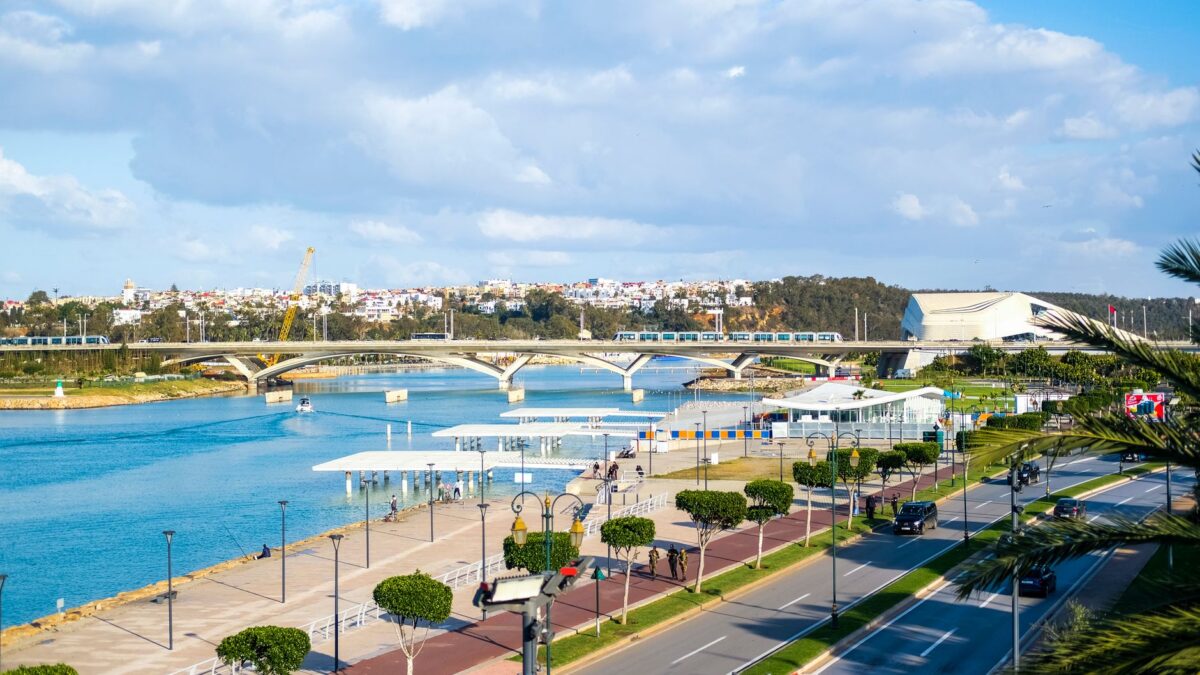
The sliding doors of Rabat-Salé Airport (RBA) open directly onto a humid, grey expanse. Late October in the capital is a specific kind of damp; the summer heat has finally broken, leaving behind a coastal chill that settles into your bones by 6 PM. You are standing on the edge of the Bou Regreg delta, looking at a city that feels less like a tourist destination and more like a living, breathing administrative heart. The air smells faintly of salt and diesel. Your first decision isn’t about where to go—it’s how to get there. Rabat is compact, but it is not walkable from the terminal. The airport sits awkwardly between the two cities, and getting into the Ville Nouvelle or the Agdal district requires strategy. Here is exactly how you move, what it costs, and which option saves your sanity.
The Al Boraq High-Speed Train: Speed Meets Reality
If you have luggage and hate uncertainty, the train is the most dignified entry point, but only if you are staying near the stations. Rabat has two main railway nodes: Rabat-Ville in the historic downtown and Rabat-Agdal in the modern business district. Both are connected to the Al Boraq high-speed line that links Tangier to Casablanca.
From the airport: There is no direct train platform at RBA. You must first take a shuttle or taxi to the nearest station. Most travelers head to Rabat-Agdal for the Al Boraq connection, which is just minutes away from the airport via road.
The Ride: A trip from Casablanca to Rabat-Agdal takes roughly 1 hour and 40 minutes. If you are coming from Tangier, it’s about 3 hours. The trains are sleek, silent, and air-conditioned—a stark contrast to the noisy bus terminals outside.
Cost: Second-class tickets run approximately 150–200 MAD ($15–$20) depending on how far in advance you book. First class is significantly pricier. Prices surge during peak travel times, so buy online via ONCF (the national rail operator) before you land.
When to pick it: Choose this if you are arriving from Casablanca or Tangier and want to avoid traffic. It is also ideal if you are staying in Agdal or Hay Riad, as Rabat-Agdal station puts you steps from the best cafes and corporate offices. However, if you are staying in the Medina or Kasbah, the train drops you slightly further out than the tram might, requiring a short taxi hop.
The ALSA Shuttle Bus: The Budget Workhorse
For the vast majority of budget-conscious travelers, the ALSA shuttle bus is the standard answer. It is reliable, frequent, and cheap, though it lacks the comfort of the train.
From the airport: Exit the arrivals hall and look for the ALSA counter or the designated bus stop just outside. Buses run regularly throughout the day, connecting the airport to central Rabat.
The Route: The bus typically terminates near the city center, often dropping passengers close to the Hassan district or near the main bus interchange. From there, you can transfer to the tram or a petit taxi.
Cost: The fare is a flat rate of around 25 MAD ($2.50) one way. This is arguably the best value in the city. You pay almost nothing to cover nearly 30 kilometers.
Journey Time: Expect 45 to 50 minutes, depending on traffic. Late October afternoons can see congestion as you approach the city limits, but the driver usually knows the shortcuts.
When to pick it: Pick this if you are traveling light, want to save every dirham, and don’t mind a bit of a shuffle upon arrival. It is perfect for students or solo backpackers heading to hostels in the Medina or Salé. Note that luggage space is limited, so keep your bags manageable.
Petit Taxis: The Local Pulse
You cannot ignore the sea of blue and yellow petit taxis waiting outside Rabat-Salé Airport. They are iconic, ubiquitous, and incredibly cheap. But they come with a warning: the meter is your friend, and negotiation is your enemy.
From the airport: Queue at the official taxi rank. Do not accept offers from drivers approaching you inside the terminal—that is a scam. Wait for the queue.
The Ride: A petit taxi is strictly for short hops within the city. Once you cross into the suburbs or drive too far, the meter becomes erratic or the driver will refuse to use it. Always insist on “le compteur” (the meter).
Cost: The base fare (drop) is roughly 7 MAD ($0.70). A typical ride from the airport to the Hassan district or Agdal should cost between 80–120 MAD ($8–$12) if the meter is working correctly. If a driver quotes you a flat price double this, walk away. There are always more taxis.
Journey Time: 30 to 40 minutes, heavily dependent on traffic. The roads into Rabat can be chaotic, with motorbikes weaving through lanes.
When to pick it: Use a petit taxi if you are arriving late at night when buses have stopped running, or if you have heavy luggage and want door-to-door service to your riad in the Medina. It is also the best option if you need to navigate a complex drop-off point. Tip the driver 5–10 MAD for helping with bags.
Private Transfers & Grand Taxis: Comfort and Class
If you prefer a guaranteed meeting, a fixed price, and a sedan rather than a hatchback, private transfers or grand taxis are the premium choice. Grand taxis are shared sedans (usually Mercedes or Peugeot) that operate on fixed routes between cities or major hubs.
From the airport: Private transfer companies often have signs in the arrivals hall. Grand taxis leave when full, so you may wait 15–30 minutes for other passengers.
The Ride: Private transfers offer meet-and-greet services, often with a driver holding your name. Grand taxis are faster than buses but slower than trains, and you share the ride with locals going in your direction.
Cost: A private car transfer from RBA to central Rabat averages 250–350 MAD ($25–$35). A grand taxi to the city center might cost 100–150 MAD ($10–$15) per seat, but you must confirm the route beforehand.
Journey Time: 40–50 minutes, similar to the bus but with fewer stops.
When to pick it: Opt for a private transfer if you are arriving with family, have significant luggage, or simply want to avoid the stress of haggling. It is also wise if you are traveling during the Green March holiday period in November, when transport demand spikes. For the grand taxi, use it only if you are comfortable sharing space and speaking basic French or Arabic to coordinate with fellow passengers.
Practical Tips for Your First Hour
- Currency: Keep small bills. Drivers and bus conductors rarely have change for large notes. Withdraw dirhams from ATMs in the airport or exchange money at the bank counters.
- Safety: Rabat is calm, but petty theft exists. Keep your phone secure in the taxi. Avoid unmarked cars.
- Navigation: Download offline maps. Signal can be spotty near the airport. Know your hotel’s address in French or Arabic to show drivers.
Once you are settled, grab a coffee at Edmonton Coffee House in Agdal or find a quiet corner at Café Crème in the Medina. Rabat rewards patience. The fog lifts, the storks settle at Chellah, and the city reveals its layered history. Welcome to the capital.
Frequently asked questions
How much does a taxi from Rabat-Salé Airport to the city center cost?
A petit taxi ride from the airport to central Rabat typically costs between 80 and 120 MAD ($8–$12) using the meter. Always insist on 'le compteur' to avoid overcharging.
Is there a direct train from Rabat-Salé Airport to Rabat city center?
No, there is no direct train platform at the airport. You must take a shuttle or taxi to Rabat-Agdal or Rabat-Ville station first, then board the Al Boraq high-speed train.
What is the cheapest way to get from Rabat-Salé Airport to Rabat?
The ALSA shuttle bus is the most affordable option, costing around 25 MAD ($2.50) one way. It takes about 45–50 minutes to reach the city center.
Can I use public transit in Rabat with a single ticket?
Yes, a single tram ticket costs 7 MAD ($0.70) and is valid for one hour with one transfer between lines L1 and L2. Tickets are bought at kiosks or via the Tram Mobile app.


