

Georgia in August 2026: what travelers should know now
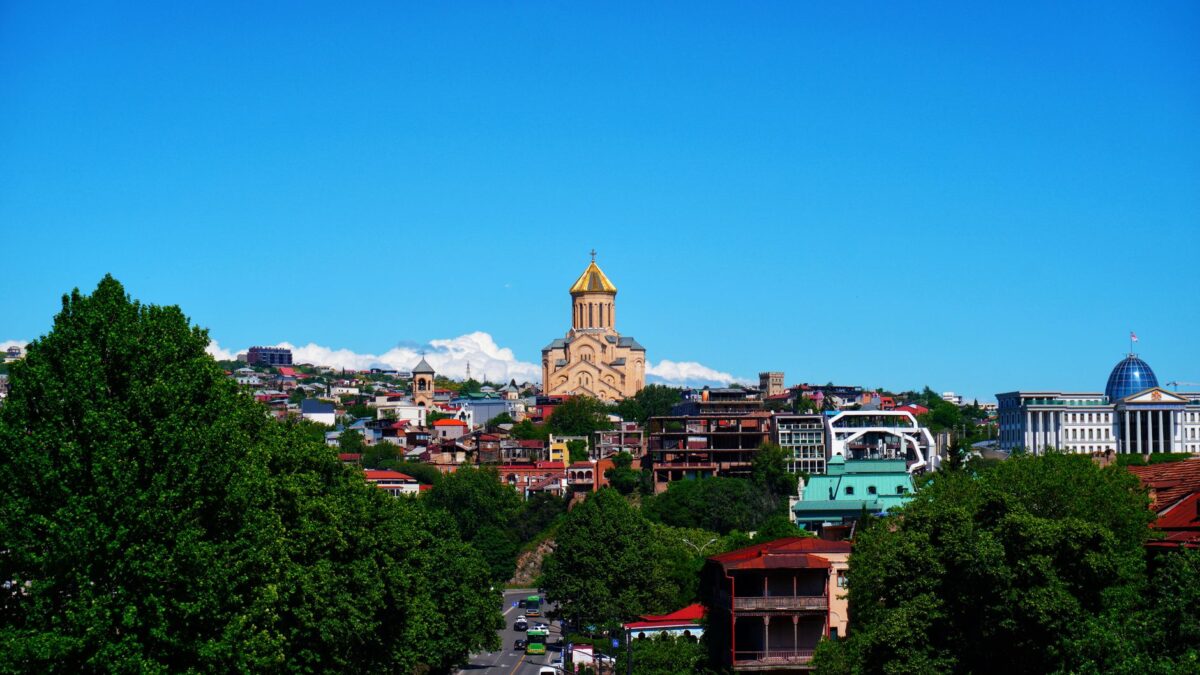
The first serious thunderstorm of late August rolled over Tbilisi this morning, a sudden curtain of rain that washed the dust off the pergolas and made the air smell like wet stone and figs. By afternoon the sun was back out, and the streets were steaming — 21–30°C, the kind of heat that tells you summer isn’t finished yet. Today is Saint Mary’s Day (მარიამობა), a quiet national holiday, but the city is hardly sleepy: the Stockton music festival is kicking off this evening at Satibe near Orbeti, just a 40-minute drive away, with shuttle buses leaving from the center. If you’re arriving in the next few weeks, here’s the real picture — where things stand, what’s disrupted, and how to make the most of this gloriously chaotic season.
What’s happening on the streets right now: the big Rustaveli closure
If you’ve seen photos of a wide, leafy Rustaveli Avenue and expect to stroll down it — forget it until late November. The city’s main thoroughfare is completely closed to traffic for a major reconstruction project that started July 23: underground water, sewer, and gas lines are being replaced, and then the whole road will be resurfaced. From September 1, a temporary traffic scheme will kick in on the side streets, so anyone driving or taking a marshrutka through the center should plan extra time. Pedestrians can still walk along the pavements, but the avenue’s usual buzz is muted — a strange feeling for such a symbolic street, the site of so much of Tbilisi’s modern history.
Walking is honestly the best way to navigate the center anyway. Tbilisi’s core is compact, and the heat makes you grateful for the shaded courtyards of Sololaki and the cobbled lanes of the Old Town (Kala). Just be aware that the area around Freedom Square and the Parliament building has been the site of recurring protests in recent years — the politics haven’t vanished, only quieted for the summer heat.
Transport interruptions and one very delayed metro station
The Varketili metro station — on the eastern end of the Akhmeteli-Varketili line — is still partially closed, and it’s a saga that won’t end this year. The rehabilitation deadline has been pushed to December 30, 2026 after structural cracks forced a suspension of works. If you’re staying in that direction, expect to use replacement buses for the last leg of your ride, or simply avoid basing yourself there.
A bigger, more unsettling story has been the series of nationwide blackouts — three in roughly two weeks in late July and August, each halting the metro and prompting a sabotage investigation by the State Security Service. It’s what everyone in the city is discussing over their tarragon soda, and while the grid has been stable since mid-August, it’s worth carrying a power bank and checking that your accommodation has a generator if you’re working remotely. The metro’s two lines (23 stations, interchange at Station Square) run fine when the power does — a single ride costs 1 GEL with a 90-minute free transfer window on the Metromoney card (2 GEL refundable deposit). Contactless bank cards work too, but at 1.50 GEL per tap, the plastic card pays for itself quickly. A monthly pass is 40 GEL — a bargain if you’re here more than a week.
Festivals, music, and the last gasp of summer
Tonight and tomorrow (August 28–29) the Stockton Invites festival lands at Satibe near Orbeti, bringing the Stockton Records lineup out of the city for a two-day open-air session. Shuttles run from Tbilisi; it’s the kind of event that feels distinctly Georgian — equal parts Euro festival and village supra, with the dry hills turning gold in the evening light.
For something more refined, the Liana Isakadze ‘Night Serenades’ international music festival is in full swing (August 19 – September 20). Concerts are at the State Conservatoire in Tbilisi, with a Morricone gala closing concert at the Griboyedov Theatre in mid-to-late September — a wonderful way to spend a warm evening indoors after the sun drops behind the Mtatsminda ridge.
Markets and gardens are bursting now: peaches, figs, watermelons, and the first tentative grapes of the rtveli harvest. Even if you’re only here for a week, buy a bunch of tsolikouri from a street vendor and eat it on your balcony — it’s the taste of the season.
What’s open, what’s crowded, and what things cost
August is a strange month in Tbilisi: it’s not the European peak rush (that’s May–June and September), but the late-summer heat keeps the city lively. Many locals decamp to the seaside at Batumi or up to the mountains, so you’ll find the Sololaki wine bars pleasantly full but not suffocating, and the rooftop terraces of Vera and Chugureti buzzing. Hotel prices reflect this — a mid-range guesthouse will run about 150–250 GEL a night, less than you’d pay in June. A modest one-bedroom flat, if you’re staying a month, is about 1,200–1,500 GEL outside the center (closer to 1,900 GEL in prime Old Town spots).
Eating well remains absurdly cheap by European standards. A khinkali is about 1 GEL at a local eatery (1.5–2.5 GEL in the center), and an Adjarian khachapuri — that buttery cheese ‘boat’ with a runny egg — is 10–15 GEL at a bakery. A proper sit-down meal at a mid-range restaurant, no wine, is 30–50 GEL; a cappuccino 7–10 GEL (from ~3.5 GEL at the no-frills places); a local beer 6–12 GEL. Museums top out around 15 GEL — the Georgian National Museum on Rustaveli is worth every tetri. A short Bolt taxi inside the city is 3–7 GEL; always use the app, never haggle with street touts.
One warning: the Khachapuri Index — the official cost of baking a standard Imeretian khachapuri — hit about 7 GEL last autumn, up ~10% year-on-year, driven by cheese prices. Food inflation is real here, so that cheap lunch you read about in 2023 now costs 10–15% more — still negligible for visitors, but a strain for locals.
Practical tips for the coming weeks
- Pack for thunderstorms. The forecast shows 8mm of rain over 10 hours today — intense but short. Carry a light rain shell and wear shoes that can handle a sudden downpour on cobblestones.
- Respect the holiday rhythm. Saint Mary’s Day (Aug 28) is a public holiday; some smaller shops and banks may close, but restaurants in tourist areas stay open. The next big holiday isn’t until Independence Day (May 26) — no, that’s spring; actually the next one is October 14 (Svetitskhovloba), so you have clear sailing in between.
- Skip the car. Rustaveli is closed, Varketili station is partial, and parking in Sololaki is a nightmare. Use the metro (1 GEL), Bolt (3–7 GEL), or walk. The Mtatsminda Funicular (1905 vintage) is a charming, cheap way to get a panoramic view from the Pantheon hill.
- Get a Georgian SIM. MagtiCom is the tourist favorite, but Silknet and Cellfie (formerly Beeline) all sell prepaid eSIMs in the airport or city shops. You’ll need a local number for banking apps anyway.
- Carry small bills. The lari is at about 2.72 per US$, and while cards are accepted widely, the Dry Bridge Market vendors, marshrutka drivers, and many local canteens are cash-only.
- Register if staying longer than 30 days. It’s a legal requirement — visit a Public Service Hall (psh.gov.ge) within your first month to register your address, or face fines.
The next few weeks are the sweet spot: the solar fury of July is done, the crowds of September haven’t arrived, and the wine harvest is just beginning to hum. Tbilisi in late August is loud, hot, and disarmingly beautiful — a city that’s given up trying to explain itself and just asks you to join the feast.
Frequently asked questions
Is Rustaveli Avenue open to traffic in August 2026?
No. Rustaveli is completely closed to traffic for reconstruction (water, sewer, and gas lines) from July 23 until late November. A temporary side-street traffic scheme starts September 1, but pedestrians can still walk the pavements.
What's the deal with the Varketili metro station closure?
The rehabilitation is delayed again — structural cracks forced a suspension of works, pushing the reopening to December 30, 2026. The station remains partially closed, so plan to use replacement buses or avoid basing yourself in that part of the city.
Are there any music festivals in Tbilisi right now?
Yes — the two-day Stockton Invites festival is happening August 28–29 at Satibe near Orbeti (40 min from Tbilisi, with shuttles), and the Liana Isakadze 'Night Serenades' classical festival runs until September 20, including a Morricone gala at the Griboyedov Theatre.
Have the power blackouts in Tbilisi stopped?
There were three nationwide blackouts in late July and mid-August, each halting the metro. Since mid-August the grid has been stable, but the sabotage investigation is ongoing — carry a power bank and ask your accommodation about backup generators.
How much does a metro ride cost in Tbilisi?
A single ride is 1 GEL with a Metromoney card (2 GEL deposit), including 90 minutes of free transfers. Using a contactless bank card costs 1.50 GEL per ride. A monthly pass is 40 GEL.


