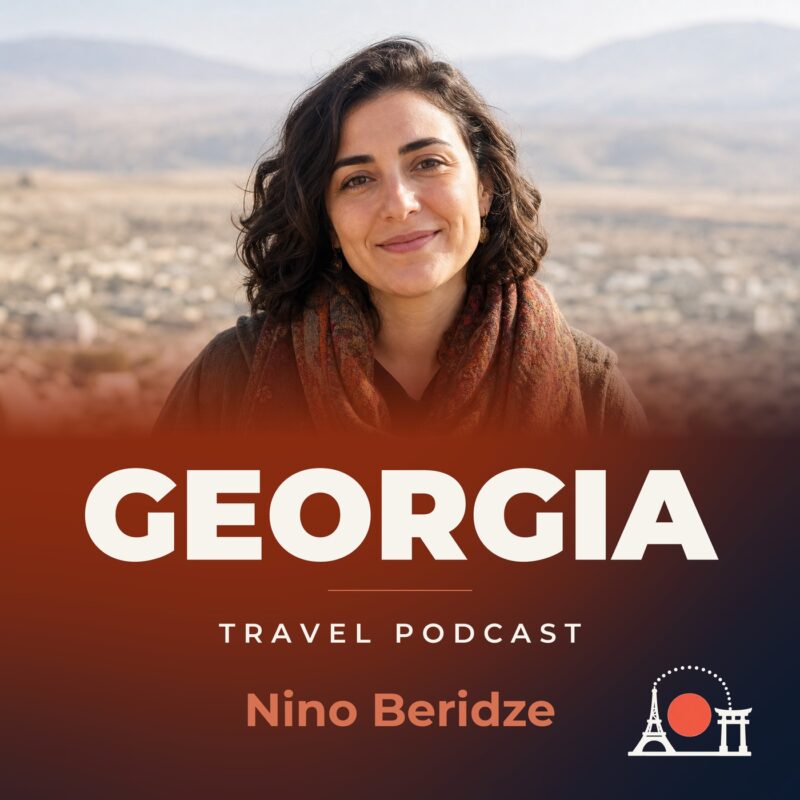
Georgia Travel Podcast with Nino Beridze
Hosted by Nino Beridze — a new episode every day from Georgia.
This podcast follows one resident learning Georgia slowly, moving between settled places and the landscapes that connect them. Travel here is shaped by the Caucasus Mountains, the Black Sea coast and the lowlands behind it, by old churches, markets and the rhythm of the Mtkvari River. The show treats Georgia as a country to live in, not just pass through.
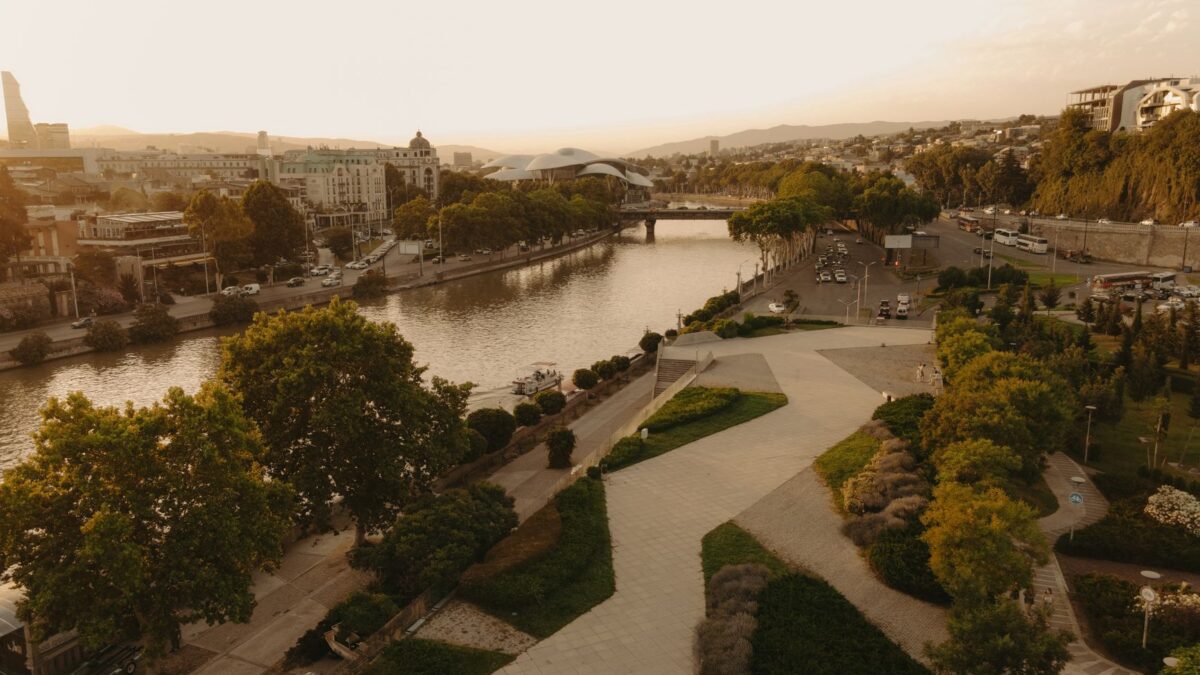
The host ranges from Tbilisi in the east to Bat’umi on the Black Sea coast, then into the Kolkhida Lowland and the foothills of the Lesser Caucasus. She also follows the Mtkvari River Basin eastwards, where most of the population lives in the central valley. These are the settings that shape daily life in Georgia.
The show unfolds across seasons, returning to the same streets and villages as weather and light change. One episode might revisit Tbilisi in early spring, another the Black Sea coast in autumn. Over time, a picture builds of how Georgia feels when you stay somewhere properly and let knowledge accumulate.
Recent episodes
Things to do in Georgia
 Kakheti - Small wineries and family-cooked lunch • Private tour
 Mtskheta-Gori-Uplistsikhe
 Private Kazbegi Tour: Gergeti, Ananuri & Scenic Views
 Tbilisi old town & soviet heritage - Private driver-guided Tour
 Paragliding Tandem Flights in Gudauri
 Discover Georgia: A 4-Day Private tour from Tbilisi
 Svaneti Mountain Villages 4x4 Safari, tour from Kutaisi
 Nana's Kitchen - traditional Georgian cooking class at real Georgian family home
Plan your trip to Georgia
Getting around
Staying connected
Georgia at a glance
Georgia in depth
Reference data on the country — geography, people, history, economy and transport.
Geography and climate
Location
Southwestern Asia, bordering the Black Sea, between Turkey and Russia, with a sliver of land north of the Caucasus extending into Europe; note - Georgia views itself as part of Europe; geopolitically, it can be classified as falling within Europe, the Middle East, or both
Terrain
Largely mountainous with Great Caucasus Mountains in the north and Lesser Caucasus Mountains in the south; Kolkhet'is Dablobi (Kolkhida Lowland) opens to the Black Sea in the west; Mtkvari River Basin in the east; fertile soils in river valley flood plains and foothills of Kolkhida Lowland
Climate
Warm and pleasant; Mediterranean-like on Black Sea coast
Elevation
- Highest point
- Mt'a Shkhara 5,193 m
- Lowest point
- Black Sea 0 m
- Mean elevation
- 1,432 m
Area
- Total
- 69,700 sq km
- Land
- 69,700 sq km
- Water
- 0 sq km
Size comparison
Slightly smaller than South Carolina; slightly larger than West Virginia
Coastline
310 km
Land borders
- Total
- 1,814 km
- Border countries
- Armenia 219 km; Azerbaijan 428 km; Russia 894 km; Turkey 273 km
Natural resources
Timber, hydropower, manganese deposits, iron ore, copper, minor coal and oil deposits; coastal climate and soils allow for important tea and citrus growth
Land use
- Agricultural land
- 34.1% (2023 est.)
- Arable land
- 4.4% (2023 est.)
- Permanent crops
- 1.8% (2023 est.)
- Permanent pasture
- 27.9% (2023 est.)
- Forest
- 44.6% (2023 est.)
- Other
- 21.2% (2023 est.)
Natural hazards
Earthquakes
Note
Note 1: strategically located east of the Black Sea, Georgia controls much of the Caucasus Mountains and the routes through them
Note 2: the world's four deepest caves are all in Georgia, including two that are the only known caves on earth deeper than 2,000 m: Krubera Cave at -2,197 m (-7,208 ft; reached in 2012) and Veryovkina Cave at -2,212 (-7,257 ft; reached in 2018)
People and society
Population
- Total
- 4,900,961 (2024 est.)
- Male
- 2,343,068
- Female
- 2,557,893
Nationality
- Noun
- Georgian(s)
- Adjective
- Georgian
Ethnic groups
Georgian 86.8%, Azeri 6.3%, Armenian 4.5%, other 2.3% (includes Russian, Ossetian, Yazidi, Ukrainian, Kist, Greek) (2014 est.)
Languages
- Languages
- Georgian (official) 87.6%, Azeri 6.2%, Armenian 3.9%, Russian 1.2%, other 1% (including Abkhaz, the official language in Abkhazia) (2014 est.)
- Major-language sample(s)
- Მსოფლიო ფაქტების წიგნი, ძირითადი ინფორმაციის აუცილებელი წყარო. (Georgian)
Religions
Eastern Orthodox Christian (official) 83.4%, Muslim 10.7%, Armenian Apostolic Christian 2.9%, other 1.2% (includes Roman Catholic Christian, Jehovah's Witness, Yazidi, Protestant Christian, Jewish), none 0.5%, unspecified/no answer 1.2% (2014 est.)
Median age
- Total
- 38.6 years (2025 est.)
- Male
- 35.9 years
- Female
- 40.6 years
Life expectancy
- Total population
- 72.8 years (2024 est.)
- Male
- 68.7 years
- Female
- 77.2 years
Urbanisation
- Urban population
- 60.7% of total population (2023)
- Rate of urbanization
- 0.35% annual rate of change (2020-25 est.)
Where people live
Settlement concentrated in the central valley, particularly in the capital city of Tbilisi in the east; smaller urban agglomerations dot the Black Sea coast, with Bat'umi being the largest
Largest cities
1.082 million TBILISI (capital) (2023)
Background and government
Background
The region of present-day Georgia once contained the ancient kingdoms of Colchis (known as Egrisi locally) and Kartli-Iberia. The area came under Roman influence in the first centuries A.D., and Christianity became the state religion in the 330s. Persian, Arab, and Turk domination was followed by a Georgian golden age (11th-13th centuries) that was cut short when the Mongols invaded in 1236. Subsequently, the Ottoman and Persian empires competed for influence in the region. Georgia was absorbed into the Russian Empire in the 19th century. Independent for three years (1918-1921) following the Russian revolution, it was forcibly incorporated into the USSR in 1921 and regained its independence when the Soviet Union dissolved in 1991.
In 2003, mounting public discontent over rampant corruption, ineffective government services, and a government attempt to manipulate parliamentary elections touched off widespread protests that led to the resignation of Eduard SHEVARDNADZE, who had been president since 1995. In the aftermath of this "Rose Revolution," new elections in 2004 swept Mikheil SAAKASHVILI and his United National Movement (UNM) party into power. SAAKASHVILI made progress on market reforms and governance, but he faced accusations of abuse of office. Progress was further complicated when Russian support for the separatist regions of Abkhazia and South Ossetia led to a five-day conflict between Russia and Georgia in August 2008, which included Russia invading large portions of Georgian territory. Russia initially pledged to pull back from most Georgian territory but then unilaterally recognized the independence of Abkhazia and South Ossetia, and Russian military forces have remained in those regions.
Billionaire Bidzina IVANISHVILI's unexpected entry into politics in 2011 brought the divided opposition together under his Georgian Dream coalition, which won a majority of seats in the 2012 parliamentary elections and removed UNM from power. Conceding defeat, SAAKASHVILI named IVANISHVILI as prime minister and left the country after his presidential term ended in 2013. IVANISHVILI voluntarily resigned from office after the presidential succession, and in the years since, the prime minister position has seen frequent turnover. In 2021, SAAKASHVILI returned to Georgia, where he was immediately arrested to serve six years in prison on outstanding abuse-of-office convictions.
Popular support for integration with the West is high in Georgia. Joining the EU and NATO are among the country's top foreign policy goals, and Georgia applied for EU membership in 2022, becoming a candidate country in December 2023. Georgia and the EU have a Deep and Comprehensive Free Trade Agreement, and since 2017, Georgian citizens have been able to travel to the Schengen area without a visa.
Government
Semi-presidential republic
Capital
Tbilisi
Time zone
UTC+4 (9 hours ahead of Washington, DC, during Standard Time)
Local name
Republic of Georgia
Independence
9 April 1991 (from the Soviet Union); notable earlier date: A.D. 1008 (Georgia unified under King BAGRAT III)
National day
Independence Day, 26 May (1918)
Economy and cost of living
Overview
Upper-middle income, fast-growing South Caucasus economy; regionally focused exporter of cars, metal ores, and energy; financial and migrant inflows resulting from Ukraine conflict; EU accession talks suspended over disputed election and foreign influence law; low inflation but persistent high unemployment
GDP per capita
- Real GDP per capita 2024
- $25,000 (2024 est.)
- Real GDP per capita 2023
- $22,600 (2023 est.)
- Real GDP per capita 2022
- $21,000 (2022 est.)
Inflation
- Inflation rate (consumer prices) 2024
- 1.1% (2024 est.)
- Inflation rate (consumer prices) 2023
- 2.5% (2023 est.)
- Inflation rate (consumer prices) 2022
- 11.9% (2022 est.)
Unemployment
- Unemployment rate 2024
- 11.5% (2024 est.)
- Unemployment rate 2023
- 11.6% (2023 est.)
- Unemployment rate 2022
- 11.7% (2022 est.)
Exchange rate
- Currency
- Laris (GEL) per US dollar -
- Exchange rates 2024
- 2.721 (2024 est.)
- Exchange rates 2023
- 2.628 (2023 est.)
- Exchange rates 2022
- 2.916 (2022 est.)
- Exchange rates 2021
- 3.222 (2021 est.)
- Exchange rates 2020
- 3.109 (2020 est.)
Main industries
Steel, machine tools, electrical appliances, mining (manganese, copper, gold), chemicals, wood products, wine
Agriculture
Milk, grapes, potatoes, maize, wheat, tangerines/mandarins, tomatoes, barley, apples, eggs (2023)
Transport and connectivity
Airports
21 (2025)
Railways
- Total
- 1,363 km (2014)
- Narrow gauge
- 37 km (2014) 0.912-m gauge (37 km electrified)
- Broad gauge
- 1,326 km (2014) 1.520-m gauge (1,251 km electrified)
Ports
- Total ports
- 3 (2024)
- Large
- 0
- Medium
- 0
- Small
- 1
- Very small
- 2
- Ports with oil terminals
- 2
- Key ports
- Batumi, Sokhumi, Supsa Marine Terminal
Internet domain
.ge
Internet users
Percent of population 82% (2023 est.)
Mobile subscriptions
- Total subscriptions
- 5.91 million (2023 est.)
- Subscriptions per 100 inhabitants
- 156 (2022 est.)
Environment
Environmental issues
Air pollution, particularly in Rust'avi; heavy water pollution of Mtkvari River and the Black Sea; inadequate supplies of potable water; soil pollution from toxic chemicals; land and forest degradation; biodiversity loss; waste management
Fresh water
63.33 billion cubic meters (2022 est.)
Country reference figures are periodically revised. Check anything time-sensitive or safety-critical against an official source before you travel.
Georgia travel guides
 Travel Tips
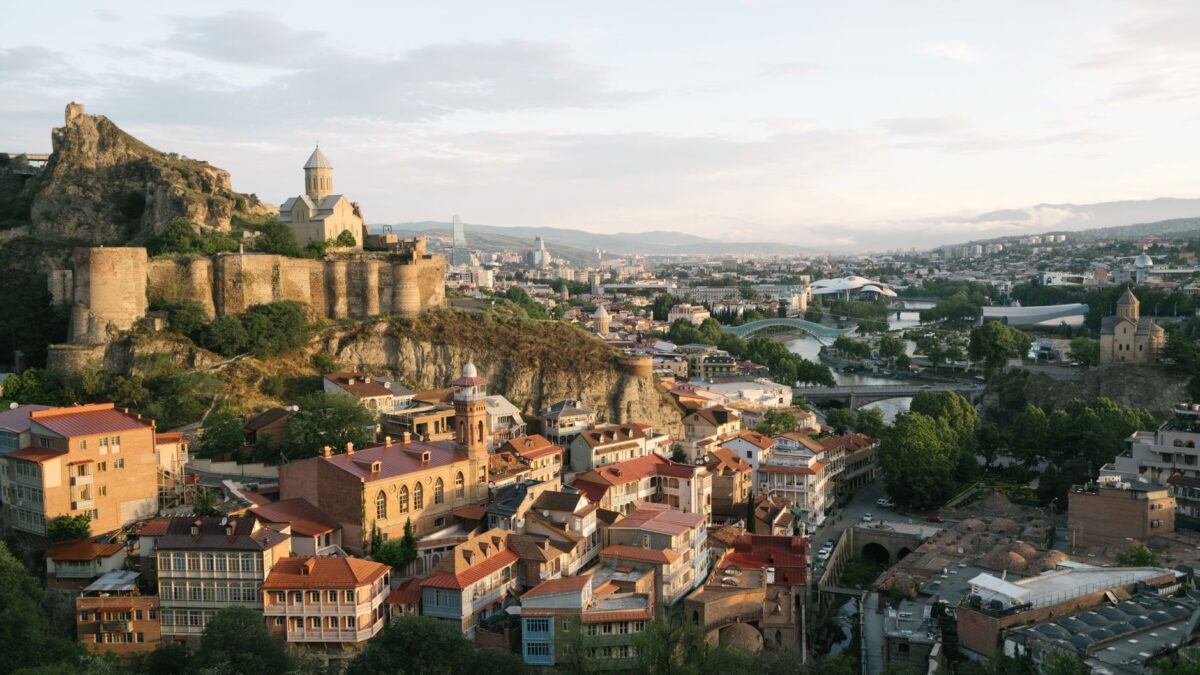
A first-timer’s guide to Georgia
Your essential practical guide to visiting Georgia. Learn the best time to go, how to navigate Tbilisi, realistic costs in Lari, and key tips…
 News & Updates
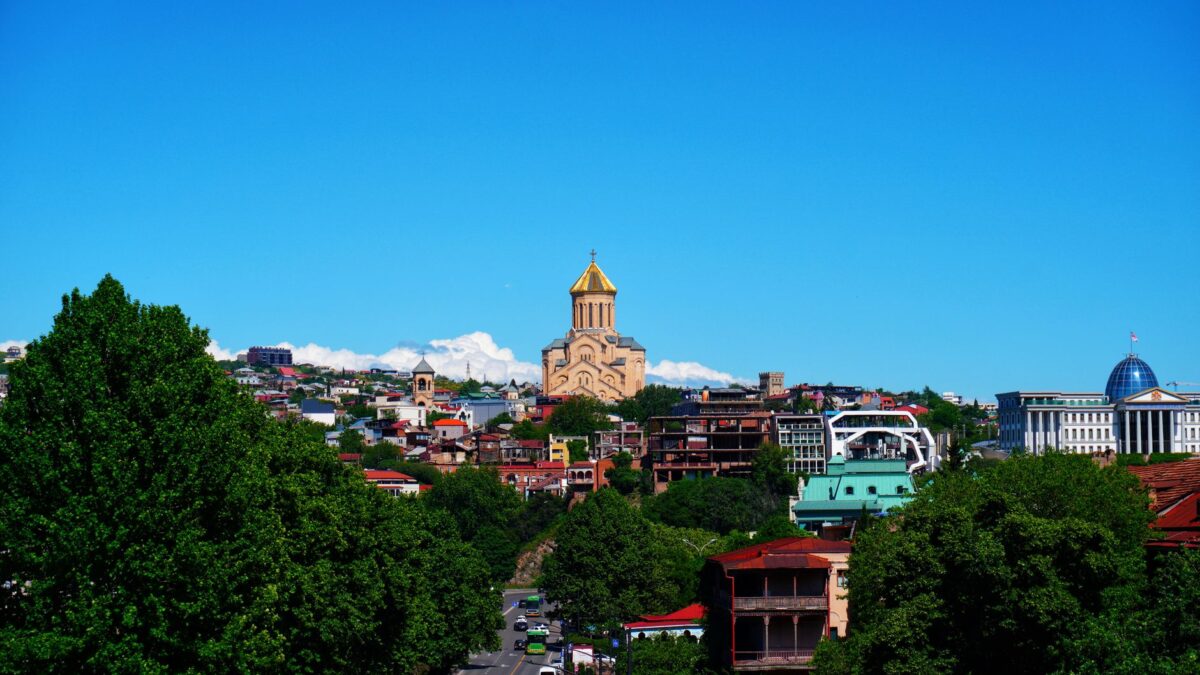
Georgia in September 2026: what travelers should know now
Georgia travel briefing for September 2026: weather, festivals, protests, and costs in Tbilisi right now.
 News & Updates
Georgia in August 2026: what travelers should know now
Tbilisi in August 2026: Rustaveli Avenue closed until November, metro disruptions, Stockton festival this weekend, and practical tips for the heat.
Western Asia
 Turkey
Turkey Travel Podcast with Emre Yilmaz
The Anatolian plateau, with its harsh interior climate, sits at the heart of a country whose largest city clusters around the Bosporus.
 United Arab Emirates
United Arab Emirates Travel Podcast with Omar Al Mansouri
The eastern Hajar Mountains rise sharply from the flat coastal plain, while the massive sand dunes of the Empty Quarter stretch beyond…
 Saudi Arabia
Saudi Arabia Travel Podcast with Layla Al Qahtani
A mostly sandy desert stretching between the Persian Gulf and the Red Sea makes Saudi Arabia the largest country on earth with…
 Israel
Israel Travel Podcast with Noa Shapira
The Negev desert, hot and dry in the south, gives way to a low coastal plain and central mountains; Hebrew and Arabic…