

Getting around Riga: metros, taxis and passes
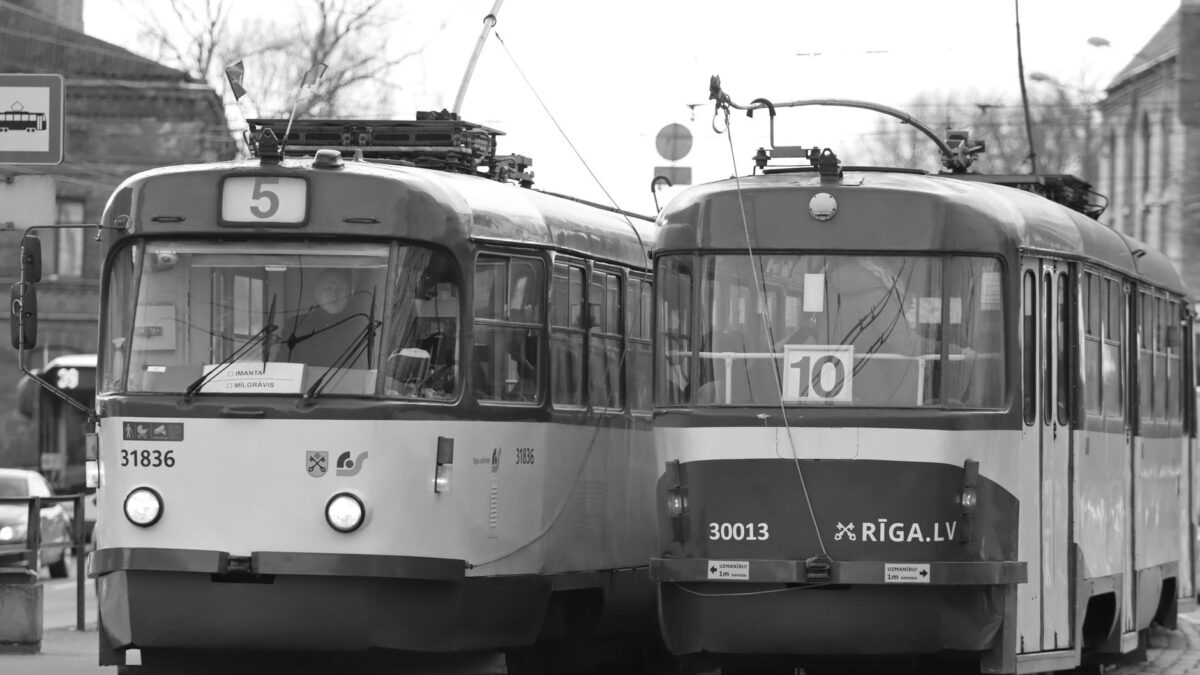
The first drizzle of late August has just kissed the cobblestones of Vecrīga, and the air smells of rain-soaked linden trees and the last charcoal smoke from Senās uguns nakts bonfires. I’m standing at the edge of Town Hall Square, watching a tram glide past the House of the Blackheads, its windows glowing against the grey. In three days, the city will burst with parents and kids carrying gladioli for Knowledge Day. But right now, Riga feels suspended — warm enough for a short-sleeved shirt, cool enough that you’re glad you brought a light jacket. You’re here, and you need to move. Let me tell you how we actually do it.
The tram, trolleybus and bus — your real backbone
First, forget the word “metro.” Riga doesn’t have one — a subway was planned in the Soviet era and never built. What we have is a clean, surprisingly efficient network of trams, trolleybuses and buses, all run by Rīgas satiksme. The trams are the workhorses: line 11 will take you from the centre out towards Mežaparks (though after last week’s storm damaged some overhead wires, check for reroutes), while lines 1, 5 and 9 rattle across the Daugava into Pārdaugava and the bohemian streets of Āgenskalns.
Here’s the honest bit about fares. A single 90-minute e-ticket costs €1.50 — but if you buy it from the driver, it’s €2.00. Always have the exact change or, better, get yourself an e-talons card. It’s a reusable smart card with a €2.85 deposit, and you can top it up at any Narvesen kiosk, at the Rīgas satiksme office, or online. One ride on the e-talons works out to roughly €1.15–1.50 depending on how you load it. For most visitors, the €30 monthly pass is overkill unless you’re staying a while — but if you’re here for even a week and plan to ride more than twice a day, just pay per ride. The city is small enough that you won’t rack up a fortune.
If you’re a student, the monthly pass drops to around €12 — bring your ID. And locals use the Rīdzinieka karte (residents’ card) which gives discounted fares; it’s tied to your declared address and often doubles as an ID for library and civic services. For visitors, the simplest trick? Download the Mobilly app — you can buy tickets on your phone and scan the QR code on the validator. Or, if you happen to bank with Citadele, their payment cards double as transit e-tickets. That’s a neat local hack not many tourists know.
Trains to the beach and beyond
Riga’s central station is a bit of a maze, but the electric trains are your ticket out of town. Half an hour west is Jūrmala — the long white-sand Baltic beach with pine forests and wooden villas. A one-way ticket is a couple of euros, and on a late-August day like this, with drizzle softening the light, you’ll have the boardwalk almost to yourself. The train also heads east to Sigulda, where the Gauja National Park’s sandstone cliffs and the working bobsleigh track await. If you’re staying in Riga proper, you’ll mostly use trains for these day trips — they’re cheap, reliable, and the carriages are clean.
Inside the city, the tram is often faster than a car. During rush hour, the #11 down Brīvības iela moves while the traffic crawls. And here’s a local confession: after the storm on 22–23 August, Mežaparks has some fenced-off forest paths with dangerous fallen trees. Locals are rerouting their runs along the lake. It’s worth remembering if you fancy a jog — the suspension is temporary, but it’s real.
Taxis and ride-hailing: use them sparingly, but smartly
Riga’s taxis are a mixed bag. The official ones — Bolt, InDriver, and the traditional city cabs — are fine, but you must know the trick. Never hail a taxi on the street in the Old Town. That’s an invitation to pay three times the going rate. Instead, use an app. Bolt is the most popular; you’ll see its green cars everywhere. A typical short hop across the centre will run you €6–8, and from the airport to the centre is around €15–20 depending on traffic. The older taxi companies with meters — Baltic Taxi, Red Cab — are also fine if you call them or book via their apps. Just ensure the meter is on and the price per kilometre is clearly displayed. In a city this compact, though, you’ll rarely need one unless you’re hauling luggage or it’s 3am after a night at Līvu Square.
One big planning note: the Vanšu Bridge — that elegant cable-stayed span over the Daugava — is in the middle of a €70–84 million renovation discussion. The most likely scenario is a full closure to private cars, but don’t panic: construction isn’t expected before late next year. For now, it’s open, but if you’re driving, keep an eye on the news. For most of life, the tram and your feet are enough.
When walking beats everything — and it will, often
Here’s the truth: Riga is a walking city. The Old Town is a UNESCO-listed medieval maze of cobblestones, Hanseatic gables, and the most photographed façade in the country — the House of the Blackheads. You can cross it in 15 minutes. The Freedom Monument on Brīvības iela is a 10-minute stroll from there, and the Art Nouveau belt along Alberta and Elizabetes ielas is another 10 beyond that. In half an hour, you can cover the entire historical core and still have time to stop for a €2.50 coffee at Rocket Bean Roastery or a slice at Crumble Cake.
Walking is also the best way to absorb the city’s layered history — from the Gothic spires of St. Peter’s Church to the hulking former KGB headquarters at Corner House on Brīvības iela 61, now a museum. And with the Open Riga! Code: 825 anniversary events winding down, you might stumble on a free neighborhood music session in Vērmane Garden or Dzegužkalns. The drizzle is light — 1mm across three hours — and locals don’t even open umbrellas for that. Just wear a water-resistant jacket and walk.
Where walking wins most distinctively is the Riga Central Market. Housed in five former Zeppelin hangars, it’s one of Europe’s largest markets. The historic Meat Pavilion is closed indefinitely after a June structural scare (corroded roof trusses — trust me, the fish and vegetable halls are better anyway), but the food hall is alive with rye bread, smoked fish, pickles, and cheese. A proper meal there costs €6–9. And unlike taking a tram and navigating the crowds, you can meander from hangar to hangar, nibbling as you go. That’s how we do Saturdays.
Practical passes, pitfall alerts, and local wisdom
If you’re staying more than a week, consider whether the €30 monthly pass makes sense. For a typical visitor — maybe two or three rides a day — daily tickets or single rides are more cost-effective. But if you’re here through Knowledge Day and into the first school week, the pass saves worry about validating. Students with an ISIC card get the €12 pass; locals with the Rīdzinieka karte pay even less. The system is honest and easy: you tap your e-talons on the validator when you board, and you’re good for 90 minutes of transfers.
Now, some caution. Pickpocketing happens in the Old Town, at the Central Market, and on crowded trams — not for nothing are the #11 and #5 known as magnets for light fingers. Keep your wallet in a front pocket. And the late-night bar area around Līvu Square can be rowdy, especially on weekends when the stag-party crowd rolls in. That’s not danger; just keep your wits.
One more thing about the storm damage: tram line 11’s overhead wires were hit, and some routes were temporarily rerouted. By the time you read this, those might be fixed — but check the Rīgas satiksme website if you’re heading to Mežaparks for the revised MESA & GACHO concert. Also, a section of Daugavpils Street near No. 8 is fully closed to traffic and pedestrians after a building was deemed at risk of collapse. Just avoid that block; the detour is posted.
And if you’re here with a bit more time, the train to Jūrmala is a must. The beaches still have that last-summer glow, even with the occasional drizzle. Bring a swimsuit if you’re brave — locals do it into September.
The bottom line? Riga rewards the walker. Buy a few single tickets, download the Mobilly app, and treat taxis as an occasional luxury. The trams will take you to the edges; your feet will take you into the soul. And when the light fades early and the street lamps glow on wet cobblestones, you’ll understand why we love this city enough to put up with a little dampness.
Frequently asked questions
Does Riga have a metro system?
No, Riga does not have a metro. The public transport network consists of trams, trolleybuses, and buses, all operated by Rīgas satiksme, with a single ticket valid for 90 minutes.
How much is a single public transport ticket in Riga?
A single 90-minute e-ticket costs about €1.50 if you buy it in advance (via e-talons card or Mobilly app), and €2.00 if you buy it from the driver.
What is the best way to get from Riga airport to the city centre?
The cheapest option is bus line 22, which runs every 20-30 minutes and takes about 30 minutes. A taxi via Bolt or other ride-hailing apps costs roughly €15-20.
Is the Riga public transport pass worth it for tourists?
If you're staying over a week and plan several rides daily, the €30 monthly pass might be worth it. For shorter visits, single tickets or the e-talons card are more cost-effective.
Is Riga a walkable city?
Yes, the Old Town and central districts are very walkable. You can cover the historical core in under an hour, and walking is often faster than taking a tram during rush hour.


