

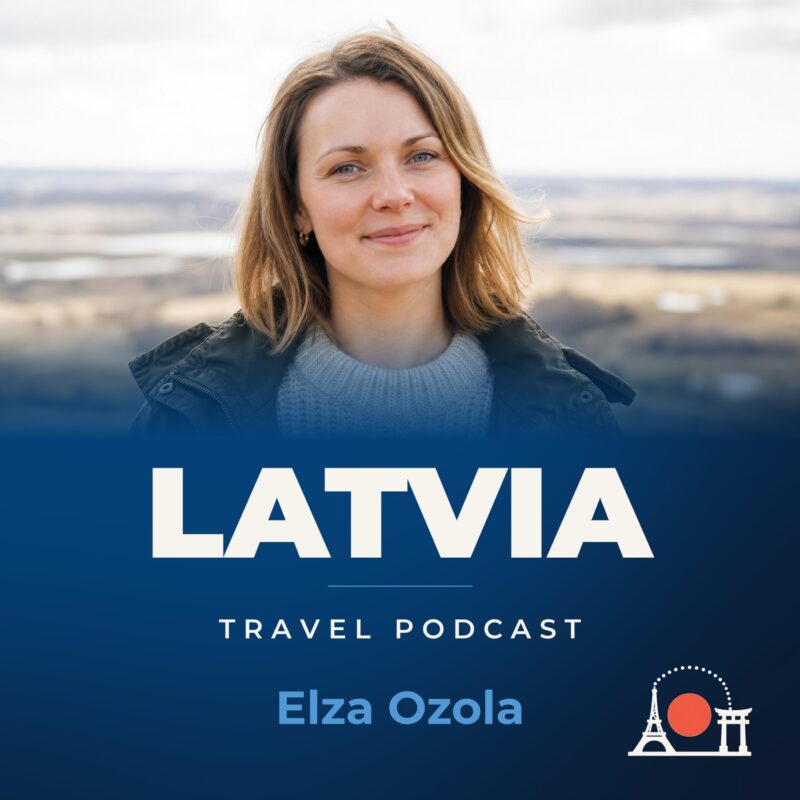
Latvia Travel Podcast with Elza Ozola
Hosted by Elza Ozola — a new episode every day from Latvia.
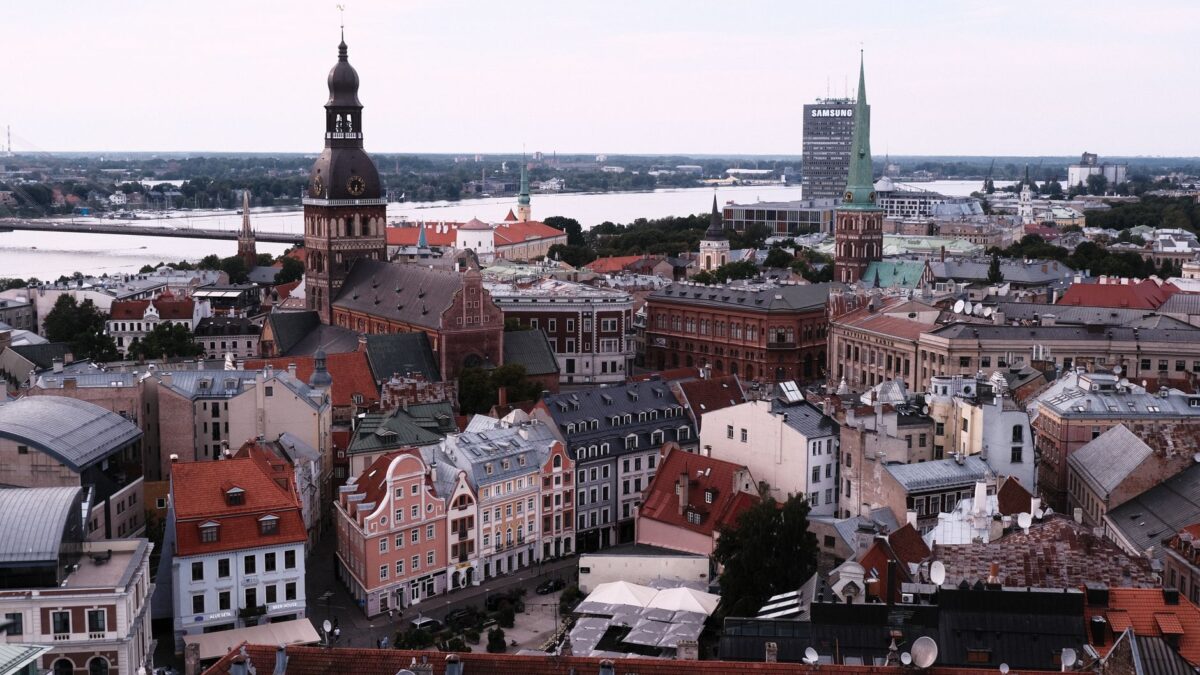
This podcast travels across Latvia the way a resident would, settling in one place long enough to understand it before moving to somewhere connected. Latvia’s landscape is a low plain, shaped by maritime weather and fertile soils. That quiet geography matters: the country’s life clusters around Riga, its capital and port, while smaller towns sit scattered across the surrounding countryside.
Over the course of a year or more, she travels from Riga to the coastal towns of Kurzeme, then to the lake-filled hills of Latgale, and later to the river valleys of Vidzeme. She returns to the capital between trips. Episodes cover everyday life in these places, from city streets and regional roads to rural markets.
The show unfolds slowly. It follows the seasons across the Latvian year: wet, moderate winters, the quick change into spring, long summer evenings near the sea, and the quieter autumn in the eastern hills. Returning to places matters, because knowing a country properly is less about covering ground than about noticing how a particular town changes over time.
Recent episodes
Things to do in Latvia
 Kayaking Adventure in Riga
 Honest tour of Riga with the best private guide in town
 Best of Latvia, Jurmala, Kemeri N Park, Kuldiga City, Food & More
 Riga Private Photoshoot Tour
 Ķemeri Great Bog Discovery With Optional Sunrise & Jūrmala Visit
 Glass Jewellery Workshop
 Relax Massage, Tantra Therapy in Riga, Latvia
 Likely to sell out
Hike In Gauja National Park - Up And Down The Switzerland Of Latvia
Likely to sell out
Hike In Gauja National Park - Up And Down The Switzerland Of Latvia
Plan your trip to Latvia
Getting around
Staying connected
Latvia at a glance
Latvia in depth
Reference data on the country — geography, people, history, economy and transport.
Geography and climate
Location
Eastern Europe, bordering the Baltic Sea, between Estonia and Lithuania
Terrain
Low plain
Climate
Maritime; wet, moderate winters
Elevation
- Highest point
- Gaizina Kalns 312 m
- Lowest point
- Baltic Sea 0 m
- Mean elevation
- 87 m
Area
- Total
- 64,589 sq km
- Land
- 62,249 sq km
- Water
- 2,340 sq km
Size comparison
Slightly larger than West Virginia
Coastline
498 km
Land borders
- Total
- 1,370 km
- Border countries
- Belarus 161 km; Estonia 333 km; Lithuania 544 km; Russia 332 km
Natural resources
Peat, limestone, dolomite, amber, hydropower, timber, arable land
Land use
- Agricultural land
- 31.7% (2023 est.)
- Arable land
- 21.9% (2023 est.)
- Permanent crops
- 0.2% (2023 est.)
- Permanent pasture
- 9.7% (2023 est.)
- Forest
- 55.5% (2023 est.)
- Other
- 12.8% (2023 est.)
Natural hazards
Large percentage of agricultural fields can become waterlogged and require drainage
Note
Most of the country is composed of fertile low-lying plains with some hills in the east
People and society
Population
- Total
- 1,888,439 (2025 est.)
- Male
- 876,654
- Female
- 1,011,785
Nationality
- Noun
- Latvian(s)
- Adjective
- Latvian
Ethnic groups
Latvian 62.7%, Russian 24.5%, Belarusian 3.1%, Ukrainian 2.2%, Polish 2%, Lithuanian 1.1%, other 1.8%, unspecified 2.6% (2021 est.)
Languages
- Languages
- Latvian (official) 56.3%, Russian 33.8%, other 0.6% (includes Polish, Ukrainian, and Belarusian), unspecified 9.4% (2011 est.)
- Major-language sample(s)
- World Factbook, neaizstājams avots pamata informāciju. (Latvian)
Religions
Lutheran 36.2%, Roman Catholic 19.5%, Orthodox 19.1%, other Christian 1.6%, other 0.1%, unspecified/none 23.5% (2017 est.)
Median age
- Total
- 43.8 years (2025 est.)
- Male
- 41.6 years
- Female
- 49.2 years
Life expectancy
- Total population
- 76.4 years (2024 est.)
- Male
- 72 years
- Female
- 81 years
Urbanisation
- Urban population
- 68.7% of total population (2023)
- Rate of urbanization
- -0.68% annual rate of change (2020-25 est.)
Where people live
Largest concentration of people is found in and around the port and capital city of Riga; small agglomerations are scattered throughout the country
Largest cities
621,000 RIGA (capital) (2023)
Background and government
Background
Several eastern Baltic tribes merged in medieval times to form the ethnic core of the Latvian people (ca. 8th-12th centuries A.D.). The region subsequently came under the control of Germans, Poles, Swedes, and finally Russians. A Latvian republic emerged following World War I, but the USSR annexed it in 1940 -- an action never recognized by the US and many other countries. Latvia reestablished its independence in 1991 after the breakup of the Soviet Union. Although the last Russian troops left in 1994, the status of the Russian minority (some 25% of the population) remains of concern to Moscow. Latvia joined both NATO and the EU in 2004; it joined the euro zone in 2014 and the OECD in 2016.
Government
Parliamentary republic
Capital
Riga
Time zone
UTC+2 (7 hours ahead of Washington, DC, during Standard Time)
Local name
Latvijas Republika
Independence
18 November 1918 (from Soviet Russia); 4 May 1990 (declared from the Soviet Union); 6 September 1991 (recognized by the Soviet Union)
National day
Independence Day (Republic of Latvia Proclamation Day), 18 November (1918)
Economy and cost of living
Overview
High-income EU and eurozone member; weak recovery following economic contraction, with slight increase in private consumption and uncertain trade environment; challenges from skilled-labor shortages, capital market access, large informal sector, and green and digital transitions
GDP per capita
- Real GDP per capita 2024
- $38,900 (2024 est.)
- Real GDP per capita 2023
- $38,800 (2023 est.)
- Real GDP per capita 2022
- $37,700 (2022 est.)
Inflation
- Inflation rate (consumer prices) 2024
- 1.3% (2024 est.)
- Inflation rate (consumer prices) 2023
- 8.9% (2023 est.)
- Inflation rate (consumer prices) 2022
- 17.3% (2022 est.)
Unemployment
- Unemployment rate 2024
- 6.8% (2024 est.)
- Unemployment rate 2023
- 6.5% (2023 est.)
- Unemployment rate 2022
- 6.9% (2022 est.)
Exchange rate
- Currency
- Euros (EUR) per US dollar -
- Exchange rates 2024
- 0.924 (2024 est.)
- Exchange rates 2023
- 0.925 (2023 est.)
- Exchange rates 2022
- 0.95 (2022 est.)
- Exchange rates 2021
- 0.845 (2021 est.)
- Exchange rates 2020
- 0.876 (2020 est.)
Main industries
Processed foods, processed wood products, textiles, processed metals, pharmaceuticals, railroad cars, synthetic fibers, electronics
Agriculture
Wheat, milk, rapeseed, barley, oats, potatoes, rye, beans, peas, chicken (2023)
Transport and connectivity
Airports
55 (2025)
Railways
Total 2,216 km (2020) 257 km electrified
Ports
- Total ports
- 5 (2024)
- Large
- 1
- Medium
- 2
- Small
- 0
- Very small
- 2
- Ports with oil terminals
- 3
- Key ports
- Lielupe, Liepaja, Riga, Salacgriva, Ventspils
Internet domain
.lv
Internet users
Percent of population 92% (2023 est.)
Mobile subscriptions
- Total subscriptions
- 2.27 million (2024 est.)
- Subscriptions per 100 inhabitants
- 121 (2024 est.)
Environment
Environmental issues
Some soil, water, and air pollution
Fresh water
34.94 billion cubic meters (2022 est.)
Country reference figures are periodically revised. Check anything time-sensitive or safety-critical against an official source before you travel.
Latvia travel guides
 Costs & Money
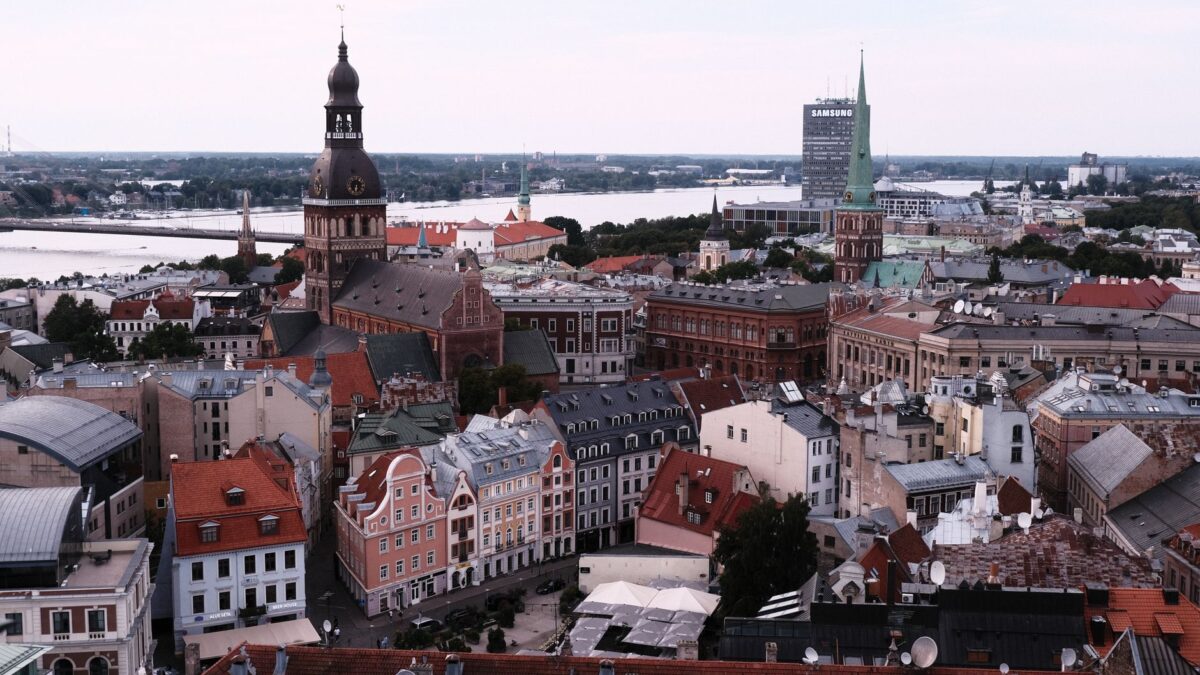
A week in Riga on a mid-range budget
Plan a week in Riga on a mid-range budget. Real prices for hotels, food, transit & attractions in EUR. Expert tips from a local…
 News & Updates
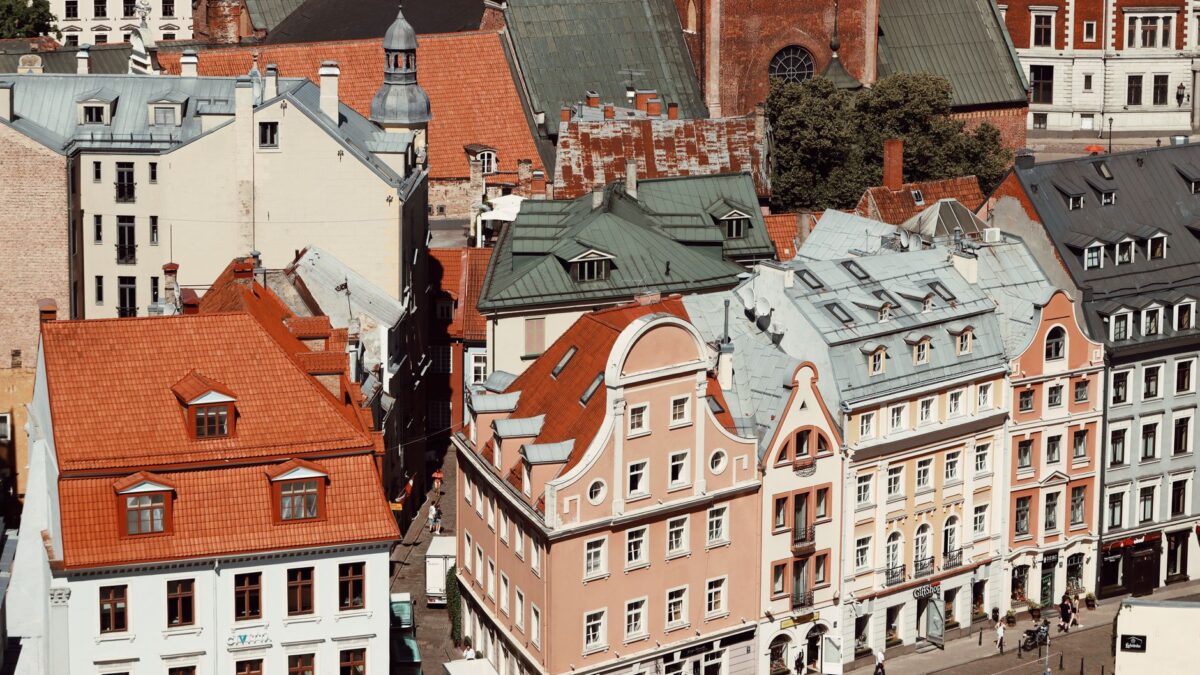
Latvia in September 2026: what travelers should know now
Latvia in September 2026: Weather, festivals like HOPS & White Night, transport changes, and local tips for travelers visiting Riga this month.
 Getting Around
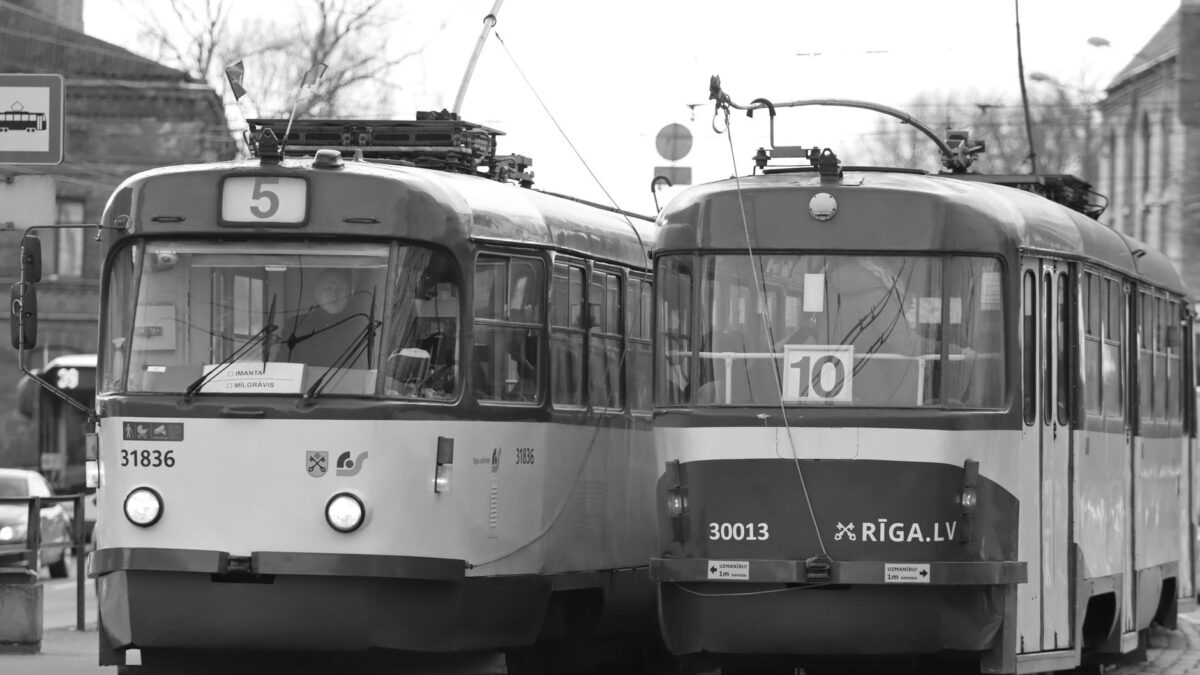
Getting around Riga: metros, taxis and passes
How locals navigate Riga, Latvia: trams, buses, fares, passes, taxis, and when walking wins. Real tips and prices for your trip.
 News & Updates
Latvia in August 2026: what travelers should know now
Riga in August 2026: storm aftermath, street art, closures, and free concerts. What’s on now, what’s closed, and how to pack for Latvia’s late…
Northern Europe
 United Kingdom
United Kingdom Travel Podcast with Oliver Hughes
The Scottish lowlands between Edinburgh and Glasgow sit under overcast skies brought by the North Atlantic Current and prevailing southwest winds.
 Ireland
Ireland Travel Podcast with Saoirse Byrne
The western seaboard's sea cliffs face the North Atlantic, while over 40% of the population lives within 100 km of Dublin.
 Denmark
Denmark Travel Podcast with Freja Andersen
The Danish Archipelago's low, gently rolling terrain means no point in the country lies far from the coast, and its more than…
 Sweden
Sweden Travel Podcast with Anton Lindqvist
The Baltic coast holds most of Sweden's population clusters, while the interior north remains sparsely populated and subarctic, and the Danish Straits…