

Getting around Vientiane: metros, taxis and passes
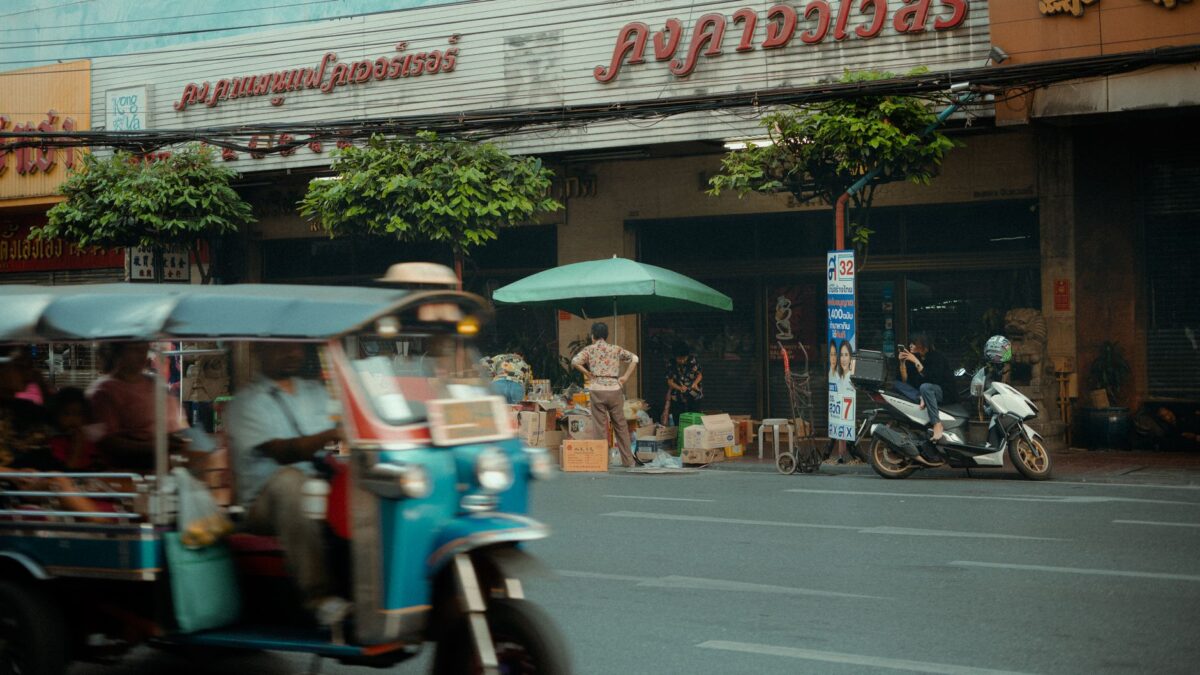
The thunderstorm rolling off the Mekong at 5pm turns the air thick and heavy, that familiar Vientiane steam-bath feeling. You’ve just finished a bowl of khao piak sen at a Talat Sao noodle stall —₭20,000, give or take—and now you’re standing at the curb wondering how to get back to your guesthouse near Nam Phou fountain. The tuk-tuk drivers are already calling out prices, and you know they’re starting high. This is the moment every visitor faces, and honestly, it’s the moment I absolutely love about this city.
There is no metro in Vientiane. No subway, no elevated rail, no transit card. The city runs on a different rhythm. We have the high-speed China–Laos Railway, a marvel that connects us to Kunming, but it stops at the Khamsavath station on the city’s eastern edge, and even that is more of a gateway to Vang Vieng than a way to get to breakfast. So when you ask ‘how do I get around?’ — the honest answer is: you walk, you bargain, you grab, and you get very comfortable with the idea that the journey is part of the experience.
Walking: The Real Transit System
Let me be clear: in the central districts—Chanthabouly, especially—walking beats everything. The historic core is compact. You can stroll from Patuxai down Lane Xang Avenue to the Mekong promenade in about 25 minutes. The distance from Wat Si Saket to Haw Phra Kaew is a five-minute wander through shady lanes. The Nam Phou fountain is a ten-minute walk from Talat Sao market. For the main sights, your feet are the most reliable form of transport.
And walking here is not a compromise. It’s how you see the real city. You’ll pass French colonial villas crumbling romantically next to modern guesthouses. You’ll hear the monks chanting from a neighborhood wat in Sikhottabong. You’ll smell the charcoal smoke of a street vendor grilling chicken. At 25–27°C with a thunderstorm brewing, it can get sticky, but the rain also brings relief. When the clouds open, you duck into a café like Common Grounds Cafe & Bakery or Comma Coffee Reading Room, order a Lao coffee for around ₭30,000–40,000, and wait it out. That’s not a delay; that’s the plan.
Buses: The Unloved but Essential Option
The city bus system exists, and it’s cheap, but it’s not for the impatient. Buses depart from the Talat Sao Bus Station, and routes are limited. The only one you’ll likely use as a visitor is bus 14, which runs from Talat Sao all the way out to Xieng Khuan—the Buddha Park—about 25 kilometers southeast. It costs a few thousand kip, takes around an hour, and drops you near the park entrance. It’s an adventure, but it’s also the most local thing you can do. The bus is functional, no frills, and the fare is so low you’ll think you misheard.
For everything else within the prefecture, the bus system is too infrequent and hard to decipher for most visitors. I’d only recommend it for the Buddha Park run, and even then, a rented scooter or a negotiated tuk-tuk round-trip might serve you better if you’re on a tight schedule.
Tuk-Tuks: The Negotiation Ritual
The tuk-tuk is Vientiane’s unofficial taxi. Three wheels, a roof, an open-air side, and a driver who is also a negotiator. There is no meter. There is no fixed fare. The price is whatever you agree on before you get in, and that’s non-negotiable after the ride starts.
Here’s the local knowledge: a short hop within the center—say, from the Mekong promenade to Talat Sao—should cost around ₭20,000–30,000. A longer cross-town ride, maybe from Chanthabouly to the COPE Visitor Centre in Xaysetha, might run ₭40,000–50,000. Always agree on the fare before you climb in. And don’t be shy about walking away if the first number is absurd—there are always more tuk-tuks. The drivers are generally honest by Southeast Asian standards, but they will test you. That’s not malice; it’s sport.
I also want to mention a more recent phenomenon. Grab is available in Vientiane, and it’s a game-changer. You book a car or a tuk-tuk through the app, the fare is set upfront, and you pay by card or cash. It’s cleaner, simpler, and removes the negotiation entirely. For the 5km ride from the center to the First Thai–Lao Friendship Bridge, Grab will quote you a fair price, roughly ₭40,000–60,000 depending on the time of day. Use it. It’s worth the convenience.
Bicycles and Scooters: The Local Way
If you’re staying for more than a couple of days, I always suggest renting a bicycle or a scooter. Guesthouses in the center—places like Mali Namphu Hotel or the many budget spots off Setthathirath Road—often have basic bicycles for rent for about ₭20,000–30,000 a day. Scooters run ₭80,000–150,000 per day, including helmets.
Vientiane is flat. The traffic is chaotic but slow. A bicycle gets you to the riverside promenade, to Talat Khua Din market in Sikhottabong, and even up to Pha That Luang with minimal effort. The gold-covered stupa, glowing in the late afternoon light, is a sight you’ll never forget from the saddle of a bike. Just be careful on the main thoroughfares—motorbikes come from every direction, and the rain can make the streets slick.
For the adventurous, a scooter opens up Hadxayfong district, the rural Mekong-bank area in the southeast. The ride to the Buddha Park under your own power is a half-day trip that shows you a side of Vientiane most tourists miss: vegetable farms, buffalo herds, and the slow, sabai sabai pace of life outside the center.
Fares, Passes, and the Reality of Costs
Let me be direct about money. There is no travel pass for Vientiane public transit. None. The concept doesn’t exist here. You pay per ride, per trip, per negotiation. The good news is that the cost is low in absolute terms, but the inflation of the past two years has hurt everyone. The kip has depreciated over 10% year-on-year, and while inflation has eased from about 26% in mid-2024 to roughly 4–7% by late 2025, everyday prices still feel high relative to local wages. The minimum wage is around ₭2.5 million per month, so when you hand over ₭50,000 for a tuk-tuk ride, that’s a significant chunk for a local. Keep that in mind when you negotiate.
To put it in perspective: a bowl of pho at Pho Zap costs about ₭20,000–25,000. A khao jee sandwich from a market cart is ₭15,000–30,000. A Beerlao at a bar is ₭20,000–25,000. A night in a mid-range guesthouse runs ₭150,000–200,000. So when a tuk-tuk driver asks for ₭50,000 for a ten-minute ride, you can do the math relative to your own budget—and you can also see why locals prefer to walk or take the bus. The fares are for tourists, and the drivers know it.
When Walking Wins, and When It Doesn’t
Walking is optimal for the entire Chanthabouly historic core. You’ll see Patuxai, Wat Si Saket (the oldest surviving temple, with its thousands of Buddha images), Haw Phra Kaew, and the Nam Phou fountain area all on foot. The Mekong promenade at Chao Anouvong Park is a beautiful evening stroll, especially when the sunset turns the river gold. Walking also suits the quieter, leafier streets of Sisattanak, where embassies sit behind high walls and the air feels cooler.
But walking is not practical for Xaysetha, the embassy district where you’ll find the essential COPE Visitor Centre—the museum documenting Laos’ tragic status as the most-bombed country per capita. That’s a 3–4km trek from the center, and in the heat, it’s too far. Take a tuk-tuk or a Grab. Similarly, reaching the Khamsavath railway station for a day trip to Vang Vieng—the karst mountains, tubing on the Nam Song, the Blue Lagoon, all about an hour away by high-speed train—requires a vehicle. And Pha That Luang, while within walking distance of the center (about 30 minutes), is far more palatable on a rented bicycle.
So here’s my advice, Noy’s rule for Vientiane: walk for anything under 2 kilometers, especially in the old center. Use a tuk-tuk or Grab for anything in the 2–5 kilometer range, and always agree on the price first. Rent a bicycle for a full day of exploration. And reserve the bus for the Buddha Park pilgrimage. The city will make sense.
The day I leave this city, I’ll walk one last time from the Mekong promenade through the incense-scented lanes of Chanthabouly, past the faded beauty of the French villas, and I’ll understand why the traffic never bothered me. In Vientiane, you’re never really going anywhere in a hurry. That’s the point.
Frequently asked questions
Does Vientiane have a metro or train system for city travel?
No, Vientiane has no metro or city train system. The high-speed China–Laos Railway connects to Vang Vieng and beyond, but the station is on the city's eastern edge. For getting around the city, you walk, ride a tuk-tuk, use Grab, or rent a bicycle or scooter.
How much does a tuk-tuk ride cost in Vientiane?
There's no meter, so always negotiate the fare before getting in. A short trip within the center (like from the Mekong promenade to Talat Sao market) is around ₭20,000–30,000. A longer cross-town ride to the COPE Visitor Centre area might cost ₭40,000–50,000.
Is Grab available in Vientiane and how does it compare to tuk-tuks?
Yes, Grab works in Vientiane and is a reliable alternative. It eliminates negotiation because the fare is set upfront in the app. For a 5km ride to the Thai–Lao Friendship Bridge, expect to pay roughly ₭40,000–60,000, similar to a negotiated tuk-tuk fare but with more convenience.
How do I get to Buddha Park (Xieng Khuan) from Vientiane center?
Take city bus 14 from Talat Sao Bus Station. It's cheap (a few thousand kip) and takes about an hour to reach the park, which is roughly 25km southeast. Alternatively, you can rent a scooter for the day or negotiate a tuk-tuk round-trip.
Is there a travel pass for public transportation in Vientiane?
No. Vientiane has no transit card or travel pass system. You pay per ride for buses, per trip for tuk-tuks, and per day for rentals. The only 'pass' you might consider is renting a bicycle for multiple days to save money on short trips.
Things to do in Laos
 Laos Buffalo Dairy Tours Interact, Learn and Taste Fresh Flavors
 Luang Prabang: Craft Your Own Aroma Candle in Heritage Home
 Evening Bamboo weaving & Cooking classes join-in
 Pony Riding in Luang Prabang
 Home-cooked dinner & Baci ceremony with Villagers in Ban Nasang
 Luang Prabang Cuisine & Culture: The Hungry Tuk Tuk