

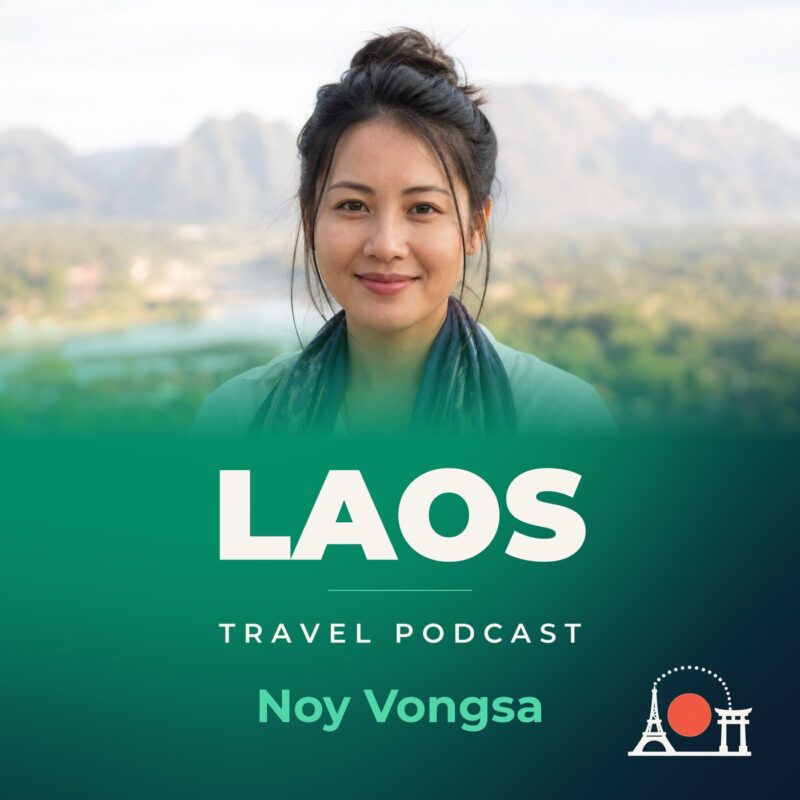
Laos Travel Podcast with Noy Vongsa
Hosted by Noy Vongsa — a new episode every day from Laos.
Laos Travel Podcast with Noy Vongsa follows one person settling into Laos over time. Travelling here is different because the country is landlocked, with rugged mountains and thick forest across most of it, and a monsoon that divides the year into wet and dry. The Mekong River anchors the western border and the people along it.
Over the series, she covers Vientiane, the capital, and Luang Prabang with its old town and temples. She also spends time on the Bolaven Plateau, where coffee plantations sit on an upland landscape, and on the Mekong’s islands near Si Phan Don. These are places connected by the river and by the seasons.
The show unfolds through the monsoon and the dry season, year by year. She returns to places after months away, notes how the river level changes, how markets adjust, how paths reappear. Knowing a country properly is slow, and the podcast lets that slowness shape each episode.
Recent episodes
Things to do in Laos
 Laos Buffalo Dairy Tours Interact, Learn and Taste Fresh Flavors
 Luang Prabang: Craft Your Own Aroma Candle in Heritage Home
 Evening Bamboo weaving & Cooking classes join-in
 Pony Riding in Luang Prabang
 Home-cooked dinner & Baci ceremony with Villagers in Ban Nasang
 Luang Prabang Cuisine & Culture: The Hungry Tuk Tuk
 Luang Prabang Mekong Sunset Cruise and Hot Pot Dinner
 Day Trek to Kuangsi Waterfall and Bear Sanctuary - Luang Prabang full day tour
Plan your trip to Laos
Getting around
Staying connected
Laos at a glance
Laos in depth
Reference data on the country — geography, people, history, economy and transport.
Geography and climate
Location
Southeastern Asia, northeast of Thailand, west of Vietnam
Terrain
Mostly rugged mountains; some plains and plateaus
Climate
Tropical monsoon; rainy season (May to November); dry season (December to April)
Elevation
- Highest point
- Phu Bia 2,817 m
- Lowest point
- Mekong River 70 m
- Mean elevation
- 710 m
Area
- Total
- 236,800 sq km
- Land
- 230,800 sq km
- Water
- 6,000 sq km
Size comparison
About twice the size of Pennsylvania; slightly larger than Utah
Coastline
0 km (landlocked)
Land borders
- Total
- 5,274 km
- Border countries
- Burma 238 km; Cambodia 555 km; China 475 km; Thailand 1,845 km; Vietnam 2,161 km
Natural resources
Timber, hydropower, gypsum, tin, gold, gemstones
Land use
- Agricultural land
- 9.9% (2023 est.)
- Arable land
- 5.3% (2023 est.)
- Permanent crops
- 1.7% (2023 est.)
- Permanent pasture
- 2.9% (2023 est.)
- Forest
- 56.8% (2023 est.)
- Other
- 33.3% (2023 est.)
Natural hazards
Floods, droughts
Note
Landlocked; most of the country is mountainous and thickly forested; the Mekong River forms a large part of the western boundary with Thailand
People and society
Population
- Total
- 7,953,556 (2024 est.)
- Male
- 3,966,320
- Female
- 3,987,236
Nationality
- Noun
- Lao(s) or Laotian(s)
- Adjective
- Lao or Laotian
Ethnic groups
Lao 53.2%, Khmou 11%, Hmong 9.2%, Phouthay 3.4%, Tai 3.1%, Makong 2.5%, Katong 2.2%, Lue 2%, Akha 1.8%, other 11.6% (2015 est.)
Languages
- Languages
- Lao (official), French, English, various ethnic languages
- Major-language sample(s)
- ແຫລ່ງທີ່ຂາດບໍ່ໄດ້ສຳລັບຂໍ້ມູນຕົ້ນຕໍ່” (Lao)
Religions
Buddhist 64.7%, Christian 1.7%, none 31.4%, other/not stated 2.1% (2015 est.)
Median age
- Total
- 25.8 years (2025 est.)
- Male
- 25 years
- Female
- 25.7 years
Life expectancy
- Total population
- 69 years (2024 est.)
- Male
- 67.4 years
- Female
- 70.7 years
Urbanisation
- Urban population
- 38.2% of total population (2023)
- Rate of urbanization
- 2.99% annual rate of change (2020-25 est.)
Where people live
Most densely populated area is in and around the capital city of Vientiane; large communities are primarily found along the Mekong River along the southwestern border; overall density is considered one of the lowest in Southeast Asia
Largest cities
721,000 VIENTIANE (capital) (2023)
Background and government
Background
Modern-day Laos has its roots in the ancient Lao kingdom of Lan Xang, established in the 14th century under King FA NGUM. For 300 years, Lan Xang had influence reaching into present-day Cambodia and Thailand, as well as over all of what is now Laos. After centuries of gradual decline, Laos came under the domination of Siam (Thailand) from the late 18th century until the late 19th century, when it became part of French Indochina. The Franco-Siamese Treaty of 1907 defined the current Lao border with Thailand. Following more than 15 years of civil war, the communist Pathet Lao took control of the government in 1975, ending a six-century-old monarchy and instituting a one party--the Lao People's Revolutionary Party--communist state. A gradual, limited return to private enterprise and the liberalization of foreign investment laws began in the late 1980s. Laos became a member of ASEAN in 1997 and the WTO in 2013.
In the 2010s, the country benefited from direct foreign investment, particularly in the natural resource and industry sectors. Construction of a number of large hydropower dams and expanding mining activities have also boosted the economy. Laos has retained its official commitment to communism and maintains close ties with its two communist neighbors, Vietnam and China, both of which continue to exert substantial political and economic influence on the country. China, for example, provided 70% of the funding for a $5.9 billion, 400-km railway line between the Chinese border and the capital Vientiane, which opened for operations in 2021. Laos financed the remaining 30% with loans from China. At the same time, Laos has expanded its economic reliance on the West and other Asian countries, such as Japan, Malaysia, Singapore, Taiwan, and Thailand. Nevertheless, despite steady economic growth for more than a decade, it remains one of Asia's poorest countries.
Government
Communist party-led state
Capital
Vientiane (Viangchan)
Time zone
UTC+7 (12 hours ahead of Washington, DC, during Standard Time)
Local name
Sathalanalat Paxathipatai Paxaxon Lao
Independence
19 July 1949 (from France); 22 October 1953 (Franco-Lao Treaty recognizes full independence)
National day
Republic Day (National Day), 2 December (1975)
Economy and cost of living
Overview
Lower middle-income, industrial Southeast Asian economy; high inflation due to 2022 currency depreciation brought on by persistently high debt; new Laos-China railway and dry port; rising inequities; ongoing labor shortages
GDP per capita
- Real GDP per capita 2024
- $8,600 (2024 est.)
- Real GDP per capita 2023
- $8,400 (2023 est.)
- Real GDP per capita 2022
- $8,200 (2022 est.)
Inflation
- Inflation rate (consumer prices) 2024
- 23.1% (2024 est.)
- Inflation rate (consumer prices) 2023
- 31.2% (2023 est.)
- Inflation rate (consumer prices) 2022
- 23% (2022 est.)
Unemployment
- Unemployment rate 2024
- 1.3% (2024 est.)
- Unemployment rate 2023
- 1.2% (2023 est.)
- Unemployment rate 2022
- 1.3% (2022 est.)
Exchange rate
- Currency
- Kips (LAK) per US dollar -
- Exchange rates 2023
- 17,688.874 (2023 est.)
- Exchange rates 2022
- 14,035.227 (2022 est.)
- Exchange rates 2021
- 9,697.916 (2021 est.)
- Exchange rates 2020
- 9,045.788 (2020 est.)
- Exchange rates 2019
- 8,679.409 (2019 est.)
Main industries
Mining (copper, tin, gold, gypsum); timber, electric power, agricultural processing, rubber, construction, garments, cement, tourism
Agriculture
Cassava, root vegetables, rice, sugarcane, vegetables, bananas, maize, rubber, coffee, watermelons (2023)
Transport and connectivity
Airports
20 (2025)
Railways
- Total
- 422 km (2023)
- Standard gauge
- 422 km (2023) 1.435-m gauge (422 km overhead electrification)
Internet domain
.la
Internet users
Percent of population 64% (2023 est.)
Mobile subscriptions
- Total subscriptions
- 4.96 million (2023 est.)
- Subscriptions per 100 inhabitants
- 65 (2023 est.)
Environment
Environmental issues
Unexploded ordnance; deforestation; soil erosion; loss of biodiversity; water pollution; limited access to potable water
Fresh water
333.5 billion cubic meters (2022 est.)
Country reference figures are periodically revised. Check anything time-sensitive or safety-critical against an official source before you travel.
Laos travel guides
 Getting Around
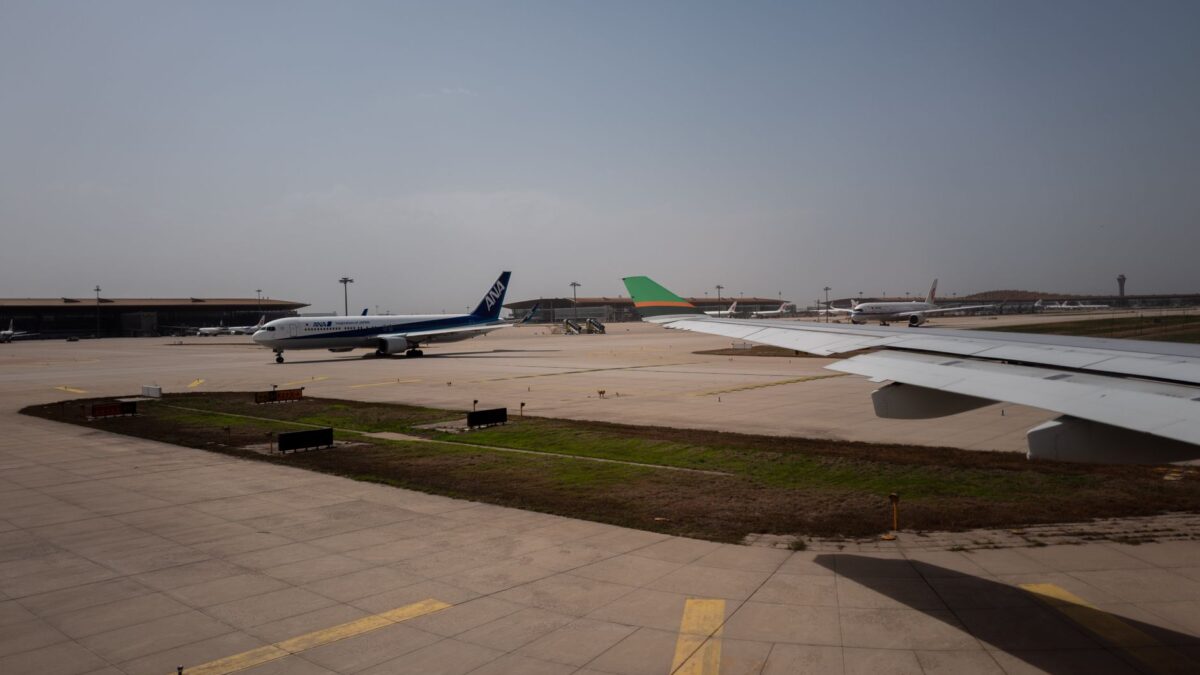
From the airport into Vientiane: every option and what it costs
Navigate Wattay Airport to Vientiane with real fares for taxis, buses & transfers. Expert tips for Sept 2026 monsoon season & major conferences.
 News & Updates
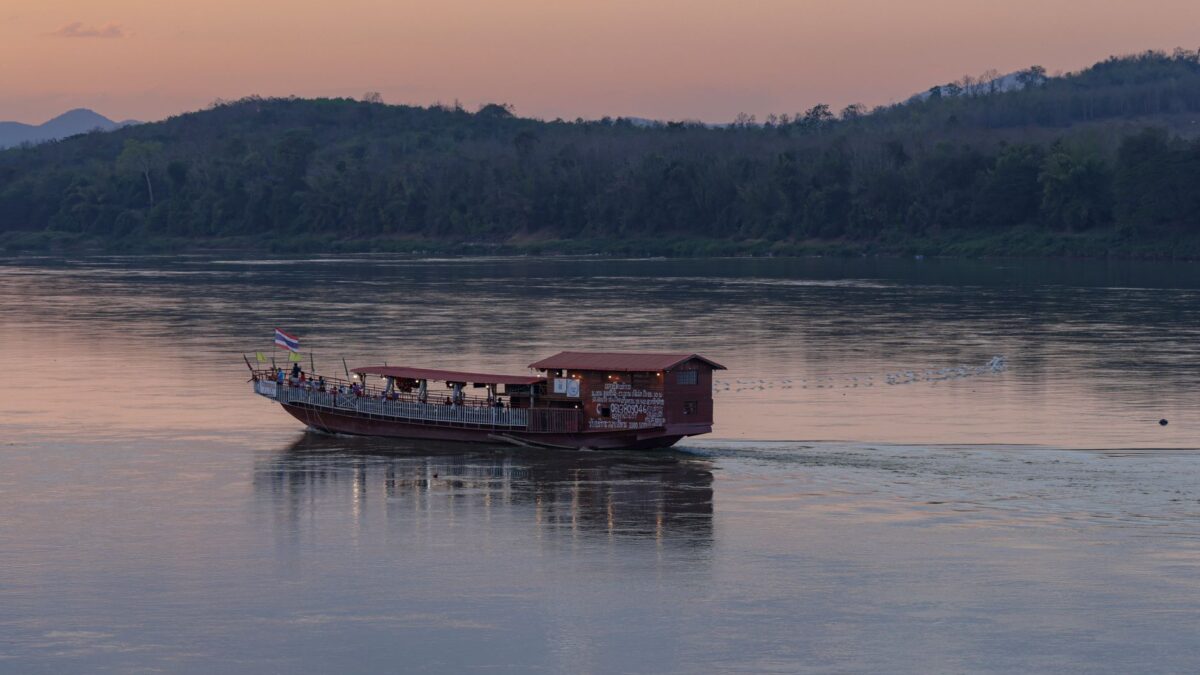
Laos in September 2026: what travelers should know now
Laos travel briefing for September 2026: weather, costs, festivals & practical tips for Vientiane.
 News & Updates
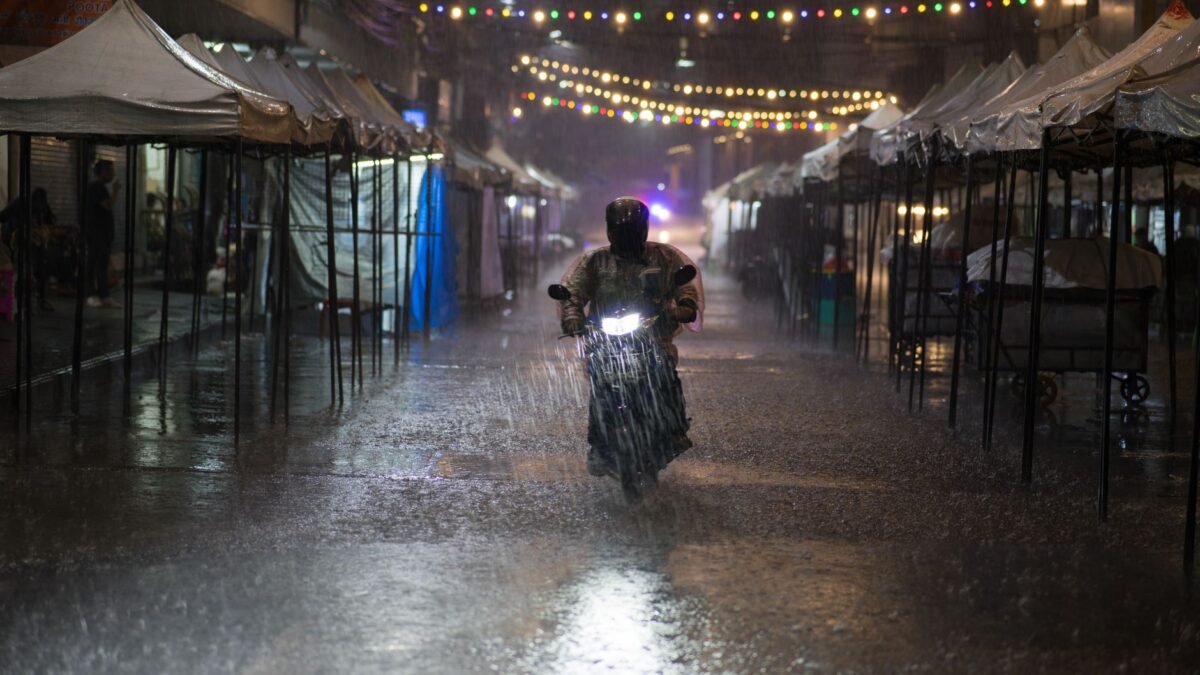
Laos in August 2026: what travelers should know now
Laos in August 2026: monsoon flooding, Beerlao Badminton, Vu Lan festival, and practical tips for Vientiane. What you need to know now.
 Getting Around
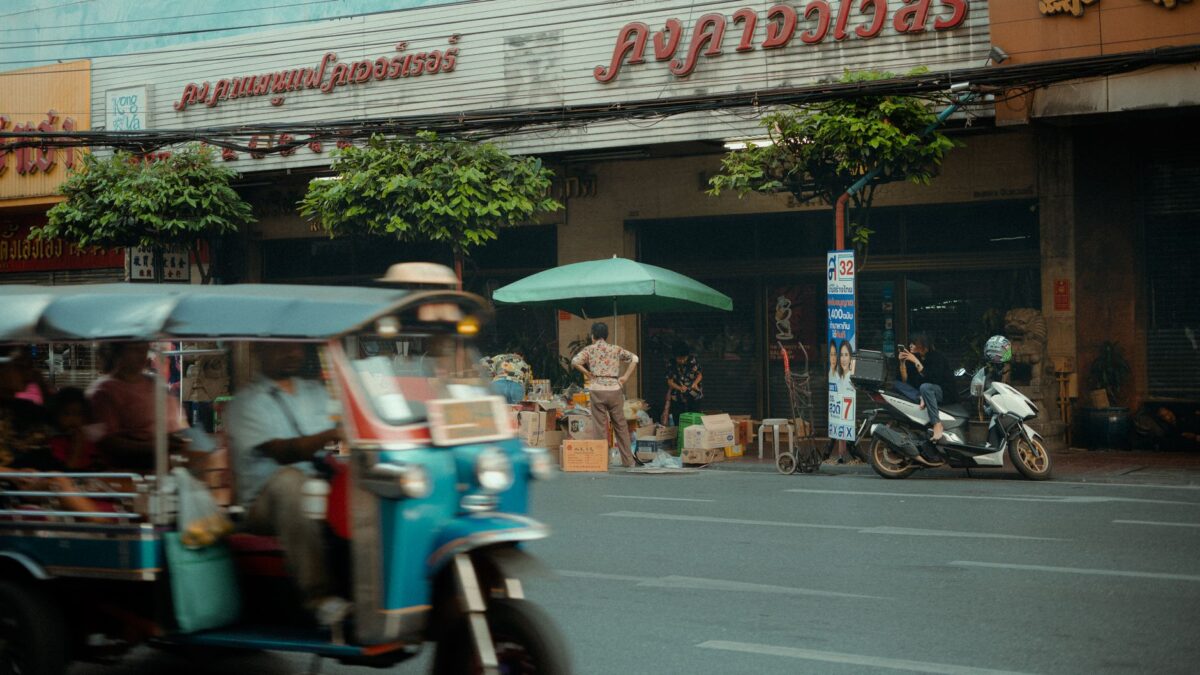
Getting around Vientiane: metros, taxis and passes
Practical guide to getting around Vientiane, Laos: walking, tuk-tuk fares, Grab ride-hailing, buses, scooter rentals, and local costs in LAK. Noy's insider tips.
Southeast Asia
 Thailand
Thailand Travel Podcast with Ploy Siriwan
The southwest monsoon brings rain and cloud from mid-May to September, shaping travel across the central plain and the mountains.
 Vietnam
Vietnam Travel Podcast with Linh Nguyen
The monsoon climate of northern Vietnam brings a hot, rainy season from May to September and a warm, dry season from October…
 Indonesia
Indonesia Travel Podcast with Bayu Pratama
The island of Java, one of the most densely populated places on earth, is the demographic heart of the Indonesian archipelago.
 Malaysia
Malaysia Travel Podcast with Aisyah Rahman
The Strait of Malacca, separating the Malay Peninsula from Sumatra, has carried maritime trade and cultural influences from China, India, the Middle…