Getting around Zagreb: metros, taxis and passes
There is a specific rhythm to Zagreb that you only catch when you stop trying to conquer it and start moving with it. It’s not in the grand boulevards of the Lower Town, but in the cobblestones of Gornji Grad, where the air smells of roasted chestnuts and damp autumn leaves. Late September here is a transition month; the humid heat of July has softened into a crisp 14–26°C breeze, often rolling in as morning fog before burning off by midday. If you are looking at this city from above, or worse, trying to navigate it by car, you are missing the point. Zagreb is a city of layers, of hills and valleys, and its best-kept secret isn’t just the coffee culture—it’s how easily you can glide through it on foot, tram, or even your own two feet.
The Illusion of the Metro
Let’s clear up the most common misconception immediately: Zagreb does not have a metro. If you arrive expecting a subterranean network like London or Paris, you will be pleasantly surprised by what you actually get. Instead of tunnels, you have the ZET (Zagrebački električni tramvaj) system—a dense, reliable web of trams and buses that serves as the city’s circulatory system. The heart of this network beats at Ban Jelačić Square (Trg bana Jelačića), where the equestrian statue stands guard over the main hub. From here, lines radiate out like spokes on a wheel, threading through the Austro-Hungarian grid of Donji Grad and climbing up toward the residential slopes.
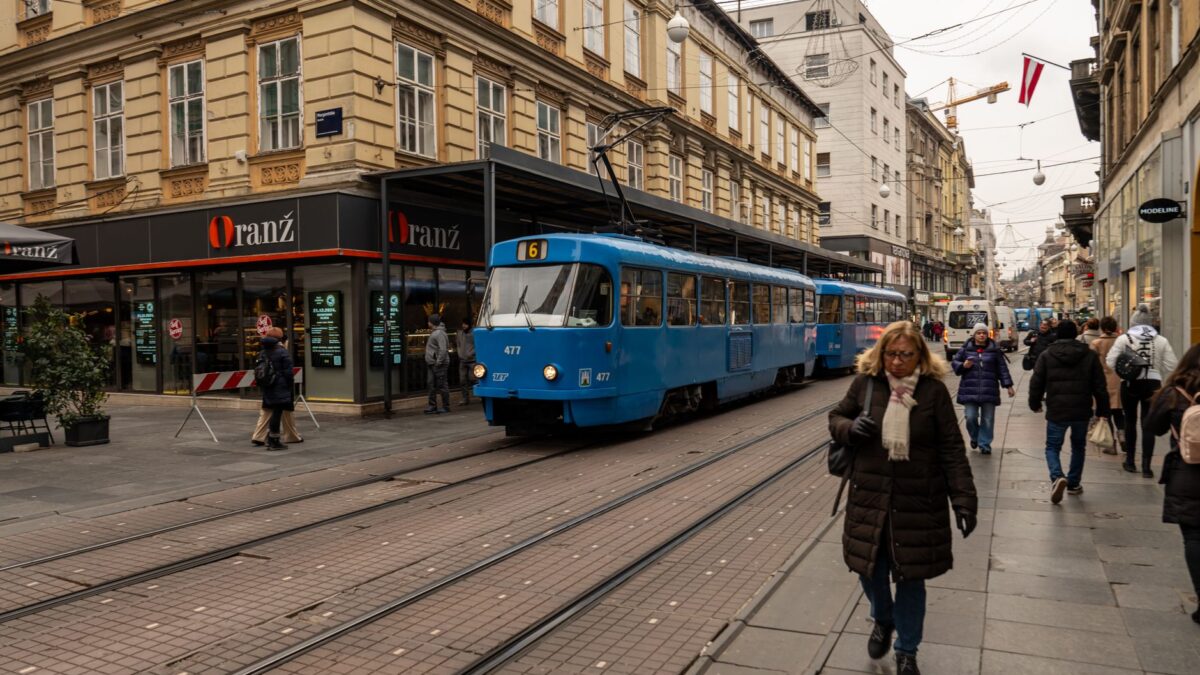
For the visitor, the tram is not just transport; it is an open-air tour. Riding Line 6 from the upper districts down to the center offers one of the best views in the city, dropping you off right at the foot of the hill near Dolac Market. The trams are modern, clean, and punctual. They run frequently during the day, though service thins out after 10 PM. Unlike many European capitals, you do not need to buy a ticket from a driver. You validate them yourself, which brings us to the next essential piece of local knowledge.
Fares, Fines, and the MojZET App
Public transport in Zagreb is inexpensive, but it is strictly enforced. The fine for riding without a validated ticket is steep enough to ruin a weekend, so take the process seriously. A single 30-minute ticket costs about €0.53 if bought at a Tisak kiosk or newsstand. If you need a bit more flexibility, a 60-minute ticket is roughly €0.93, and a 90-minute pass runs about €1.33. These prices are among the most affordable in Europe, making it easy to hop between districts without breaking the bank.
However, the smartest move is to download the MojZET app. It allows you to purchase digital tickets directly on your phone, saving you the hassle of finding a kiosk and carrying loose change. If you are staying longer, look into the prepaid ‘pokaz’ card. For a one-time fee of around €3.98 plus a photo taken at a ZET office, you get a reusable smart card topped up with monthly passes. A standard monthly coupon costs approximately €47.78, while a simple 30-day ticket is around €53.09. Residents under 18 and pensioners ride for free, but for everyone else, keeping your ticket validated—either digitally or stamped in the yellow machines on board—is non-negotiable.
When Walking Beats the Tram
Zagreb is remarkably compact, and in many cases, walking is faster and far more enjoyable than waiting for a tram. The city is divided into two distinct halves: Gornji Grad (Upper Town) and Donji Grad (Lower Town). The Upper Town is a medieval labyrinth of cobblestones, quiet streets, and historic charm. Here, there are no trams. To move between the Lower Town and the Upper Town, you use the Zagreb Funicular (Uspinjača). Opened in 1890, it is the world’s shortest public funicular line, covering just 66 meters. It is a quick, nostalgic ride that drops you right into the heart of Gradec.
Once in Gornji Grad, you walk. St. Mark’s Church, with its iconic mosaic-tiled roof bearing the coats of arms of Croatia, Dalmatia, and Slavonia, is a short climb from the funicular. Nearby, the Lotrščak Tower fires its noon cannon, a tradition locals still watch for with amusement. From there, you can stroll down to Kaptol, the ecclesiastical quarter anchored by the twin spires of Zagreb Cathedral. Note that the south spire remains scaffolded following the 2020 earthquake, a visible reminder of the city’s resilience. The walk from the Cathedral to Dolac Market takes only minutes, passing through narrow alleys that feel worlds away from the busy Ilica street below.
If you head back down to Donji Grad, follow the Lenuci’s Green Horseshoe. This U-shaped chain of parks—including Zrinjevac and King Tomislav Square—connects major museums and cafes. It is a favorite spot for the Saturday ‘špica,’ the traditional Sunday afternoon promenade where Zagrebians dress up and stroll. In late September, the parks are filled with students returning from university and families enjoying the last warm days before winter. Walking here lets you appreciate the architectural blend of Baroque, Art Nouveau, and modernist styles that define the city.
Taxis and Ride-Hailing
While the tram and walking cover most needs, there are times when you need a direct ride. Zagreb has a healthy taxi industry, and ride-hailing apps are available. However, unlike some cities where surge pricing makes travel unpredictable, fares here remain relatively stable. Specific base fares and per-kilometer rates fluctuate, but generally, a ride across the city center will cost less than a tourist might expect in Western Europe. Always ensure the meter is running or agree on a price before getting in if you are using a traditional taxi hailed on the street.
For those staying in private accommodations, remember that hotels register guests automatically, but you must report your stay to the local police (MUP) within a day or two. This administrative detail is rarely a hassle, but it is a requirement for legal stays. When moving around, keep an eye on your belongings. Zagreb is safe, but pickpocketing exists, particularly in crowded trams and around Ban Jelačić Square during peak seasons. Trust your instincts, and never leave a bag unattended on a seat.
Eating on the Go
You cannot talk about moving through Zagreb without talking about fueling up. The city’s café culture is legendary, but so is its ‘gablec’—the daily set menu found in local bistros and canteens. For around €6 to €8, you can get a hearty lunch featuring classics like Zagrebački odrezak (breaded schnitzel), Zapečene štrukle (baked strukli pastry), or Grah s kobasicom (bean stew with sausage). These meals are often served in university student canteens, which are open to the public at full price, offering a bargain of about €5–6 for a full meal. It is a practical way to eat well without spending hours in a restaurant.
As evening falls, the energy shifts. Tkalčićeva Street, the pedestrian strip connecting Upper and Lower Town, comes alive with bars and restaurants. It is the epicenter of nightlife, but also a great place to grab a drink and people-watch. If you prefer something quieter, venture to the banks of the Sava River. Venues like La Štruk or Kai Street Food offer casual dining with a view, especially as the city hosts events like the Green River Fest under the Hendrix Bridge. The food scene reflects the city’s pragmatic yet passionate approach to life: good ingredients, honest preparation, and plenty of room for conversation.
Zagreb rewards those who slow down. Whether you are catching a tram to Maksimir Park to see the zoo, walking up to Mirogoj Cemetery to admire Hermann Bollé’s arcades, or simply sitting in Quahwa Coffee with a book, the city reveals itself in small moments. The weather in September is perfect for exploration—cool enough for long walks, warm enough for outdoor seating. Embrace the mix of old and new, the hills and the plains, and let the rhythm of the trams guide you. You will find that getting around Zagreb is not about efficiency; it is about discovery.
Frequently asked questions
Does Zagreb have a metro system?
No, Zagreb does not have a metro. The city relies on an extensive network of trams and buses operated by ZET, along with the historic Zagreb Funicular for steep inclines.
How much is a single tram ticket in Zagreb?
A 30-minute tram ticket costs approximately €0.53 if purchased at a kiosk, while a 60-minute ticket is about €0.93. Digital tickets are available via the MojZET app.
Is it safe to walk around Zagreb at night?
Yes, Zagreb is generally safe and walkable at night. However, be vigilant against pickpockets in crowded areas like Ban Jelačić Square and on trams, especially during festivals.
What is the best way to get from Lower Town to Upper Town?
The easiest way is to take the Zagreb Funicular (Uspinjača) from Koturaška Street. It is the world’s shortest public funicular and offers a quick, scenic ride to Gornji Grad.
Things to do in Croatia
 Full-Day Private Boat Tour of Elafiti Island from Dubrovnik
 Private Walks & Storytelling - the best small group tour in Split
 GROUP/ PRIVATE Walking History Tour of SPLIT with Daniela
 Private Boat Tour to the Elafiti Islands with Atlantic Marine
 Dubrovnik Private Full Day Island Hopping Tour Elaphiti Islands
 Exclusive Private Tour: Red Rocks & Pakleni Islands