
Croatia Travel Podcast with Ivana Marić
Hosted by Ivana Marić — a new episode every day from Croatia.
Travelling in Croatia means moving between two climates and two ways of life. The interior is continental, with hot summers and cold winters, while the coast has mild winters and dry summers. This podcast explores those differences through the places and habits that shape everyday life.
Episodes draw on the northern half of the country, where most people live, and go further afield. Zagreb, Istria, Slavonia and the Dalmatian coast all appear, as do the highlands above the Adriatic and the sparsely populated islands. A less obvious stop is Gorski kotar, a wooded highland region between the coast and the interior.
The show unfolds over a couple of years rather than a checklist. It returns to places at different times of year, so the same town appears in a cold continental winter and a dry Adriatic summer. That slow accumulation of detail is what knowing somewhere properly sounds like.
Recent episodes
Things to do in Croatia
 Full-Day Private Boat Tour of Elafiti Island from Dubrovnik
 Private Walks & Storytelling - the best small group tour in Split
 Private Boat Tour to the Elafiti Islands with Atlantic Marine
 Dubrovnik Private Full Day Island Hopping Tour Elaphiti Islands
 GROUP/ PRIVATE Walking History Tour of SPLIT with Daniela
 Adrenaline Quad Safari Tour
 Exclusive Private Tour: Red Rocks & Pakleni Islands
 Private Speedboat Tour: Caves Beaches Islands and more
Plan your trip to Croatia
Getting around
Staying connected
Croatia at a glance
Croatia in depth
Reference data on the country — geography, people, history, economy and transport.
Geography and climate
Location
Southeastern Europe, bordering the Adriatic Sea, between Bosnia and Herzegovina and Slovenia
Terrain
Geographically diverse; flat plains along Hungarian border, low mountains and highlands near Adriatic coastline and islands
Climate
Mediterranean and continental; continental climate predominant with hot summers and cold winters; mild winters, dry summers along coast
Elevation
- Highest point
- Dinara 1,831 m
- Lowest point
- Adriatic Sea 0 m
- Mean elevation
- 331 m
Area
- Total
- 56,594 sq km
- Land
- 55,974 sq km
- Water
- 620 sq km
Size comparison
Slightly smaller than West Virginia
Coastline
5,835 km (mainland 1,777 km; islands 4,058 km)
Land borders
- Total
- 2,237 km
- Border countries
- Bosnia and Herzegovina 956 km; Hungary 348 km; Montenegro 19 km; Serbia 314 km; Slovenia 600 km
Natural resources
Oil, some coal, bauxite, low-grade iron ore, calcium, gypsum, natural asphalt, silica, mica, clays, salt, hydropower
Land use
- Agricultural land
- 26.6% (2023 est.)
- Arable land
- 15.5% (2023 est.)
- Permanent crops
- 1.4% (2023 est.)
- Permanent pasture
- 9.6% (2023 est.)
- Forest
- 34.7% (2023 est.)
- Other
- 38.2% (2023 est.)
Natural hazards
Destructive earthquakes
Note
Controls most land routes from Western Europe to the Aegean Sea and Turkish Straits; most Adriatic Sea islands lie off the coast of Croatia -- some 1,200 islands, islets, ridges, and rocks
People and society
Population
- Total
- 4,071,208 (2025 est.)
- Male
- 1,968,334
- Female
- 2,102,874
Nationality
- Noun
- Croat(s), Croatian(s)
- Adjective
- Croatian
Ethnic groups
Croat 91.6%, Serb 3.2%, other 3.9% (including Bosniak, Romani, Albanian, Italian, and Hungarian), unspecified 1.3% (2021 est.)
Languages
- Languages
- Croatian (official) 95.2%, Serbian 1.2%, other 3.1% (including Bosnian, Romani, Albanian, and Italian) unspecified 0.5% (2021 est.)
- Major-language sample(s)
- Knjiga svjetskih činjenica, nužan izvor osnovnih informacija. (Croatian)
Religions
Roman Catholic 79%, Orthodox 3.3%, Protestant 0.3%, other Christian 4.8%, Muslim 1.3%, other 1.1%, agnostic 1.7%, none or atheist 4.7%, unspecified 3.9% (2021 est.)
Median age
- Total
- 44.9 years (2025 est.)
- Male
- 43.2 years
- Female
- 47 years
Life expectancy
- Total population
- 77.7 years (2024 est.)
- Male
- 74.6 years
- Female
- 81 years
Urbanisation
- Urban population
- 58.6% of total population (2023)
- Rate of urbanization
- 0.05% annual rate of change (2020-25 est.)
Where people live
More of the population lives in the northern half of the country, with approximately a quarter of the populace residing in and around the capital of Zagreb; many of the islands are sparsely populated
Largest cities
684,000 ZAGREB (capital) (2023)
Background and government
Background
The lands that today comprise Croatia were part of the Austro-Hungarian Empire until the end of World War I. In 1918, the Croats, Serbs, and Slovenes formed a kingdom known after 1929 as Yugoslavia. Following World War II, Yugoslavia became a federal independent communist state consisting of six socialist republics, including Croatia, under the strong hand of Josip Broz, aka TITO. Although Croatia declared its independence from Yugoslavia in 1991, it took four years of sporadic, but often bitter, fighting before Yugoslav forces were cleared from Croatian lands, along with a majority of Croatia's ethnic Serb population. Under UN supervision, the last Serb-held enclave in eastern Slavonia was returned to Croatia in 1998. The country joined NATO in 2009 and the EU in 2013. In January 2023, Croatia further integrated into the EU by joining the Eurozone and the Schengen Area.
Government
Parliamentary republic
Capital
Zagreb
Time zone
UTC+1 (6 hours ahead of Washington, DC, during Standard Time)
Local name
Republika Hrvatska
Independence
25 June 1991 (from Yugoslavia); notable earlier dates: ca. 925 (Kingdom of Croatia established), 1 December 1918 (Kingdom of Serbs, Croats, and Slovenes established, later became Yugoslavia)
National day
Statehood Day (National Day), 30 May (1990)
Economy and cost of living
Overview
Upper-middle-income Balkan economy; newest euro user (introduced in 2023); increased investments from EU structural funds and tourism sector contributing to strong but moderating economic growth; declining energy prices and restrictive monetary policy easing inflation; historically low unemployment rate with labor shortages within services and manufacturing sectors
GDP per capita
- Real GDP per capita 2024
- $42,600 (2024 est.)
- Real GDP per capita 2023
- $41,100 (2023 est.)
- Real GDP per capita 2022
- $39,900 (2022 est.)
Inflation
- Inflation rate (consumer prices) 2024
- 3% (2024 est.)
- Inflation rate (consumer prices) 2023
- 7.9% (2023 est.)
- Inflation rate (consumer prices) 2022
- 10.8% (2022 est.)
Unemployment
- Unemployment rate 2024
- 5.3% (2024 est.)
- Unemployment rate 2023
- 6.1% (2023 est.)
- Unemployment rate 2022
- 7% (2022 est.)
Exchange rate
- Currency
- Euros (EUR) per US dollar -
- Exchange rates 2024
- 0.924 (2024 est.)
- Exchange rates 2023
- 0.925 (2023 est.)
- Exchange rates 2022
- 0.95 (2022 est.)
- Exchange rates 2021
- 0.845 (2021 est.)
- Exchange rates 2020
- 0.876 (2020 est.)
Main industries
Chemicals and plastics, machine tools, fabricated metal, electronics, pig iron and rolled steel products, aluminum, paper, wood products, construction materials, textiles, shipbuilding, petroleum and petroleum refining, food and beverages, tourism
Agriculture
Maize, wheat, sugar beets, milk, barley, soybeans, sunflower seeds, potatoes, pork, grapes (2023)
Transport and connectivity
Airports
45 (2025)
Railways
Total 2,617 km (2020) 980 km electrified
Ports
- Total ports
- 16 (2024)
- Large
- 2
- Medium
- 0
- Small
- 6
- Very small
- 8
- Ports with oil terminals
- 8
- Key ports
- Bakar, Dubrovnik, Omisalj, Rijeka Luka, Rovinj, Sibenik, Split, Zadar
Internet domain
.hr
Internet users
Percent of population 83% (2023 est.)
Mobile subscriptions
- Total subscriptions
- 4.72 million (2024 est.)
- Subscriptions per 100 inhabitants
- 122 (2024 est.)
Environment
Environmental issues
Air pollution in urban areas, as well as emissions from neighboring countries; surface water pollution in the Danube River Basin
Fresh water
105.5 billion cubic meters (2022 est.)
UNESCO Global Geoparks
- Total global geoparks and regional networks
- 3 (2024)
- Global geoparks and regional networks
- Biokovo-Imotski Lakes; Papuk; Vis Archipelago (2024)
Country reference figures are periodically revised. Check anything time-sensitive or safety-critical against an official source before you travel.
Croatia travel guides
 News & Updates
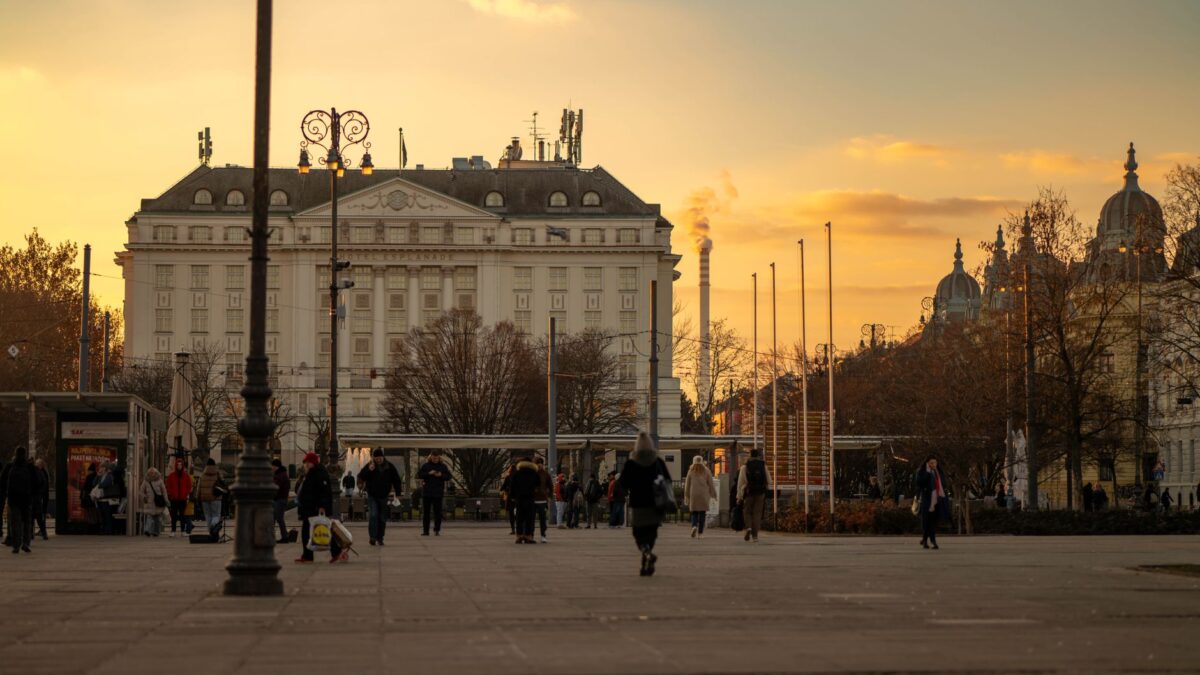
Croatia in September 2026: what travelers should know now
Croatia travel update for September 2026: weather, festivals, construction closures, and dining costs in Zagreb.
 Costs & Money
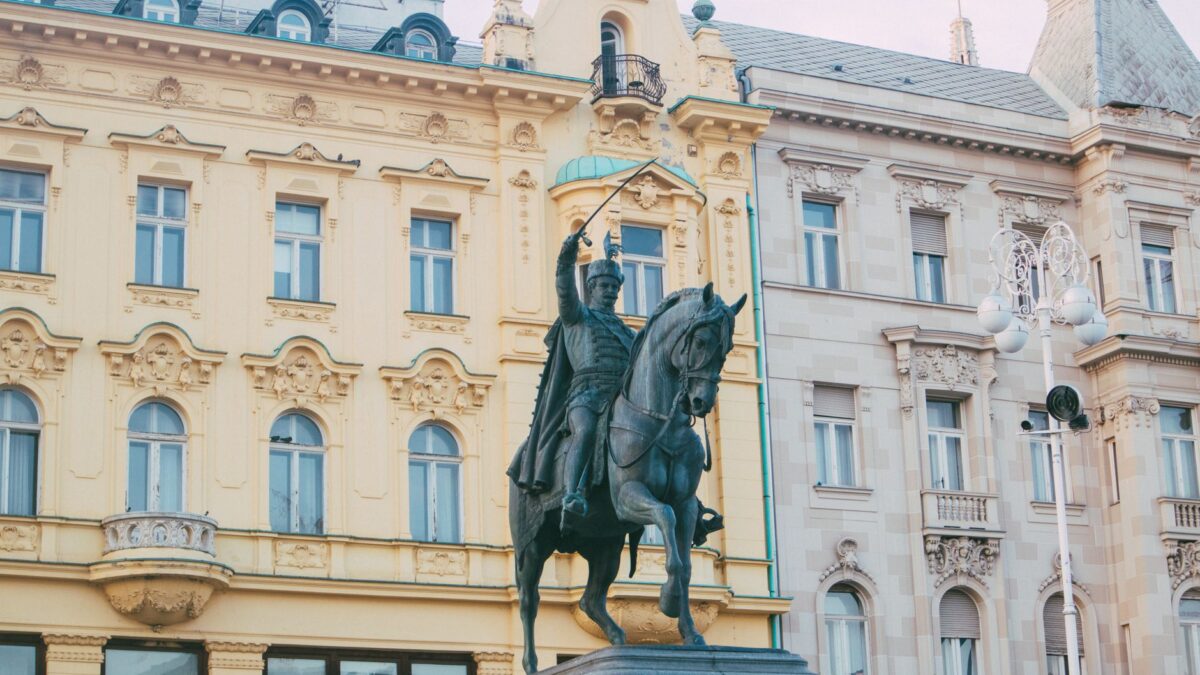
A week in Zagreb on a mid-range budget
Plan a week in Zagreb on a mid-range budget. Real prices for meals, transit, and hotels, plus insider tips on free museums and local…
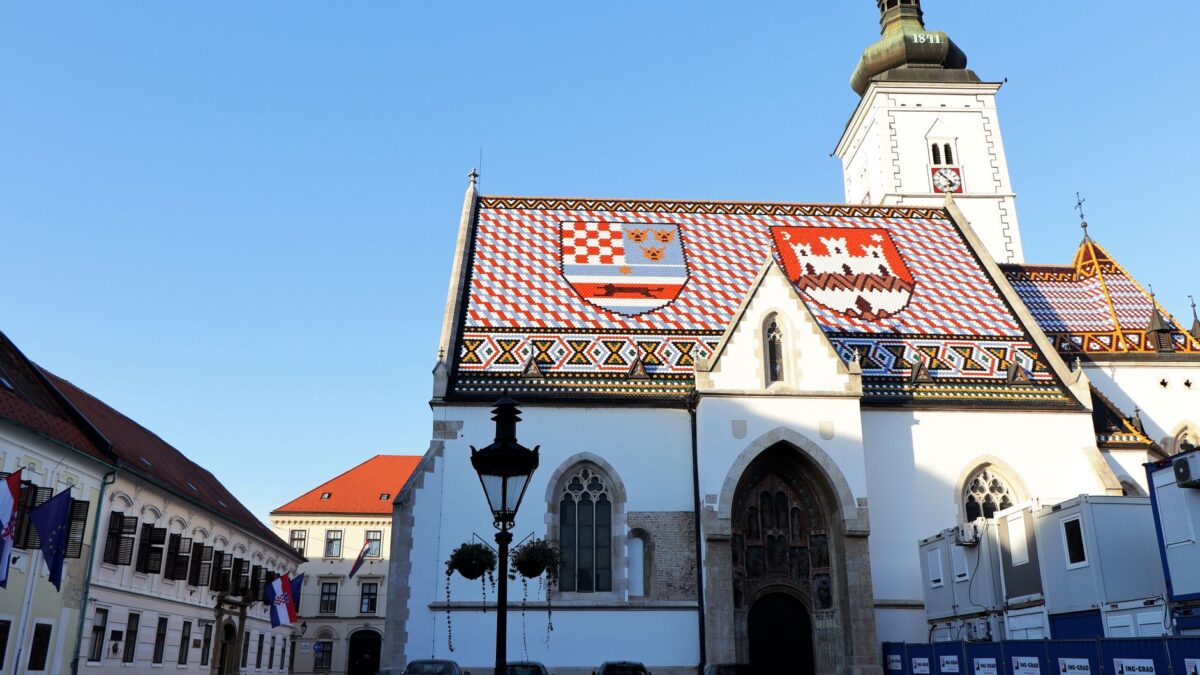 News & Updates
Croatia in August 2026: what travelers should know now
Zagreb bursts back to life as summer ends. Festivals, thunderstorms, and local tips for your August 2026 week in Croatia's capital.
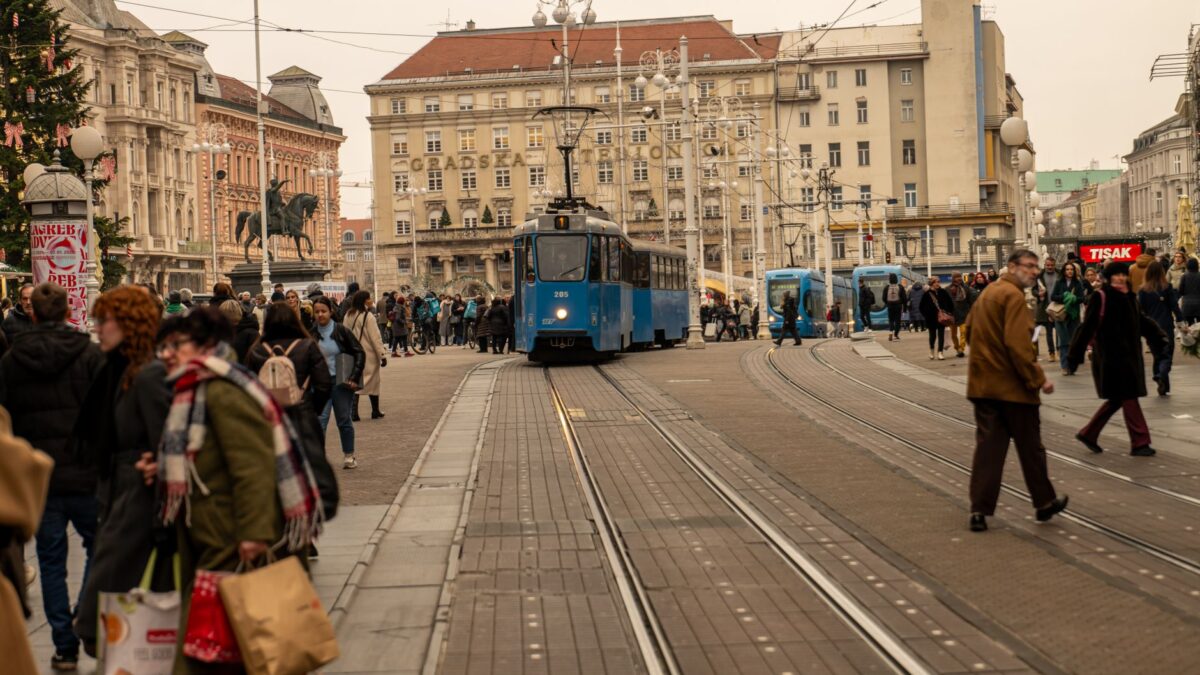 Travel Tips
The best time to visit Croatia
From festival-packed summers to snowy Advent markets, discover the best time to visit Zagreb, Croatia – season by season, with prices, crowds, and local…
Southern Europe
 Spain
SpainSpain Travel Podcast with Mateo Herrera
The Pyrenees run along the northern border; Madrid and Barcelona anchor Spain's largest urban settlements, and the interior summers are hot and…
 Italy
ItalyItaly Travel Podcast with Sofia Romano
The Po River Valley, with its dense population and plains, contrasts sharply with the mountainous terrain that dominates most of Italy.
 Greece
Greece Travel Podcast with Nikos Pappas
The Peloponnese is a mountainous peninsula with ranges that reach into the Aegean as island chains, while Athens holds one third of…
 Portugal
Portugal Travel Podcast with Inês Carvalho
The westward sweep of the Tagus River divides Portugal’s mountainous north from the rolling southern plains, shaping two distinct worlds in one…