

How much does a trip to Senegal cost?
The humidity hits you first—a thick, warm blanket that smells of salt, diesel, and roasting peanuts. It is late October in Dakar, the tail end of the hivernage rains. The sky is a bruised purple-grey, heavy with the promise of another downpour, but the city is buzzing. You are standing near the Corniche, watching the surf crash at Ngor, while the whole capital holds its breath for the Youth Olympics. Traffic is already tightening; by mid-October, streets like rue 11 in Médina have gone one-way, and Point E’s Tour de l’Œuf is pedestrianised. But despite the congestion and the construction cranes dotting the horizon around Diamniadio, there is a rhythm to this place that money cannot buy. And if you are wondering whether your wallet can keep up with the vibe, let’s talk numbers.
Where You Sleep: The Rent vs. The Room
Dakar is among West Africa’s priciest capitals when it comes to housing, but as a short-term visitor, you have options that range from humble to luxurious. If you are looking for long-term stability, a modest one-bedroom flat in the city centre runs about 300,000–475,000 XOF per month. That is roughly $640 USD, which feels steep compared to neighbours like Abidjan, but reflects Dakar’s status as the economic engine of Francophone West Africa.
For your trip, however, you will likely opt for guesthouses or hotels. In areas like Fann or Point E—where the air is quieter and the universities give the district an academic hum—you can find solid mid-range accommodation for about 40,000–60,000 XOF per night (around $80 USD). Places like Maison Bonheur or Casa Mara Guest House offer comfort without the five-star price tag. If you want to be on the water, look toward the Almadies. Here, embassies line the streets, and seafood restaurants serve the freshest catch of the day. A stay here might cost slightly more, but you are paying for the view of the Atlantic and the breeze off the ocean.
Eating Like a Local (and Paying Little)
This is where Senegal surprises you. While housing costs are high, street food remains incredibly affordable. Senegal has some of the lowest inflation rates in Africa, hovering around 1.2% to 1.5%, which keeps daily essentials stable. You do not need to spend much to eat well; in fact, eating poorly is harder than eating excellently.
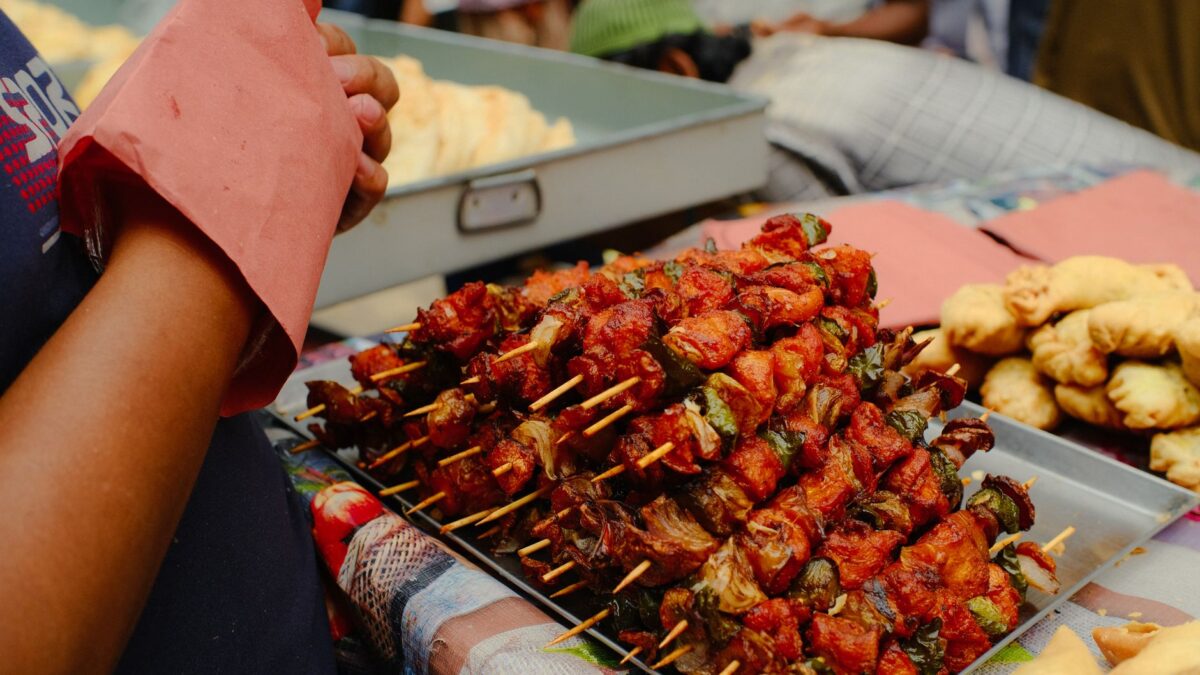
Head to a gargote—a small, local eatery—and order the national dish, thiéboudienne (rice cooked in tomato sauce with fish). At a spot like Chef Mami or any busy corner stall in Plateau, expect to pay between 1,500 and 2,500 XOF (about $3 USD). If you go to a tourist-oriented restaurant, that price might double to 4,000 XOF, but why would you? For lunch, grab a plate of yassa (chicken or fish marinated in onions and lemon) for the same 1,500–2,500 XOF range. Street vendors also sell fatayas, those fried pastry triangles stuffed with spiced meat or fish, for just 500 XOF. Pair that with a grilled meat skewer (dibi) for 2,000 XOF, and you have a feast.
If you prefer the market atmosphere, visit Marché Kermel or Sandaga in the Plateau district. Around 1,500 XOF gets you a full plate from a stall, surrounded by the chaos of fabrics, spices, and life. It is cheap, it is safe if you watch your belongings, and it is authentic. For coffee, Kotao Coffee in Plateau or Coffee Loft offers a modern brew for a few thousand CFA, bridging the gap between traditional café touba and Western espresso culture.
Getting Around: TER, SunuBRT, and Shared Taxis
Navigating Dakar requires strategy. The traffic during JOJ prep means many avenues are restricted. Avoid relying on informal taxis for long distances unless you are comfortable negotiating. Instead, embrace the new public transit systems. The TER (Train Express Régional) is sleek and modern. A second-class ticket from downtown to the new city of Diamniadio costs between 500 and 1,500 XOF. It is fast, air-conditioned, and avoids the gridlock entirely.
For shorter hops within the city, the SunuBRT electric bus rapid transit covers an 18.3 km corridor. The fare is a flat 500 XOF, payable via a rechargeable card or QR code on the GoaMobile app. It is clean, reliable, and the best way to see the city without sweating through your shirt. If you must take a shared taxi (car rapide), budget about 200–1,000 XOF depending on the distance. Metered taxis exist but are less common for locals; ride-hailing apps are growing but still niche.
Walk whenever possible. The historic districts of Médina and Plateau are dense with history. You can walk from the Grand Mosque of Dakar, with its imposing 67-meter minaret, down to the bustling Tilène market. Just remember: pickpocketing is real in crowded markets like Sandaga. Keep your phone in a front pocket, and never flash cash.
Attractions: History, Art, and Views
Senegal invests heavily in culture, and many attractions are reasonably priced. The Museum of Black Civilizations in Plateau, housed in a striking circular building inspired by traditional Casamance huts, is a must-visit. Tickets are modest, and the collection on African diaspora history is profound. Nearby, the IFAN Museum (Musée Théodore Monod) offers deep insights into West African art and ethnography.
For a panoramic view, take the elevator or climb the stairs to the top of the African Renaissance Monument in Ouakam. The 52-meter bronze statue dominates the skyline, and the small museum inside provides context. Alternatively, head to the Phare des Mamelles lighthouse for sunset views over the ocean. If you have time, a ferry to Île de Gorée is essential. The House of Slaves (Maison des Esclaves) is a UNESCO site and a poignant memorial to the Atlantic slave trade. Ferry tickets and entrance fees add up, but it is a spiritual experience rather than just a sightseeing stop.
Currently, the cultural scene is vibrant. The FILDAK book fair is returning to the city, and the 5th Salon du Livre Féminin is taking over Place de la Nation. You might even catch Orchestra Baobab performing their new album. These events are often free or low-cost, adding value to your trip without stretching your budget.
Practical Money Tips
You do not need to exchange large amounts of cash. Mobile money is king here. Services like Wave, Orange Money, and Free Money are used for everything from buying street food to paying for hotel bills. Get a local SIM card at the airport (Orange or Free); data is cheap, and registration is quick with your passport. Banks like CBAO or Ecobank are widespread, but for daily spending, mobile wallets are your best friend.
Visitors from the EU, US, Canada, and many other regions enjoy visa-free entry for 90 days. Just ensure your passport is valid for six months and carry proof of yellow fever vaccination. If you plan to stay longer, you will need a Carte d’Identité d’Étranger, processed at the DPETV in Dieuppeul.
In summary, Dakar rewards the flexible traveller. Accommodation sets your baseline, but food and transport are remarkably accessible. With a daily budget of 20,000–30,000 XOF, you can eat well, move comfortably, and explore deeply. Spend 50,000+ XOF if you want mid-range hotels and private tours. The city is open, welcoming, and surprisingly affordable if you know where to look.
Frequently asked questions
How much does a meal cost in Dakar?
A plate of thiéboudienne at a local gargote costs between 1,500 and 2,500 XOF ($3 USD). Mid-range restaurants charge 5,000–15,000 XOF, while street snacks like fatayas are around 500 XOF.
What is the best way to get around Dakar?
Use the modern TER train for trips to Diamniadio (500–1,500 XOF) and the SunuBRT electric buses for city travel (500 XOF flat rate). Shared taxis cost 200–1,000 XOF depending on distance.
Is Dakar expensive for tourists?
Housing is pricey, but daily expenses like food and transport are very affordable due to low inflation. Street food is under $3 USD, making it one of the most budget-friendly capitals in West Africa.
Do I need cash or can I use mobile money?
Mobile money (Wave, Orange Money, Free Money) is dominant and accepted almost everywhere, from markets to hotels. Cash is useful for small vendors, but digital payments are the norm.
What are the current traffic restrictions in Dakar?
Due to the Youth Olympics, streets like rue 11 in Médina are one-way or closed, and Point E’s Tour de l'Œuf is pedestrianised. Public transit lanes are reserved, so using TER or BRT is recommended.
Things to do in Senegal
 7 Days in Senegal Private Tour package
 Gorée Island - Pink Lake excursion 2 persons minimum
 Senegal private tour 7 days 6 nights-minimum 2 people to book it
 2 days Joal Fadiouth and Saloum Delta Private Tour package
 Private Tour: Kedougou, Senegal
 Dakar Gorée scooter immersion between sea faith and daily life