Senegal Travel Podcast with Fatou Diop
Hosted by Fatou Diop — a new episode every day from Senegal.
Senegal is a low-lying country on the western tip of Africa, where the Gambia pushes almost as an enclave into its centre. The dry season runs from December to April under the harmattan, and the rainy season brings strong southeast winds from May to November. This show follows a slower way of travelling through that landscape, staying in one place before moving on.
The range of places includes the Atlantic city of Dakar, the old river town of Saint-Louis, the mangrove-lined Saloum Delta and the southeastern foothills around Kédougou. These are not interchangeable stops on a circuit; each has a different climate, language and history. The show lets these differences emerge slowly, rather than treating Senegal as a single backdrop.
The host settles in one place long enough to learn its rhythms, then moves somewhere connected to it. She returns to earlier stops as the dry season gives way to the rains, watching the same streets and paths change. The show builds an understanding of Senegal from repeated visits, not from a single pass.
Recent episodes
Things to do in Senegal
 7 Days in Senegal Private Tour package
 Gorée Island - Pink Lake excursion 2 persons minimum
 Senegal private tour 7 days 6 nights-minimum 2 people to book it
 2 days Joal Fadiouth and Saloum Delta Private Tour package
 Private Tour: Kedougou, Senegal
 Cultural Excursions ( Goree Island and Lac Rose) with SENEXPAT
 Dakar Gorée scooter immersion between sea faith and daily life
 Discovery Senegal 8 Days 7 Nights
Plan your trip to Senegal
Getting around
Staying connected
Senegal at a glance
Senegal in depth
Reference data on the country — geography, people, history, economy and transport.
Geography and climate
Location
Western Africa, bordering the North Atlantic Ocean, between Guinea-Bissau and Mauritania
Terrain
Generally low, rolling, plains rising to foothills in southeast
Climate
Tropical; hot, humid; rainy season (May to November) has strong southeast winds; dry season (December to April) dominated by hot, dry, harmattan wind
Elevation
- Highest point
- Unnamed elevation 2.8 km southeast of Nepen Diaka 648 m
- Lowest point
- Atlantic Ocean 0 m
- Mean elevation
- 69 m
Area
- Total
- 196,722 sq km
- Land
- 192,530 sq km
- Water
- 4,192 sq km
Size comparison
Slightly smaller than South Dakota; slightly larger than twice the size of Indiana
Coastline
531 km
Land borders
- Total
- 2,684 km
- Border countries
- The Gambia 749 km; Guinea 363 km; Guinea-Bissau 341 km; Mali 489 km; Mauritania 742 km
Natural resources
Fish, phosphates, iron ore
Land use
- Agricultural land
- 49.4% (2023 est.)
- Arable land
- 19.9% (2023 est.)
- Permanent crops
- 0.4% (2023 est.)
- Permanent pasture
- 29.1% (2023 est.)
- Forest
- 45.1% (2023 est.)
- Other
- 5.5% (2023 est.)
Natural hazards
Lowlands seasonally flooded; periodic droughts
Note
Westernmost country on the African continent; The Gambia is almost an enclave within Senegal
People and society
Population
- Total
- 18,847,519 (2024 est.)
- Male
- 9,283,314
- Female
- 9,564,205
Nationality
- Noun
- Senegalese (singular and plural)
- Adjective
- Senegalese
Ethnic groups
Wolof 39.7%, Pulaar 27.5%, Sereer 16%, Mandinka 4.9%, Jola 4.2%, Soninke 2.4%, other 5.4% (includes Europeans and persons of Lebanese descent) (2019 est.)
Languages
French (official), Wolof, Pulaar, Jola, Mandinka, Serer, Soninke
Religions
Muslim 97.2% (most adhere to one of the four main Sufi brotherhoods), Christian 2.7% (mostly Roman Catholic) (2019 est.)
Median age
- Total
- 19.4 years (2025 est.)
- Male
- 18.4 years
- Female
- 20 years
Life expectancy
- Total population
- 70.6 years (2024 est.)
- Male
- 68.8 years
- Female
- 72.4 years
Urbanisation
- Urban population
- 49.6% of total population (2023)
- Rate of urbanization
- 3.59% annual rate of change (2020-25 est.)
Where people live
The population is concentrated in the west, with Dakar anchoring a well-defined core area; approximately 70% of the population is rural, as shown in this population distribution map
Largest cities
3.340 million DAKAR (capital) (2023)
Background and government
Background
Senegal is one of the few countries in the world with evidence of continuous human life from the Paleolithic period to present. Between the 14th and 16th centuries, the Jolof Empire ruled most of Senegal. Starting in the 15th century, Portugal, the Netherlands, France, and Great Britain traded along the Senegalese coast. Senegal’s location on the western tip of Africa made it a favorable base for the European slave trade. European powers used the Senegalese island of Goree as a base to purchase slaves from the warring chiefdoms on the mainland, and at the height of the slave trade in Senegal, over one-third of the Senegalese population was enslaved. In 1815, France abolished slavery and began expanding inland. During the second half of the 19th century, France took possession of Senegal as a French colony. In 1959, the French colonies of Senegal and French Sudan were merged and granted independence in 1960 as the Mali Federation. The union broke up after only a few months. In 1982, Senegal joined with The Gambia to form the nominal confederation of Senegambia. The envisaged integration of the two countries was never implemented, and the union dissolved in 1989.
Since the 1980s, the Movement of Democratic Forces in the Casamance -- a separatist movement based in southern Senegal -- has led a low-level insurgency. Several attempts at reaching a comprehensive peace agreement have failed. Since 2012, despite sporadic incidents of violence, an unofficial cease-fire has remained largely in effect. Senegal is one of the most stable democracies in Africa and has a long history of participating in international peacekeeping and regional mediation. The Socialist Party of Senegal ruled for 40 years until Abdoulaye WADE was elected president in 2000 and re-elected in 2007. WADE amended Senegal's constitution over a dozen times to increase executive power and weaken the opposition. In 2012, WADE’s decision to run for a third presidential term sparked public backlash that led to his loss to current President Macky SALL. A 2016 constitutional referendum limited future presidents to two consecutive five-year terms. President Bassirou Diomaye FAYE took office in April 2024.
Government
Presidential republic
Capital
Dakar
Time zone
UTC 0 (5 hours ahead of Washington, D.C., during Standard Time)
Local name
République du Sénégal
Independence
4 April 1960 (from France); 20 August 1960 (full independence after federation with Mali is dissolved)
National day
Independence Day, 4 April (1960)
Economy and cost of living
Overview
Lower middle-income, services-driven West African economy; key mining, construction, agriculture, and fishing industries; tourism and exports hit hard by COVID-19; large informal economy; developing offshore oil and gas fields; systemic corruption
GDP per capita
- Real GDP per capita 2024
- $4,500 (2024 est.)
- Real GDP per capita 2023
- $4,300 (2023 est.)
- Real GDP per capita 2022
- $4,200 (2022 est.)
Inflation
- Inflation rate (consumer prices) 2024
- 0.8% (2024 est.)
- Inflation rate (consumer prices) 2023
- 5.9% (2023 est.)
- Inflation rate (consumer prices) 2022
- 9.7% (2022 est.)
Unemployment
- Unemployment rate 2024
- 3% (2024 est.)
- Unemployment rate 2023
- 2.8% (2023 est.)
- Unemployment rate 2022
- 2.9% (2022 est.)
Exchange rate
- Currency
- Communaute Financiere Africaine francs (XOF) per US dollar -
- Exchange rates 2024
- 606.345 (2024 est.)
- Exchange rates 2023
- 606.57 (2023 est.)
- Exchange rates 2022
- 623.76 (2022 est.)
- Exchange rates 2021
- 554.531 (2021 est.)
- Exchange rates 2020
- 575.586 (2020 est.)
Main industries
Agricultural and fish processing, phosphate mining, fertilizer production, petroleum refining, zircon, and gold mining, construction materials, ship construction and repair
Agriculture
Rice, groundnuts, watermelons, millet, cassava, sugarcane, maize, sorghum, onions, milk (2023)
Transport and connectivity
Airports
20 (2025)
Railways
- Total
- 906 km (2017) (713 km operational in 2017)
- Narrow gauge
- 906 km (2017) 1.000-m gauge
Ports
- Total ports
- 6 (2024)
- Large
- 0
- Medium
- 1
- Small
- 1
- Very small
- 4
- Ports with oil terminals
- 4
- Key ports
- Dakar, Karabane, Lyndiane, M'bao Oil Terminal, Rufisque, St. Louis
Internet domain
.sn
Internet users
Percent of population 61% (2023 est.)
Mobile subscriptions
- Total subscriptions
- 22.4 million (2023 est.)
- Subscriptions per 100 inhabitants
- 120 (2022 est.)
Environment
Environmental issues
Deforestation; overgrazing; soil erosion; desertification; droughts; seasonal flooding; overfishing; weak environmental laws; poaching
Fresh water
38.97 billion cubic meters (2022 est.)
Country reference figures are periodically revised. Check anything time-sensitive or safety-critical against an official source before you travel.
Senegal travel guides
 News & Updates
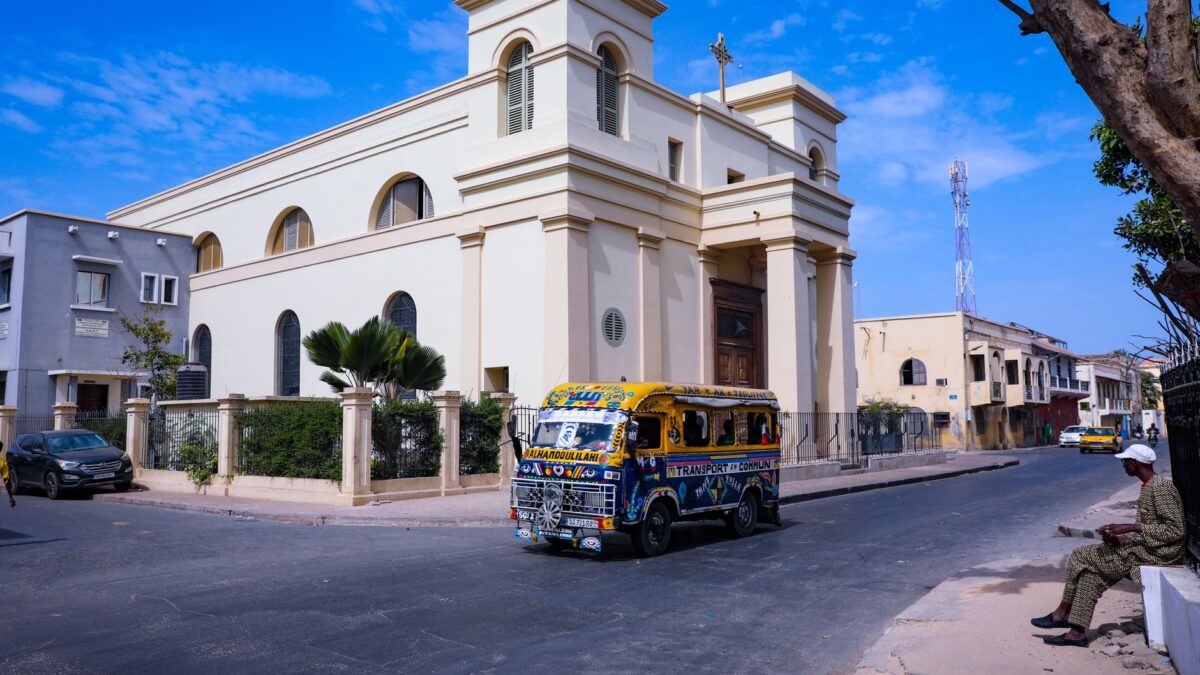
Senegal in September 2026: what travelers should know now
Senegal travel briefing for September 2026: Weather, Dakar 2026 Youth Olympics updates, protests, and practical tips.
 News & Updates
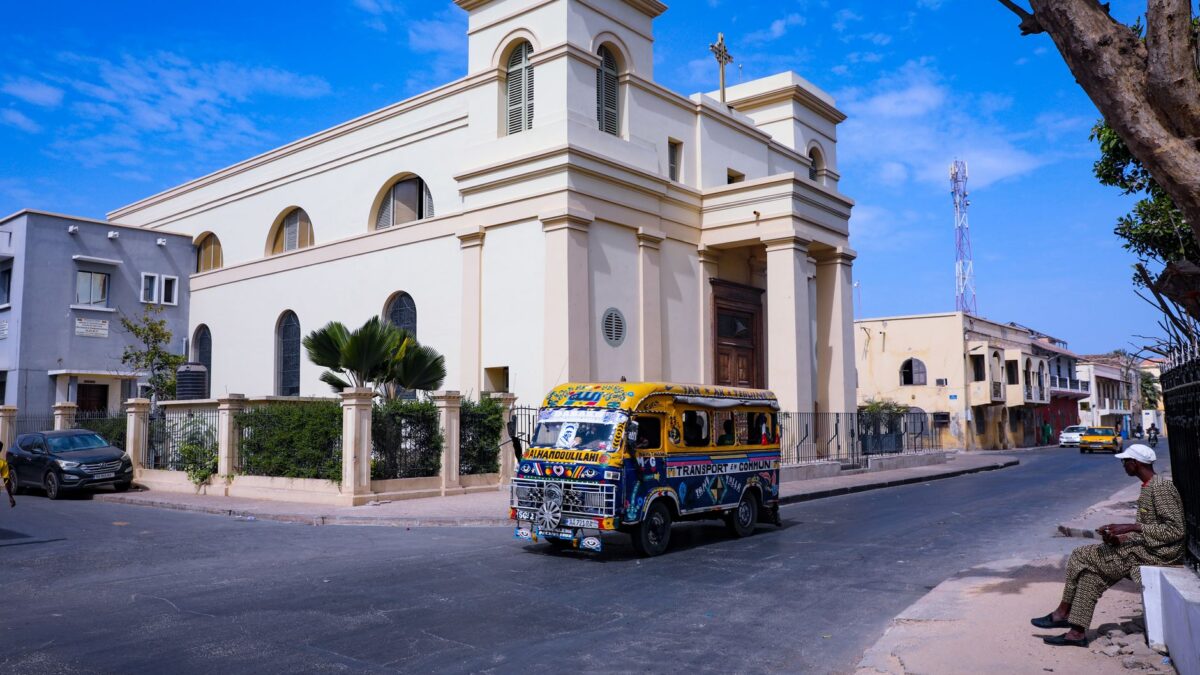
Senegal in August 2026: what travelers should know now
Dakar in August 2026: rainy season, Youth Olympic Games buzz, FENSCO festival, museum shows, prices, and practical tips for travelers — from local host…
 Costs & Money
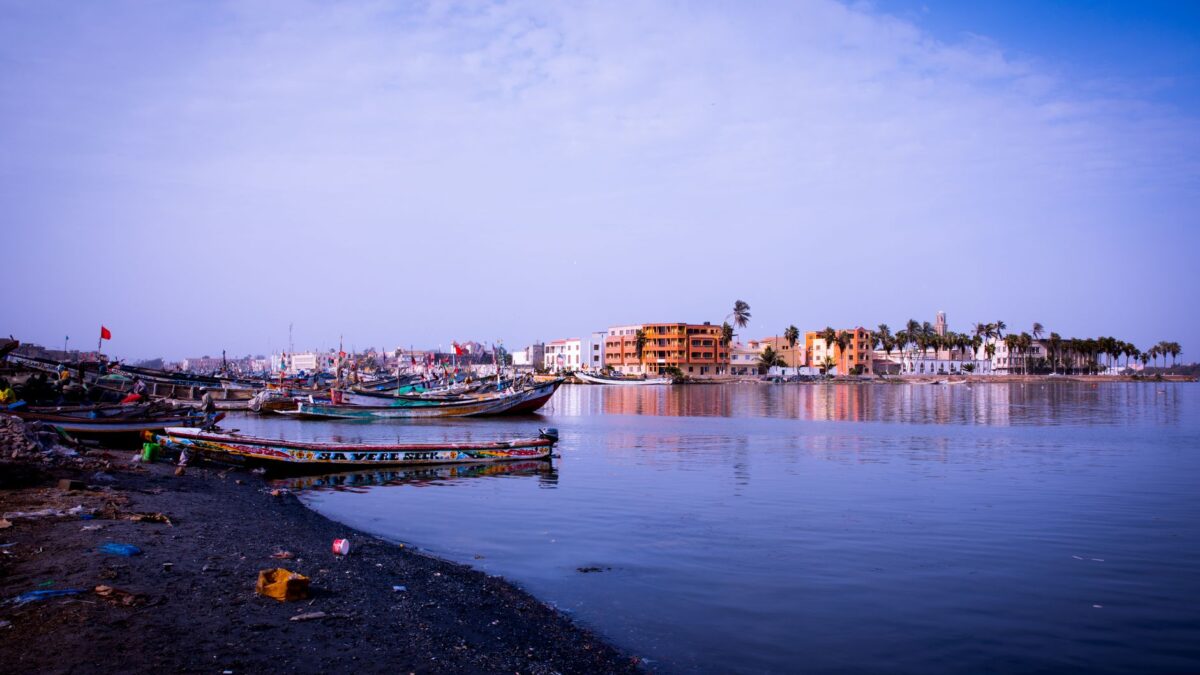
A week in Dakar on a mid-range budget
A week in Dakar on a mid-range budget: real prices for food, transport, hotels, and experiences in Dakar, Senegal. Your practical guide to the…
 Living Abroad
Moving to Senegal: visas, banking and SIM cards
Practical first-week Senegal guide: visas, CIE registration, bank accounts, SIM cards, and transport — all with real prices and local tips for Dakar.
West Africa
 Ghana
GhanaGhana Travel Podcast with Ama Boateng
The Atlantic coast draws the densest settlement, while Lake Volta, the world's largest artificial lake, spreads behind the Akosombo Dam.
 Nigeria
Nigeria Travel Podcast with Chidi Okafor
The Niger River enters from the northwest, crosses the country's southern rainforests and swamps, then reaches its delta in the Gulf of…