

How much does a trip to Singapore cost?
You step off the plane at Changi Airport, and the first thing that hits you isn’t just the humidity—it’s the sheer efficiency of it all. The Rain Vortex cascades down from the ceiling like a controlled waterfall, and before you’ve even collected your bags, you’re thinking about how to get into the city without breaking the bank. Singapore is a paradox: it can feel impossibly expensive if you let it, but it is also one of the most affordable major cities in Asia for food and transport if you know where to look. I’m Rachel Tan, and as someone who has lived here through its rapid transformation, I want to save you from the tourist traps and show you how to experience this island nation on a realistic budget.
The Real Cost of Getting Around
Forget hailing taxis unless you have a specific reason; they are pricey. Singapore’s public transport is world-class, clean, and incredibly cheap. The system runs on SimplyGo, meaning you can simply tap your contactless Visa, Mastercard, or Amex card directly at the gantries. You don’t even need to buy a ticket. If you plan to travel extensively, consider the Singapore Tourist Pass for unlimited rides over 1, 2, or 3 days, or grab an EZ-Link stored-value card (about S$10 total, covering the card cost and initial credit).
A single MRT or bus ride for an adult card fare on a typical 14 km trip costs around S$2.02. It sounds trivial, but these add up. A monthly adult transit pass offering unlimited bus and MRT access is S$122, though for most short-term visitors, paying per ride is more economical. Buses no longer accept cash, so ensure your payment method is ready. There is also a generous 45-minute transfer window: if you switch from bus to train (or vice versa) within 45 minutes, the second leg is free. This makes hopping between districts like Tiong Bahru and Katong very wallet-friendly.
Eating Your Way Through: Hawker Centres vs. Restaurants
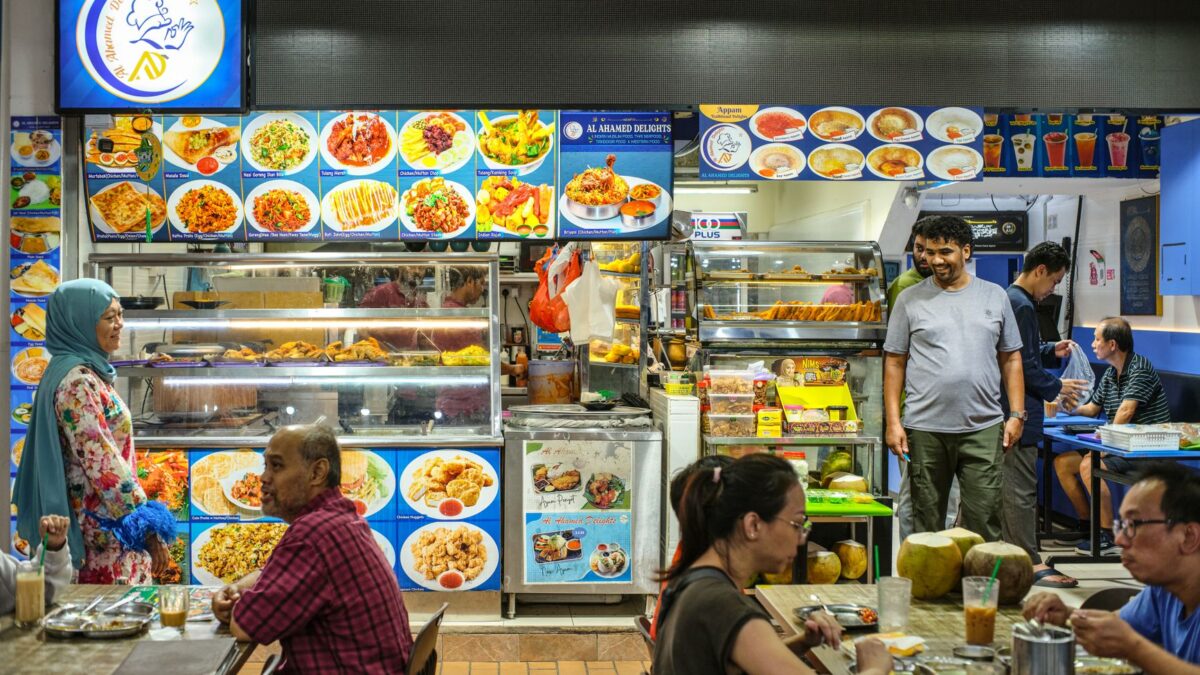
This is where Singapore shines—and saves you money. The government heavily subsidizes hawker centres, keeping everyday food accessible. While housing and cars are costly, a meal at an inexpensive local place, typically a hawker centre, will set you back only S$4–6, with a typical plate landing around S$5. Prices have trended up slightly in recent years, with average chicken rice rising from about S$3.40 in 2019 to roughly S$4.15 by 2023, but you can still find incredible value.
Start your day with a cup of local coffee (kopi or kopi-o) at a kopitiam for from S$1.40. For lunch, head to Maxwell Food Centre in Chinatown. You can order Hainanese chicken rice or Char kway teow for S$4.50–7 per dish. A full meal for two people, including drinks, might cost S$15–20—a fraction of what you’d pay elsewhere. If you crave laksa, expect to pay S$6–9, while Roti prata (plain) is a bargain at S$2.20. For something heartier, Bak kut teh (pork rib soup with rice) at a hawker stall or restaurant ranges from S$10–16.
If you prefer air-conditioned comfort, a mid-range restaurant meal costs S$25–40 per person. Venues like MERCI MARCEL CLUB STREET or Lazy Lizard offer Western and fusion options, but remember: eating out daily will double or triple your food budget. Stick to the hawker centres for authenticity and savings.
Accommodation: Where to Stay Without Breaking the Bank
Housing in Singapore is expensive. A modest one-bedroom flat in a non-central area rents for about S$2,800–3,500 monthly, but as a visitor, you have options. Budget travelers can find hostels or capsule hotels in areas like Little India or Kampong Gelam. Mid-range options include boutique hotels like Hotel Mi Rochor or Citadines Rochor Singapore, which often hover around S$150–250 per night depending on the season. For a comfortable stay near the action, Mercure ICON Singapore City Centre or The Serangoon House Little India provide better amenities for S$300–500+.
Location matters. Staying in Marina Bay or Orchard Road commands a premium. If you want character, consider Tiong Bahru, Singapore’s first planned public housing estate, known for its 1930s Streamline Moderne flats and indie cafes. Or try Katong & Joo Chiat for Peranakan heritage, pastel shophouses, and a slower pace. These areas offer unique experiences without the central business district price tag.
Attractions: Free Views and Paid Gems
Singapore offers plenty of free attractions. Gardens by the Bay is free to enter, and you can enjoy the Supertree Grove’s nightly Garden Rhapsody light show without spending a cent. The Singapore Botanic Gardens, a UNESCO World Heritage Site, is also free, except for the National Orchid Garden. Walk along the Southern Ridges or visit Merlion Park for iconic skyline photos at no cost.
For paid experiences, Gardens by the Bay’s cooled conservatories, Cloud Forest and Flower Dome, cost around S$28–30 for adults. Marina Bay Sands SkyPark Observation Deck on level 57 offers 360-degree views for approximately S$23–30. The ArtScience Museum inside Marina Bay Sands charges around S$28. Cultural institutions like the National Gallery Singapore (housing the region’s largest collection of modern Southeast Asian art) and the National Museum of Singapore charge reasonable entry fees, often around S$23–25 for foreigners. If you’re interested in wildlife, the Mandai Wildlife Reserve groups the Singapore Zoo, Night Safari, River Wonders, and Bird Paradise, with tickets ranging from S$40–50 per attraction.
Daily Budget Breakdown
Here is a realistic estimate for daily costs, excluding flights:
- Budget Traveler (S$80–100/day): Hostel accommodation (~S$30), hawker meals (S$15), public transport (S$5), free attractions. You’ll eat well, move efficiently, and see the highlights without spending much.
- Mid-Range Traveler (S$150–200/day): Boutique hotel (~S$100), mix of hawker and casual dining (S$40), transport (S$5), one paid attraction. You’ll enjoy comfort and variety.
- Comfortable Traveler (S$300+/day): High-end hotel (~S$200), mid-range restaurants (S$60), taxis/Grab for convenience (S$20), multiple paid attractions. You’ll experience luxury and ease.
Singapore is safe, clean, and efficient. Just remember: no eating or drinking on the MRT, no littering, and strict laws on drugs and chewing gum. With careful planning, you can explore this vibrant island without draining your wallet. Welcome to Singapore—enjoy the journey!
Frequently asked questions
How much does a meal cost in Singapore?
A meal at a hawker centre costs around S$4–6 per person, while a mid-range restaurant meal averages S$25–40. Local coffee starts from S$1.40.
Is public transport expensive in Singapore?
No, it is very affordable. A single MRT/bus ride costs around S$2.02. You can use contactless cards via SimplyGo or buy a Singapore Tourist Pass for unlimited rides.
Do I need a visa to enter Singapore?
Many nationalities enter visa-free for 30–90 days. However, everyone must submit an SG Arrival Card (free) within 3 days before arrival. Check if your nationality requires a visa.
What are some free attractions in Singapore?
Gardens by the Bay (garden areas only), Singapore Botanic Gardens, Merlion Park, and the outdoor sections of Kampong Glam and Little India are free to explore.
How much should I budget per day for Singapore?
Budget travelers spend around S$80–100/day, mid-range travelers S$150–200/day, and comfortable travelers S$300+/day, including accommodation, food, and transport.
Things to do in Singapore
 Singapore Light to Night Bike Tour
 Private Custom Singapore Walking Tour (4–8 Hrs, Flexible Plan)
 Private Tour: Sightseeing Daytrip to Johor Bahru from Singapore
 Private Singapore Food Tour: Culture & Local Neighborhoods
 Private Singapore Walking Tour: History, Culture & Local Insights
 Beyond Michelin: Chinatown Hawker Food Tour with 8 Tastings