

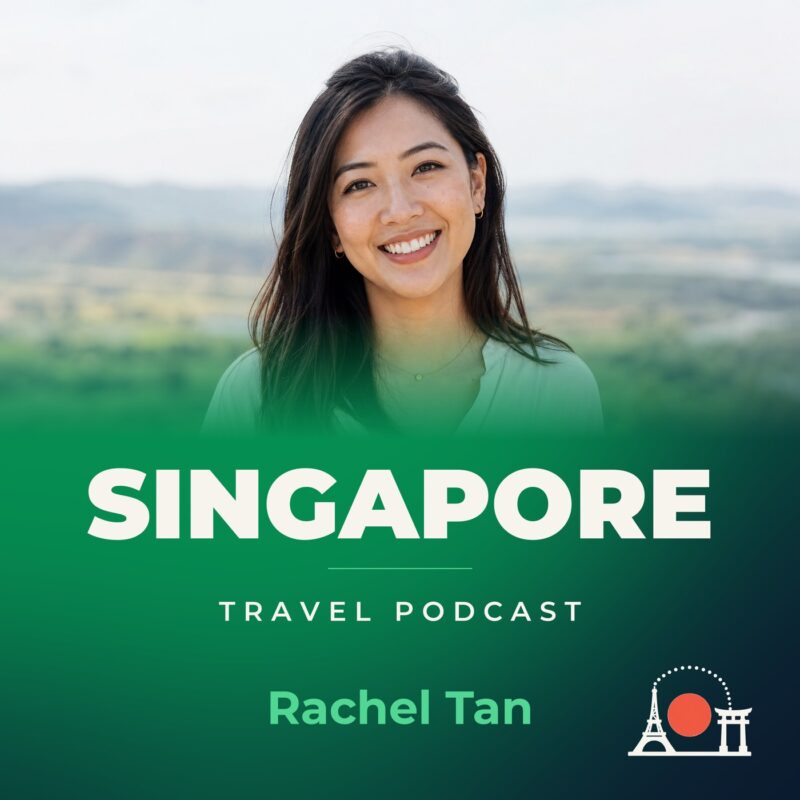
Singapore Travel Podcast with Rachel Tan
Hosted by Rachel Tan — a new episode every day from Singapore.
Singapore Travel Podcast is a show about travelling in a place where a tropical climate and two monsoon seasons set the pace. The city-state sits on roughly sixty islands, with most urban life along the southern coast and a lowlying central plateau inland. That mix makes every journey a negotiation between weather, water and dense city form.
Across episodes the show covers Changi, Bukit Timah, the Southern Ridges and Pulau Ujong, the island that carries most of Singapore’s population. These are not just stopovers; they are settings for understanding how this city-state organises itself. The host returns to them in different weather, so the northeastern monsoon and the drier months shape what travel looks like.
The show’s structure follows the calendar, returning to places as the northeastern monsoon gives way to the inter-monsoon thunderstorms. Revisits are deliberate: a wet morning in Changi, a dry afternoon at Bukit Timah. Over months, the repeated visits build a working knowledge of Singapore’s weather, rhythms and landscapes.
Recent episodes
Things to do in Singapore
 Singapore Light to Night Bike Tour
 Private Custom Singapore Walking Tour (4–8 Hrs, Flexible Plan)
 Private Tour: Sightseeing Daytrip to Johor Bahru from Singapore
 Private Singapore Food Tour: Culture & Local Neighborhoods
 Private Singapore Walking Tour: City Highlights & Hidden Gems
 Beyond Michelin: Chinatown Hawker Food Tour with 8 Tastings
 Explore a Rainforest teeming with Wildlife at Night!
 Singapore Food & Bike Tour - Downtown
Plan your trip to Singapore
Getting around
Staying connected
Singapore at a glance
Singapore in depth
Reference data on the country — geography, people, history, economy and transport.
Geography and climate
Location
Southeastern Asia, islands between Malaysia and Indonesia
Terrain
Lowlying, gently undulating central plateau
Climate
Tropical; hot, humid, rainy; two distinct monsoon seasons - northeastern monsoon (December to March) and southwestern monsoon (June to September); inter-monsoon - frequent afternoon and early evening thunderstorms
Elevation
- Highest point
- Bukit Timah 166 m
- Lowest point
- Singapore Strait 0 m
Area
- Total
- 719 sq km
- Land
- 709.2 sq km
- Water
- 10 sq km
Size comparison
Slightly more than 3.5 times the size of Washington, D.C.
Coastline
193 km
Land borders
Total 0 km
Natural resources
Fish, deepwater ports
Land use
- Agricultural land
- 0.9% (2023 est.)
- Arable land
- 0.8% (2023 est.)
- Permanent crops
- 0.1% (2023 est.)
- Permanent pasture
- 0% (2022 est.)
- Forest
- 22% (2023 est.)
- Other
- 77.1% (2023 est.)
Natural hazards
Flash floods
Note
Focal point for Southeast Asian sea routes; consists of about 60 islands, the largest of which by far is Pulau Ujong; land reclamation has removed many former islands and created a number of new ones
People and society
Population
- Total
- 6,080,545 (2025 est.)
- Male
- 3,040,862
- Female
- 3,039,683
Nationality
- Noun
- Singaporean(s)
- Adjective
- Singapore
Ethnic groups
Chinese 74.2%, Malay 13.7%, Indian 8.9%, other 3.2% (2021 est.)
Languages
- Languages
- English (official) 48.3%, Mandarin (official) 29.9%, other Chinese dialects (includes Hokkien, Cantonese, Teochew, Hakka) 8.7%, Malay (official) 9.2%, Tamil (official) 2.5%, other 1.4% (2020 est.)
- Major-language sample(s)
- The World Factbook, the indispensable source for basic information. (English)
Religions
Buddhist 31.1%, Christian 18.9%, Muslim 15.6%, Taoist 8.8%, Hindu 5%, other 0.6%, none 20% (2020 est.)
Median age
- Total
- 39.8 years (2025 est.)
- Male
- 38 years
- Female
- 40.6 years
Life expectancy
- Total population
- 86.7 years (2024 est.)
- Male
- 84 years
- Female
- 89.5 years
Urbanisation
- Urban population
- 100% of total population (2023)
- Rate of urbanization
- 0.74% annual rate of change (2020-25 est.)
Where people live
Most of the urbanization is along the southern coast, with relatively dense population clusters found in the central areas
Largest cities
6.081 million SINGAPORE (capital) (2023)
Background and government
Background
A Malay trading port known as Temasek existed on the island of Singapore by the 14th century. The settlement changed hands several times in the ensuing centuries and was eventually burned in the 17th century, falling into obscurity. In 1819, the British founded modern Singapore as a trading colony on the same site and granted it full internal self-government for all matters except defense and foreign affairs in 1959. Singapore joined the Malaysian Federation in 1963 but was ousted two years later and became independent. Singapore subsequently became one of the world's most prosperous countries, with strong international trading links and per capita GDP among the highest globally. The People’s Action Party has won every general election in Singapore since the end of the British colonial era, aided by its success in delivering consistent economic growth, as well as the city-state's fragmented opposition and electoral procedures that strongly favor the ruling party.
Government
Parliamentary republic
Capital
Singapore
Time zone
UTC+8 (13 hours ahead of Washington, DC, during Standard Time)
Local name
Republic of Singapore
Independence
9 August 1965 (from Malaysian Federation)
National day
National Day, 9 August (1965)
Economy and cost of living
Overview
High-income, service-based economy; global financial hub; business-friendly policies and open to investment and trade; inflation easing but persistent in services; public investments in education, healthcare, and infrastructure; strong human capital development challenged by aging population
GDP per capita
- Real GDP per capita 2024
- $132,600 (2024 est.)
- Real GDP per capita 2023
- $129,600 (2023 est.)
- Real GDP per capita 2022
- $133,600 (2022 est.)
Inflation
- Inflation rate (consumer prices) 2024
- 2.4% (2024 est.)
- Inflation rate (consumer prices) 2023
- 4.8% (2023 est.)
- Inflation rate (consumer prices) 2022
- 6.1% (2022 est.)
Unemployment
- Unemployment rate 2024
- 3.2% (2024 est.)
- Unemployment rate 2023
- 3.5% (2023 est.)
- Unemployment rate 2022
- 3.6% (2022 est.)
Exchange rate
- Currency
- Singapore dollars (SGD) per US dollar -
- Exchange rates 2024
- 1.336 (2024 est.)
- Exchange rates 2023
- 1.343 (2023 est.)
- Exchange rates 2022
- 1.379 (2022 est.)
- Exchange rates 2021
- 1.343 (2021 est.)
- Exchange rates 2020
- 1.38 (2020 est.)
Main industries
Electronics, chemicals, financial services, oil drilling equipment, petroleum refining, biomedical products, scientific instruments, telecommunication equipment, processed food and beverages, ship repair, offshore platform construction, entrepot trade
Agriculture
Chicken, eggs, vegetables, pork, duck, spinach, lettuce, pork offal, cabbages, pork fat (2023)
Transport and connectivity
Airports
9 (2025)
Ports
- Total ports
- 5 (2024)
- Large
- 2
- Medium
- 1
- Small
- 1
- Very small
- 1
- Ports with oil terminals
- 3
- Key ports
- Jurong Island, Keppel - (East Singapore), Pulau Bukom, Pulau Sebarok
Internet domain
.sg
Internet users
Percent of population 94% (2023 est.)
Mobile subscriptions
- Total subscriptions
- 9.96 million (2024 est.)
- Subscriptions per 100 inhabitants
- 171 (2024 est.)
Environment
Environmental issues
Water pollution; industrial pollution; limited freshwater resources; waste disposal problems from limited land availability; air pollution; deforestation; seasonal smoke/haze from forest fires in Indonesia
Fresh water
600 million cubic meters (2022)
Country reference figures are periodically revised. Check anything time-sensitive or safety-critical against an official source before you travel.
Singapore travel guides
 Travel Tips
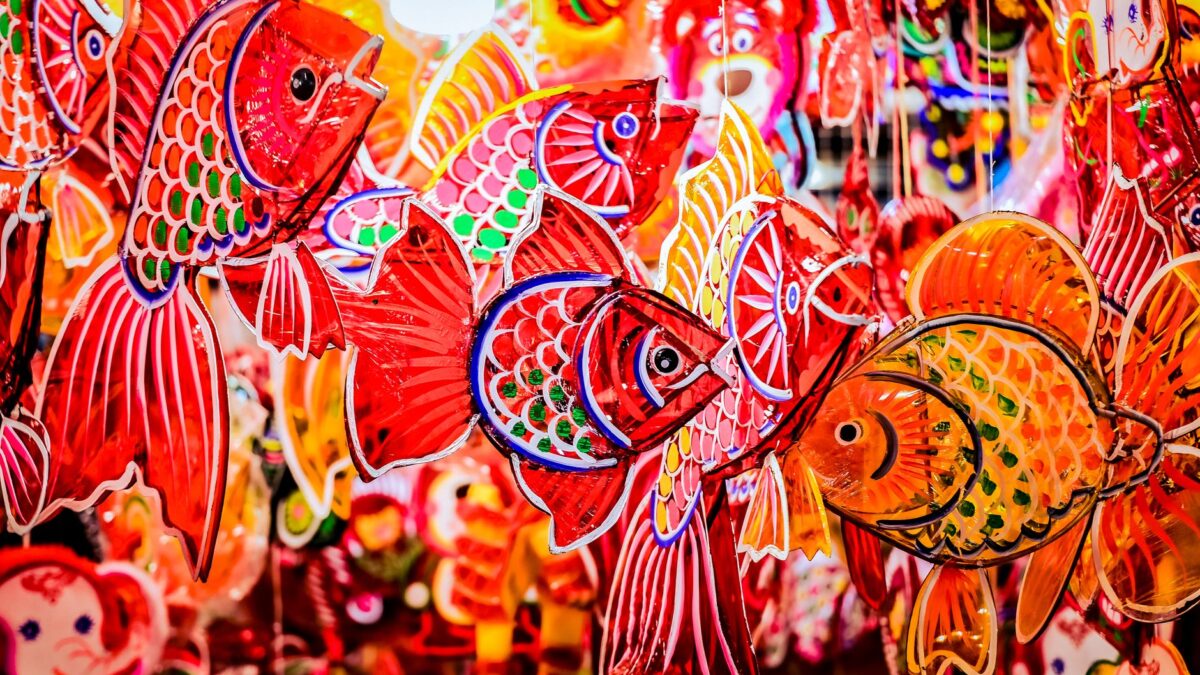
The best time to visit Singapore
Plan your September trip to Singapore: navigate haze, Mid-Autumn festivals, and costs. Expert tips on weather, crowds, and hidden gems in the Lion City.
 News & Updates
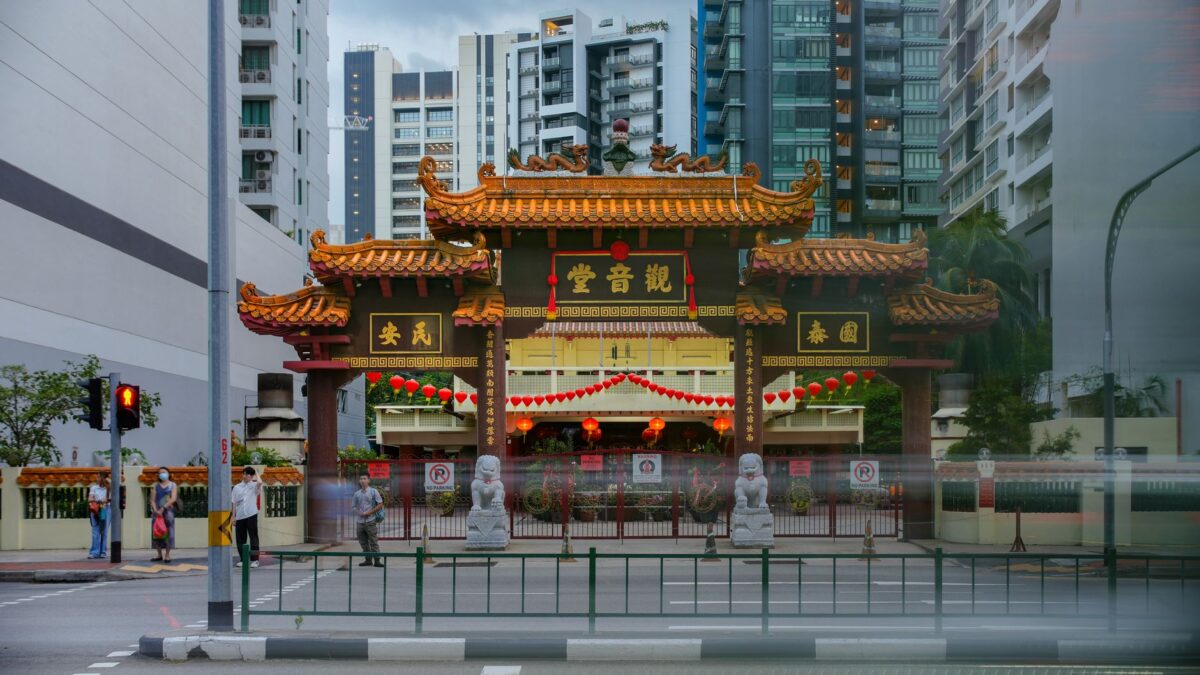
Singapore in September 2026: what travelers should know now
Singapore travel update Sept 2026: navigate haze alerts, LRT closures, and Mid-Autumn festivals. Essential tips for your September trip.
 Culture & Etiquette
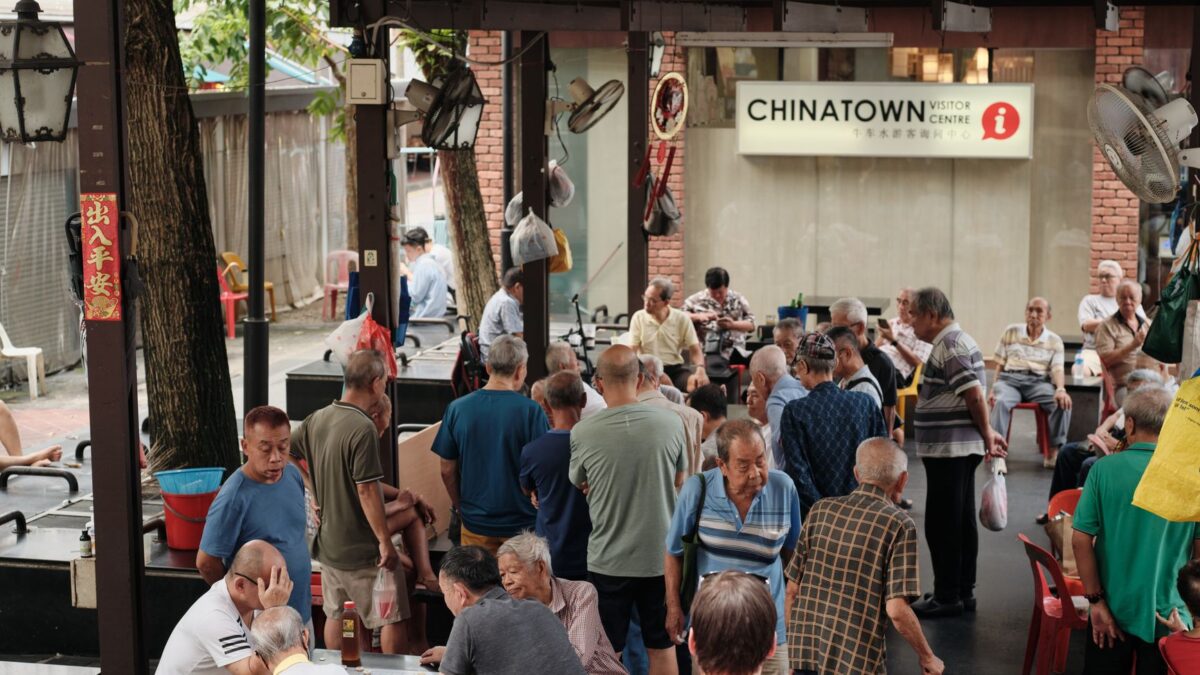
Singapore etiquette: the dos and don’ts
Master Singapore etiquette: hawker centre manners, dress codes, tipping norms, and cultural dos/donuts for a respectful visit.
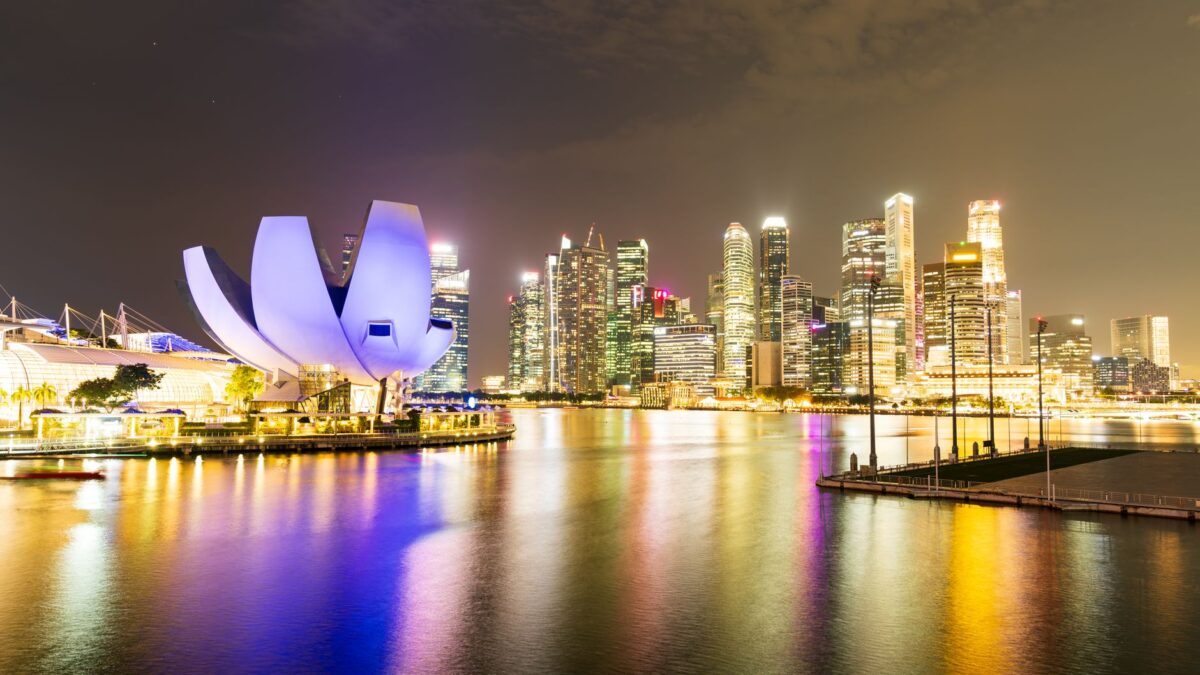 Living Abroad
Moving to Singapore: visas, banking and SIM cards
Practical first-week guide for moving to Singapore: visas, Employment Pass, Singpass, bank accounts, SIM cards, and local tips from a resident host.
Southeast Asia
 Thailand
Thailand Travel Podcast with Ploy Siriwan
The southwest monsoon brings rain and cloud from mid-May to September, shaping travel across the central plain and the mountains.
 Vietnam
Vietnam Travel Podcast with Linh Nguyen
The monsoon climate of northern Vietnam brings a hot, rainy season from May to September and a warm, dry season from October…
 Indonesia
Indonesia Travel Podcast with Bayu Pratama
The island of Java, one of the most densely populated places on earth, is the demographic heart of the Indonesian archipelago.
 Malaysia
Malaysia Travel Podcast with Aisyah Rahman
The Strait of Malacca, separating the Malay Peninsula from Sumatra, has carried maritime trade and cultural influences from China, India, the Middle…