

Hungary in August 2026: what travelers should know now
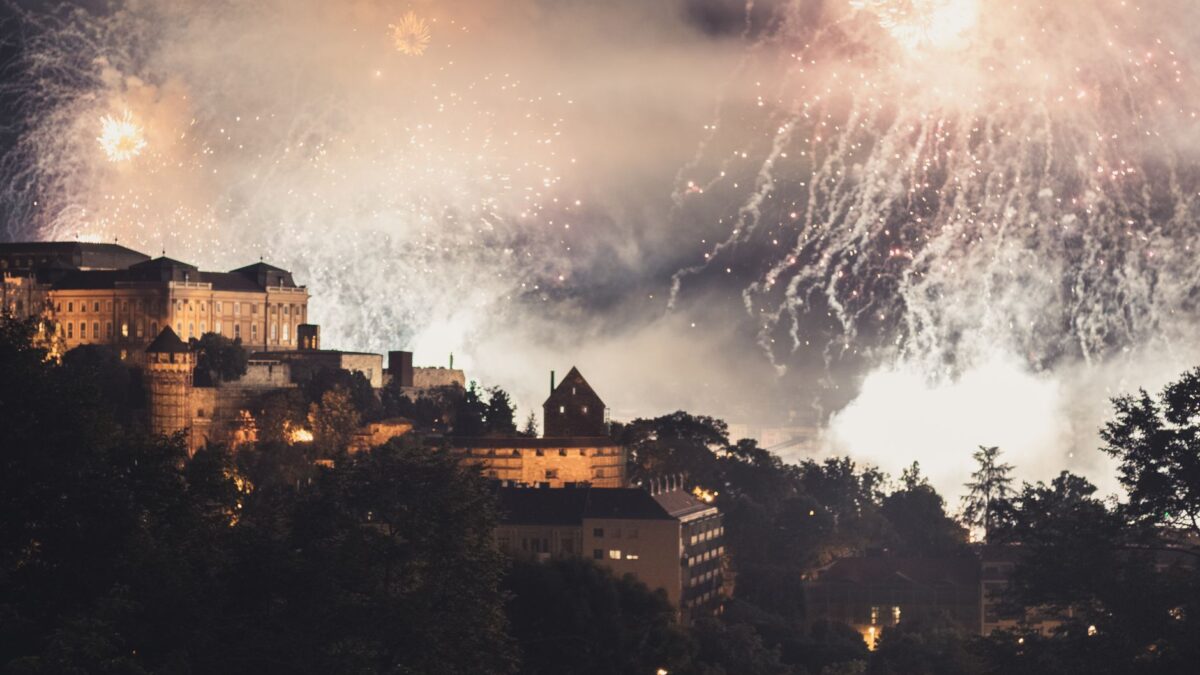
August in Budapest is a slow, golden burn. The city is still in its festival prime, the Danube promenades are thick with sunscreen and cold beer, and the air — overcast at 24–34°C as I write this on the 17th — has that heavy, end-of-summer weight. But the big date everyone is actually thinking about is Thursday, August 20: State Foundation Day (Az államalapítás ünnepe), when Hungarians mark the founding of the state with fireworks, parades, and a public holiday that stops the city for a day. If you’re arriving now, you’re landing right in the middle of it. Let’s get you oriented.
Weather right now: hot, hazy, and humid — but survivable
It’s been hovering around 24–34°C, often overcast, with daylight from roughly 05:42 to 19:53 — so you get long, warm evenings, but the sun isn’t baking you non-stop. This is classic Budapest late-summer: the morning can be pleasant, the afternoon sticky, and then a brief thunderstorm rolls through before dinner. Pack light layers, a compact umbrella, and shoes you can walk in for miles. The real heat is in the paved squares of District V (Belváros–Lipótváros) and the party-packed streets of District VII — so plan your sightseeing around the Buda hills or the river on the hottest afternoons.
Drink water like it’s your job, and follow the locals: head to Margaret Island’s park or the shaded trails of Normafa in District XII when the thermometer climbs. And yes, the thermal baths are not just for winter — a late-evening soak at Széchenyi Gyógyfürdő in Városliget when the heat breaks is one of the great summer pleasures of this city.
August 20: the holiday that changes everything
This Thursday is State Foundation Day — a national public holiday, three days from now. It commemorates the founding of the Hungarian state and the canonisation of King Saint Stephen in the year 1000. Expect the city to shut down in parts: most shops (except tourist-oriented ones and some supermarkets in the centre) will close, banks and post offices will be closed, and public transport will run on a Sunday/holiday schedule. But it’s also one of the most spectacular days of the year — the evening fireworks over the Danube are world-class, and the riverside between the Parliament (Országház) and the Buda Castle (Budavári Palota) becomes a sea of people. If you want a view, book a ruin-bar rooftop or a riverside table well in advance — they go fast. Also know that Váci utca, Deák tér, and the District VII party zone will be packed; keep your wallet in your front pocket.
If you’re not staying for the 20th, the following weekend is still busy, so expect hotel prices (which are already at mid-range 25,000–50,000 HUF per night for a 3–4★ spot) to hold — and book ahead if you haven’t.
Festivals and events now: ruin bars, Parliament, and the last of summer
This is peak season, and the city is leaning into it. The ruin-bar phenomenon — born here at Szimpla Kert in 2002 — is in full summer swing, and the open-air courtyards of District VII are the place to be. Expect loud, energetic nights in Erzsébetváros; if you want a slightly calmer but still trendy vibe, head to District VI around the Oktogon, where cafés like Madal or the grand New York Café draw their own crowds. The Great Market Hall (Nagy Vásárcsarnok) is busy with souvenir hunters — paprika, salami, strudel — so go early in the morning to avoid the worst crush.
For a quieter, more local afternoon, walk the Buda Castle grounds and Fisherman’s Bastion (yes, it’s crowded, but the view over the Danube to the Parliament is still unbeatable), or take the HÉV upriver to the Danube Bend at Visegrád and Szentendre — about an hour away, and the riverside towns are lovely in this weather.
One note on museums: the Museum of Fine Arts, the Hungarian National Museum, and the Buda Castle’s museums are open through the holiday, but double-check hours on August 20 — many close early. Entry fees run about 3,000–6,000 HUF, which is fair for the quality on display.
Peak season prices: what things actually cost right now
Budapest has shed its ‘cheap capital’ label after the post-2023 inflation, but it’s still among the more affordable EU capitals — you just need to know what to expect. A weekday lunch menu (napi menü) — soup plus a main at a local spot — runs about 2,500–3,500 HUF (roughly $8). A main course at a mid-range restaurant will be around 3,000–5,000 HUF, and a draught beer (0.5 L) at a bar is 700–1,200 HUF. A cappuccino at a café: 900–1,200 HUF. A single transit fare is 500 HUF, but if you’re staying more than a few days, the monthly pass is a steal at 8,950 HUF (about $24). That’ll cover the metro M1–M4, trams, buses, the HÉV within the city limits, and the Danube boat line — buy it in the BudapestGO app (the renamed BKK FUTÁR), which works even with a foreign number.
The one thing that’s genuinely expensive right now is accommodation — mid-range hotels and airbnbs are charging peak-season rates, and with August 20 falling in the middle of the week, the whole week is booked solid. If you’re on a budget, consider a guesthouse in the quieter, still-central District XIII — the leafy Poszonyi utca café strip is a lovely base. And a short taxi ride across town (say, centre to Buda) will set you back about 2,500–5,000 HUF — use Bolt or the FŐTAXI app rather than hailing, to avoid tourist overcharging.
Practical tips for this specific moment
- Validate your transit ticket before boarding. Inspectors fine about 12,000 HUF on the spot if you’re caught without a valid pass. The BudapestGO app is your friend.
- Bring your passport. Hungary is in Schengen — US/UK/CA/AU/JP citizens enter visa-free for 90 days per 180-day period, but you’ll need it for SIM cards (the three operators are Telekom, Yettel, and Vodafone/One — prepaid SIMs are sold with passport ID), and it’s always good to have.
- Expect crowds and pickpockets. Generally safe day and night, but stay alert in the tourist crush around Váci utca, Deák tér, and the District VII party zone. Keep your phone in your front pocket, not your back one.
- Book anything for August 20 now. If you want a river-view dinner or a rooftop bar spot for the fireworks, today’s the day to reserve — not Thursday.
- Drink tap water. It’s excellent and free — fill your bottle before you leave your hotel; you’ll thank yourself in the midday heat.
Why you should love this city right now
Budapest in late August is a strange, wonderful mix: the last hurrah of summer festivals, the solemnity of a national holiday, and the everyday rhythm of a city that knows how to enjoy a long evening. It’s politically tense under the surface — the liberal municipal leadership and the national government don’t see eye to eye — but on the street, people are friendly, helpful, and happy to guide you through a menu or recommend a ruin bar. The tech boom and EV plants (CATL, BYD) are changing the city’s economy, but the soul is still in the thermal baths, the paprika-spiced kitchens, and the Danube at sunset. You’re here at a good time.
Enjoy the fireworks on Thursday, eat a langos from a riverside stand, and remember: the best view of the Parliament is from the Buda side, across the water, just as the lights come on. That’s the Budapest you’ll remember.
Frequently asked questions
What is Hungary's State Foundation Day on August 20, 2026?
It's a national public holiday (Az államalapítás ünnepe) marking the founding of the Hungarian state and the canonisation of King Saint Stephen. Expect fireworks over the Danube, closed shops, and a packed city — book riverside views in advance.
Is Budapest expensive to visit in August 2026?
It's peak season, so hotels are pricier (about 25,000–50,000 HUF per night for mid-range), but meals remain affordable: a weekday lunch menu runs 2,500–3,500 HUF, a draught beer 700–1,200 HUF, and a monthly transit pass is only 8,950 HUF.
What should I pack for Budapest in late August?
Light layers for 24–34°C heat, a compact umbrella for possible afternoon thunderstorms, comfortable walking shoes, and a refillable water bottle — tap water is excellent and free.
Do I need a visa for Hungary as an American?
No, US citizens enter visa-free for up to 90 days in any 180-day period as Hungary is in Schengen. Your passport must be less than 10 years old and valid at least 3 months beyond your departure date.
What's the best way to get around Budapest during the holiday?
Use public transport with a monthly pass (8,950 HUF) bought in the BudapestGO app — it covers metro, tram, bus, HÉV, and the Danube boat line. Validate before boarding to avoid a 12,000 HUF fine.
Things to do in Hungary
 3 Hours Budapest Segway Grand City Tour Buda, Margaret and Pest
 1 Hour Budapest Segway Tour - Parliament Hightails
 Private Sightseeing Tour using Electric Tuk Tuk Ride in Budapest
 Shooting Experience HOLLYWOOD Package in Budapest
 Budapest private sightseeing with Nelli & her local guides
 Hungarian Strudel Making Class: Stretch & Fill Two Ways