Uzbekistan Travel Podcast with Timur Rashidov
Hosted by Timur Rashidov — a new episode every day from Uzbekistan.
This show follows one person’s attempt to know Uzbekistan properly, settling in a place, learning it, then moving somewhere connected to it. Travelling here means crossing flat desert, broad irrigated valleys and the Fergana Valley in the east, all inside one of only two doubly landlocked states in the world.
The host’s range takes in Tashkent, Samarkand, Nukus and the Kyzylkum Desert, with repeated detours along the Amu Darya and Syr Darya. He returns to people and places between episodes, asking what has changed since his last visit and what has stayed stubbornly the same.
Over the seasons, the show returns to places Timur has already visited, so a valley is caught in cotton harvest, winter fog and spring planting. Knowledge accumulates slowly: which roads flood, where irrigated fields meet desert, how speech shifts from Uzbek to Russian to Tajik in different towns.
Recent episodes
Things to do in Uzbekistan
 Special offer
Khiva to Bukhara: Transfer with Top 5 Fortresses & Akchakul Lake
Special offer
Khiva to Bukhara: Transfer with Top 5 Fortresses & Akchakul Lake
 Samarkand Private Guided Tour with transport (options avail)
 Samarkand All Inclusive Day Tour from Tashkent
 Special offer
Seven Lakes: Fully Inclusive Door-to-Door Guided Tour
Special offer
Seven Lakes: Fully Inclusive Door-to-Door Guided Tour
 Tashkent: Hands-On Uzbek Culture & Pottery Workshop
 Bukhara: Walking Tour with a Small Group. Complete Guidance
 Cultural Treasures Of The Silk Road
 Special offer
Nukus to Khiva: Transfer with Top 4 Fortresses & Akchakul Lake
Special offer
Nukus to Khiva: Transfer with Top 4 Fortresses & Akchakul Lake
Plan your trip to Uzbekistan
Getting around
Staying connected
Uzbekistan at a glance
Uzbekistan in depth
Reference data on the country — geography, people, history, economy and transport.
Geography and climate
Location
Central Asia, north of Turkmenistan, south of Kazakhstan
Terrain
Mostly flat-to-rolling sandy desert with dunes; broad, flat intensely irrigated river valleys along course of Amu Darya, Syr Darya (Sirdaryo), and Zaravshan; Fergana Valley in east surrounded by mountainous Tajikistan and Kyrgyzstan; shrinking Aral Sea in west
Climate
Mostly mid-latitude desert, long, hot summers, mild winters; semiarid grassland in east
Elevation
- Highest point
- Xazrat Sulton Tog' 4,643 m
- Lowest point
- Sariqamish Kuli -12 m
Area
- Total
- 447,400 sq km
- Land
- 425,400 sq km
- Water
- 22,000 sq km
Size comparison
About four times the size of Virginia; slightly larger than California
Coastline
0 km (doubly landlocked)
Land borders
- Total
- 6,893 km
- Border countries
- Afghanistan 144 km; Kazakhstan 2,330 km; Kyrgyzstan 1,314 km; Tajikistan 1,312 km; Turkmenistan 1,793 km
Natural resources
Natural gas, petroleum, coal, gold, uranium, silver, copper, lead and zinc, tungsten, molybdenum
Land use
- Agricultural land
- 58.1% (2023 est.)
- Arable land
- 9.1% (2023 est.)
- Permanent crops
- 1% (2023 est.)
- Permanent pasture
- 47.9% (2023 est.)
- Forest
- 8.7% (2023 est.)
- Other
- 31.8% (2023 est.)
Natural hazards
Earthquakes; floods; landslides or mudslides; avalanches; droughts
Note
Along with Liechtenstein, one of the only two doubly landlocked countries in the world
People and society
Population
- Total
- 37,015,151 (2025 est.)
- Male
- 18,576,048
- Female
- 18,439,103
Nationality
- Noun
- Uzbekistani
- Adjective
- Uzbekistani
Ethnic groups
Uzbek 83.8%, Tajik 4.8%, Kazakh 2.5%, Russian 2.3%, Karakalpak 2.2%, Tatar 1.5%, other 2.9% (2017 est.)
Languages
- Languages
- Uzbek (official) 74.3%, Russian 14.2%, Tajik 4.4%, other 7.1%
- Major-language sample(s)
- Jahon faktlari kitobi, asosiy ma'lumotlar uchun zaruriy manba. (Uzbek)
Religions
Muslim 88% (mostly Sunni), Eastern Orthodox 9%, other 3%
Median age
- Total
- 29.2 years (2025 est.)
- Male
- 28.1 years
- Female
- 29.8 years
Life expectancy
- Total population
- 76.2 years (2024 est.)
- Male
- 73.6 years
- Female
- 79 years
Urbanisation
- Urban population
- 50.5% of total population (2023)
- Rate of urbanization
- 1.25% annual rate of change (2020-25 est.)
Where people live
Most of the population is concentrated in the fertile Fergana Valley in the easternmost arm of the country; the south has significant clusters of people, but the central and western deserts are sparsely populated
Largest cities
2.603 million TASHKENT (capital) (2023)
Background and government
Background
Uzbekistan is the geographic and population center of Central Asia, with a diverse economy and a relatively young population. Russia conquered and united the disparate territories of present-day Uzbekistan in the late 19th century. Stiff resistance to the Red Army after the Bolshevik Revolution was eventually suppressed and a socialist republic established in 1924. During the Soviet era, intensive production of "white gold" (cotton) and grain led to the overuse of agrochemicals and the depletion of water supplies, leaving the land degraded and the Aral Sea and certain rivers half-dry. Independent since the Union of Soviet Socialist Republics (USSR) dissolved in 1991, the country has diversified agricultural production while developing its mineral and petroleum export capacity and increasing its manufacturing base, although cotton remains a major part of its economy. Uzbekistan’s first president, Islom KARIMOV, led Uzbekistan for 25 years until his death in 2016. His successor, former Prime Minister Shavkat MIRZIYOYEV, has improved relations with Uzbekistan’s neighbors and introduced wide-ranging economic, judicial, and social reforms. MIRZIYOYEV was reelected in 2021 with 80% of the vote and again following a 2023 constitutional referendum with 87% of the vote.
Government
Presidential republic; highly authoritarian
Capital
Tashkent (Toshkent)
Time zone
UTC+5 (10 hours ahead of Washington, DC, during Standard Time)
Local name
O'zbekiston Respublikasi
Independence
1 September 1991 (from the Soviet Union)
National day
Independence Day, 1 September (1991)
Economy and cost of living
Overview
Lower-middle income Central Asian economy; key exporter of natural gas, cotton, and gold; ongoing reform efforts to reduce state-owned sector dominance, attract foreign investment, and improve sustainability of cotton production
GDP per capita
- Real GDP per capita 2024
- $10,500 (2024 est.)
- Real GDP per capita 2023
- $10,000 (2023 est.)
- Real GDP per capita 2022
- $9,600 (2022 est.)
Inflation
- Inflation rate (consumer prices) 2024
- 9.6% (2024 est.)
- Inflation rate (consumer prices) 2023
- 10% (2023 est.)
- Inflation rate (consumer prices) 2022
- 11.4% (2022 est.)
Unemployment
- Unemployment rate 2024
- 4.5% (2024 est.)
- Unemployment rate 2023
- 4.5% (2023 est.)
- Unemployment rate 2022
- 4.5% (2022 est.)
Exchange rate
- Currency
- Uzbekistani soum (UZS) per US dollar -
- Exchange rates 2024
- 12,652.287 (2024 est.)
- Exchange rates 2023
- 11,734.833 (2023 est.)
- Exchange rates 2022
- 11,050.145 (2022 est.)
- Exchange rates 2021
- 10,609.464 (2021 est.)
- Exchange rates 2020
- 10,054.261 (2020 est.)
Main industries
Textiles, food processing, machine building, metallurgy, mining, hydrocarbon extraction, chemicals
Agriculture
Milk, wheat, cotton, potatoes, carrots/turnips, tomatoes, grapes, watermelons, vegetables, apples (2023)
Transport and connectivity
Airports
74 (2025)
Railways
- Total
- 4,642 km (2018)
- Broad gauge
- 4,642 km (2018) 1.520-m gauge (1,684 km electrified)
Internet domain
.uz
Internet users
Percent of population 89% (2023 est.)
Mobile subscriptions
- Total subscriptions
- 40.2 million (2024 est.)
- Subscriptions per 100 inhabitants
- 1,110 (2024 est.)
Environment
Environmental issues
Growing concentrations of chemical pesticides and natural salts in the shrinking Aral Sea; desertification; water pollution and soil salination from industrial wastes and the heavy use of fertilizers and pesticides; soil contamination from buried nuclear processing and agricultural chemicals
Fresh water
48.87 billion cubic meters (2022 est.)
Country reference figures are periodically revised. Check anything time-sensitive or safety-critical against an official source before you travel.
Uzbekistan travel guides
 News & Updates
Uzbekistan in September 2026: what travelers should know now
Uzbekistan travel briefing for September 2026: weather, marathon closures, new bus rules, and what to expect in Tashkent now.
 Getting Around
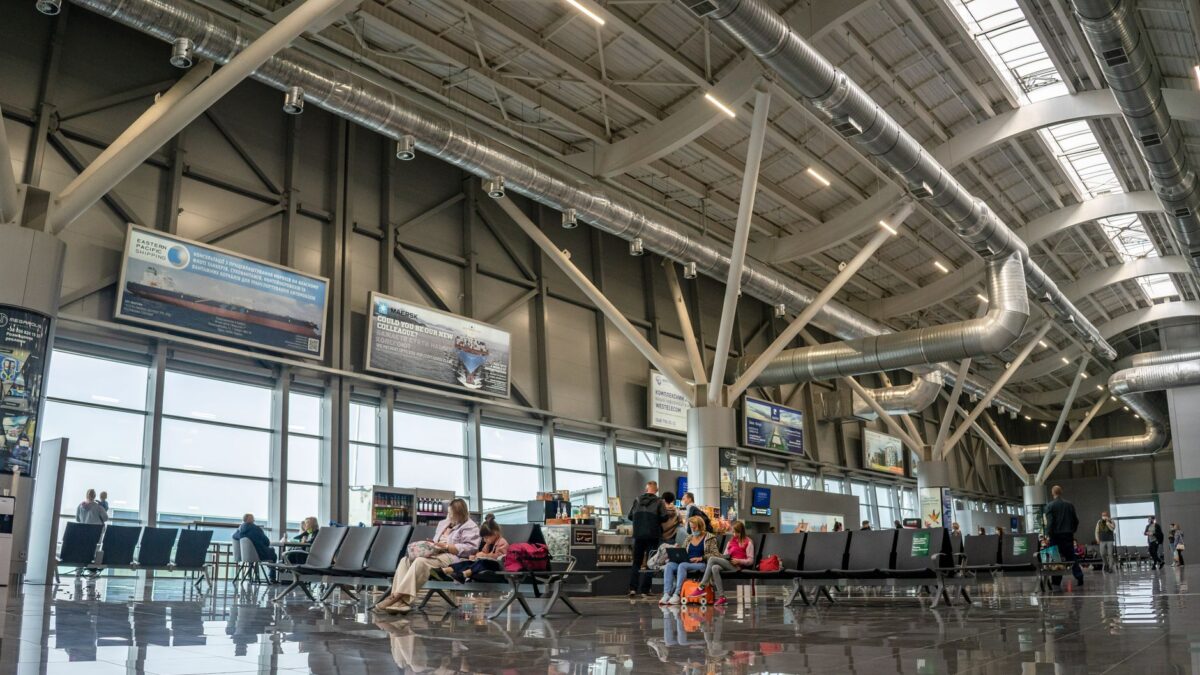
From the airport into Tashkent: every option and what it costs
Get from Tashkent Airport to the city center by metro, taxi, bus, or private transfer. Real 2026 fares, times, and tips from a local…
 Living Abroad
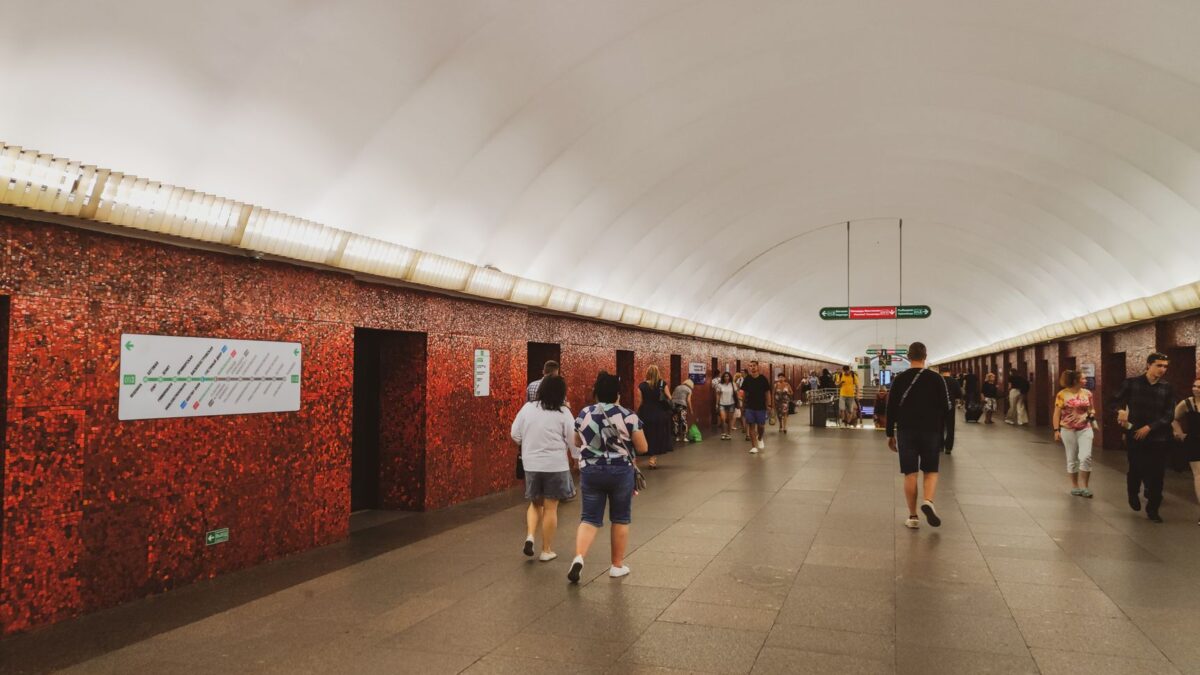
Moving to Uzbekistan: visas, banking and SIM cards
Practical first-week guide to moving to Uzbekistan: visas, residence registration, opening a bank account, getting a SIM card, and finding your neighbourhood in Tashkent.
 Culture & Etiquette
Uzbekistan etiquette: the dos and don’ts
Essential Uzbekistan etiquette: greetings, dining, tipping, dress, and cultural dos and don'ts — a locals' guide to traveling considerately through Tashkent and beyond.