
Kazakhstan Travel Podcast with Aigerim Serik
Hosted by Aigerim Serik — a new episode every day from Kazakhstan.
Aigerim Serik hosts a podcast about travelling through Kazakhstan the way a resident would: settling in one place, learning it, then moving somewhere connected to it. The country’s geography makes that approach necessary. Most of the interior is thinly populated steppe, with continental cold and heat, and people concentrated in urban corridors in the far north and south.
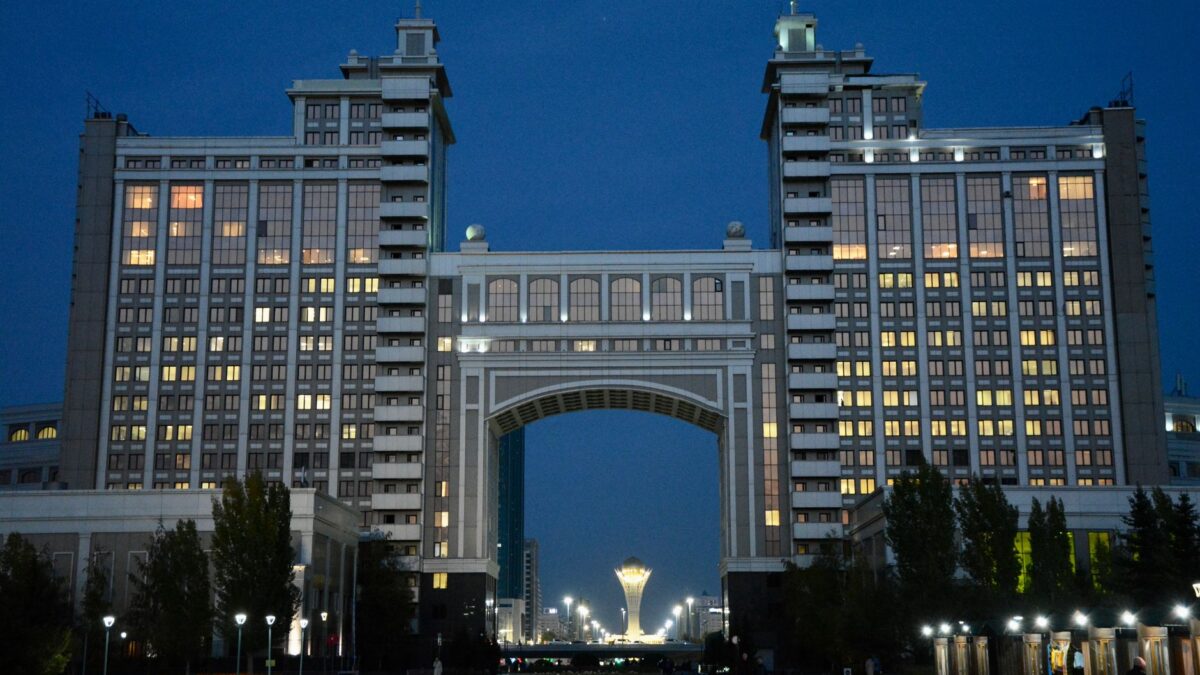
Each episode grounds itself in a particular place: Almaty’s foothills, Astana’s windswept avenues, Shymkent’s bazaars, and the Betpak-Dala desert, a dry interior region far from the usual tourist route. The host also follows connections between these places, such as the railways and roads that tie the steppe together.
Over a couple of years, the show moves with the seasons. Winter arrives cold and dry across the northern plains; summer brings heat and aridity to the southern oases and deserts. The host returns to earlier stops as they change, and the series builds a slow, accumulated sense of how Kazakhstan works.
Recent episodes
Things to do in Kazakhstan
 Astana City Tour: Private Full Day with Lunch and Comfort Pickup
 Private Full Day Almaty City Tour
 Discovering 6 Stunning Sights on Private Tour of Charyn Canyon
 1 Day Group Tour to Charyn Canyon, Kolsay Lake and Kaindy Lake
 Astana: KarLag and Karaganda - Private USSR history tour
 1 Day Private Tour to Charyn Canyon, Kolsay and Kaiyndy
 Almaty Jeep Private Full-Day Tour: Kolsay, Kaindy & Charyn Canyon
 Almaty city tour. Shymbulak, Koktobe, Green market, Park 28 Panfilov's guardsmen
Plan your trip to Kazakhstan
Getting around
Staying connected
Kazakhstan at a glance
Kazakhstan in depth
Reference data on the country — geography, people, history, economy and transport.
Geography and climate
Location
Central Asia, northwest of China; a small portion west of the Ural (Oral) River in easternmost Europe
Terrain
Vast flat steppe extending from the Volga in the west to the Altai Mountains in the east and from the plains of western Siberia in the north to oases and deserts of Central Asia in the south
Climate
Continental, cold winters and hot summers, arid and semiarid
Elevation
- Highest point
- Pik Khan-Tengri 7,010 m
- Lowest point
- Qauyndy Oyysy -132 m
- Mean elevation
- 387 m
Area
- Total
- 2,724,900 sq km
- Land
- 2,699,700 sq km
- Water
- 25,200 sq km
Size comparison
Slightly less than four times the size of Texas
Coastline
0 km (landlocked)
Land borders
- Total
- 13,364 km
- Border countries
- China 1,765 km; Kyrgyzstan 1,212 km; Russia 7,644 km; Turkmenistan 413 km; Uzbekistan 2,330 km
Natural resources
Major deposits of petroleum, natural gas, coal, iron ore, manganese, chrome ore, nickel, cobalt, copper, molybdenum, lead, zinc, bauxite, gold, uranium
Land use
- Agricultural land
- 79.4% (2023 est.)
- Arable land
- 11% (2023 est.)
- Permanent crops
- 0% (2023 est.)
- Permanent pasture
- 68.3% (2023 est.)
- Forest
- 1.3% (2023 est.)
- Other
- 19.3% (2023 est.)
Natural hazards
Earthquakes in the south; mudslides around Almaty
Note
World's largest landlocked country and one of only two landlocked countries in the world that extends into two continents (the other is Azerbaijan); Russia leases approximately 6,000 sq km (2,317 sq mi) of territory enclosing the Baikonur Cosmodrome
People and society
Population
- Total
- 20,432,662 (2025 est.)
- Male
- 9,902,303
- Female
- 10,530,359
Nationality
- Noun
- Kazakhstani(s)
- Adjective
- Kazakhstani
Ethnic groups
Kazakh 71%, Russian 14.9%, Uzbek 3.3%, Ukrainian 1.9%, Uyghurs 1.5%, German 1.1%, Tatar 1.1%, other 4.9%, unspecified 0.3% (2023 est.)
Languages
- Languages
- Kazakh (official, Qazaq) 80.1%, Russian 83.7%, English 35.1% (2021 est.)
- Major-language sample(s)
- Әлемдік деректер кітабы, негізгі ақпараттың таптырмайтын көзі. (Kazakh)
Religions
Muslim 69.3%, Christian 17.2% (Orthodox 17%, other 0.2%), Buddhism 0.1%, other 0.1%, non-believers 2.3%, unspecified 11% (2021 est.)
Median age
- Total
- 32.1 years (2025 est.)
- Male
- 30 years
- Female
- 33.8 years
Life expectancy
- Total population
- 73.3 years (2024 est.)
- Male
- 69 years
- Female
- 77.9 years
Urbanisation
- Urban population
- 58.2% of total population (2023)
- Rate of urbanization
- 1.19% annual rate of change (2020-25 est.)
Where people live
Most of the country displays a low population density, particularly the interior; population clusters appear in urban agglomerations in the far northern and southern portions of the country
Largest cities
1.987 million Almaty, 1.291 million NUR-SULTAN (capital), 1.155 million Shimkent (2023)
Background and government
Background
Ethnic Kazakhs derive from a mix of Turkic nomadic tribes that migrated to the region in the 15th century. The Russian Empire conquered the Kazakh steppe in the 18th and 19th centuries, and Kazakhstan became a Soviet Republic in 1925. Forced agricultural collectivization led to repression and starvation, resulting in more than a million deaths in the early 1930s. During the 1950s and 1960s, the agricultural "Virgin Lands" program generated an influx of settlers -- mostly ethnic Russians, but also other nationalities -- and by the time of Kazakhstan’s independence in 1991, ethnic Kazakhs were a minority. However, non-Muslim ethnic minorities departed Kazakhstan in large numbers from the mid-1990s through the mid-2000s, and a national program has repatriated about a million ethnic Kazakhs (from Uzbekistan, Tajikistan, Mongolia, and the Xinjiang region of China) to Kazakhstan. As a result of this shift, the ethnic Kazakh share of the population now exceeds two-thirds.
Kazakhstan's economy is the largest in Central Asia, mainly due to the country's vast natural resources. Current issues include diversifying the economy, attracting foreign direct investment, enhancing Kazakhstan's economic competitiveness, and strengthening economic relations with neighboring states and foreign powers.
Government
Presidential republic
Capital
Astana
Time zone
UTC+5 (10 hours ahead of Washington, DC, during Standard Time)
Local name
Qazaqstan Respublikasy
Independence
16 December 1991 (from the Soviet Union)
National day
Independence Day, 16 December (1991)
Economy and cost of living
Overview
Upper-middle-income Central Asian economy; robust growth due to rising oil production, expansion in manufacturing and services, rising domestic demand, and infrastructure investments; however, rapid growth contributing to high inflation rate; declining unemployment and poverty rates
GDP per capita
- Real GDP per capita 2024
- $35,900 (2024 est.)
- Real GDP per capita 2023
- $34,700 (2023 est.)
- Real GDP per capita 2022
- $33,500 (2022 est.)
Inflation
- Inflation rate (consumer prices) 2024
- 8.8% (2024 est.)
- Inflation rate (consumer prices) 2023
- 14.7% (2023 est.)
- Inflation rate (consumer prices) 2022
- 15% (2022 est.)
Unemployment
- Unemployment rate 2024
- 4.8% (2024 est.)
- Unemployment rate 2023
- 4.9% (2023 est.)
- Unemployment rate 2022
- 4.9% (2022 est.)
Exchange rate
- Currency
- Tenge (KZT) per US dollar -
- Exchange rates 2024
- 468.962 (2024 est.)
- Exchange rates 2023
- 456.165 (2023 est.)
- Exchange rates 2022
- 460.165 (2022 est.)
- Exchange rates 2021
- 425.908 (2021 est.)
- Exchange rates 2020
- 412.953 (2020 est.)
Main industries
Oil, coal, iron ore, manganese, chromite, lead, zinc, copper, titanium, bauxite, gold, silver, phosphates, sulfur, uranium, iron and steel; tractors and other agricultural machinery, electric motors, construction materials
Agriculture
Wheat, milk, barley, potatoes, watermelons, cantaloupes/melons, sunflower seeds, maize, onions, tomatoes (2023)
Transport and connectivity
Airports
132 (2025)
Railways
- Total
- 16,636 km (2021)
- Broad gauge
- 16,636 km (2021) 1.520-m gauge (4,237 km electrified)
Internet domain
.kz
Internet users
Percent of population 93% (2023 est.)
Mobile subscriptions
- Total subscriptions
- 26.2 million (2024 est.)
- Subscriptions per 100 inhabitants
- 127 (2024 est.)
Environment
Environmental issues
Radioactive or toxic chemical sites from former defense industries; severe industrial pollution in some cities; air and soil pollution (including dust storms) from chemical pesticides and natural salts left after two rivers were diverted; soil pollution from overuse of agricultural chemicals; salination from infrastructure and irrigation practices; water pollution; desertification
Fresh water
108.41 billion cubic meters (2022 est.)
Country reference figures are periodically revised. Check anything time-sensitive or safety-critical against an official source before you travel.
Kazakhstan travel guides
 Culture & Etiquette
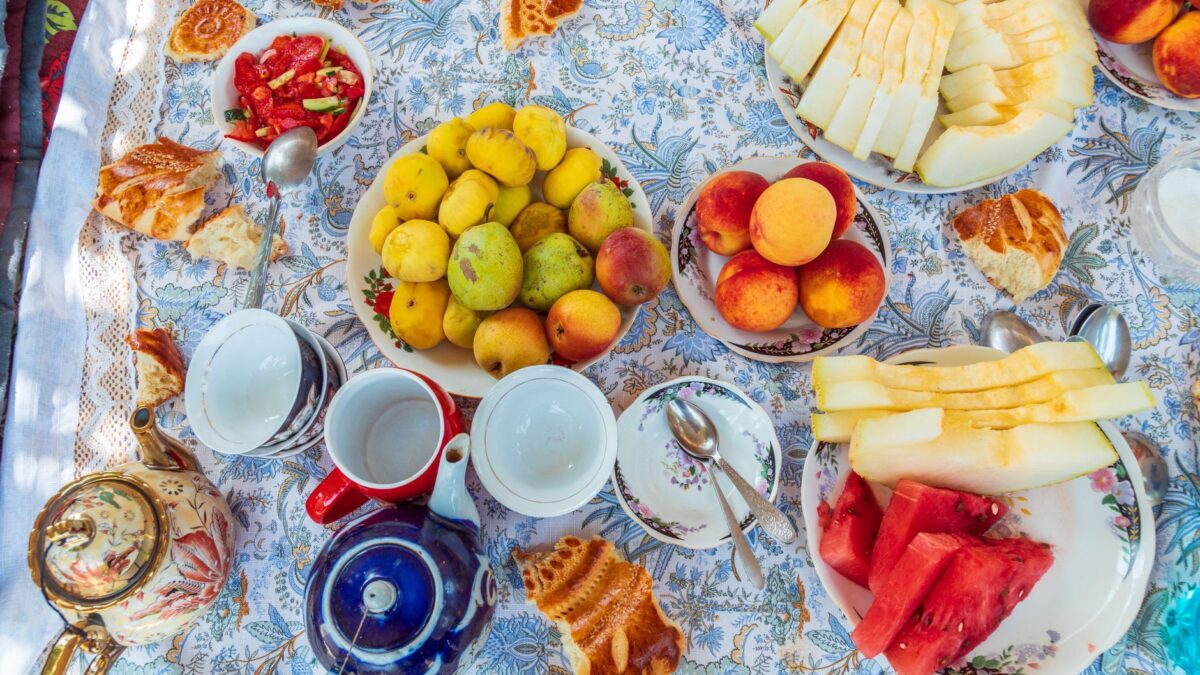
Kazakhstan etiquette: the dos and don’ts
Master Kazakhstan etiquette with practical tips on greetings, dining, tipping, and dress codes for Astana and beyond.
 News & Updates
Kazakhstan in August 2026: what travelers should know now
Your local briefing for Astana, Kazakhstan in August 2026. Constitution Day, road closures, weather whiplash, prices, and what to know now.
 Living Abroad
Moving to Kazakhstan: visas, banking and SIM cards
Practical guide to moving to Kazakhstan: visas, migration registration, IIN, banking with Kaspi, SIM cards, transit costs, and Astana neighborhoods in 2026.