

What to eat in Bosnia and Herzegovina — and what it costs
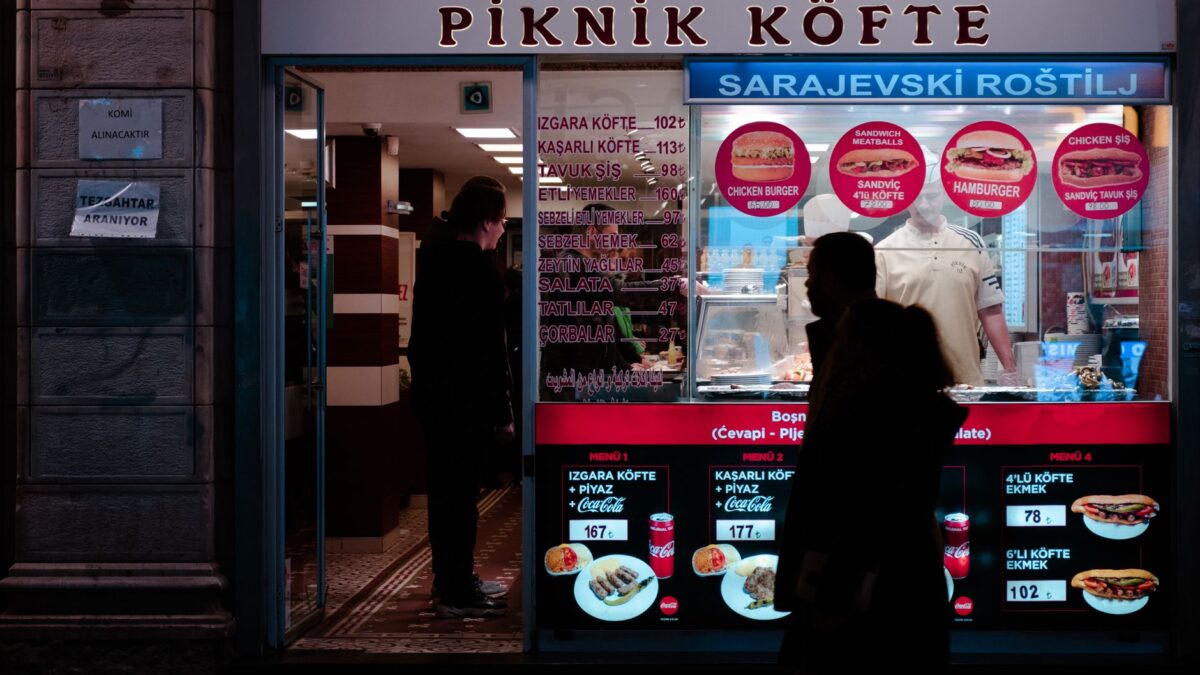
The valley fills with fog and coal-smoke haze in early November. The mountain slopes above town get their first dusting of snow, and the air smells of roasted chestnuts and persimmons sold by street vendors near the tram stops. This is when Sarajevo turns inward. You do not wander the streets looking for Instagram spots; you look for warmth, and you find it in the steam rising from a paper cone or the heavy wooden doors of a kafana.
I am Amina Begović, and I live here. For years, people asked me if Bosnia was expensive. Now, the answer is more complicated. Sarajevo remains one of Europe’s cheaper capitals, but prices are climbing fast. A kilo of burek has nearly doubled in about four years, driven by record tourist demand. But if you know where to look—and what to avoid—you can still eat like royalty on a modest budget.
The Street Food You Must Try
Forget the fancy restaurants for your first meal. The soul of Bosnian food is found on the street, specifically in the Baščaršija district, the Ottoman-era bazaar heart of the city. Here, the Gazi Husrev-beg Mosque looms over the square, and the Sebilj fountain stands as the city’s symbol.
You will see signs for Buregdžinica (pie shops). These are the places to go for breakfast or a quick lunch. You can buy a single slice of burek—a piece of meat pita—for roughly 2.50 to 3 BAM. If you are hungry, order a kilo of chopped burek, which costs between 22 and 28 BAM. Other varieties include sirnica (cheese) and zeljanica (spinach), usually priced around 20 BAM per kilogram. It is cheap, greasy, and exactly what you need after a cold morning.
Then there is the king of street food: ćevapi. This is grilled minced meat served with somun bread, raw onion, and kajmak (clotted cream). In tourist-heavy spots near the Latin Bridge, a “desetka” (ten pieces with sides) might cost 12 to 14 BAM. However, if you walk slightly away from the main square into the neighbourhoods, you can find better quality for 7 to 9 BAM. Do not be afraid to ask locals where they eat; they will point you to the place with the longest line.
Sit-Down Dining: Real Prices in Real Places
When you want to sit down, the economy shifts. A meal at an inexpensive local place will set you back about 15 BAM per person. If you aim for a mid-range restaurant for a three-course dinner for two, without drinks, expect to spend between 60 and 70 BAM.
For an authentic experience that bridges the gap between street food and fine dining, try Ćevabdžinica Nune. Located just off the main square, this is a historic institution. It is crowded, noisy, and delicious. You will pay standard market rates, but the portion sizes are generous enough to share.
If you prefer a setting with more history, seek out Restaurant Đulagin Dvor or Avlija Sarajevo. These venues offer traditional Bosnian cuisine in restored Ottoman-style courtyards. The atmosphere is romantic, especially with the winter chill outside, but the prices reflect the premium location. Expect to pay closer to the higher end of the mid-range scale here. For something different, Klopa offers a modern twist on local ingredients, while Dveri provides a cozy, intimate vibe for those who want to linger over a slow meal.
Coffee Culture and Nightlife Costs
In Bosnia, coffee is not just a drink; it is a ritual. The Bosnian coffee (bosanska kafa) is on UNESCO’s Intangible Cultural Heritage list. You cannot leave without trying it. A cup of local kafa costs between 2 and 4 BAM. A cappuccino, which has become very popular with the younger crowd, runs about 3.90 BAM. In the heart of Baščaršija, prices can creep up to 6 BAM.
To escape the tourist trap prices, head to the Marijin Dvor district or the Vratnik hilltop quarter. There, you will find cafes like Backyard Coffee, Kamarija, and FABRIKA COFFEE SARAJEVO. These are hubs for students, artists, and locals. You can enjoy excellent coffee and pastries for standard prices while watching the world go by.
As evening falls, the café life moves indoors. A local draught beer (0.5 L) in a bar costs approximately 5 BAM. If you prefer to save money, grab a bottle from the supermarket for about 1.65 BAM. For nightlife, the Ministry of Ćejf is a legendary spot known for its sevdah music and lively atmosphere. It is affordable, loud, and deeply cultural.
Practical Tips for Your Wallet
Sarajevo uses the convertible mark (BAM/KM), pegged to the euro. Cash is still king. While cards are accepted in most restaurants, smaller bakeries and street vendors prefer cash. Keep small bills handy.
Transportation is also inexpensive. A single ride on the GRAS tram or bus costs 2.20 BAM. You can buy tickets via SMS or at kiosks. If you plan to move around a lot, a monthly pass is roughly 54 BAM. The new Tram Line 11, running from Baščaršija to Hrasnica, is a great way to explore the newer parts of the city without breaking the bank.
Taxis are easy to find. The base fare starts at about 1.50 BAM, plus roughly 1 BAM per kilometer. Always insist on the meter or agree on a price before getting in. Avoid unofficial drivers near the airport or train station.
Finally, remember that November is the start of the tourist season lull. Hotels are quieter, and prices may be slightly lower than in summer. However, keep an eye on events. Jazz Fest Sarajevo is approaching, and while it brings energy to the city, it also drives up hotel rates. Plan accordingly, eat well, and enjoy the warmth of the Bosnian hospitality—it is worth every konvertibilna marka.
Frequently asked questions
How much does a typical meal cost in Sarajevo?
An inexpensive local meal costs around 15 BAM per person. A mid-range three-course dinner for two is typically 60-70 BAM.
Where can I find the best ćevapi in Sarajevo?
For a historic experience, try Ćevabdžinica Nune near Baščaršija. For better value, look for neighbourhood spots where a 'desetka' costs 7-9 BAM instead of the tourist price of 12-14 BAM.
Is coffee expensive in Bosnia and Herzegovina?
No. Local Bosnian coffee costs 2-4 BAM, and a cappuccino is about 3.90 BAM. Prices rise to around 6 BAM in prime tourist areas like Baščaršija.
What is the currency and should I use cash?
The currency is the convertible mark (BAM/KM). It is largely a cash economy, so carry small bills for street food and bakeries.


