

What to eat in Ecuador — and what it costs
You step off the Trolebús at Plaza del Teatro, and the grey Quito sky seems to press down on the red-tile roofs. The air smells like roasted corn, diesel, and something sweet from a nearby café. It’s 10 a.m. and the Mercado Central is already humming. A woman behind a steaming pot waves you over with a ladle. You sit down. The first spoonful of locro de papa — thick, cheesy, comfort in a bowl — tells you everything you need to know about this city: it feeds you properly, and it doesn’t cost much to do it.
Street food and quick bites: the city’s real kitchen
Quito’s street food is where you’ll find the city’s soul, and your change. Start with empanadas de viento — the ‘wind’ empanadas, puffed and golden, filled with cheese that stretches as you pull it apart. They’re everywhere, but the best I’ve had are from a cart near the Basílica del Voto Nacional, where the gargoyles — yes, turtles and iguanas — look down on you as you eat. Cost? About $1.00 to $1.50 each, depending on how hungry the vendor thinks you are.
Then there’s hornado, the slow-roasted pork that’s a weekend ritual. You’ll see whole pigs turning on spits outside markets, the skin crackling, the meat falling apart. A plate with a chunk of pork, hominy (mote), and a slice of avocado will set you back about $4.00–$6.00 at a local ‘hueco’ — the word locals use for no-frills joints. The best I’ve found is at the Mercado Central‘s second floor, where the food stalls are a maze of steam and sizzle. An almuerzo there — soup, a main plate, fresh juice, and a small dessert — is around $3.00. You won’t leave hungry.
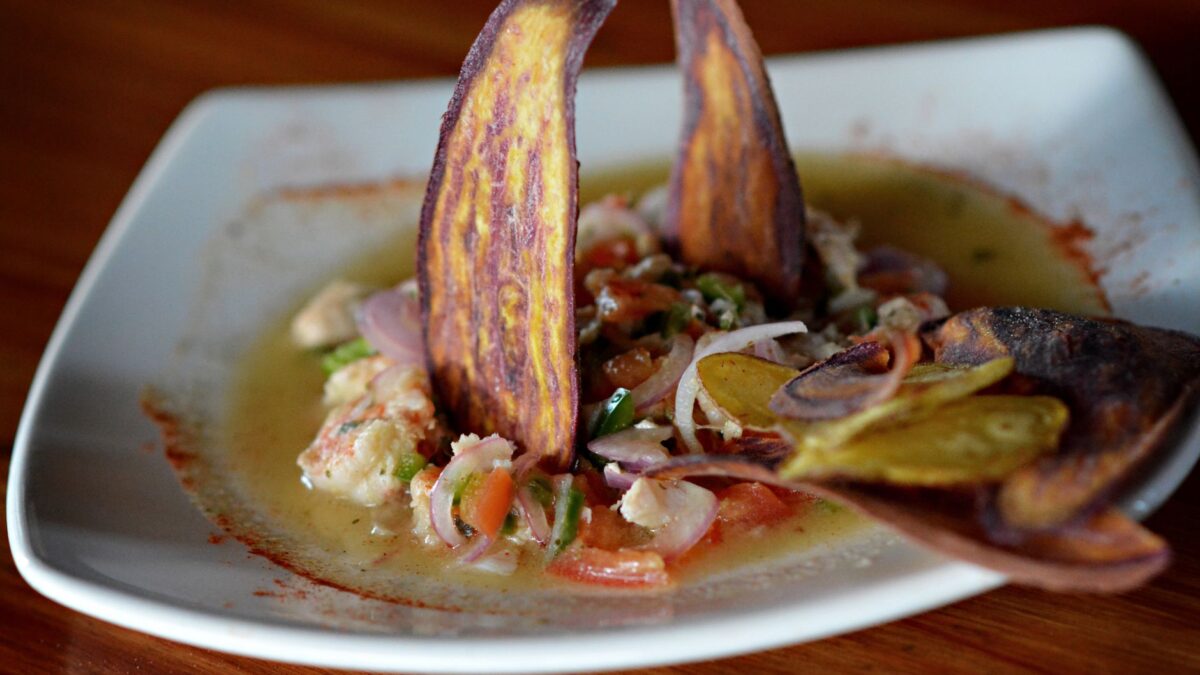
Don’t skip yaguarlocro, a blood-sausage potato stew that sounds intimidating but tastes like the Andes in a bowl. It’s hearty, earthy, and a bit of a challenge for first-timers — which is exactly why you should try it. At a local spot, it’s about $4.00–$7.00. And for a quick seafood fix, encebollado — a tuna and yucca stew, bright with onion and lime — is the hangover cure of choice. It’s served all day, but best at lunch, and runs around $4.00–$6.00 in the city’s cevicherías.
The almuerzo: Quito’s greatest value
If you’re on a budget, the almuerzo (set lunch) is your best friend. Every neighbourhood has its comedores, and for about $2.50 to $5.00 — roughly $3 is typical — you get a soup, a main plate (rice, a protein, maybe a salad), and a fresh juice. The Mercado Central‘s second floor is the classic spot, but I also love the stalls near Parque La Carolina, where office workers crowd in for the same deal. It’s not fancy, but it’s honest food, cooked by people who’ve been doing it for decades.
The key is to go early — by 1 p.m. the good places are packed. And don’t be shy about asking what the menú is; the options change daily, and the answer is usually more interesting than anything you’d pick from a laminated card.
Sit-down meals: where to splash out
Quito’s dining scene has quietly become one of South America’s most exciting, especially in the bohemian barrio of La Floresta. This is where you’ll find Casa Warmi, a restaurant that’s been championing local ingredients and traditional techniques with a modern twist. The menu changes with the market, but you can count on dishes that make you rethink what Ecuadorian food can be. A full meal here — three courses, no drinks — will run about $20 per person, which is the upper end of what you’d pay in the city.
For something more classic, head to the Centro Histórico and book a table at Café Plaza Grande Restaurante, overlooking the Plaza de la Independencia. The setting is pure colonial elegance, and the food is refined Ecuadorian. It’s a special-occasion spot, but worth it for the view alone. A meal for two with a glass of wine will easily hit $40–$60. If you’re staying at the Casa Gangotena hotel (which you probably aren’t, but a coffee in their dining room is a splurge worth making), the restaurant is equally impressive.
For a mid-range option that doesn’t feel touristy, try De La Llama, which focuses on Andean ingredients — think trout, quinoa, and creative takes on locro. It’s the kind of place where the chef clearly cares, and the prices reflect that without being outrageous. A main dish runs $12–$18.
And then there’s Querubin, a spot that’s been around forever and does solid Ecuadorian classics in a handsome, slightly old-fashioned room. It’s not hip, but it’s reliable, and the llapingachos (cheese-stuffed potato patties) are as good as any you’ll find.
Café culture and the sweet side
Quito runs on coffee, and the specialty scene has exploded in recent years. For a proper cup, I rate Coffee Zular in La Floresta and COFFEE RELIEF – Specialty Coffee Shop & Roasters in La Carolina. Both take their beans seriously, source from Ecuadorian highlands, and will gladly explain the terroir of a single-origin from Loja or Piura. A cappuccino will cost around $3 — not cheap by local standards, but fair for the quality. If you’re looking for a pastry with your caffeine, La Cafebreria UIO is a charming spot in La Floresta that does excellent breakfasts, too.
For dessert, you can’t leave without trying higos con queso — figs poached in panela syrup, served with a slice of fresh cheese. It’s a colonial holdover, weirdly delicious, and available in most traditional restaurants. Also look for espumillas, those meringue-and-juice foams sold from carts in the Old Town. They’re an acquired taste, but at $0.50 each, there’s no risk in trying one.
Drinks: from canelazo to craft beer
Ecuadorians don’t have the wine scene of Argentina, but Quito has its own drinks. The classic is canelazo, a warm cinnamon-and-sugar drink spiked with aguardiente (sugar cane liquor). It’s the perfect antidote to a chilly Andean evening, and you’ll find it at street stalls during festivals. A small cup costs about $1.50.
If you prefer beer, the national lagers — Pilsener and Club — are fine, but the craft scene is growing. Most bars will have a local IPA or porter on tap, and a 0.5 L draft will set you back about $2.50. One of the best places to drink is around Plaza Foch in La Mariscal, though be aware that the area has had some security incidents recently — keep your wits about you after dark and use an app-based taxi (Cabify or inDrive) rather than hailing one on the street.
Getting there and getting around
You’ll want to explore beyond the centre. The Metro de Quito is the modern, efficient way to move north-south, and a single ride is just $0.45 if you get a MetroCard. The Trolebús and Ecovía buses are cheaper still at $0.35 a ride, and a monthly pass is only $25. But note that the Ecovía’s E1 circuit is currently suspended for about a month while they repave Avenida 12 de Octubre — you’ll need to use the E-1M extension and transfer at Marín Central. It’s a pain, but it’s temporary.
To reach Cumbayá or the Mitad del Mundo, you’ll likely take a taxi or bus. The Ruta Viva has lane closures for the next few months, so budget extra time. And if you’re heading to the TelefériqO, go early to beat the clouds. The cable car takes you from 3,000 m to 4,100 m on the flanks of Pichincha — a 20-minute ride to the páramo. Bring a jacket; it’s cold up there.
Frequently asked questions
How much does a typical lunch cost in Quito?
An almuerzo at a local eatery costs around $3, ranging from $2.50 to $5. It includes soup, a main plate, and juice. At Mercado Central's second floor, it's about $3.
What is the must-try traditional food in Ecuador?
Start with empanadas de viento, hornado (roast pork), llapingachos (cheese potato patties), and encebollado (tuna stew). These are cheap and authentic, found at local huecos and markets.
Is Quito expensive for food compared to the US?
No. Quito is roughly 50-60% below US costs. A meal for two at a mid-range restaurant is about $40, while a local meal is under $8.
Where can I find the best casual dining in Quito?
La Floresta is the best for creative cuisine, with places like Casa Warmi. For classic dishes, try Querubin or the Mercado Central food stalls.
What's a good budget for food per day in Quito?
If you eat like a local, $10-15 per day is enough for three solid meals plus a coffee. If you splurge on dinner, budget $20-30.


