

What to eat in Hungary — and what it costs
There is a specific smell that hits you when you step off the tram at Váci utca in the late afternoon. It’s not just the Danube breeze or the stone dust of the Castle District; it’s the heavy, sweet scent of caramelized sugar and burning wood from the *kürtőskalács* stalls. For years, I’ve watched tourists line up for these chimney cakes, often paying a premium for a snack that, while delicious, tells only half the story of Hungarian food. To truly eat here, you have to look past the tourist gloss of District V and dive into the rhythm of the city—from the steam rising off a bowl of goulash in a Ferencváros backstreet to the crisp snap of a fresh baguette in Újlipótváros.
The Street Food Essentials: Lángos and Kürtőskalács
You cannot talk about Budapest food without addressing the elephant in the room: lángos. This deep-fried dough, topped with sour cream, grated cheese, and garlic, is the undisputed king of street snacks. But here is the local secret: skip the fancy stalls near the Parliament and head to the upper gallery of the Great Market Hall (Nagyvásárcsarnok). The view of the river is nice, but the food is authentic. A portion will set you back about 800–1,500 HUF (roughly $3). It is cheap, hot, and incredibly filling.
Then there is the kürtőskalács, or chimney cake. If you buy one on the main drag of Váci utca, you might pay up to 2,500 HUF ($5) for something that tastes like generic carnival fare. Instead, find a smaller bakery in District VII or near the ruins bars. Expect to pay around 1,000–2,500 HUF depending on the fillings—cinnamon-walnut is classic, but chocolate-hazelnut is a modern favorite. It’s best eaten standing up, walking toward the Danube as the sun sets.
Lunch Like a Local: The ‘Napi Menü’
If there is one meal you must prioritize, it is the napi menü, or “menu of the day.” This is a weekday tradition where restaurants offer a two-course lunch (usually soup and a main dish) for a fraction of the dinner price. In an inexpensive local spot, this will cost you between 2,500 and 3,500 HUF (about $8). It is the single best value in the city.
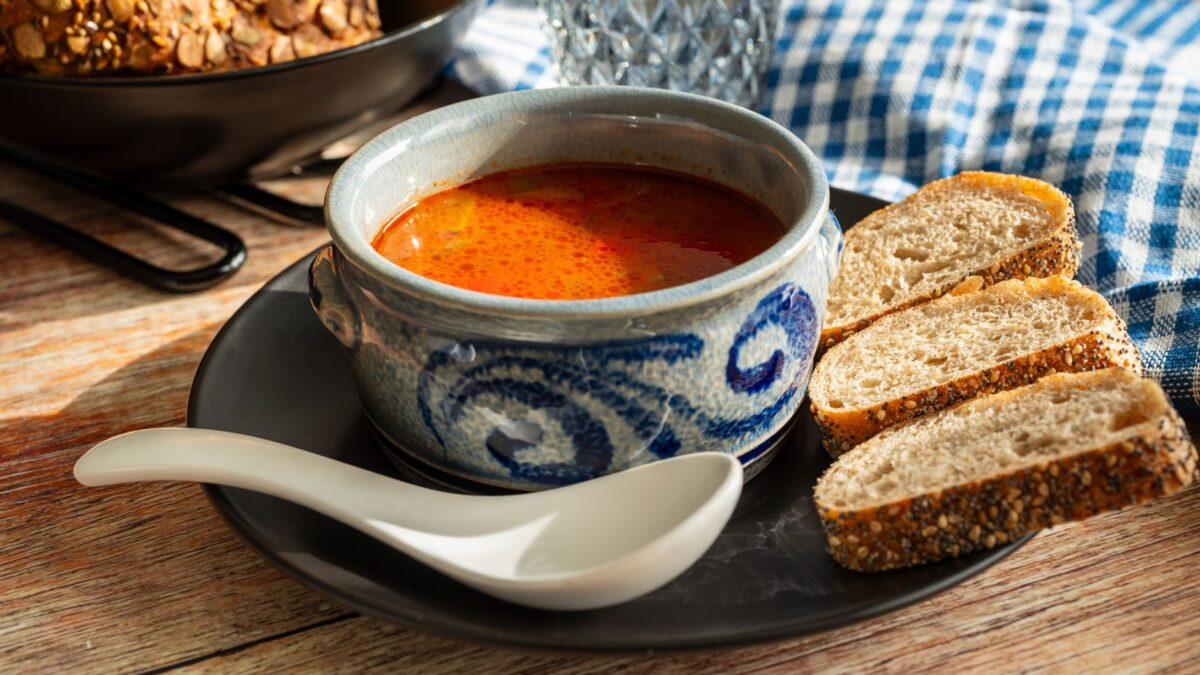
For your first soup, order gulyásleves (goulash soup). Yes, it is different from the thick stew served internationally; here, it is a broth-heavy, paprika-infused comfort food. At Hungarikum Bisztró in the Jewish Quarter, you can get a solid version of this along with other national dishes. If you want to try something heartier, Gettó Gulyás is a chain born in the ghetto bars that serves massive portions of traditional stews. Their prices are consistent, and the atmosphere is lively. Don’t forget to order fresh white bread; a 500g loaf costs around 550 HUF ($1.5) and is essential for mopping up every drop of sauce.
Dinner and Drinks: From Ruin Bars to Fine Dining
When evening falls, the energy shifts. The Jewish Quarter (District VII) is the engine of nightlife, centered around Szimpla Kert. While you go there for the quirky decor, stay for the food. You can grab a meal at the bar area, but for a proper sit-down experience, I recommend Mazel Tov for incredible Middle Eastern-Hungarian fusion, or Fat Mama for creative, high-quality plates that break away from tradition.
If you are celebrating or want to see the city dressed up, book a table at New York Café. It is expensive, yes, but the architecture is unmatched. A cappuccino and a slice of Dobos torte will cost you around 1,000 HUF ($2.7) each, which is standard for café culture here. For a full three-course dinner for two at a mid-range restaurant, budget around 15,000–22,000 HUF (approx. $50), excluding drinks.
No meal is complete without Unicum, the herbal bitter liqueur from the Zwack distillery. It’s an acquired taste for foreigners but a digestive staple for locals. Pair your dinner with a glass of Tokaji dessert wine if you want sweetness, or a local draught beer. A 0.5L beer at a bar runs 700–1,200 HUF ($2.6). If you visit in early September, catch the Downtown Beer Festival on Szabadság tér, where over 250 craft beers flow.
Where to Eat by District
Budapest is divided, and so is its food scene. Here is how to navigate it:
- District V – Belváros & Lipótváros: This is the center. You will find Hell’s Kitchen – Hungarian Restaurant here, which offers a theatrical take on national cuisine. It is pricey and touristy, but reliable if you want a safe introduction to dishes like duck breast with dumplings.
- District VII – Erzsébetváros: The Jewish Quarter is loud, fun, and packed with eateries. Cafe Muse is great for breakfast, while Madal Cafe offers a quieter, artistic vibe for coffee and light bites. At night, the ruin bars dominate, but don’t sleep on the hidden courtyards like Gozsdu Udvar.
- District XIII – Újlipótváros: This is where the expats and families live. It is calmer, tree-lined, and home to Lehel market. If you want to buy ingredients for a picnic or find a quiet bistro away from the chaos, this is your district. Prices here are slightly higher than in the outer districts but reflect the quality.
- District I – Várkerület: The Castle District is romantic but sleepy after dark. Dining here is mostly about the view. Mantra Specialty Coffee Minibar is a gem for coffee lovers who appreciate precision. For dinner, you pay for the location as much as the food.
Practical Tips: Money and Timing
Hungary uses the Forint (HUF). While cards are widely accepted, having cash is still useful for street vendors and smaller cafes. As of 2026, inflation has stabilized around 4.4%, but prices have climbed since 2023. A monthly transit pass (Budapest-pass) remains frozen at 8,950 HUF ($24), making public transport incredibly affordable. Single tickets are 500 HUF ($1.4).
Timing your visit matters. Late August into early September is harvest season (*szüret*). Wineries in Etyek start bringing in grapes, and the city slows down as schools reopen. The crowds thin out, and the weather cools to a pleasant 20–26°C. If you visit during the Bakáts Festival in Ferencváros or the Jewish Summer Festival, you will find pop-up food markets that showcase regional specialties you won’t find in regular restaurants.
Finally, be wary of unlicensed taxis. Use Bolt or Főtaxi. And remember, hospitality here is warm. Hungarians love to feed their guests. If you accept an invitation to share a drink or a meal, do so with gratitude. That is where the real flavor of Hungary lies—not just in the paprika, but in the people.
Frequently asked questions
How much does a typical meal cost in Budapest?
A modest lunch set ('napi menü') costs 2,500–3,500 HUF ($8). A mid-range three-course dinner for two is around 15,000–22,000 HUF ($50). Street food like lángos is roughly 800–1,500 HUF ($3).
What is the best place to try authentic goulash soup?
Try Gettó Gulyás in the Jewish Quarter for hearty portions, or Hungarikum Bisztró for a broader menu. Both are reliable spots for traditional flavors.
Is New York Café worth the money?
It is expensive, but the architecture is unmatched. Expect to pay around 1,000 HUF ($2.7) per coffee or dessert item. It is more about the experience than the food itself.
What should I avoid eating as a tourist?
Avoid overpriced chimney cakes (kürtőskalács) sold directly on Váci utca. They are often mass-produced. Buy them from smaller bakeries in District VII or XI for better quality and lower prices.
How much does a beer cost in Budapest bars?
A 0.5L local draught beer typically costs between 700–1,200 HUF ($2.6). Craft beer may be slightly higher.
Things to do in Hungary
 3 Hours Budapest Segway Grand City Tour Buda, Margaret and Pest
 1 Hour Budapest Segway Tour - Parliament Hightails
 Private Sightseeing Tour using Electric Tuk Tuk Ride in Budapest
 Shooting Experience HOLLYWOOD Package in Budapest
 Budapest private sightseeing with Nelli & her local guides
 Hungarian Strudel Making Class: Stretch & Fill Two Ways