

What to eat in Indonesia — and what it costs
The heat in Jakarta doesn’t just sit on you; it presses. It is a humid, heavy blanket that smells of diesel, frangipani, and frying oil. You step out of the MRT station at Bundaran HI and the air hits you like a warm towel. But before you sweat through your shirt, you need to eat. Indonesia’s capital is not just a transit hub for Bali or Yogyakarta—it is a culinary beast in its own right, a place where Dutch colonial history collides with Malay spice traditions and Chinese entrepreneurship. If you know where to look, you can eat like a king for the price of a cup of coffee in London.
The Warung Economy: Street Food That Won’t Break You
Forget Michelin stars for a moment. The soul of Indonesian food lives in the warung—small, family-run stalls often tucked into residential corners or operating from morning until late night. In Jakarta, these are everywhere, from the leafy lanes of Menteng to the bustling edges of Glodok.
Your first mission must be Nasi Goreng (fried rice). This is not the takeout version you might know. At a local warteg (a type of affordable cafeteria-style warung), a plate of nasi goreng with an egg and chicken is roughly Rp20,000–35,000 (about $1.7). It comes with krupuk (crackers) and pickles. The flavor is smoky, sweet, and savory, driven by kecap manis (sweet soy sauce).
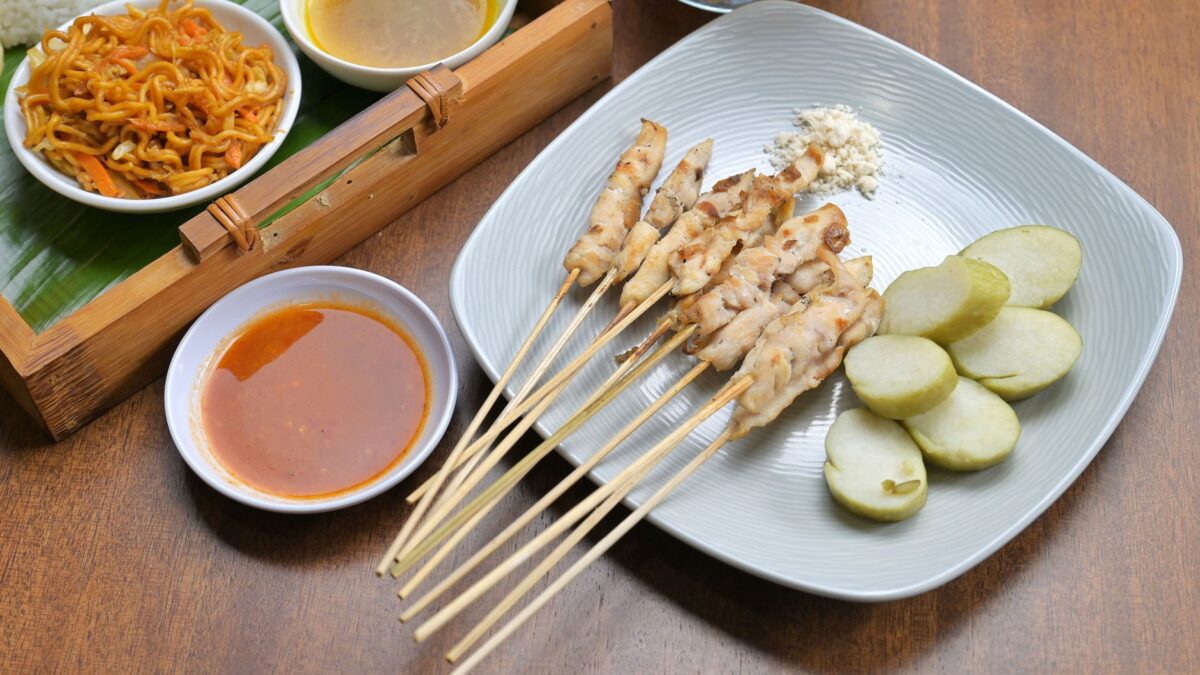
Next, seek out Sate Ayam. Chicken satay skewered over charcoal, served with a rich peanut sauce and lontong (rice cake). A portion from a street stall runs about Rp25,000–40,000 (around $2.0). It is cheap, efficient, and deeply satisfying. Look for places with visible smoke and a steady stream of locals. Avoid the ones with bright neon signs advertising English menus; the best spots operate on sight and gesture.
Districts to Dine: Where to Find Real Flavor
Jakarta is vast and gridlocked, but food clusters make navigation easier. Here is where you should head based on what you crave.
Menteng: The Colonial Classic
If you want a taste of old Batavia, start in Menteng. This central district is home to art-deco villas and embassies, but also the famous Jl. Sabang street-food strip. Here, you can find traditional Betawi dishes like Kerak Telor (an omelet made with glutinous rice and spices) cooked live on stage. For a sit-down experience, try SEMAJA Menteng. It offers authentic Javanese cuisine in a refined setting. Prices here are higher than street level—expect to pay more for comfort and air conditioning—but the quality is consistent. Nearby, Amanaia Menteng serves excellent Indonesian favorites in a cozy, garden-like atmosphere.
Glodok: Chinatown’s Midnight Feast
Head north to Kota Tua (Old Batavia) and then into Glodok, Jakarta’s Chinatown. This area is a sensory overload. By day, it is a maze of trading streets and temples like Vihara Dharma Bhakti. By night, it transforms. The Petak Sembilan market area is alive with food carts. You will find Bakso (meatball soup) and Lumpia (spring rolls) here that are arguably the best in the city. Grab a taxi or use the MRT to Kota station, then walk or hop on a Gojek motorbike to dive into the alleys. The prices remain low, sticking to that Rp20,000–40,000 range per item.
Kemang: The Expat & Digital Nomad Hub
In South Jakarta, Kemang is where the city’s creative class gathers. It is leafy, trendy, and filled with independent galleries and craft coffee shops. While this is the most expensive district, it offers incredible variety. For a high-end twist on local flavors, check out The Acre, which focuses on sustainable, farm-to-table Indonesian ingredients. If you want something more casual, the cafes along Jl. Borneo offer great brunches. First Crack Coffee – Jl Bumi and Giyanti Coffee Roastery are staples for those needing a caffeine fix between exploring the area’s boutiques. A meal here might cost Rp100,000–200,000 ($6–$12), reflecting the expat demographic.
SCBD / Sudirman: Rooftops and Skyscrapers
The financial spine of Jakarta, SCBD, is all glass and steel. After dark, the rooftop bars here offer views that justify the premium price. Cloud Lounge Jakarta and Social House Grand Indonesia are popular spots. While you won’t find street food here, you can enjoy sophisticated Indonesian fusion cuisine. Expect to pay Rp200,000+ ($12+) per dish. It is worth it once for the view, but not for daily sustenance.
Drinks, Coffee, and Modern Habits
You cannot survive Jakarta without coffee. The country is a major producer, and the local scene is booming. % Arabica Jakarta Roastery in Senopati (near Kemang) is a pilgrimage site for coffee lovers, offering a pristine, minimalist experience. Lucky Cat Coffee & Kitchen is another favorite for its aesthetic and quality beans. A latte here will cost around Rp40,000–60,000 ($2.5–$3.8), which is still reasonable compared to Western capitals.
For alcohol, note that Indonesia is predominantly Muslim, and regulations are strict. However, Jakarta is cosmopolitan. You can find beer and cocktails in hotels and licensed venues. Non-alcoholic options like Teh Botol (bottled tea) and Es Jeruk (fresh lime juice) are ubiquitous and cheap, usually Rp10,000–15,000 ($0.6–$0.9).
Practical Tips: Getting Around and Paying
Transportation is key to eating well. Traffic in Jakarta is legendary. Use the MRT for long distances (fares range from Rp4,000 to Rp14,000, about $0.6) and TransJakarta buses for shorter hops (Rp3,500 flat, or Rp2,000 during early hours). An integrated Jak Lingko card works across modes. For last-mile travel, Grab and Gojek are indispensable. They handle ride-hailing, food delivery, and payments seamlessly.
Payment-wise, cash is still king at warungs, but digital wallets are everywhere. QRIS (Quick Response Code Indonesian Standard) is now accepted even at small stalls. If you have a BCA or Mandiri bank account, their stored-value cards (Flazz or e-Money) work on public transport. Otherwise, carry enough IDR for street vendors. As of 2024, the exchange rate hovers around 15,855 IDR to 1 USD, making Jakarta incredibly affordable for foreigners.
Housing costs reflect the city’s divide. A modest one-bedroom outside the center, like in Tebet or Kelapa Gading, rents for Rp4,000,000–8,000,000 ($380). In the center, expect Rp8,000,000–15,000,000 ($730). Budget accommodation is plentiful; a guesthouse might cost Rp225,000–355,000 ($18) a night, while a mid-range hotel with breakfast is around Rp500,000–1,050,000 ($30–$65).
Final Thoughts: Eat Boldly
Jakarta is chaotic, loud, and hot. But it is also generous with its food. Do not be afraid to sit on plastic stools, point at what looks good, and smile. The people are friendly, and the flavors are unforgettable. From the smoky sate of Glodok to the refined Javanese feasts of Menteng, every bite tells a story of this island nation’s complex history. Just remember to stay hydrated, use sunblock, and embrace the humidity. Your stomach will thank you.
Frequently asked questions
How much does street food cost in Jakarta?
A typical plate of nasi goreng or satay at a local warung or street stall costs between Rp20,000 and Rp40,000 (approximately $1.50 to $2.50). This makes eating out extremely affordable for visitors.
What is the best district for food in Jakarta?
It depends on your taste. Menteng offers classic Betawi and Javanese cuisine in a colonial setting. Glodok (Chinatown) is best for midnight snacks and Asian-Indonesian fusion. Kemang is ideal for trendy cafes and international dining.
Is Jakarta safe for tourists regarding food hygiene?
Jakarta has low crime rates, so safety is less about theft and more about traffic. For food, stick to busy stalls with high turnover, as fresh ingredients are cycled quickly. Drink bottled water or filtered water from reputable cafes.
How do I pay for food in Jakarta?
Cash (IDR) is essential for street vendors and warungs. However, digital wallets like GoPay, OVO, and Dana are widely accepted, even at small stalls via QRIS codes. Credit cards work in malls and upscale restaurants.
What is the average cost of a mid-range dinner in Jakarta?
A sit-down meal at a mid-range restaurant in areas like SCBD or Kemang typically costs between Rp100,000 and Rp200,000 ($6–$12) per person. Rooftop bars and luxury hotels will be significantly higher.
Things to do in Indonesia
 PRIVATE Authentic Balinese Cooking Class in Ubud at Putu's Home
 Ubud Highlights: Monkey Forest, Rice Terrace, Tirta Empul Temple
 Anggrek Putih Lombok Cooking Class & Garden Tour
 Ubud Adventure All Inclusive Private Day Tour
 Likely to sell out
Nusa Penida Two Dives Trip for Certified Divers
Likely to sell out
Nusa Penida Two Dives Trip for Certified Divers
 Bali Airport Transfer Service in Private