

What to eat in Madagascar — and what it costs
The jacarandas are still holding onto their purple blooms in Antananarivo, but the air has turned thick and muggy. It is early November, and the city is preparing for the rains. If you are standing near the Analakely market, you can smell it: wet earth, frying oil, and the sweet scent of mangoes starting to appear in the stalls. But there is another rhythm here that dictates your day more than the weather. Around 6 p.m., as the sun dips behind the hills, the lights go out. Jirama, the national utility, announces a rolling two-hour power cut, and the city shifts from daytime commerce to evening survival. This is when the real food life begins—not in sterile, air-conditioned dining rooms, but around charcoal braziers and candlelit tables.
Breakfast on the Run: The Street Food Triad
You do not need a reservation for the best meal of your trip. You need to be at the Analakely covered market (Zoma) by 7 a.m. or wandering the streets of Isoraka before 8 a.m. The street breakfast is a study in texture and heat, and it costs less than a cup of coffee elsewhere. Your first stop should be a vendor selling mofo gasy. These are fluffy, deep-fried rice cakes, golden brown and dusted with sugar. They are simple, warm, and perfect for dipping into strong black coffee. Expect to pay about 200–500 Ar each. That is roughly $0.10 USD per cake. You will likely buy three or four.
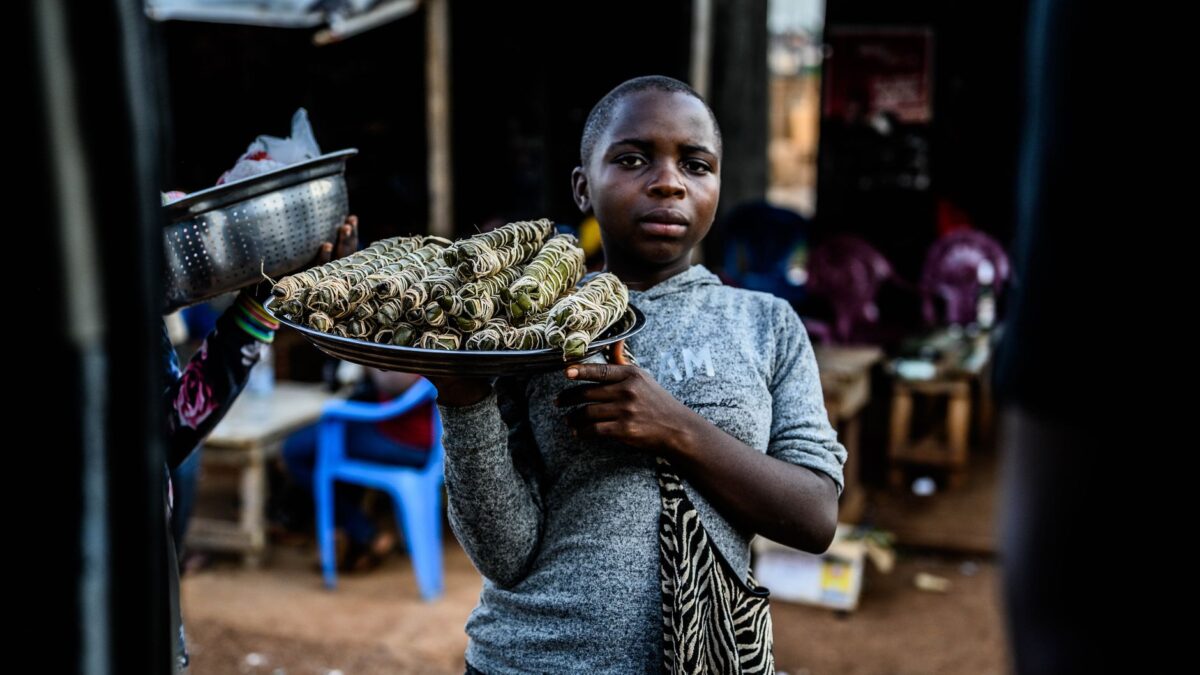
Next, look for the sambos. These are fried dough pockets filled with minced meat, potatoes, and onions, similar to samosas but with a distinct Malagasy crust. A vendor might sell them for 300–800 Ar each. If you prefer something softer, grab a koba: a steamed cake made of rice flour, bananas, and peanuts, wrapped in a banana leaf. It costs about 500–1,500 Ar per portion. Combine these items, and you have had a feast for well under 5,000 Ar ($1.10). This is the fuel that gets you up the steep hills of the upper town.
If you want to sit down for this ritual, Dune Coffee Shop in Isoraka offers a reliable spot to watch the morning rush without getting lost in the market crowds. Their cappuccino runs about 7,300 Ar ($1.60), which feels expensive until you realize it includes air conditioning and Wi-Fi—a luxury when the grid fails later in the day.
Lunch and Dinner: The Rice and Laoka Culture
In Madagascar, rice (vary) is not just a side dish; it is the anchor of existence. You will eat it twice a day, every day. The companion to rice is laoka, a selection of sauces, stews, or stir-fries. The most iconic is romazava, a fragrant soup made with green leafy vegetables (often brèdes), beef or pork, and sometimes tomato. Another staple is ravitoto, shredded cassava leaves cooked in coconut milk with salted pork. These dishes are deeply savory, comforting, and incredibly affordable.
For an authentic experience, head to the Analakely area. There are numerous small eateries (hotely) where you can find a plate of romazava or ravitoto with a mound of white rice for about 12,000–20,000 Ar ($2.70–$4.40). This is a solid, hearty meal. If you prefer a slightly more refined setting, The Peace Restaurant in the Ivandry district offers consistent quality. A meal at an inexpensive local restaurant generally costs around 12,000 Ar, while a mid-range dinner for two with three courses at a place like La Petite Brasserie or La Plantation will run you about 90,000 Ar ($20). This price point is reasonable given the import costs of many ingredients, but it remains cheap compared to European standards.
When the power cuts hit, these restaurants switch to generators or gas stoves. The atmosphere changes. Conversations rise over the hum of backup engines. It is part of the charm. Do not be surprised if your server asks you to move to a table near a window or door to catch a breeze when the electricity stops.
Drinks and Socializing: Beers, Coffees, and Spirits
Madagascar has a vibrant drinking culture, though it is often quieter than you might expect. The national beer is Three Horses Beer (THB). It is light, crisp, and ubiquitous. A 0.5 L bottle costs about 4,500 Ar ($1.00) in a bar or supermarket. It is the drink of choice for chatting with locals after work. If you visit Café Melya or Le Plan B, you will see groups of friends sharing bottles of THB and laughing.
For something stronger, look for lamorom or
Water safety is a concern. Always drink bottled water. A 1.5 L bottle costs about 1,000–1,500 Ar. Do not drink tap water, even for brushing teeth if you have a sensitive stomach. Milk and bread are also staples; a liter of milk is about 4,325 Ar, and a loaf of white bread is roughly 4,536 Ar. These prices reflect the inflation rate of around 8.1%, making daily essentials feel pricier for locals earning average wages.
Where to Eat and Stay: Practical Tips
Your choice of neighborhood affects your food options. Isoraka is the old bourgeois quarter, grid-like and elegant. Here you will find embassies, boutiques selling natural cosmetics, and some of the city’s best guesthouses like Maison d’Hôtes Mandrosoa or Résidence Le Hublot. Dining here is safer and more convenient, with easy access to places like Café du Musée.
Analakely is the commercial engine. It is chaotic, noisy, and pickpocket-prone after dark. The Zoma Market is here. Go for the food, but keep your phone tucked away. The Ambondrona stone staircase leads up to the old town, offering views but also a workout. Faravohitra is historic, home to the Catholic cathedral and Lycée Jules Ferry. If you are lucky, you might get a table at Chez Mariette, a famous reservation-only table d’hôtes known for its traditional ambiance. It is an investment, but the experience of eating family-style in a colonial-era home is unforgettable.
Safety is paramount. Petty theft targets phones and bags in crowded areas like Analakely. Avoid walking alone after 8 p.m., especially when the power is out and streets are dark. Use metered taxis for short rides; the base fare is about 15,000 Ar, and they charge roughly 9,000 Ar per km. Agree on the price before you get in. Shared minibuses (taxi-be) cost only 600 Ar but are cramped and require local knowledge of routes.
Finally, respect the rhythm of the city. Plan your heavy shopping and sightseeing for the morning. After 6 p.m, embrace the darkness. Find a candlelit table, order a romazava, share a Three Horses Beer, and listen to the sounds of the city waking up in the dark. That is when you truly taste Madagascar.
Frequently asked questions
How much does a typical meal cost in Antananarivo?
A simple street breakfast with mofo gasy and sambos costs under 5,000 Ar ($1.10). A main course of rice and laoka at a local eatery is about 12,000–20,000 Ar ($2.70–$4.40). A mid-range dinner for two is approximately 90,000 Ar ($20).
What are the must-try traditional dishes in Madagascar?
The essential dishes are romazava (green leafy vegetable stew with meat), ravitoto (shredded cassava leaves with pork), and vary amin'anana (rice with greens). For snacks, try mofo gasy (fried rice cakes) and koba (banana-peanut rice cake).
Where is the best place to find street food in Tana?
The Analakely covered market (Zoma) is the hub for street food, especially in the morning. For a safer, seated option, cafes in the Isoraka district like Dune Coffee Shop offer reliable breakfasts.
Is it safe to eat street food in Madagascar?
Street food is delicious and cheap, but hygiene varies. Stick to busy stalls with high turnover. Avoid raw salads or unpeeled fruits. Drink only bottled water. Areas like Analakely are safe during the day but avoid walking there after dark due to petty theft.
What time does the daily power cut happen?
Power cuts typically occur in the evening, often starting around 6 p.m. and lasting about two hours. Restaurants use generators, so dining continues, but plan your outdoor activities accordingly.


