Madagascar Travel Podcast with Hery Rakoto
Hosted by Hery Rakoto — a new episode every day from Madagascar.
Madagascar Travel Podcast with Hery Rakoto is a slow, place-based guide to the world’s fourth-largest island. Travelling here means moving between a narrow coastal plain, a central high plateau and an arid south, while hearing Malagasy and French in daily use. The island’s isolation has produced species that exist nowhere else, and its rivers and roads carry their own rhythms.
Early episodes keep a base in Antananarivo, the capital on the high plateau. Later the host moves east to Toamasina, the country’s main port, then south to the spiny forest country around Toliara and inland to Fianarantsoa, the highland town known for its surrounding rice terraces.
The show unfolds across dry-season months and wet-season months, returning to the same highland towns and eastern coastline. Each visit adds a layer; a market becomes recognisable, a route through the hills becomes familiar. Over two years the podcast accumulates the kind of knowledge that comes from living somewhere, not passing through.
Recent episodes
Things to do in Madagascar
 Tsingy tour 3 days start in Morondava
 Excursion to Nosy Iranja & Antsoha for Small Groups with Lunch
 3-Day Private Tour to Andasibe National Park
 Private Tour for the Highlights of Madagascar
 Guided tour to Lokobe Natural Park
 Antananarivo: Lemurs Park & City Tour
 Private 14-Day Classic Route Tour in Madagascar
 RN7 Road Trip - Private Multi Day Madagascar Tour
Plan your trip to Madagascar
Getting around
Staying connected
Madagascar at a glance
Madagascar in depth
Reference data on the country — geography, people, history, economy and transport.
Geography and climate
Location
Southern Africa, island in the Indian Ocean, east of Mozambique
Terrain
Narrow coastal plain, high plateau and mountains in center
Climate
Tropical along coast, temperate inland, arid in south
Elevation
- Highest point
- Maromokotro 2,876 m
- Lowest point
- Indian Ocean 0 m
- Mean elevation
- 615 m
Area
- Total
- 587,041 sq km
- Land
- 581,540 sq km
- Water
- 5,501 sq km
Size comparison
Almost four times the size of Georgia; slightly less than twice the size of Arizona
Coastline
4,828 km
Land borders
Total 0 km
Natural resources
Graphite, chromite, coal, bauxite, rare earth elements, salt, quartz, tar sands, semiprecious stones, mica, fish, hydropower
Land use
- Agricultural land
- 70.3% (2023 est.)
- Arable land
- 5.2% (2023 est.)
- Permanent crops
- 1% (2023 est.)
- Permanent pasture
- 64.1% (2023 est.)
- Forest
- 17.5% (2023 est.)
- Other
- 12.2% (2023 est.)
Natural hazards
Periodic cyclones; drought; and locust infestation
Volcanism: Madagascar's volcanoes have not erupted in recorded history
Note
World's fourth-largest island; strategic location along Mozambique Channel; despite Madagascar’s close proximity to the African continent, ocean currents isolate the island, resulting in high rates of endemic plant and animal species; approximately 90% of the flora and fauna on the island are found nowhere else
People and society
Population
- Total
- 31,345,040 (2025 est.)
- Male
- 15,647,362
- Female
- 15,697,678
Nationality
- Noun
- Malagasy (singular and plural)
- Adjective
- Malagasy
Ethnic groups
Malayo-Indonesian (Merina and related Betsileo), Cotiers (mixed African, Malayo-Indonesian, and Arab ancestry - Betsimisaraka, Tsimihety, Antaisaka, Sakalava), French, Indian, Creole, Comoran
Languages
Malagasy (official) 99.9%, French (official) 23.6%, English 8.2%, other 0.6% (2018 est.)
Religions
Church of Jesus Christ in Madagascar/Malagasy Lutheran Church/Anglican Church 34%, Roman Catholic 32.3%, other Christian 8.1%, traditional/Animist 1.7%, Muslim 1.4%, other 0.6%, none 21.9% (2021 est.)
Median age
- Total
- 20.5 years (2025 est.)
- Male
- 21.1 years
- Female
- 21.5 years
Life expectancy
- Total population
- 68.8 years (2024 est.)
- Male
- 67.3 years
- Female
- 70.3 years
Urbanisation
- Urban population
- 40.6% of total population (2023)
- Rate of urbanization
- 4.26% annual rate of change (2020-25 est.)
Where people live
Most of population lives on the eastern half of the island; significant clustering is found in the central highlands and eastern coastline, as shown in this population distribution map
Largest cities
3.872 million ANTANANARIVO (capital) (2023)
Background and government
Background
Madagascar was one of the last major habitable landmasses on earth to be settled by humans. While there is some evidence of human presence on the island in the millennia B.C., large-scale settlement began between A.D. 350 and 550 with settlers from present-day Indonesia. The island attracted Arab and Persian traders as early as the 7th century, and migrants from Africa arrived around A.D. 1000. Madagascar was a pirate stronghold during the late 17th and early 18th centuries and served as a slave trading center into the 19th century. From the 16th to the late 19th century, a native Merina Kingdom dominated much of Madagascar. The French conquered the island in 1896 and made it a colony; independence was regained in 1960.
Free presidential and National Assembly elections were held in 1992-93, ending 17 years of single-party rule. In 1997, in the second presidential race, Didier RATSIRAKA, the leader during the 1970s and 1980s, returned to the presidency. The 2001 presidential election was contested between the followers of RATSIRAKA and Marc RAVALOMANANA, nearly causing half the country to secede. In 2002, the High Constitutional Court announced RAVALOMANANA the winner. He won a second term in 2006 but, following protests in 2009, handed over power to the military, which then conferred the presidency on the mayor of Antananarivo, Andry RAJOELINA, in what amounted to a coup d'etat. After a lengthy mediation process, Madagascar held UN-supported presidential and parliamentary elections in 2013. Former de facto finance minister Hery RAJAONARIMAMPIANINA won in a runoff and was inaugurated in 2014. In 2019, RAJOELINA was declared the winner against RAVALOMANANA. In 2023, RAJOELINA won another term in an election that most of the opposition boycotted, including RAJAONARIMAMPIANINA and RAVALOMANANA, who claimed it was rigged in favor of RAJOELINA. International observers, however, saw no evidence of systemic fraud, leading the international community to accept the election results.
Government
Semi-presidential republic
Capital
Antananarivo
Time zone
UTC+3 (8 hours ahead of Washington, DC, during Standard Time)
Local name
République de Madagascar/Repoblikan'i Madagasikara
Independence
26 June 1960 (from France)
National day
Independence Day, 26 June (1960)
Economy and cost of living
Overview
Low-income East African island economy; natural resource rich; extreme poverty; return of political stability has helped growth; sharp tax revenue drop due to COVID-19; leading vanilla producer; environmentally fragile
GDP per capita
- Real GDP per capita 2024
- $1,700 (2024 est.)
- Real GDP per capita 2023
- $1,600 (2023 est.)
- Real GDP per capita 2022
- $1,600 (2022 est.)
Inflation
- Inflation rate (consumer prices) 2023
- 9.9% (2023 est.)
- Inflation rate (consumer prices) 2022
- 8.2% (2022 est.)
- Inflation rate (consumer prices) 2021
- 5.8% (2021 est.)
Unemployment
- Unemployment rate 2024
- 3.1% (2024 est.)
- Unemployment rate 2023
- 3.1% (2023 est.)
- Unemployment rate 2022
- 3.2% (2022 est.)
Exchange rate
- Currency
- Malagasy ariary (MGA) per US dollar -
- Exchange rates 2024
- 4,525.425 (2024 est.)
- Exchange rates 2023
- 4,429.579 (2023 est.)
- Exchange rates 2022
- 4,096.116 (2022 est.)
- Exchange rates 2021
- 3,829.978 (2021 est.)
- Exchange rates 2020
- 3,787.754 (2020 est.)
Main industries
Meat processing, seafood, soap, beer, leather, sugar, textiles, glassware, cement, automobile assembly plant, paper, petroleum, tourism, mining
Agriculture
Rice, sugarcane, cassava, sweet potatoes, milk, bananas, vegetables, mangoes/guavas, maize, potatoes (2023)
Transport and connectivity
Airports
93 (2025)
Railways
- Total
- 836 km (2018)
- Narrow gauge
- 836 km (2018) 1.000-m gauge
Ports
- Total ports
- 13 (2024)
- Large
- 0
- Medium
- 0
- Small
- 2
- Very small
- 11
- Ports with oil terminals
- 5
- Key ports
- Andoany, Antsiranana, Antsohim Bondrona, Iharana, Mahajanga, Maintirano, Manakara, Mananjary, Maroantsetra, Morondava, Toamasina, Tolanaro, Toliara
Internet domain
.mg
Internet users
Percent of population 20% (2023 est.)
Mobile subscriptions
- Total subscriptions
- 23.5 million (2023 est.)
- Subscriptions per 100 inhabitants
- 76 (2023 est.)
Environment
Environmental issues
Erosion and soil degradation from deforestation and overgrazing; desertification; agricultural fires; water pollution from raw sewage and other organic wastes; wildlife preservation
Fresh water
337 billion cubic meters (2022 est.)
Country reference figures are periodically revised. Check anything time-sensitive or safety-critical against an official source before you travel.
Madagascar travel guides
 News & Updates
Madagascar in September 2026: what travelers should know now
Madagascar travel update Sept 2026: Weather, Urban Flow Festival, major road closures, and cash tips for Antananarivo.
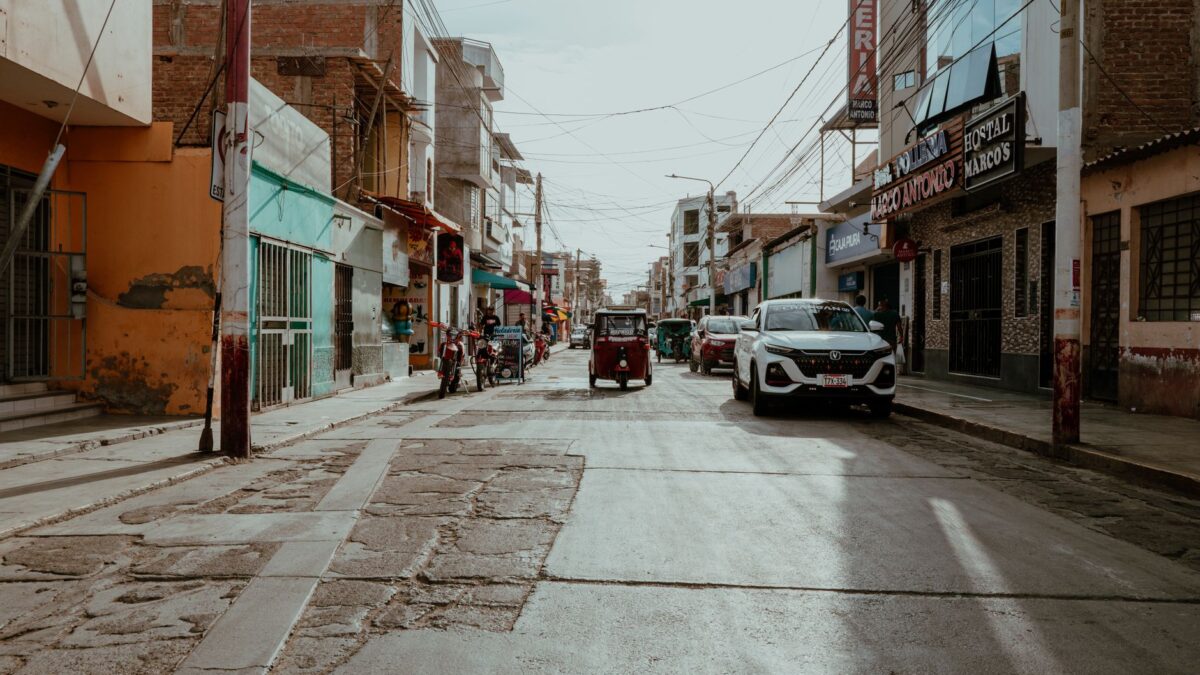 Getting Around
Getting around Antananarivo: metros, taxis and passes
Discover how locals navigate Antananarivo: taxi-bes, negotiated taxis, ride-hailing apps (Yango/Heetch), when walking wins, and the idle cable car — plus real costs in…
 News & Updates
Madagascar in August 2026: what travelers should know now
Madagascar in August 2026: power cuts, bar curfews, flyover construction, and the NEXT Voice finale. Practical tips for Antananarivo this month.
East Africa
 Kenya
KenyaKenya Travel Podcast with Baraka Kimani
The Swahili coast has linked Mombasa with India, China, Persia and the Arab world since at least the 2nd century, shaping Kenya's…
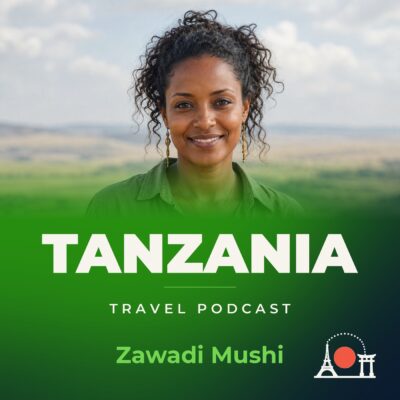 Tanzania
Tanzania Travel Podcast with Zawadi Mushi
The northern highlands of Tanzania contain Kilimanjaro, Africa's highest point, one of only three mountain ranges on the continent with glaciers.
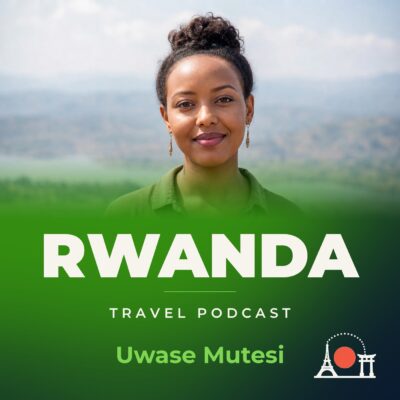 Rwanda
Rwanda Travel Podcast with Uwase Mutesi
Kinyarwanda is the universal language spoken across Rwanda's rugged grassy uplands, where most people live in the central regions and along Lake…
 Uganda
Uganda Travel Podcast with Daniel Okello
A Uganda travel show that follows the seasons from Kampala's hills to Lake Victoria's shore, with time to learn the country as…