

What to eat in Morocco — and what it costs
The first thing you notice in Rabat in late August is the light — heavy, honeyed, sliding off the whitewashed walls of the Kasbah des Oudaias as the call to prayer rolls over the Bou Regreg. And the second thing? The smell. Cumin and charred lamb, frying sardines, the sweet steam of mint being crushed into tea glasses. This is a city that eats with its eyes first, and its wallet second. I’ve lived here long enough to know that the best meals aren’t in the glossy guidebooks — they’re in the alleys, the souk corners, and the family-run counters where the price is written in chalk and the flavour is written in memory. Let me take you through what to eat, where to find it, and what it’ll actually cost you — in dirhams, the way we count.
Breakfast like a local — sweet, salty, and under 10 dirhams
Moroccans don’t do a big breakfast. We do harcha — a griddled semolina flatbread that’s crisp outside, tender inside — or msemen, the flaky square pancake that’s fried and then torn apart with honey or dipped in warm amlou (a paste of almonds, argan oil, and honey). Head to any neighbourhood bakery near the Medina, or better, the stalls that line Rue Souika before 9 AM. A stack of harcha with a glass of sweet mint tea will set you back about 5–8 dirhams (under a dollar). Add a fried egg with cumin if you’re hungry — another 3 dirhams. For coffee, skip the tourist traps and duck into Café Crème or Unique Coffee in Agdal, where a proper cappuccino runs 15–20 dirhams. It’s not the cheapest caffeine in town, but the people-watching is priceless.
Street food that punches above its price — 20 to 40 dirhams
Rabat’s street food is the unsung hero. You don’t need a table; you need an appetite. The classic move is kefta — spiced minced beef or lamb, cooked on a flat grill with a nest of eggs in the middle, served with fresh bread and a pot of mint tea. A generous portion at a proper street stall, like Qaouti House Fast Food Snack near the medina, costs about 40 dirhams (about $4). It’s the kind of meal that fills you for the whole afternoon.
If you want to go leaner, a street sandwich of mekla — meat and egg in a crusty roll with a soft drink — is about 21 dirhams (just over $2). You’ll find these at the little kiosks near the tram stops or around the Mohammed VI Museum of Modern and Contemporary Art, where office workers queue at lunch. Don’t be shy to point at what looks good; the vendors are used to curious tourists.
For a sit-down-but-still-cheap lunch, the neighbourhood kalak joints (think: stewed beans, lentils, or chickpeas with bread) serve a filling plate for 15–20 dirhams. It’s not glamorous, but it’s honest, and it’s what Rabatis eat on a regular Tuesday.
Tagines and slower, happier lunches — 80 to 120 dirhams
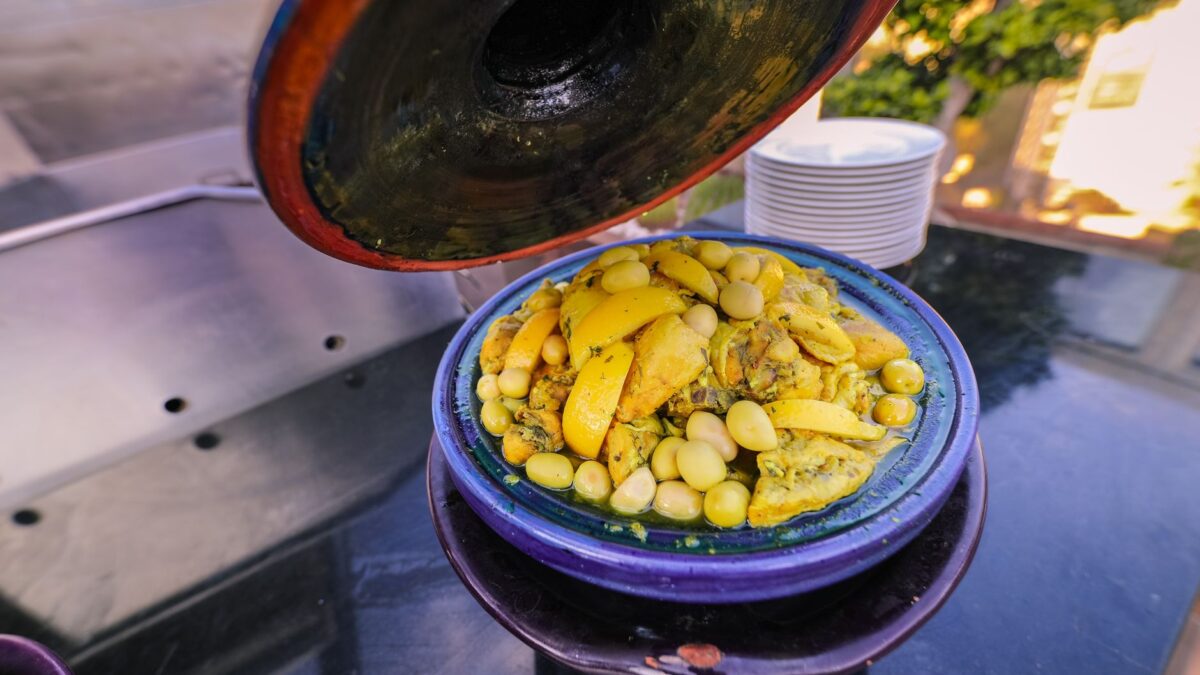
You can’t leave Morocco without a proper tagine, and Rabat has plenty of spots where it’s done right. The clay pot arrives bubbling, with the steam carrying the scent of preserved lemon, olives, and whatever meat you chose. A chicken tagine with olives at a mid-range restaurant — think Dar Lwalida in the old medina or Little Mamma in Agdal — will cost you around 80–120 dirhams (roughly $8–12). That includes bread, olives, and usually a small salad. If you go for beef with prunes or kefta with tomatoes and eggs, the price stays in the same range.
The trick is to go where the locals go. Dar Al Fawakih Medina is a bit of a find — a family-run spot near the souk that serves a mean lamb tagine with seasonal vegetables for about 90 dirhams. It’s not fancy, but the courtyard seating and the sound of the medina beyond the walls make it feel like a secret.
And if you’re in the Hassan district after visiting the Hassan Tower and the Mausoleum of Mohammed V, don’t miss the small eateries on the side streets — they might not have a name on the door, but a plate of beef tagine with bread and a mint tea will run you about 70–90 dirhams. It’s lunch with history on your left and the Atlantic on your right.
Seafood and the salty breeze — the Kasbah and the Marina
Rabat sits on the Atlantic, and that means sardines, mackerel, and the occasional sea bass. The best way to eat them is simple: grilled, with cumin and lemon, and a handful of khobz (bread) to mop up the juices. Head toward the Kasbah des Oudaias, and you’ll find informal grills near the Andalusian Gardens or the terrace at Café Maure — though the café is more for tea and the view than a full meal.
For a proper seafood lunch, the Marina de Rabat has a handful of small restaurants but they trend tourist-priced. You’re better off walking a few blocks into the medina, where a fried-fish plate with salad and fries goes for about 60–80 dirhams. It’s not on the promenade, but it’s on the tables where Rabatis eat. A word on timing: the morning catch is best at lunch; by evening, the good stuff’s gone.
When you want a proper evening out — from 150 dirhams up
Sometimes you want a tablecloth, and that’s fine. Boho Café in Agdal is a good middle ground — a stylish café-restaurant where a tagine or a grilled chicken skewer with all the sides runs about 120–150 dirhams. It’s not cheap by Rabat standards, but it’s the kind of place you’d take a date or a visiting friend. For a more classic Moroccan experience, Dar Lwalida transforms at night into a proper riad restaurant with a set menu — starter, tagine, pastry, and tea — for about 200 dirhams (around $20). It’s worth the splurge.
If you’re on a tighter budget but still want a sit-down vibe, the fast-food hybrid places — like Qaouti House — do a full plate of chicken, fries, and salad for about 50–60 dirhams. You’ll eat well, just without the frills.
The sweet end and the practical bits
Dessert in Morocco is often just more tea and some pastries — chebakia (honey-soaked sesame flowers), sellou (a nutty, spiced flour confection), or a simple plate of fresh fruit. A slice of kaab el ghazal (gazelle horns) at a café like Hatch in Agdal costs about 15 dirhams, and yes, it’s worth it.
Now, the money bits. You’re paying in Moroccan dirhams (MAD), and the dirham is a closed currency — you can’t get it outside Morocco, so exchange at licensed bureaux (the densest cluster is on Avenue Fal Ould Oumeir in Agdal). Keep the receipt to convert back on departure. Prices I’ve quoted are today’s honest street-level reality, but note that Rabat is now the most expensive city in the country for rent, and transport fares rose in July 2025 — the tram now costs 7 dirhams for a single ride, and a monthly pass is 270 dirhams. That doesn’t change the food prices much, but it’s worth knowing you’ll budget around 40–60 dirhams for a filling local meal, 80–120 dirhams for a sit-down tagine, and 150+ for a fancy evening out.
One last tip: the city is buzzing this week — the World Book Capital libraries are drawing crowds, and the WAFCON final just filled the Moulay El Hassan Stadium with visitors. But the food never waits for an excuse. Go eat a kefta at noon, a tagine at sunset, and a piece of gazelle horn under the stars. Rabat fills you up in ways that don’t show on a receipt.
Frequently asked questions
How much does a typical meal cost in Morocco?
A meal at a local eatery or street stall costs about 40–60 dirhams (around $5). A sit-down tagine at a neighbourhood restaurant runs 80–120 dirhams. Street sandwiches can cost as little as 21 dirhams.
What is the best street food to try in Rabat?
Kefta with eggs — spiced meatballs grilled and topped with eggs, served with bread and mint tea — is a must, at about 40 dirhams. Also try harcha or msemen breakfast pancakes for 5–8 dirhams.
Where can I find authentic Moroccan food in Rabat?
Look for family-run spots like Dar Al Fawakih Medina or Dar Lwalida in the old medina, or Bôbo Café in Agdal for a modern vibe. For street food, try Qaouti House near the medina.
Is it customary to tip in Moroccan restaurants?
Tipping is appreciated but not mandatory. Around 10% for good service at sit-down restaurants is fine, and rounding up the bill for street food or cafés is common.
Can I pay with credit cards for food in Morocco?
Credit cards are accepted at higher-end restaurants and cafés in Agdal and Hay Riad. For street food and small vendors, cash in dirhams is required.


